
Exploring how modified composite materials are reshaping the stories buildings tell
Walk down any street, and you'll notice it: buildings aren't just boxes that keep the rain out. They're silent storytellers. A weathered brick facade might whisper of a neighborhood's industrial past; a sleek glass tower shouts innovation and progress. But in a world where cookie-cutter designs often dominate city skylines, the quest to create something truly unique has become the holy grail for architects and designers alike. The problem? Traditional building materials—stone, concrete, wood—have always come with a catch: they're heavy, rigid, and frustratingly limited in how they can be shaped, colored, or textured. That is, until MCM flexible stone stepped onto the scene.
This article isn't just about a material. It's about how MCM—short for modified composite material—has unlocked a new chapter in architectural design, where flexibility meets durability, and customization isn't just a buzzword but a reality. And at the heart of this revolution? Tools like "Golden Faith Real Photos" that let clients, architects, and builders see exactly how these custom creations will come to life before a single panel is installed.
Let's talk about the elephant in the room: traditional cladding materials are, well, traditional for a reason. Stone is timeless, concrete is strong, wood feels warm. But anyone who's worked with them knows their dark side. Natural stone, for example, is stunning—but it's also incredibly heavy. That means structural engineers have to design buildings to support tons of extra weight, driving up costs and limiting where it can be used. Wood looks beautiful at first, but without constant maintenance, it warps, rots, or fades under the sun. Concrete? It's durable, but try asking for a gradient color or a 3D texture, and you'll likely get a polite (or not-so-polite) eye roll from the contractor.
Then there's the issue of sameness . Walk through a business district, and you'll see the same gray concrete panels, the same red brick, the same generic stone veneers repeated block after block. It's not that architects lack creativity—it's that the materials they're working with box them in. "I wanted to create a facade that looked like a sunset," one architect told me recently, "with hues fading from warm orange to soft pink. But with traditional stone, that meant sourcing dozens of different slabs, matching colors by hand, and hoping for the best. It was a logistical nightmare, and the result still didn't capture the flow I imagined."
Maintenance is another hidden cost. A marble-clad building might look luxurious on day one, but within a few years, weathering, stains, and cracks start to show. Pressure washing, sealing, repairs—these add up, turning a "premium" choice into a budget drain. For schools, hospitals, or commercial buildings that need to look sharp without constant upkeep, traditional materials often fall short.
Enter MCM flexible stone—a material that sounds almost too good to be true until you see it in action. At its core, MCM is a modified composite material, blending natural minerals with advanced polymers to create something that's both lightweight and surprisingly strong. Think of it as stone, but reimagined: thin enough to bend (yes, bend) around curves, light enough that it doesn't require massive structural support, and tough enough to stand up to rain, wind, and even the occasional hailstorm.
What makes it "flexible"? Traditional stone is rigid; MCM, by contrast, has a slight give to it, allowing it to be installed on surfaces that aren't perfectly flat—like curved walls, arches, or even ceilings. I once visited a restaurant with a circular facade where the architect had used MCM panels to create a wave-like effect, the material gently curving in and out as if the building itself was breathing. With natural stone, that design would have been nearly impossible. With MCM? It was just another day at the office.
But flexibility isn't its only trick. MCM panels are also lightweight —up to 80% lighter than natural stone, in fact. That translates to lower shipping costs, easier installation (no need for cranes for every panel), and the ability to use them on buildings where traditional stone would be too heavy. A historic renovation project I worked on recently needed to update its facade without compromising the original structure, which was over a century old. MCM flexible stone was the only material that could add modern flair without risking damage to the building's delicate framework.
And let's talk durability. MCM is resistant to water, fire, and UV rays, meaning it won't fade, warp, or crack over time. Unlike wood, it doesn't need to be sealed or stained. Unlike concrete, it doesn't develop unsightly hairline fractures in extreme temperatures. One manufacturer I spoke with mentioned a project in a coastal area, where saltwater and high winds are constant threats. Five years later, the MCM panels still look as crisp as the day they were installed—no rust, no peeling, just the same rich texture and color.
If MCM flexible stone solves the practical problems of traditional materials, custom MCM exterior panels are what make it a creative powerhouse. Here's the thing: modern architecture isn't just about function—it's about expression . A university might want a facade that reflects its innovative spirit; a boutique hotel might aim for a cozy, welcoming vibe; a tech company might want something sleek and futuristic. With custom MCM panels, these visions don't have to be watered down to fit what's "possible"—they can be brought to life, down to the smallest detail.
Take color, for example. MCM panels can be dyed in virtually any shade, from bold primaries to soft pastels, and even gradients. Remember that architect I mentioned earlier, the one who wanted a sunset facade? With MCM, they were able to create a custom gradient panel that shifted from deep amber to blush pink, with each panel blending seamlessly into the next. "It was like painting with a giant brush," they said. "I could adjust the color intensity, the transition speed, even add subtle speckles to mimic the way sunlight filters through clouds. And because it was all done in a controlled factory setting, every panel was consistent—no more guessing if the next batch would match."
Texture is another area where MCM shines. Want a surface that looks like rough-hewn stone? No problem. Prefer something smooth and polished, like honed marble? Done. How about 3D patterns—waves, geometric shapes, or even custom logos? MCM can handle that too, thanks to advanced manufacturing techniques like 3D printing (part of the MCM 3D printing series). One restaurant chain used custom 3D-printed MCM panels to create a facade that looked like stacked books, paying homage to the nearby library. The level of detail was stunning—each "book" had tiny embossed letters, and the panels were arranged to look like a haphazardly stacked shelf, adding a playful, inviting feel to the building.
But here's where "Golden Faith Real Photos" becomes indispensable. Customization is exciting, but it can also be nerve-wracking. How do you know the gradient you designed will look as good in real life as it does on a computer screen? Will the texture of the Lunar Peak Golden panels read as "luxurious" or "gaudy" in person? Real photos take the guesswork out of the equation. These aren't just snapshots—they're high-resolution images taken in different lighting conditions (morning sun, afternoon shade, even artificial evening light) that show the panels up close, from different angles, and at scale. Clients can zoom in to see the grain of a wood-inspired texture, compare how two shades of gold look side by side, or visualize how a pattern will repeat across an entire facade. It's like test-driving a material before committing to the full build.
To really understand the beauty of custom MCM, let's zoom in on two standout options: Lunar Peak Golden and Rammed Earth Board (Gradient). These materials aren't just "products"—they're tools for storytelling, each with its own personality and potential.
Lunar Peak Golden isn't your average gold cladding. It has a depth and warmth that feels both ancient and contemporary, like gold leaf that's been gently aged by time. The color isn't a flat, brassy yellow—instead, it shimmers with subtle undertones of amber and bronze, with tiny variations in hue that catch the light as you move past the building. Run your hand over it, and you'll feel a slight texture, like the surface of a well-loved antique, that adds tactile interest without being overwhelming.
Where does it shine? Luxury spaces, for starters. A boutique hotel in Dubai used Lunar Peak Golden panels on its entrance facade, pairing them with floor-to-ceiling glass windows. The result? A building that feels opulent but not ostentatious, with the golden panels reflecting the desert sun by day and glowing softly under spotlights at night. "Our guests often comment on how the entrance feels like stepping into a jewel box," the hotel manager told me. "It sets the tone for the entire stay."
But Lunar Peak Golden isn't just for hotels. A tech startup in Silicon Valley chose it for their headquarters' accent panels, using it to frame their logo and highlight key architectural features. "We wanted to balance innovation with tradition," their CEO explained. "The golden panels represent our commitment to quality and longevity, while the sleek glass and steel represent forward-thinking. It's a visual metaphor for our brand."
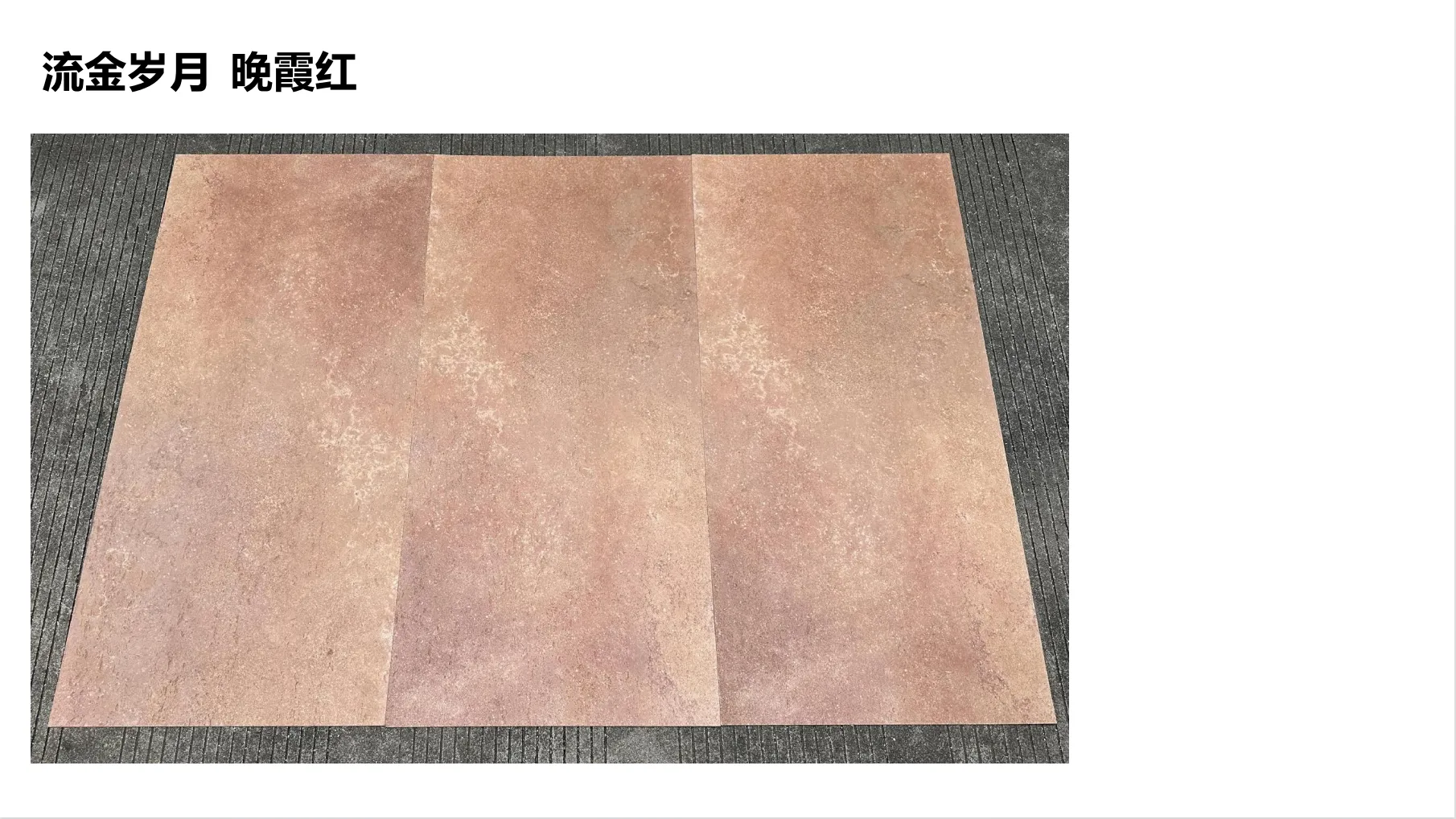
If Lunar Peak Golden is about luxury, Rammed Earth Board (Gradient) is about connection—to nature, to history, to the land itself. Rammed earth has been used for centuries, but MCM has reimagined it for the modern world. The gradient version takes it a step further, blending earthy tones—sandy beiges, terracotta reds, soft greens—in a way that mimics the natural color variations of soil and rock.
The texture is what really sets it apart. Unlike smooth concrete or polished stone, Rammed Earth Board has a rough, organic feel, with visible layers that look like they were formed by hand (even though they're precision-engineered). It's the kind of material that invites touch, that makes you want to lean in and examine the way the colors blend and shift. A community center in Portland used gradient rammed earth panels for its exterior, and locals often stop to take photos, saying the building "feels like it grew out of the ground."
Eco-conscious designers love it too. Rammed Earth Board is made with sustainable materials, and its earthy tones align with biophilic design principles—creating spaces that reduce stress and connect people to nature. A yoga retreat in Costa Rica used it for their main pavilion, pairing the gradient panels with large windows and natural wood accents. "Our guests tell us the building feels calm, grounding," the retreat owner said. "It's like practicing yoga outside, even when you're indoors."
Let's circle back to "Golden Faith Real Photos"—because in the world of custom architecture, seeing is believing. Think about it: when you're designing a building, you're asking clients, investors, and even the public to invest in a vision. A sketch on paper or a 3D render can help, but there's nothing like a high-quality photo of the actual material to build confidence.
I spoke with a developer who was on the fence about using Lunar Peak Golden for a luxury condo project. "The renderings looked great, but I kept thinking, 'Is this going to look cheap in real life?'" they said. "Then the supplier sent over Golden Faith Real Photos—close-ups of the panels in sunlight, shade, even under rainy conditions. I could see the way the color deepened when it was overcast, how the texture caught the light at different angles. It wasn't just a color anymore; it was a feeling. That's when I knew we had to use it."
Real photos also help with collaboration. Architects, contractors, and clients often have different ideas about what "warm" or "rustic" means. A photo of Rammed Earth Board (Gradient) eliminates those misunderstandings. "I told the contractor I wanted a 'soft gradient,'" one client recalled, "but they kept showing me samples with harsh color contrasts. Then I showed them a Golden Faith Real Photo of the gradient I had in mind—subtle, almost imperceptible shifts from one shade to the next—and they immediately got it. No more miscommunications."
And let's not forget about the end users. A school that uses custom MCM panels wants students and teachers to feel inspired; a retail store wants customers to feel drawn in. Real photos let these stakeholders imagine themselves interacting with the building. "When we showed parents the Golden Faith photos of the new school facade—with its warm, earthy tones and inviting texture—they got excited," a principal told me. "They could picture their kids playing outside, the building feeling like a second home. That buy-in made the whole project feel more meaningful."
With so many MCM options available, it can help to see how different series stack up. Below is a comparison of three popular MCM lines, highlighting their key features and ideal uses:
| MCM Series | Key Features | Aesthetic Vibe | Best For |
|---|---|---|---|
| MCM Flexible Stone | Lightweight, bendable, durable, wide color range | Natural stone look with modern flexibility; textures from rough to smooth | Curved facades, historic renovations, accent walls |
| Lunar Peak Series (Golden, Silvery, Black) | Metallic sheen, subtle color variations, UV-resistant | Luxurious, sophisticated; shimmers in light, ages gracefully | Hotels, high-end offices, landmark buildings |
| Rammed Earth Board (Gradient, Solid Colors) | Organic texture, gradient color options, eco-friendly materials | Rustic, earthy, biophilic; feels connected to nature | Schools, community centers, eco-resorts |
In today's world, architectural choices aren't just about looks—they're about responsibility. Clients, governments, and even consumers are demanding buildings that are eco-friendly, energy-efficient, and built to last. MCM checks all these boxes, making it a smart choice for sustainable design.
First, there's the material itself. MCM is made with a high percentage of recycled content, including post-industrial minerals and polymers. Unlike natural stone, which requires mining and quarrying (often with significant environmental impact), MCM production has a much lower carbon footprint. And because it's lightweight, transporting MCM panels uses less fuel than hauling heavy stone or concrete, further reducing emissions.
Then there's longevity. A building clad in MCM flexible stone won't need to be re-clad for decades, unlike wood (which may need replacement every 10-15 years) or painted surfaces (which require repainting every few years). Less replacement means less waste, and fewer resources spent on maintenance. One study found that MCM-clad buildings have a 40% lower lifecycle environmental impact than those using traditional stone cladding—meaning they're better for the planet over the long haul.
Energy efficiency is another bonus. MCM panels can be engineered with insulating properties, helping to keep buildings cool in summer and warm in winter. This reduces reliance on heating and cooling systems, lowering energy bills and carbon emissions. A community center in Canada reported a 25% decrease in heating costs after re-cladding with insulated MCM panels—a significant saving that adds up year after year.
At the end of the day, architecture is about more than walls and roofs. It's about creating spaces that inspire, comfort, and tell stories. For too long, traditional building materials have limited what those stories could be—heavy, rigid, and frustratingly one-note. MCM flexible stone, custom exterior panels, and tools like Golden Faith Real Photos are changing that.
Whether it's the warm glow of Lunar Peak Golden on a hotel facade, the organic beauty of Rammed Earth Board (Gradient) on a community center, or the sleek flexibility of MCM 3D printing series panels on a modern office building, MCM is empowering architects to dream bigger and build bolder. It's not just a material—it's a canvas, one that lets buildings reflect the unique personalities of the people who design them, fund them, and use them every day.
So the next time you walk down a street and pause to admire a building—really look at it. Chances are, if it feels uniquely alive, if its texture and color make you stop and smile, it might just be wrapped in MCM. And that's the magic of it: MCM doesn't just build buildings. It builds stories.
Recommend Products












