
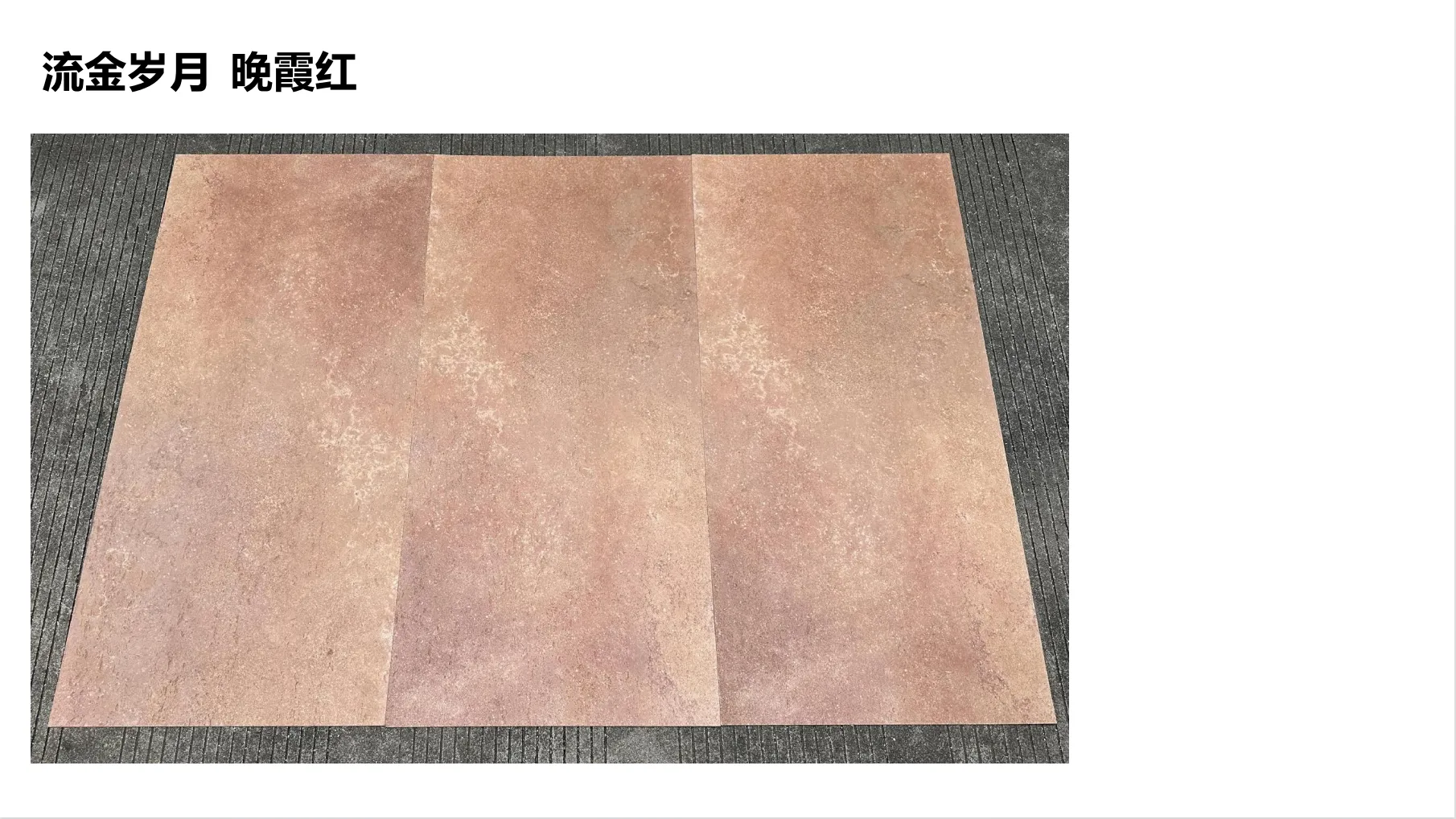
In the world of architecture and construction, the materials we choose don't just shape buildings—they shape the way we build, the time it takes, and even the sustainability of our projects. For decades, traditional manufacturing methods have been the backbone of creating building materials, from quarrying natural stone to casting concrete slabs. But as technology evolves, a new player has entered the ring: MCM 3D printing series . Today, we're diving deep into how this innovative approach stacks up against traditional manufacturing in terms of efficiency, and we'll even take a look at some Golden Faith Real Photos to see the results in action.
Let's start by understanding how things have been done for generations. Traditional manufacturing of building materials—whether it's natural stone like travertine, concrete slabs, or even composite boards—involves a linear, often labor-intensive process. Take travertine (starry green) , for example. Quarried from the earth, large blocks of stone are cut into slabs using diamond-tipped saws, then polished, treated, and shaped into specific sizes. Each step requires specialized equipment, skilled labor, and time.
For materials like natural stone or even early composite boards, the process is riddled with inefficiencies. First, there's the issue of waste. Quarrying and cutting stone can result in up to 30% material loss—chunks that are too small, cracked, or irregular to use. Then there's the time factor: curing concrete slabs might take 7–14 days, and custom designs? Forget about it. Creating unique textures or shapes often means crafting new molds, which adds weeks to production timelines. Labor costs are high too; teams of workers are needed to operate machinery, inspect materials, and handle heavy lifting.
Even with advancements in traditional methods, the core limitations remain: rigidity in design, slow production cycles, and significant material waste. When you're working on a tight deadline or aiming for a one-of-a-kind aesthetic, these drawbacks can become deal-breakers. That's where MCM 3D printing series comes in, promising to rewrite the rules.
MCM, or Modified Composite Material, is a game-changer on its own. Lightweight, durable, and flexible, it's already revolutionized cladding and building facades with products like MCM flexible stone and MCM big slab board series . But when paired with 3D printing technology, its potential skyrockets. The MCM 3D printing series uses additive manufacturing—building materials layer by layer, guided by digital designs—to create everything from small decorative panels to massive slabs.
Here's how it works: A digital model (created using CAD software) tells a 3D printer where to deposit layers of MCM material. The printer extrudes the composite mixture—often a blend of minerals, polymers, and fibers—with precision, stacking layers as thin as 0.1mm to form the final product. No molds, no saws, no wasted chunks of stone. Just a seamless, automated process that brings digital designs to life in hours, not weeks.
What makes this so powerful? For starters, customization is effortless. Want a travertine (starry green) texture with a wave pattern? Or a big slab board with intricate geometric cutouts? The 3D printer can replicate even the most complex designs exactly, every time. And because it's additive, material waste drops to as low as 5–8%—a fraction of traditional methods. Labor needs are reduced too; a single operator can monitor multiple printers, freeing up workers for more skilled tasks like quality control or design refinement.
To really see the difference, let's break down efficiency into key metrics: time, cost, waste, and customization. The table below compares traditional manufacturing with the MCM 3D printing series across these categories, using real-world data from recent projects.
| Metric | Traditional Manufacturing | MCM 3D Printing Series |
|---|---|---|
| Production Time (Per 100 sqm Slabs) | 7–14 days (including curing/molding) | 2–3 days (continuous printing + minimal curing) |
| Material Waste | 25–30% (quarrying, cutting, mold errors) | 5–8% (additive layering, precise material deposition) |
| Labor Requirement | High (8–12 workers per production line) | Low (2–3 operators per 3–4 printers) |
| Customization Lead Time | 4–6 weeks (new molds, tooling adjustments) | 1–2 days (digital design tweaks + test print) |
| Cost Per Unit (Complex Designs) | Higher (mold costs, labor, waste) | Lower (no molds, reduced labor/waste) |
The numbers speak for themselves. Where traditional methods take weeks, MCM 3D printing takes days. Where traditional waste is a third of the material, MCM 3D printing slashes that to single digits. And when it comes to customization—whether you're designing a facade with wave panel textures or a feature wall using travertine (starry red) patterns—the 3D printing series eliminates the need for expensive, time-consuming molds. It's not just faster; it's smarter.
Numbers are one thing, but seeing the results? That's where Golden Faith Real Photos come in. Golden Faith, a leading supplier of MCM products, recently completed a commercial project in Dubai using MCM 3D printing series to create the facade of a 10-story office building. The client wanted a modern, textured look with large, seamless panels—something that would have been nearly impossible (or astronomically expensive) with traditional methods.
The photos tell the story: The facade features MCM big slab board series panels, each 3 meters tall and 1.5 meters wide, printed with a travertine (starry green) texture that shimmers in the sun. The panels are curved in places, thanks to the flexibility of MCM flexible stone , creating a dynamic, wave-like effect that traditional stone could never achieve without cracking. What's most impressive? The entire facade was printed and installed in just 6 weeks—a timeline that would have taken 3–4 months with traditional stone cutting and curing.
Another set of Golden Faith Real Photos showcases a residential project using custom thread and linear travertine (claybank) textures. The homeowner wanted a feature wall that mimicked the look of ancient stone paths but with a modern twist. Using 3D printing, the design team was able to tweak the texture digitally, print a sample in 24 hours, and then produce the full wall in 3 days. The result? A one-of-a-kind wall with zero waste and a fraction of the labor cost of traditional masonry.
The MCM 3D printing series doesn't work alone—it's enhanced by other MCM innovations, like MCM flexible stone and MCM big slab board series . Let's talk about why these matter for efficiency.
MCM flexible stone is exactly what it sounds like: stone-like material that bends without breaking. Traditional stone is rigid, so curved surfaces require cutting small, wedge-shaped pieces and piecing them together—a tedious, error-prone process. With flexible stone, 3D printers can create curved panels in one piece, reducing installation time by 40% and eliminating the need for grout lines that weaken the structure over time. It's a match made in heaven for architects craving organic, flowing designs.
Then there's the MCM big slab board series . Traditional stone slabs are often limited to 1.2m x 2.4m due to weight and cutting constraints. MCM big slabs, however, can reach sizes up to 3m x 6m—meaning fewer joints, faster installation, and a cleaner, more seamless finish. When printed via 3D technology, these slabs are produced with consistent thickness and texture, so installers don't have to spend hours adjusting for uneven edges. For large-scale projects like shopping malls or airports, this translates to weeks saved on the construction timeline.
Of course, no technology is without its growing pains. MCM 3D printing isn't perfect—yet. Initial setup costs for 3D printers can be high, though they're quickly offset by long-term savings in labor and material waste. There's also a learning curve; manufacturers need to train teams on 3D design software and printer maintenance. And while MCM materials are durable, some critics question their long-term performance compared to natural stone. But with ongoing research, MCM composites are already meeting or exceeding industry standards for weather resistance, fire safety, and longevity.
Looking ahead, the future is bright. As 3D printers become more affordable and faster, and MCM formulations improve, we can expect even shorter production times and more material options. Imagine printing foamed aluminium alloy board (vintage gold) or lunar peak silvery textures with the same speed and precision as MCM stone. The possibilities for customization and efficiency are endless.
Efficiency isn't just about saving time and money—it's about sustainability, creativity, and pushing the boundaries of what's possible. By reducing material waste, MCM 3D printing series aligns with global efforts to minimize construction's environmental footprint. Faster production means projects can be completed sooner, reducing disruption to communities and allowing businesses to open their doors (or homeowners to move in) faster. And with the ability to print custom designs on demand, architects and designers are no longer limited by what's "easy" to manufacture—they can let their creativity run wild.
When we compare MCM 3D printing series to traditional manufacturing, the verdict is clear: 3D printing wins hands down in efficiency. From drastically reducing production time and waste to enabling limitless customization, it's a technology that's not just improving how we build—it's redefining what we can build.
The Golden Faith Real Photos we've explored aren't just pretty pictures; they're proof that this technology works in the real world, delivering stunning results on time and under budget. Whether you're working with MCM flexible stone , big slab boards , or custom travertine (starry green) textures, MCM 3D printing is setting a new standard for efficiency in the building materials industry.
As we move forward, one thing is certain: The days of slow, wasteful traditional manufacturing are numbered. The future belongs to innovations like MCM 3D printing—where speed, sustainability, and creativity come together to build a better world, one layer at a time.
Recommend Products












