
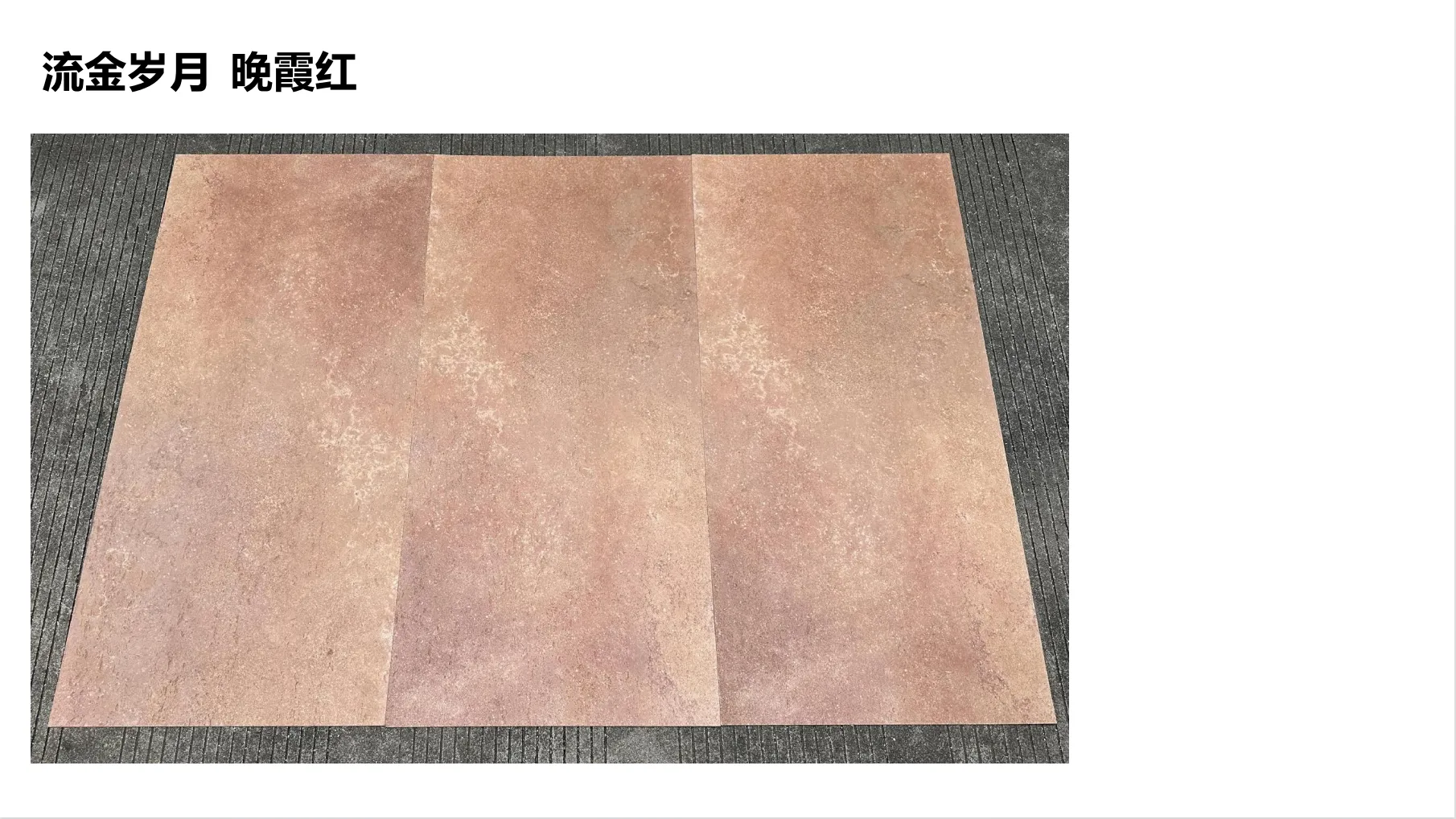
There's a quiet magic in old buildings—those weathered walls that hold stories of decades past, the creak of floorboards that remember countless footsteps, the way sunlight filters through original windows to paint patterns on aged surfaces. But as any preservationist or homeowner knows, loving an old building means grappling with its quirks: crumbling plaster, uneven walls, and the constant tension between honoring history and ensuring it stands strong for years to come. When it comes to renovating these spaces, the materials you choose aren't just about aesthetics—they're about respect. Respect for the building's soul, respect for the hands that built it, and respect for the future generations who'll walk through its doors. That's where MCM flexible stone steps in: a modern solution with the heart of natural materials, designed to breathe new life into old walls without erasing their memories.
Old buildings are sensitive creatures. Unlike new constructions, where walls are straight and structural supports can handle heavy loads, historic spaces often come with uneven surfaces, fragile substrates, and strict preservation guidelines. Traditional renovation materials—think thick natural stone slabs or heavy ceramic tiles—can feel like a betrayal here. Their weight risks straining aging foundations; their rigidity can't conform to the subtle curves of hand-laid brick; their installation often requires aggressive prep work that chips away at original details. Worse, many "modern" materials sacrifice texture for durability, leaving interiors feeling sterile, as if the building's personality has been scrubbed clean.
Take, for example, a 1920s townhouse in Boston I visited last year. The owners dreamed of restoring the foyer, which had suffered water damage over the years, but they hesitated to use real marble—its weight would have required reinforcing the floor joists, and its porous nature would have made it prone to stains in a high-traffic area. Vinyl "marble-look" tiles felt like a cop-out; they lacked the depth of real stone, the way light catches on its surface and shifts throughout the day. It was a classic dilemma: how to preserve character without compromising on practicality.
This is where MCM flexible stone shines. Born from the need to blend tradition and innovation, it's a modified composite material that mimics the texture, color, and depth of natural stone—travertine, granite, marble— but with a lightweight, flexible core. It's thin (often just 3-5mm thick), bendable enough to hug uneven walls, and tough enough to withstand the wear and tear of daily life. For old buildings, that's a game-changer: a material that speaks the language of history but understands the demands of modern living.
At its core, MCM flexible stone is a celebration of balance. It starts with natural mineral aggregates—crushed stone, quartz, marble dust—mixed with a polymer binder that gives it flexibility without sacrificing strength. The result? A product that looks and feels like it was quarried from the earth, but handles like a sheet of thick fabric. Installers often compare it to wallpaper, but with the heft of stone: it cuts cleanly with a utility knife, adheres to most substrates with minimal prep, and even bends up to 30 degrees to follow the contours of curved walls or arched doorways.
But what truly sets MCM apart is its commitment to authenticity. Unlike printed vinyl or laminated panels, which rely on surface patterns to mimic stone, MCM's texture runs through the entire material. Run your hand over a slab of Golden Faith , and you'll feel the subtle ridges and valleys of natural travertine; run it over travertine (starry green) , and tiny iridescent flecks catch the light like stars in a dark sky. These aren't just "looks"—they're experiences, the kind that make you pause and think, "Is this real?" It's the kind of detail that matters in old buildings, where every scratch and imperfection tells a story. MCM doesn't hide those stories; it frames them.
| Material | Weight (kg/m²) | Flexibility | Installation Complexity | Suitability for Old Buildings |
|---|---|---|---|---|
| Natural Stone Slabs | 25-30 | Rigid (no bend) | High (requires structural support, mortar bed) | Low (risks damage to foundations, uneven surfaces) |
| Ceramic Tiles | 15-20 | Brittle (breaks under flex) | Medium (requires level substrate, grout lines) | Medium (can crack on uneven walls, lacks texture depth) |
| MCM Flexible Stone | 3-5 | High (bends up to 30°) | Low (peel-and-stick or thin-set, no structural prep) | High (lightweight, conforms to curves, preserves texture) |
MCM's lineup is vast, but a few stars stand out for their ability to complement old buildings. Let's dive into the ones that architects and designers are reaching for when they want to honor history while embracing modernity—starting with the product that inspired this story: Golden Faith .
If old buildings had a favorite color, it might be the hue of Golden Faith . This MCM variant mimics the soft, amber glow of aged travertine, with subtle cream and gold veining that evokes sunlight on sandstone. What makes it special, though, is its texture: a matte finish that's smooth to the touch but not slippery, with tiny pits and pores that mimic the natural weathering of stone. It's warm, not flashy—perfect for spaces where you want to feel wrapped in history, not overwhelmed by it.
I spoke with Maria, an interior designer who used Golden Faith to renovate a 1930s library in upstate New York. "The original walls were covered in faded wallpaper, and the client wanted something that felt 'timeless but tough,'" she told me. "We considered real travertine, but the library's floor couldn't handle the weight. Golden Faith was a revelation. We installed it over the existing plaster with minimal prep—just a light sanding and a primer—and it clung to the walls like it had always been there. Now, when you walk in, the light hits those golden veins, and it feels like the room is breathing. The clients say it's like the library finally got its voice back."
For old buildings with a touch of whimsy—think cottage-style homes or art deco theaters— travertine (starry green) is a showstopper. Unlike traditional travertine, which leans earthy, this variant features a deep forest-green base dotted with tiny, reflective particles that catch light like distant stars. It's as if someone took a slab of stone and scattered stardust across it, creating a texture that shifts from subtle to striking depending on the light.
Take the renovation of a 1940s movie theater in Chicago, where the lobby walls were originally clad in dark wood paneling that had warped beyond repair. The preservation board insisted on a material that "echoed the theater's celestial theme" (the ceiling, restored in 2010, features hand-painted constellations). Travertine (starry green) checked every box. Its flexibility allowed it to follow the lobby's curved walls, and its lightweight nature meant no need to reinforce the century-old structure. Today, when the theater's chandeliers glow, the walls shimmer like a night sky—paying homage to the past while feeling utterly alive.
Not all old buildings are cozy or whimsical—some, like converted warehouses or industrial lofts, thrive on their raw, utilitarian roots. For these spaces, lunar peak golden offers a sleek alternative to cold metal or stark concrete. With a metallic golden sheen that mimics aged brass, it blends the warmth of traditional metals with the durability of MCM. Its surface has a subtle hammered texture, like metal that's been worked by hand, adding depth without feeling fussy.
A recent project in Brooklyn comes to mind: a 1910s textile factory converted into artist studios. The owners wanted to preserve the building's industrial vibe but needed walls that could withstand paint splatters, furniture scrapes, and the occasional wayward sculpture. Lunar peak golden was used in the common areas, paired with fair-faced concrete (another MCM standout, with its raw, unpolished finish that mimics poured concrete but weighs a fraction of the real thing). The result? A space that feels both rugged and refined, where the golden tones warm up the concrete's coolness, and the MCM's flexibility allowed installers to cover the factory's original brick walls without filling in their characterful gaps.
One of the most common pushbacks I hear about MCM is, "But does it really hold up?" Let's be clear: old buildings aren't just pretty—they're lived in. Walls get bumped by furniture, kids scrawl on them (even in historic homes), and moisture can seep in through old windows. MCM doesn't just look the part; it performs. Its polymer binder resists water, mold, and stains, making it ideal for kitchens, bathrooms, and basements—areas where old buildings often struggle. And because it's thin and lightweight, it's easy to repair: a damaged section can be cut out and replaced without disturbing the surrounding material, unlike natural stone, which often requires full slab replacement.
Take moisture, for example. Many old buildings suffer from poor insulation, leading to condensation on walls. Traditional stone and tile trap this moisture, leading to mold and mildew. MCM, however, is breathable—its porous surface allows moisture to evaporate, keeping walls dry. In a 18th-century cottage renovation in upstate New York, the owners used fair-faced concrete in the bathroom, where previous tile had failed due to humidity. Three years later, there's not a hint of mold, and the concrete's texture still looks fresh—no peeling, no discoloration.
They say a picture is worth a thousand words, and when it comes to renovation, Golden Faith real photos tell stories of transformation that words can barely capture. Take the before-and-after shots of a 1930s schoolhouse converted into a community center in Portland. The original walls, covered in chipped paint and water stains, looked defeated—until Golden Faith went up. The photos show walls that now glow with warm, golden veining, their texture soft but substantial. Kids run their hands over the surface as they pass, and seniors sit nearby, remarking that the space "feels like it did when I was a student—only better."
Another set of Golden Faith real photos comes from a bed-and-breakfast in Savannah, where the owners renovated six guest rooms using the material. "We wanted each room to feel unique but cohesive," they told me. "With Golden Faith , we could cut the panels to fit around original fireplace mantels and window frames, so no two walls look exactly alike. Our guests often ask where we found 'that beautiful stone'—when we tell them it's MCM, they're shocked. They can't believe something so lightweight feels so real."
In a world increasingly focused on eco-friendly choices, MCM flexible stone adds another layer of appeal: it's kind to the planet. Unlike natural stone, which requires mining and heavy transportation, MCM uses recycled mineral aggregates and low-VOC binders, reducing its carbon footprint. Its lightweight nature also cuts down on shipping emissions—trucks can carry 10 times more MCM panels than natural stone slabs, lowering fuel use. And because it's so durable, it reduces the need for frequent replacements, keeping waste out of landfills.
For historic preservationists, this sustainability matters deeply. Old buildings are inherently green—they reuse existing resources instead of creating new ones—and MCM aligns with that ethos. When you choose MCM, you're not just preserving a building; you're preserving the planet, too. It's a small choice with a big impact, and in old buildings, where every decision ripples through time, that's everything.
At the end of the day, renovating an old building is about more than walls and floors. It's about honoring the people who came before, the lives that unfolded within those rooms, and the legacy you want to leave behind. MCM flexible stone understands that. It doesn't try to be something it's not—a "perfect" material that erases imperfection. Instead, it embraces the beauty of impermanence, the way natural materials age with grace. It's a reminder that old buildings don't need to be frozen in time; they need to evolve, to grow, to keep telling stories.
Whether you're restoring a Victorian parlor with Golden Faith , reviving a warehouse with lunar peak golden , or adding a touch of magic with travertine (starry green) , MCM flexible stone is more than a renovation material. It's a bridge between past and present, a way to say, "I see you, old friend—and I'm here to help you shine." And in a world that often rushes to tear down and rebuild, that's a gift worth celebrating.
So the next time you step into an old building, take a closer look at the walls. If they're clad in MCM flexible stone, you'll see more than just a pretty surface—you'll see a promise: that history doesn't have to fade, and that some stories are worth preserving, one flexible panel at a time.
Recommend Products












