
How flexible stone, prefabricated panels, and innovative materials are redefining speed and beauty in modern building
It's 6:30 a.m. on a Tuesday, and Maria, the lead architect on the new downtown mixed-use development, is already staring at her laptop screen, frustration creeping in. The project deadline is six weeks away, but the exterior cladding supplier just pushed back delivery by another 10 days. "We can't keep doing this," she mutters, scrolling through emails from the general contractor. "Every delay feels like a domino—first materials, then labor, then the client's trust."
Sound familiar? In construction, time is more than money—it's reputation, it's client satisfaction, it's the difference between a project that shines and one that fades into the background. For years, the industry has grappled with this: how to build faster without cutting corners on quality or aesthetics. Enter the MCM Project Board series—a lineup of materials designed to turn "we'll finish on time" from a hopeful promise into a daily reality. And at the heart of it all? Golden Faith real photos, a collection that doesn't just showcase materials, but tells the story of projects that beat the clock.
Construction delays aren't just about missed deadlines. They're about crews standing idle, rental equipment sitting unused, and clients watching their budgets balloon. A 2023 survey by the Construction Industry Institute found that 68% of projects exceed their original timelines, with material lead times cited as the top culprit. Traditional stone cladding, for example, often requires on-site cutting, sealing, and customization—steps that add days, even weeks, to a schedule. Heavy, brittle, and prone to weather-related delays, it's a material that demands patience… something modern projects can't afford.
"We once had a hotel project where the travertine tiles arrived chipped because of poor packaging," recalls James, a senior project manager with 15 years of experience. "By the time we reordered and reinstalled, we were three weeks behind. The client threatened to pull the plug. That's when I started hunting for alternatives."
Alternatives like MCM Project Board. Built on the backbone of modified composite materials, this series isn't just a product line—it's a mindset shift. It asks: What if building materials worked with your schedule, not against it? What if "fast" and "gorgeous" weren't mutually exclusive?
At first glance, the MCM Project Board series might look like any other collection of building materials. But dig deeper, and you'll find innovation stitched into every panel. Take MCM flexible stone, for example. Unlike traditional stone, which is heavy and rigid, this material bends without breaking, making it easier to transport, handle, and install. Imagine carrying a 4x8-foot panel that weighs half as much as natural stone—no crane needed, no fear of cracks during transit. For James' hotel project, that alone would have saved days of labor.
Then there are the prefabricated MCM panel systems. These aren't just "cut to size"—they're ready to install . Factory-finished, color-matched, and pre-drilled for easy mounting, they arrive on-site with zero guesswork. No more waiting for on-site masons to measure and cut; no more mismatched batches. It's like building with giant, beautiful Legos—only sturdier, and designed to last.
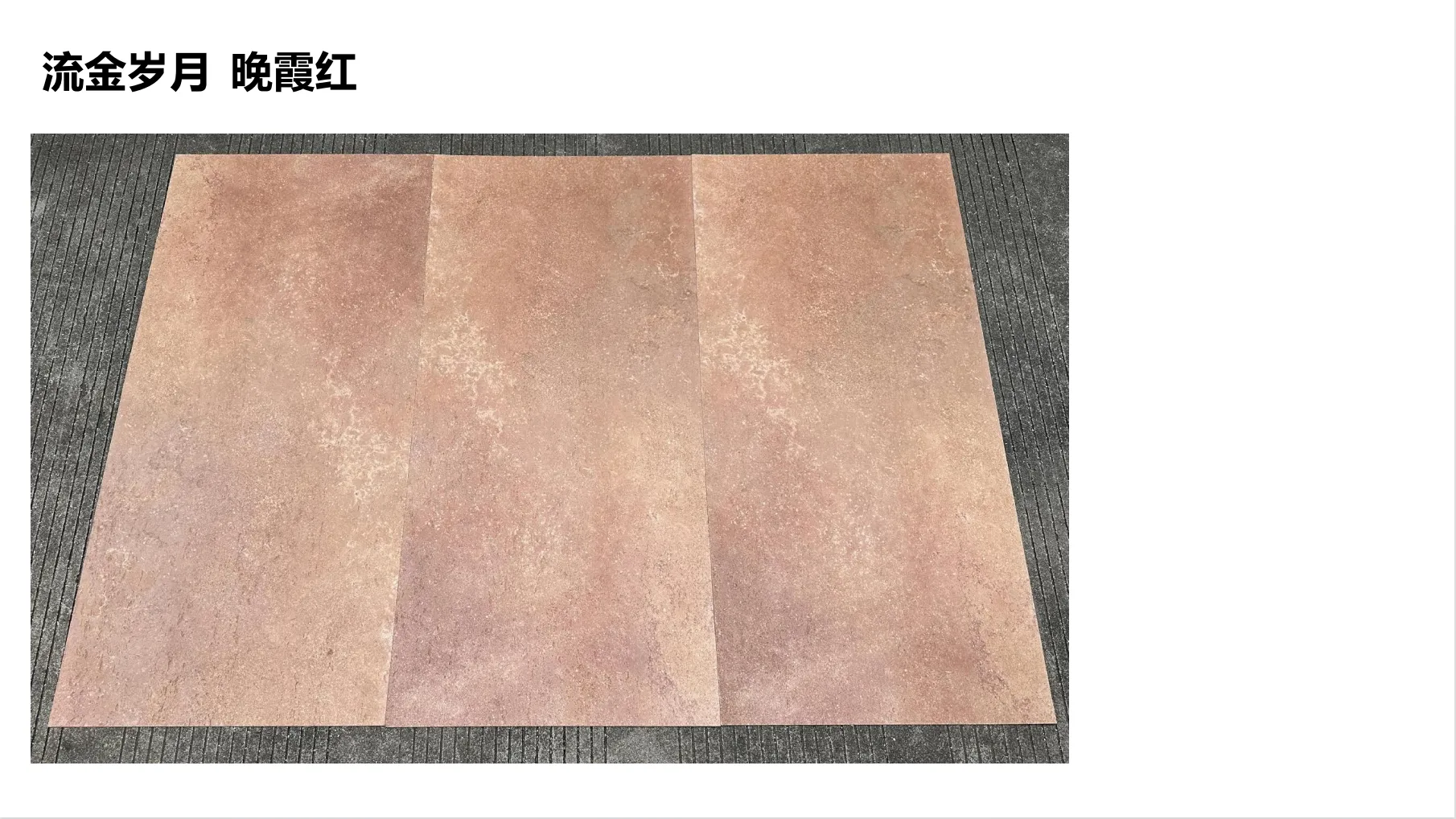
And let's talk aesthetics. One of the biggest fears with fast-track materials is that they'll look "cheap" or generic. But Golden Faith real photos put that worry to rest. Flip through the gallery, and you'll see lunar peak silvery panels catching the morning light on a boutique office building, their metallic sheen softening the concrete skyline. There's fair-faced concrete that mimics the raw, industrial beauty of a New York loft, but with none of the porousness that plagues traditional concrete. And then there's travertine (starry green)—a stone-like finish dotted with tiny, iridescent flecks that sparkle when hit by sunlight, turning a plain wall into a conversation piece.
It's easy to say "MCM is fast," but how does it actually work? Let's break it down. Traditional stone cladding requires four key steps: quarrying, cutting, transporting, and installing. Each step is vulnerable to delays—quarries hit weather issues, cutting tools break, transport trucks get stuck in traffic. MCM Project Board streamlines this process by combining high-tech composites with precision manufacturing.
For example, the 3D printing series within MCM uses additive manufacturing to create intricate textures—like wave panels or bamboo mat board—that would take weeks to carve by hand. The result? A panel with the depth of handcrafted stone, but produced in hours, not days. And because it's printed in a controlled factory environment, there's no risk of weather-related production halts.
Foamed aluminium alloy board (vintage silver) is another standout. Lightweight yet surprisingly strong, it resists corrosion and dents, making it ideal for high-traffic areas like retail facades. "We used it on a mall renovation last year," says Sarah, an architect specializing in commercial spaces. "The old steel panels took two crews a week to install. With the foamed aluminium boards? One crew, three days. And the vintage silver finish? The client loved it so much they asked us to use it on their next project."
Numbers and specs tell part of the story, but Golden Faith real photos tell the rest. Let's zoom in on a recent project: the Riverfront Arts Center, a 40,000-square-foot cultural space in a mid-sized city. The client's mandate? Open by the annual Arts Festival, just 12 weeks away. "We were skeptical," admits Lisa, the center's director. "Everyone said we'd need at least 16 weeks for the exterior alone. Then the contractor suggested MCM Project Board."
The team opted for a mix of lunar peak golden panels and travertine (starry blue), accented with fair-faced concrete. The lunar peak golden, with its warm, sunlit hue, wraps around the main entrance, while the starry blue travertine adds a playful, artistic touch to the upper floors. "The panels arrived pre-cut and labeled," Lisa recalls. "I walked the site one morning, and by afternoon, half the west wall was up. It was like watching a puzzle come together—quick, but perfect."
Golden Faith's photos of the finished center don't just show a building—they show a vibe . The golden panels catch the sunset, turning the entrance into a beacon. The starry blue travertine shimmers when it rains, as if someone sprinkled stardust on the walls. And the fair-faced concrete? It grounds the design, adding a touch of industrial chic that complements the artsy interior. "We opened three days early," Lisa says, smiling. "The festival line wrapped around the block, and all anyone could talk about was the building. That's the power of MCM—speed without sacrificing soul."
Still on the fence? Let's talk data. Below is a side-by-side comparison of traditional exterior cladding and MCM Project Board, based on average project metrics:
| Metric | Traditional Stone Cladding | MCM Project Board (Flexible Stone + Prefabricated Panels) |
|---|---|---|
| Lead Time (From Order to Delivery) | 4-6 weeks | 1-2 weeks |
| Installation Time (Per 1,000 sq. ft.) | 5-7 days | 1-2 days |
| Weight (Per sq. ft.) | 25-30 lbs. | 8-12 lbs. |
| On-Site Waste | 15-20% | 2-3% |
| Weather-Related Delays | Common (due to on-site cutting/sealing) | Rare (factory-finished, ready to install) |
The difference is clear: MCM Project Board cuts lead times by 50-75%, slashes installation time by up to 70%, and reduces waste—all while being lighter and more durable. For the Riverfront Arts Center, that translated to $45,000 in saved labor costs and a stress-free countdown to opening day.
"But is it durable?" That's the question every skeptic asks. And rightfully so—no one wants a building that looks great today but fades tomorrow. Here's the good news: MCM Project Board isn't just fast; it's built to last. The modified composite core resists moisture, mold, and UV damage, while the outer layers (like lunar peak silvery or travertine) are treated with a protective sealant that stands up to rain, snow, and even salt air.
"We tested a sample of the foamed aluminium alloy board (vintage gold) in our lab," says Dr. Maya Patel, a materials scientist who consults for construction firms. "We exposed it to 500 hours of salt spray, extreme temperatures, and simulated sunlight. The result? No rust, no fading, no degradation. It looked as good as the day it came out of the box."
And when it comes to maintenance? Minimal. Unlike traditional stone, which requires periodic resealing, MCM panels can be cleaned with a simple hose and mild detergent. "We haven't touched the exterior of the Arts Center since opening," Lisa says. "It still looks brand new."
Maria, the architect we met earlier, eventually switched to MCM Project Board for her downtown development. The exterior cladding arrived on time, installation wrapped up a week early, and the client? "They're already talking about phase two," she says, grinning. "MCM didn't just save the schedule—it saved my sanity."
Construction will always have challenges, but materials shouldn't be one of them. MCM Project Board series—with its flexible stone, prefabricated panels, and showstopping aesthetics—proves that building fast and building well don't have to be opposites. And Golden Faith real photos? They're not just pretty pictures. They're proof that when you choose the right materials, you don't just build a structure—you build a success story.
So the next time you're staring down a tight deadline, remember: the clock doesn't have to be your enemy. With MCM Project Board, it might just become your ally.
Recommend Products












