
The sun blazes down on Riyadh's skyline, casting a golden hue over concrete and glass. At midday, temperatures soar to 50°C, and the air shimmers with heat. By evening, a sudden sandstorm whips across the city, gritty particles pelting building facades like tiny bullets. In Saudi Arabia, where the desert climate is as unforgiving as it is majestic, constructing buildings that stand the test of time isn't just a challenge—it's a battle against nature. For architects and builders here, the question isn't just "What looks beautiful?" but "What survives?" Enter the Golden Faith series from MCM: a collection of materials designed to turn the desert's harshness into a backdrop for enduring beauty. Today, we're diving into how these products—from mcm flexible stone to travertine (vintage gold) —defy the odds, and why their "real photos" tell a story of resilience that's as compelling as the landscapes they adorn.
Walk through any older neighborhood in Jeddah or Dammam, and you'll see the scars of the desert. Natural limestone facades, once crisp and white, are stained with sand and sun-bleached to a dull gray. Wooden accents on heritage buildings have warped and cracked, their grains swollen by rare but torrential rains and then parched dry by relentless heat. Even metal railings, once gleaming, are pockmarked with corrosion, victims of salt-laden winds from the Persian Gulf. Traditional materials weren't built for this: they absorb heat, expand and contract with temperature swings (which can range from 5°C at night to 50°C by day), and erode under the constant assault of sand and UV radiation.
"We used to specify natural travertine for luxury projects," says Lina Al-Mansoori, a Riyadh-based architect with 15 years of experience. "But within three years, the color would fade, and the pores would trap sand, making the surface look dirty no matter how much we cleaned it. Clients would call, frustrated, asking why their 'premium' stone was deteriorating. That's when we started looking for alternatives."
Modified Composite Material (MCM) isn't just a buzzword—it's a paradigm shift. Born from a blend of natural minerals, polymers, and advanced manufacturing techniques, MCM products are lightweight (up to 80% lighter than natural stone), flexible (able to bend without cracking), and engineered to resist the very elements that break traditional materials. Unlike natural stone, which is mined and cut, MCM is crafted in controlled environments, allowing for precise customization of texture, color, and durability. And the Golden Faith series takes this a step further: it's a curated collection of MCM products designed specifically for the Middle East, where gold tones are not just aesthetically pleasing but culturally significant—symbolizing prosperity, warmth, and timelessness.
"Golden Faith isn't just about color," explains Karim Hassan, product manager at MCM's Dubai office. "It's about creating materials that look like they've been kissed by the desert sun, not beaten by it. Take travertine (vintage gold) —it mimics the rich, honeyed tones of Italian travertine but with a sealed surface that repels sand and resists fading. Or foamed aluminium alloy board (vintage gold) —it reflects sunlight, keeping buildings cooler, and its matte finish won't show fingerprints or sand scratches. These aren't just 'materials'—they're solutions."
Imagine a material that can wrap around curved walls, cling to uneven surfaces, and absorb the impact of flying sand without chipping. That's mcm flexible stone in a nutshell. Made by compressing natural stone particles into a thin, flexible sheet, it's like stone with a backbone of rubber. In Saudi Arabia, where architects love bold, organic shapes—think the sweeping curves of modern mosques or the undulating facades of luxury resorts—flexible stone is a game-changer.
"We used flexible stone on the exterior of the Al-Rahman Mosque in Dammam," says Al-Mansoori. "The design called for a series of concave arches, and traditional stone would have required custom-cut pieces that were heavy and prone to cracking. MCM flexible stone bent to the shape perfectly. Five years later, after countless sandstorms, the arches still look seamless. No cracks, no chips—just that warm, earthy texture we wanted."
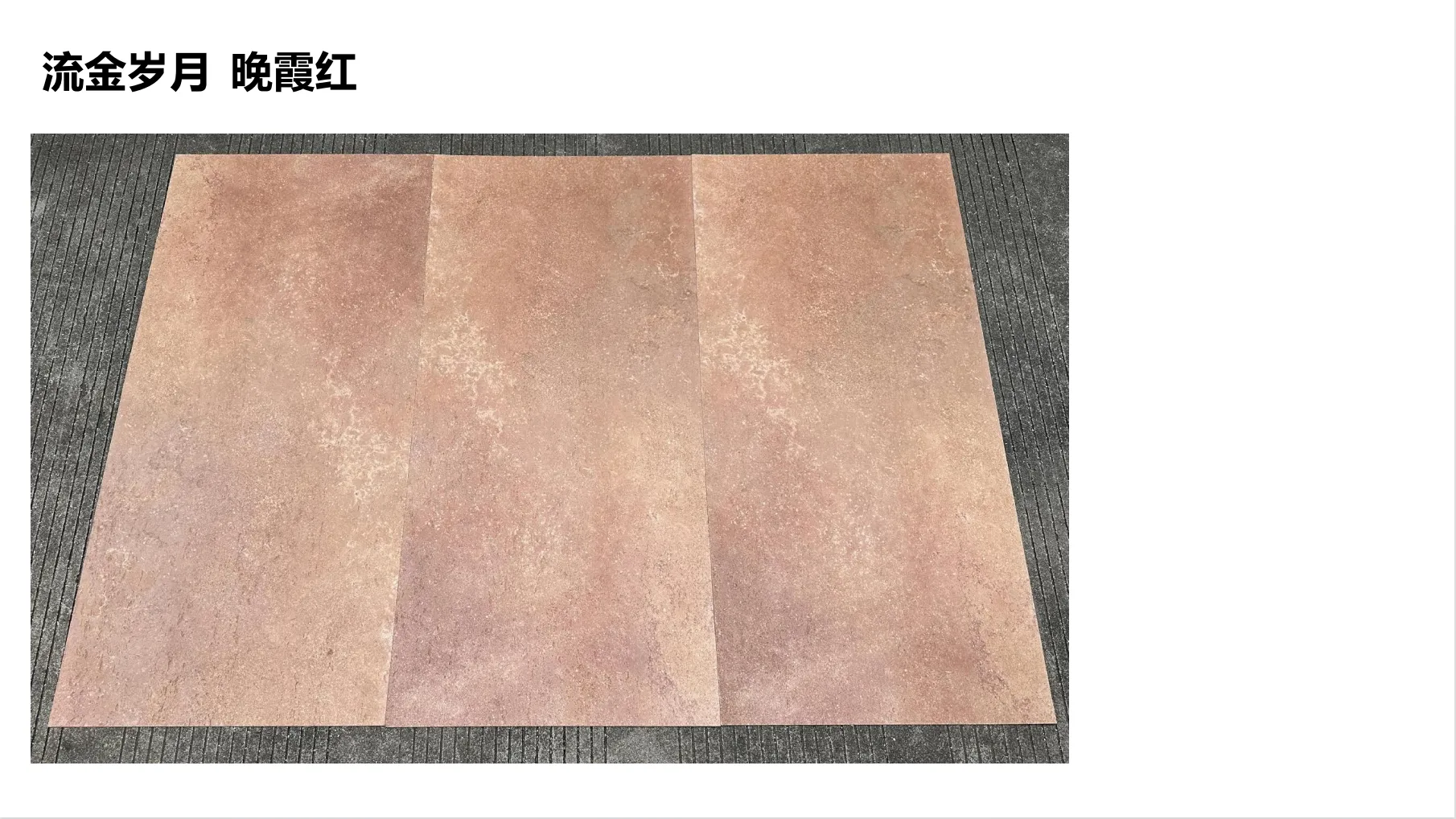
Travertine has been used in architecture for millennia, from the Colosseum to the Hagia Sophia. But natural travertine is porous, making it a magnet for desert sand and moisture. Travertine (vintage gold) reimagines this classic material for the 21st century. Its surface is sealed with a nano-coating that repels water and sand, while the vintage gold hue is embedded deep within the material, not just painted on. This means no fading, even after years of direct sunlight.
"I visited a villa in Riyadh last month that used vintage gold travertine on its outdoor patio," Hassan recalls. "The owner told me they hose it down once a month, and it looks brand new. No sand buildup in the pores, no discoloration—just that same warm, golden glow. Natural travertine would have needed acid washing every six months, which eats away at the stone over time. This stuff? It's low-maintenance luxury."
Metal might seem like a risky choice in the desert—after all, metal conducts heat, right? Not foamed aluminium alloy board (vintage gold) . This innovative material is made by injecting air bubbles into aluminum alloy during manufacturing, creating a lightweight, insulating core. The result? A panel that reflects up to 70% of solar radiation, keeping building interiors cooler and reducing air conditioning costs. The vintage gold finish, achieved through anodization (a process that bonds color to the metal's surface), is scratch-resistant and fade-proof—perfect for facades that face the full brunt of the sun.
"We specified foamed aluminium alloy for the exterior of a commercial complex in Khobar," says Al-Mansoori. "The client was worried about energy bills, so we did a test: one section with traditional aluminum cladding, one with MCM's vintage gold foamed alloy. After a year, the MCM section had 30% lower cooling costs. And aesthetically? The gold panels catch the light beautifully at sunrise and sunset, making the building look like it's glowing. Clients stop us in the lobby to ask about it—it's become a talking point."
Not all Golden Faith products shout "gold"—some whisper, and none do it better than fair-faced concrete . This raw, unpolished concrete finish has become a favorite for modernist projects, where simplicity and texture take center stage. But MCM's version isn't your average concrete: it's reinforced with fiberglass to prevent cracking from thermal expansion, and its surface is treated to resist staining from sand and oil. In the desert, where monochromatic palettes can feel harsh, fair-faced concrete adds depth and contrast, pairing beautifully with vintage gold accents.
"We used fair-faced concrete with vintage gold travertine accents on a cultural center in Medina," says Hassan. "The concrete provides a neutral backdrop, while the gold adds warmth. Even after four years, the concrete hasn't developed hairline cracks—something that's common with traditional concrete in temperature swings. It's a testament to how MCM engineers materials to work with the climate, not against it."
When MCM talks about "Golden Faith real photos," they're not just sharing pretty snapshots. These images—taken at construction sites, finished buildings, and even after years of exposure—are evidence. They show travertine (vintage gold) facades that still glow after five summers. They capture foamed aluminium alloy boards that haven't dented, even after a sandstorm. They document flexible stone that's still clinging to curved walls, no peeling or lifting in sight. For architects and clients, these photos are more than marketing—they're reassurance.
"I used to show clients samples in the office, but they'd say, 'That looks great, but will it look like that in the desert?'" Al-Mansoori laughs. "Now, I show them real photos of projects we completed three, four, five years ago. A hotel in Abha, a residential complex in Riyadh—same color, same texture. That's when they believe. Photos don't lie, especially when they're taken in the same harsh conditions they'll face."
| Material | Durability in Desert Climate (1-10) | Heat Resistance | Maintenance Needs | Aesthetic Retention (5-Year Test) |
|---|---|---|---|---|
| Natural Limestone | 4 | Poor (absorbs heat, fades) | High (frequent cleaning, sealing) | Significant fading, sand trapping |
| Traditional Wood | 3 | Very Poor (warps, rots) | Very High (annual refinishing) | Severe warping, discoloration |
| Standard Aluminium Cladding | 6 | Moderate (conducts heat) | Medium (fingerprints, scratches) | Minor fading, visible scratches |
| MCM Flexible Stone | 9 | Excellent (reflective, heat-resistant core) | Low (hose down monthly) | No fading, no cracking |
| Travertine (Vintage Gold) | 9.5 | Excellent (sealed surface, UV-resistant color) | Low (occasional cleaning) | Color retention 95%, no sand buildup |
| Foamed Aluminium Alloy (Vintage Gold) | 10 | Exceptional (reflects 70% solar radiation) | Very Low (no sealing needed) | No fading, scratch-resistant finish |
| Fair-Faced Concrete (MCM) | 9 | Good (insulating, no heat absorption) | Low (resistant to staining) | No cracking, texture retention |
To truly understand Golden Faith's impact, look no further than the Al-Nour Tower, a 30-story mixed-use building in Riyadh's financial district. Completed in 2020, the tower's facade combines foamed aluminium alloy board (vintage gold) with travertine (vintage gold) accents and fair-faced concrete. Five years on, it's become a landmark—not just for its height, but for how it's weathered the desert.
"The client wanted a building that would stand out, even in Riyadh's skyline," says Al-Mansoori, who led the design team. "But they also wanted it to be low-maintenance. We proposed Golden Faith because we knew the materials could handle the heat and sand. Today, the vintage gold panels still reflect the sun like mirrors, and the travertine accents haven't faded a bit. The facility manager told me they've spent less than 5% of the maintenance budget they allocated for traditional materials. That's a win-win."
The real photos of Al-Nour Tower tell the story: a 2020 shot shows the tower gleaming, fresh and new. A 2025 photo, taken from the same angle, shows… almost no difference. The gold is still warm, the concrete still crisp, the travertine still rich. It's a visual testament to MCM's promise: beauty that lasts.
In Saudi Arabia, architecture isn't just about function—it's about identity. Gold has deep roots in the region's culture, from traditional jewelry to the golden domes of mosques. The Golden Faith series taps into this heritage, offering materials that feel both modern and familiar. "When we present vintage gold travertine to clients, they often say, 'That looks like home,'" says Hassan. "It's not just a color—it's a feeling. And knowing that feeling won't fade, even after years in the desert, makes it that much more special."
Take the travertine (starry gold) variant, which features subtle metallic flecks that catch the light, mimicking the night sky over the Empty Quarter. Or the foamed aluminium alloy board (vintage gold) , which echoes the warm tones of traditional brass lanterns. These details aren't accidental—they're intentional, designed to bridge the gap between global design trends and local culture.
In the desert, time is measured in sunrises and sandstorms. Traditional materials see time as an enemy; MCM's Golden Faith series sees it as a collaborator. From mcm flexible stone that bends with the wind to travertine (vintage gold) that glows with age, these products are more than building materials—they're a promise. A promise that beauty doesn't have to be fragile, that durability doesn't have to be dull, and that in the harshest of climates, something golden can endure.
So the next time you see a Golden Faith real photo—a facade glowing in the Saudi sun, a texture that looks as fresh as the day it was installed—remember: it's not just a picture. It's a story of resilience, of innovation, and of a material revolution that's changing how we build in the desert. And in a land where the desert has shaped civilizations for millennia, that's a story worth telling.
Recommend Products












