
Choosing the right material for your building or renovation project is like picking the perfect outfit for a special occasion—you want it to look stunning, feel comfortable, and stand the test of time. For decades, traditional stone has been the "little black dress" of architecture: reliable, elegant, and always in style. But here's the thing—even the most timeless classics can start to feel limiting. Heavy, hard to work with, and prone to wear and tear, traditional stone often leaves us asking: Is there a way to have beauty without the hassle? Enter COLORIA MCM Flexible Stone. Today, we're diving deep into why this innovative material, especially the showstopping Golden Faith Real Photos series, is redefining what's possible in architecture and design.
Let's start with the obvious: traditional stone is breathtaking. Walk into any historic cathedral, ancient temple, or luxury villa, and you'll see why it's been a cornerstone of design for millennia. The natural veining of marble, the rugged texture of granite, the warm glow of travertine—these materials tell stories of the earth itself. They're durable, too; some stone structures have stood for centuries, weathering storms and time with grace.
But if you've ever worked with traditional stone up close, you know the fairy tale fades a bit. Let's talk about the not-so-glamorous side. First, there's the weight. A single slab of granite can weigh over 200 pounds, and marble isn't much lighter. That means hiring specialized installers, reinforcing floors or walls to support the load, and paying extra for transportation (those delivery trucks aren't cheap!). I once spoke to a contractor friend who told me about a kitchen renovation where the homeowners insisted on a massive marble backsplash. By the time they reinforced the wall studs and brought in a crane to lift the slab, the project costs ballooned by 30%. Ouch.
Then there's the brittleness. For all its durability, traditional stone is surprisingly fragile. drop a hammer on a granite countertop, and you might end up with a hairline crack that's impossible to fix. Spill red wine on travertine and forget to seal it? Stains become permanent. And if you live in an area with temperature swings, freeze-thaw cycles can cause stone to chip or flake over time. One homeowner I know spent $5,000 on a natural stone patio, only to replace half the slabs after three harsh winters.
Maintenance is another headache. Most natural stones need to be sealed every 1-3 years to prevent staining, and even then, they're not impervious. Acidic substances like lemon juice or vinegar can etch the surface of marble, leaving dull spots. And let's not forget the design limitations. Want a curved wall or a custom 3D texture? Traditional stone is hard, rigid, and unforgiving. Cutting it into complex shapes requires specialized tools and often results in wasted material—and wasted money.
"We loved the look of natural limestone for our fireplace, but after it cracked during installation and stained within months, we realized we'd traded long-term practicality for short-term beauty." — Sarah, a homeowner in Chicago
Don't get me wrong—traditional stone has its place. But in a world where we crave both aesthetics and functionality, it's clear we need something that marries the best of nature with modern innovation. That's where COLORIA MCM Flexible Stone comes in.
MCM stands for Modified Composite Material, and it's exactly what it sounds like: a blend of natural stone aggregates (think crushed marble, granite, or travertine) and high-performance polymers that create a material that's both strong and flexible. Imagine taking all the beauty of natural stone—the texture, the color, the depth—and wrapping it in a lightweight, bendable, practically indestructible package. That's MCM Flexible Stone in a nutshell.
COLORIA, a leader in this technology, has spent years perfecting the formula. Their MCM panels are just 3-5mm thick, weigh a fraction of traditional stone (about 3-5 pounds per square foot, compared to 15-20 pounds for natural stone), and can bend up to 30 degrees without cracking. Let that sink in: a material that looks like real stone but can curve around columns, wrap over arches, or even be used on ceilings without fear of collapse. It's like giving stone a yoga lesson—and it aced the class.
But what really sets COLORIA apart is their commitment to aesthetics. They don't just replicate stone—they elevate it. Take their 3D Printing Series, for example. Using advanced 3D printing technology, they can create textures that traditional stone cutting could never achieve: intricate geometric patterns, organic waves, even custom designs tailored to a client's vision. A designer I know used the 3D Printing Series to create a feature wall that mimics the ripples of a mountain stream; the client thought it was hand-carved marble until she touched it and realized how lightweight it was.
Fun fact: COLORIA MCM panels are made with up to 80% natural stone aggregates, so they're not just a "fake" alternative—they're a smarter way to use the earth's resources. By combining stone with recycled polymers, they reduce waste from traditional quarrying and cutting, making them a greener choice, too.
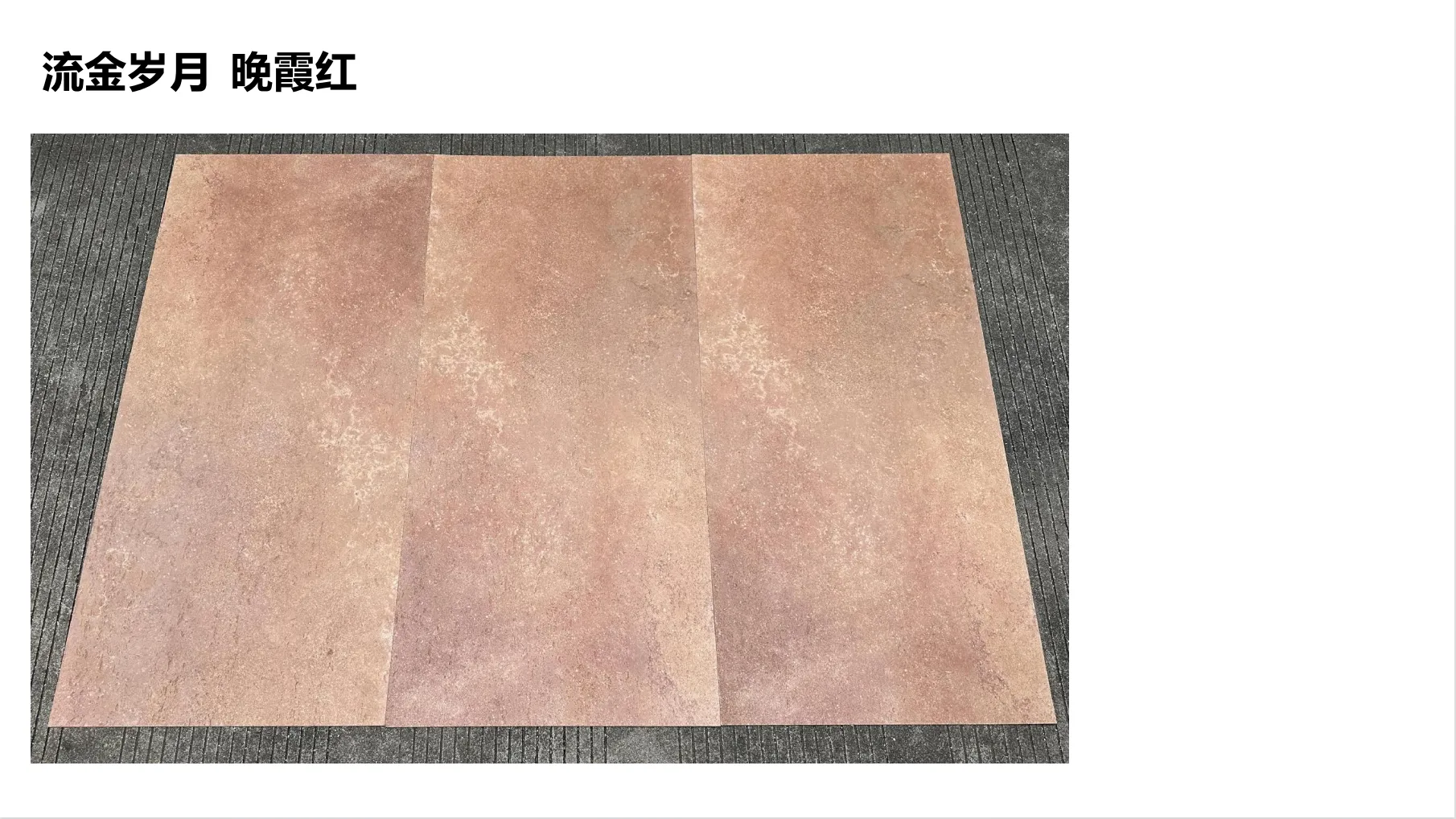
Now, let's talk about the star of the show: Golden Faith Real Photos. If traditional golden travertine is a classic oil painting, Golden Faith Real Photos is a high-definition masterpiece. From the moment you lay eyes on it, you're struck by the richness of the color—a warm, radiant gold that shimmers in the light, with subtle veining that looks like liquid sunlight frozen in stone. But here's the kicker: the "Real Photos" name isn't just marketing. COLORIA uses advanced digital scanning to capture the exact texture and color of natural golden stone, then replicates it with pinpoint accuracy across every panel. No more guessing if the sample will match the final product—what you see in the photos is exactly what you get.
I visited a COLORIA showroom last year and ran my hand over a Golden Faith panel. I expected it to feel synthetic, but instead, the texture was surprisingly authentic—slightly rough to the touch, with the same porous, natural feel as travertine. The sales rep told me that's because they use real stone dust in the mix, so the tactile experience is identical to the real thing. But when she picked up the panel with one hand and bent it slightly, my jaw dropped. A traditional golden travertine slab that size would have required two people to lift, and bending it would have shattered it into pieces.
One of the most impressive things about Golden Faith Real Photos is its versatility. It works indoors and out, in residential and commercial spaces. A luxury hotel in Dubai used it for their lobby walls, pairing it with warm lighting to create a grand, welcoming atmosphere that guests often mistake for real gold travertine. A homeowner in California installed it as an outdoor kitchen backsplash; after two years of rain, sun, and barbeque grease, it still looks brand new. No sealing, no staining, no chips—just that same golden glow.
Compare that to traditional golden travertine. I've seen travertine patios that, after a few seasons, start to fade to a dull beige, or develop mold in the pores that's impossible to scrub away. Golden Faith, on the other hand, is treated with a UV-resistant coating that prevents fading, and its non-porous surface (thanks to that polymer binding) repels water, mold, and stains. Wipe it down with a damp cloth, and it's good as new. It's like having a stone that's as low-maintenance as a vinyl floor but looks like it belongs in a palace.
While Golden Faith Real Photos is a showstopper, it's just one star in COLORIA's constellation. Their MCM Big Slab Board Series deserves a spotlight, too. If you've ever dreamed of seamless, floor-to-ceiling stone walls without the grout lines or seams, this is your answer. Traditional stone slabs max out at around 5 feet in length (anything bigger is too heavy to transport or install), but COLORIA's Big Slab Series offers panels up to 10 feet long and 4 feet wide. That means fewer joints, a cleaner look, and a sense of spaciousness that small slabs can never achieve.
A restaurant owner in New York City used the Big Slab Series for their main dining room wall, choosing a sleek, dark gray dolomitic travertine finish. The result? A wall that looks like a single, continuous slab of stone, making the room feel larger and more luxurious. And because the panels are lightweight, they installed it in a day—no need for structural reinforcements or heavy machinery. The owner told me the feedback from customers has been incredible: "People keep asking if it's real stone. When I tell them it's flexible, they don't believe me until I press on the wall and it gives a little."
Another advantage of the Big Slab Series is consistency. Traditional stone slabs vary in color and veining—no two are exactly alike. That can be charming in some contexts, but if you're going for a uniform look (say, a corporate office lobby), it's a nightmare. COLORIA's panels are color-matched and textured identically, so every slab looks like a mirror image of the last. No more stressing over whether the third pallet of stone will clash with the first.
Still on the fence? Let's break it down side by side. Here's how traditional stone stacks up against COLORIA MCM Flexible Stone in the categories that matter most:
| Feature | Traditional Stone | COLORIA MCM Flexible Stone |
|---|---|---|
| Weight | Heavy (15-20 lbs/sq ft); requires structural reinforcement | Lightweight (3-5 lbs/sq ft); no reinforcement needed |
| Flexibility | Rigid; cracks under bending or impact | Flexible; bends up to 30 degrees without damage |
| Installation | Needs specialized labor and tools; time-consuming (days to weeks) | DIY-friendly (with basic tools); installs in hours to days |
| Maintenance | Requires sealing every 1-3 years; stains and scratches easily | No sealing needed; wipes clean with water; stain-resistant |
| Design Flexibility | Limited to flat or simple curves; complex shapes require custom cutting (expensive!) | Can be bent, curved, or 3D-printed into any shape; perfect for unique designs |
| Cost (Total) | High upfront (stone + delivery + installation + reinforcement) + ongoing maintenance costs | Lower upfront (material + easy installation) + minimal maintenance; saves money long-term |
| Sustainability | Quarrying disrupts ecosystems; high waste from cutting | Uses recycled materials; reduces quarrying; 100% recyclable at end of life |
Don't just take my word for it—let's hear from people who've made the leap from traditional stone to COLORIA MCM Flexible Stone.
Case Study 1: The Historic Home Renovation
Maria and James own a 1920s bungalow in Boston with original stone fireplace. When they decided to renovate the living room, they wanted to extend the stone look to the adjacent accent wall but worried about adding weight to the old structure. "We were told traditional stone would require reinforcing the floor joists, which would mean ripping up the hardwood floors we'd just refinished," Maria recalls. "Then we found COLORIA's Golden Faith Real Photos. We installed the panels ourselves over a weekend, and you can't tell where the original stone ends and the MCM begins. It's lightweight, so no structural work needed, and it looks even better than we imagined."
Case Study 2: The Commercial Office Build-Out
A tech startup in San Francisco wanted their new office to feel modern and innovative, with a "natural meets tech" vibe. They initially planned to use marble for the reception area, but the budget was tight. "Traditional marble was going to cost $25,000 for materials and installation alone," says the company's facilities manager, Alex. "COLORIA's Big Slab Series in Marble Interstellar Gray came in at $8,000, and we installed it in a day. The team loves it—it looks high-end, and we saved enough money to invest in better office furniture. Plus, when we move to a bigger space in a few years, we can take the panels with us and reuse them. Try doing that with real marble!"
At the end of the day, building materials shouldn't hold you back—they should inspire you. Traditional stone has earned its place in history, but it's time to stop letting its limitations dictate our designs. COLORIA MCM Flexible Stone, with stars like Golden Faith Real Photos and the Big Slab Series, isn't just a replacement for stone—it's a upgrade. It's lighter, stronger, more beautiful, and more sustainable. It's stone that bends, not breaks. Stone that looks like a million bucks but costs a fraction. Stone that works as hard as you do.
Whether you're building a new home, renovating a kitchen, or designing a commercial space, the question isn't Should I use stone? It's Why settle for traditional stone when I can have COLORIA? The future of architecture is flexible—and it's golden.
Recommend Products












