
Let's start with a moment we've all felt: standing in a space that feels alive . Maybe it's a sunlit café with walls that seem to breathe, or a community center where the texture of the cladding makes you want to reach out and touch it. These spaces don't just exist—they connect with us, because they're built with intention. But for architects, designers, and builders, creating that magic while staying true to sustainability? It's often felt like walking a tightrope. We want materials that honor the planet, but we also crave beauty, durability, and flexibility. What if there was a solution that didn't make us choose?
Enter MCM—Modified Composite Material. It's not just a product; it's a promise. A promise that we can build spaces that awe us and protect the earth. Over the past decade, MCM has quietly revolutionized the construction industry, and today, we're diving into why it's not just a trend, but the future. We'll explore the stories behind its most innovative lines—from the starry glow of travertine to the earthy warmth of rammed earth—and how they're turning "sustainable" from a buzzword into something tangible, something you can see, touch, and live with.
Think about the last time you walked into a "green" building. Maybe it was efficient, but did it make your heart skip a beat? For too long, sustainable materials have been boxed into a narrow aesthetic: stark, utilitarian, or so expensive they're out of reach for most projects. Natural stone is beautiful but heavy, requiring massive energy to quarry and transport. Traditional concrete? Durable, but carbon-intensive. Wood? Warm, but vulnerable to rot and pests. And if you wanted something flexible—say, a curved wall or a lightweight facade? Forget it. Sustainability often meant sacrificing design freedom, and that's a trade-off no creator should have to make.
I spoke with Lila, an architect in Portland, who summed it up perfectly: "I once designed a community library with the goal of using 100% recycled materials. We settled on reclaimed wood, but within a year, it warped in the rain. The budget ballooned for repairs, and the clients were disappointed. I left that project feeling like I'd failed—not just them, but the planet. I thought, 'Is this really the best we can do?'"
It wasn't. Because MCM was already being developed to answer that very question.
At its core, MCM is a blend of natural minerals, recycled polymers, and reinforcing fibers, engineered to mimic the look and feel of traditional materials—stone, wood, concrete—without their drawbacks. It's lightweight (up to 80% lighter than natural stone), flexible (it can bend without breaking), and designed to last for decades with minimal maintenance. But what truly sets MCM apart is its soul. It's not just about "reducing carbon footprints"—though it does that brilliantly. It's about connection : to nature, to history, to the people who will use these spaces for generations.
Take, for example, the way MCM captures texture. Run your hand over a slab of MCM flexible stone, and you'll feel the same grooves and grains as natural limestone, but without the weight that crushes foundations. Or look at a foamed aluminium alloy board in vintage silver—its metallic sheen shimmers like aged metal, but it's so light a single person can carry a 4x8 sheet. MCM doesn't just imitate nature; it elevates it, making the extraordinary accessible.
Fun fact: MCM's production process uses up to 60% recycled materials and emits 70% less CO2 than traditional cladding. That's not just a statistic—it's a choice to build smarter, not harder.
MCM isn't a one-size-fits-all solution. Its magic lies in its diversity, with lines designed to suit every vision. Let's meet the standouts—the materials that are turning heads (and projects) around the world.
Imagine a material that can curve around a spiral staircase, wrap a cylindrical column, or even climb a rounded arch—all while looking like solid stone. That's MCM flexible stone. Traditional stone is rigid; bend it, and it cracks. But MCM flexible stone? It has the tensile strength of a polymer and the soul of natural rock. I visited a boutique hotel in Barcelona last year that used it for their lobby's curved accent wall. The designer, Carlos, told me, "We wanted the space to feel like a cave—warm, organic, protective. With natural stone, that would have required custom-cutting hundreds of pieces, costing a fortune and creating tons of waste. MCM flexible stone? We rolled it out like a carpet, trimmed it on-site, and installed it in two days. The guests run their hands over it like it's a living thing."
Available in a spectrum of finishes—from the rough-hewn texture of "rough granite stone (medium grey)" to the smooth elegance of "polish concrete"—it's proof that flexibility doesn't mean sacrificing character. And because it's so lightweight, it reduces the load on buildings, cutting down on structural costs and energy use during construction. For Lila, the architect from Portland, it's a game-changer: "I just finished a community center with a curved facade using MCM flexible stone. The kids call it 'the wave wall'—they run their fingers along it every morning. That's the power of design that bends, not breaks."
Travertine has been a staple in architecture for millennia—think the Colosseum, the Roman Forum. It's timeless, with its porous surface and warm tones. But MCM's take on travertine? It's not just timeless—it's otherworldly . Enter "travertine (starry green)": a finish that mimics the look of travertine, but with tiny, iridescent flecks that catch the light like stars in a dark forest. It's not glittery or gaudy; it's subtle, like moonlight on moss.
Maria, a designer in Kyoto, used it for a tea house overlooking a bamboo grove. "The clients wanted a space that felt connected to the night sky," she said. "During the day, the starry green travertine looks earthy, almost muted. But at dusk, when the lanterns come on? The flecks glow, like someone scattered stardust across the walls. It's magic. And because it's MCM, we didn't have to import heavy stone from Italy—we sourced it locally, and it cost a third of the price."
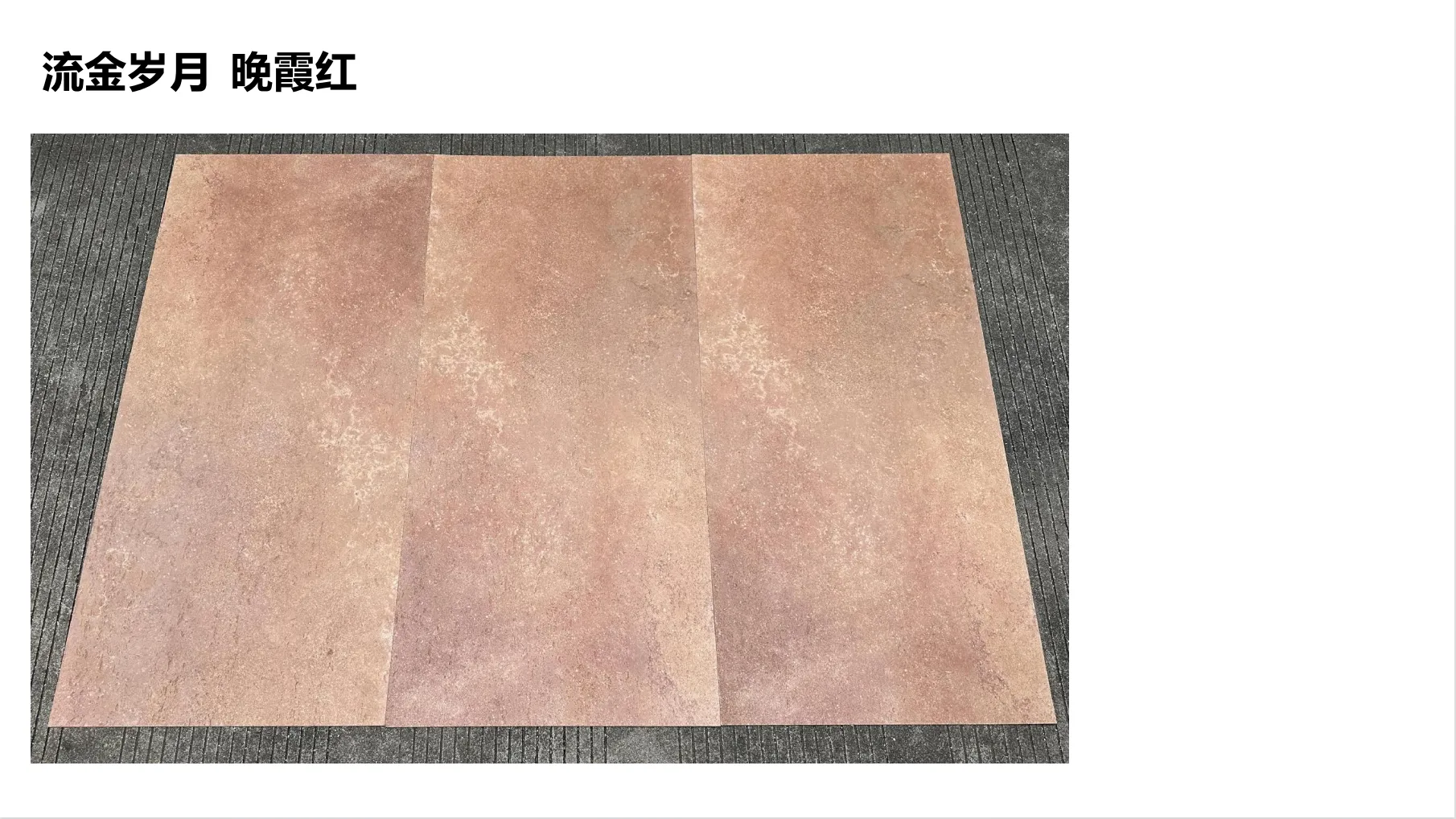
Starry green isn't alone in the travertine family, either. There's starry red (evoking a sunset over canyons), starry orange (like autumn leaves), and starry blue (the calm of a twilight ocean). Each one tells a story, and each one is made with 40% recycled materials, including crushed glass from old windows. It's sustainability with a side of wonder—and isn't that what we all want?
If travertine whispers "history," foamed aluminium alloy board shouts "innovation"—but with a retro twist. Available in vintage silver, vintage gold, and bold gold, these panels are lightweight (seriously—you could carry one under your arm), corrosion-resistant, and 100% recyclable. They're the perfect marriage of industrial edge and old-world charm.
I toured a brewery in Detroit last month that used foamed aluminium alloy board (vintage silver) for their exterior. The building, a repurposed factory, needed a material that matched its gritty heritage but wouldn't rust in the Michigan snow. "We wanted that 'aged metal' look without the maintenance," said the owner, Jake. "Traditional aluminium would have been too shiny, too new. But this? It has that patina, like it's been there for 100 years. And when the sun hits it? It glows like a beacon. We've had locals tell us it's become their favorite landmark."
What's even cooler? The foam core of these boards is made from recycled aluminium cans—over 500 cans go into a single 4x8 panel. That's not just recycling; that's turning waste into art. And because they're so light, installing them requires fewer workers and less equipment, slashing construction time and emissions. For commercial projects, that's not just good for the planet—it's good for the bottom line.
Rammed earth is one of the oldest building techniques on the planet—think the Great Wall of China, or the adobe homes of the American Southwest. It's earthy, tactile, and deeply grounding. But traditional rammed earth is heavy, labor-intensive, and prone to cracking in humid climates. MCM's rammed earth board? It's all the warmth, none of the hassle.
Available in a range of hues—from "matcha green" (soft, like spring moss) to "gradient B" (swirls of terracotta and sand)—these boards are made by compressing recycled earth minerals and polymers, creating a texture that looks hand-packed by artisans. Sarah, a homeowner in Santa Fe, used rammed earth board (gradient C) for her living room walls. "I grew up in a traditional adobe house, and I missed that earthy feel," she told me. "But when I learned traditional rammed earth would require reinforcing the foundation and constant sealing? I almost gave up. Then I found MCM's version. Now, my walls have that same warm, sun-baked color, but they're moisture-resistant and lightweight. My kids even help me dust them—they say it feels like hugging the earth."
And here's the kicker: MCM rammed earth board uses 85% recycled soil and minerals, diverting waste from landfills. It also has natural thermal insulation properties, keeping homes cooler in summer and warmer in winter—slashing energy bills. It's not just a material; it's a bridge between ancient wisdom and modern innovation.
Concrete has long been the workhorse of construction—strong, versatile, and iconic in its simplicity. But traditional concrete is a carbon heavyweight, responsible for about 8% of global CO2 emissions. Enter MCM's fair-faced concrete: the same raw, industrial look, but with a fraction of the environmental impact.
Fair-faced concrete (or "exposed concrete") is celebrated for its unadorned beauty—the way light plays on its subtle imperfections, the way it ages gracefully, developing a patina over time. MCM's version captures that perfectly, with a matte finish that feels soft to the touch (no rough, splintery edges here). And because it's MCM, it's lightweight, so it can be used for everything from accent walls to furniture. "I designed a co-working space using fair-faced concrete panels," said Raj, a designer in Chicago. "The clients wanted that 'loft vibe'—raw, authentic, no frills. But they also wanted to be LEED-certified. MCM's fair-faced concrete checked both boxes. It looks like we poured it on-site, but it weighs nothing compared to real concrete. The building's energy use is 30% lower than similar spaces, and the team loves working there—they say it feels 'honest.'"
MCM fair-faced concrete uses recycled aggregates and a low-carbon binder, cutting its carbon footprint by 60% compared to traditional concrete. It's also mold-resistant and easy to clean, making it ideal for high-traffic areas. For anyone who loves the industrial aesthetic but hates the environmental cost? This is your answer.
Words are powerful, but let's get concrete (pun intended). Here's how MCM's most popular lines compare when it comes to sustainability, durability, and design flexibility:
| Product | Key Features | Sustainability Highlights | Top Applications |
|---|---|---|---|
| MCM Flexible Stone | Bendable (up to 90°), mimics natural stone texture, lightweight (4-6kg/m²) | 60% recycled materials, 70% less CO2 than natural stone | Curved facades, accent walls, furniture |
| Travertine (Starry Green) | Iridescent "star" flecks, porous texture, available in 6 starry colors | 40% recycled glass, locally sourced minerals | Hotels, restaurants, feature walls |
| Foamed Aluminium Alloy Board (Vintage Silver) | Lightweight (2-3kg/m²), corrosion-resistant, vintage metallic finish | 100% recyclable, made from recycled aluminium cans | Commercial exteriors, signage, art installations |
| Rammed Earth Board (Gradient B) | Earthy gradient colors, hand-packed texture, thermal insulation | 85% recycled soil/minerals, natural temperature regulation | Residential walls, wellness centers, eco-resorts |
| Fair-Faced Concrete | Matte finish, industrial aesthetic, mold-resistant | 60% lower carbon footprint than traditional concrete, recycled aggregates | Co-working spaces, retail stores, public buildings |
Numbers tell part of the story, but projects tell the rest. Let's visit three spaces transformed by MCM—and the people who brought them to life.
When the city of Austin wanted to build a community center in a low-income neighborhood, they had two goals: make it a safe, joyful space for kids, and use 100% sustainable materials. The result? A building wrapped in travertine (starry blue) and MCM flexible stone. "The kids here don't have a lot of green space, so we wanted the center to feel like a piece of the sky," said project manager Elena. "The starry blue travertine panels catch the sunlight during the day and glow under LED lights at night. The kids call it 'the spaceship building.' And because MCM is so lightweight, we could add a rooftop garden without reinforcing the structure—now they grow vegetables up there. It's not just a building; it's a place where they feel like they belong."
Remember Lila, the architect who struggled with the library project? Her latest build is a 3,000 sq ft home using rammed earth board (matcha green) and foamed aluminium alloy board (vintage gold). "The clients wanted a home that felt 'rooted' but modern," she said. "The rammed earth walls bring the outside in—warm, earthy, like living in a cave with windows. The vintage gold aluminium accents add a touch of luxury without feeling flashy. And the best part? The home's energy bills are 40% lower than the neighborhood average. The clients told me, 'We don't just live here—we thrive here.' That's the dream, right?"
Raj's co-working space, mentioned earlier, has become a local sensation. With fair-faced concrete walls and MCM flexible stone accents, it's a blend of raw and refined. "We have startups here, artists, even a yoga studio," Raj laughed. "The fair-faced concrete walls absorb sound, so it's never too noisy, and the flexible stone accents add warmth. People stay longer, collaborate more—they say the space 'feels productive but not sterile.' And because we used MCM, we got our LEED Platinum certification in 6 months. The owners are already planning a second location."
Sustainability isn't about sacrifice. It's about reimagining what's possible. MCM does that by proving that we can build spaces that honor the planet and our desire for beauty, connection, and joy. It's not just a material; it's a movement—one that says, "We can do better, and we can do it together."
So the next time you walk into a space that takes your breath away, pause. Look closer. Maybe it's MCM—quietly working, making magic. And maybe, just maybe, it's a sign of what's to come: a world where every building tells a story of respect—for the earth, for the people who build it, and for the generations who will call it home.
Golden Faith Real Photos captures this vision perfectly—not just through images, but through the stories of the people who use these materials. Because at the end of the day, sustainability isn't about numbers on a page. It's about the kid touching the wave wall, the family growing vegetables on the rooftop, the artist finding inspiration in a starry green accent wall. That's the future MCM is building. And it's beautiful.
Recommend Products












