
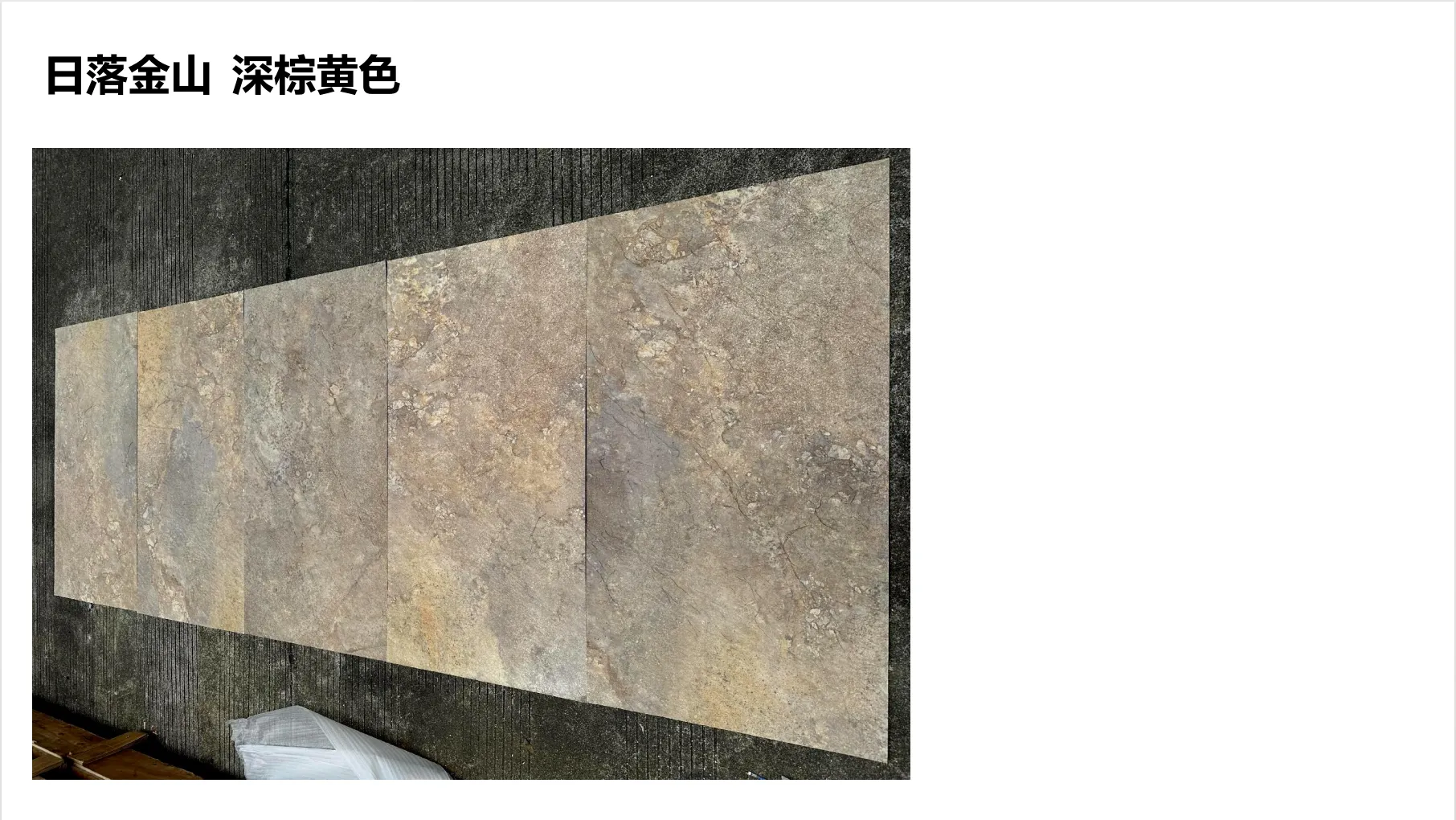
Walk through any city, and you'll notice a pattern: most buildings wear their exteriors like stiff suits. Brick, concrete, stone—these materials are reliable, but they're also static. They don't shift with the light, don't warm up when the sun sets, don't whisper the way a sunset does. Traditional cladding locks buildings into a single story, while the sky outside writes a new one every evening. That disconnect always felt like a missed opportunity to me. Why shouldn't our homes and offices reflect the beauty of the world outside them? Why can't a wall feel as alive as the sky it faces?
I remember visiting a coastal town last year where a new community center had just opened. From a distance, its facade looked ordinary—tan and unassuming. But as I approached, the late afternoon sun hit it, and something extraordinary happened. The panels began to glow, shifting from pale gold to rich amber, with flecks of orange that seemed to dance across the surface. It was like watching a sunset frozen in time, but better—it was
interactive
. Kids pointed up, elders smiled, and even the seagulls seemed to pause. That building wasn't just a structure; it was a conversation starter. Later, I learned it was clad in
To understand why these panels are game-changers, let's start with the basics. MCM stands for Modified Composite Material—a blend of natural minerals, recycled polymers, and reinforcing fibers that's lightweight, durable, and surprisingly flexible. Traditional stone or concrete cladding can weigh hundreds of pounds per square foot, limiting design possibilities and adding structural strain. MCM, by contrast, weighs a fraction of that, which means architects can dream bigger: curved walls, undulating facades, even panels that wrap around corners without cracking. But the real magic? 3D printing.
3D printing isn't new, but applying it to MCM is. Instead of stamping out uniform panels, the MCM 3D printing series builds them layer by layer, like a sculptor adding clay to a masterpiece. This precision lets designers create textures and patterns that were once impossible: micro-ridges that catch the last light of day, color gradients that shift from top to bottom (mimicking the way a sunset fades from sky to horizon), and even tiny indentations that act like prisms, scattering light into warm, golden hues. It's not just manufacturing—it's artistry with a purpose.
At the heart of this innovation is
They say a picture is worth a thousand words, but
One photo, taken at a restaurant in Barcelona, sticks in my mind. The building's exterior is wrapped in Golden Sunset panels, and as the sun sets, the dining patio is bathed in the same warm light. Patrons aren't just looking at the sunset—they're sitting inside it. The panels reflect the sky's colors onto the tables, the chairs, the faces of people laughing over tapas. It's intimate, like bringing the sunset indoors without a single window. That's the power of these photos: they don't just document the panels—they document how they transform spaces into something emotional.
Golden Sunset panels don't work alone—they're part of a family of materials designed to capture the full spectrum of sunset magic. Let's meet a few of the key players:
If Golden Sunset is the star of the show,
Sunset isn't just about color—it's about texture. As the sun dips lower, the sky often fills with tiny particles of dust or moisture that catch the light, creating a sprinkle of sparkles.
We've touched on this, but it's worth repeating: none of this would be possible without MCM flexible stone. Imagine trying to print a gradient sunset onto a rigid concrete slab—it would crack, or the colors would bleed, or the texture would feel forced. MCM flexible stone bends with the design, letting gradients flow smoothly and textures sit naturally. It's lightweight enough to be installed on high-rises (no need for extra structural support) and durable enough to last for decades, even in harsh climates. For architects, that means peace of mind—they can designly without worrying about the material failing.
| Material | Role in Sunset Design | Key Feature |
|---|---|---|
| Golden Sunset | Base color, mimics sunset gradients | 3D-printed color transitions (gold → orange → terracotta) |
| Lunar Peak Golden | Accent, horizon glow | Subtle metallic sheen, warm gold hue |
| Travertine (Starry Orange) | Texture, dusk sparkles | Micro-indentations that reflect light like stars |
| MCM Flexible Stone | Base material | Lightweight, flexible, weather-resistant |
Enough about materials—let's talk about real-world impact. Where are these panels being used, and how are they changing the way we experience buildings?
Remember that community center I mentioned earlier? Let's dive deeper. The architects wanted to create a space that felt like an extension of the beach—where locals could gather, watch the sunset, and feel connected to the natural world. They chose Golden Sunset panels for the main facade, paired with Lunar Peak Golden accents and Travertine (Starry Orange) around the entrance. The result? A building that transforms throughout the day. In the morning, it's a soft, neutral presence. By afternoon, it starts to warm up. And at sunset? It becomes the center of attention. Families bring blankets, photographers set up tripods, and even the local barista has started offering "sunset specials" because everyone wants to be there when the magic happens.
Hotels often struggle to stand out—how do you make a guest feel like they're somewhere special, not just another room? One boutique hotel in Arizona solved that problem by using Golden Sunset panels in its lobby. The walls are curved (thanks to MCM flexible stone) and clad in the panels, which wrap around the space like a hug. Even on cloudy days, the panels retain their warm hue, making the lobby feel cozy and inviting. But when the sun sets over the desert, the magic happens: the panels reflect the sky's colors, turning the lobby into a kaleidoscope of gold and orange. Guests don't just take photos of the sunset—they take photos inside the hotel , because the lobby itself has become part of the sunset experience.
Golden Sunset panels and the MCM 3D printing series are just the beginning. As technology improves, the possibilities are endless. Imagine panels that adjust their color based on the season—deeper reds for autumn sunsets, softer pinks for spring. Or panels embedded with tiny LEDs that enhance the sunset effect on cloudy days, ensuring the magic never fades. Some designers are even experimenting with "sunset mapping," where panels are customized to replicate the exact colors of a specific sunset (say, the sunset on your wedding day, or the first sunset you saw with your child). The future isn't just about mimicking nature—it's about personalizing it.
But for now, let's celebrate what's already possible. Golden Sunset real photos aren't just marketing tools—they're proof that architecture can be more than functional. It can be emotional. It can make us pause, smile, and remember the beauty of the world outside our windows. The next time you watch a sunset, take a moment to imagine that beauty frozen in the walls of the buildings around you. With MCM 3D printing series, that imagination is becoming a reality.
Sunsets are a reminder that beauty is fleeting—but maybe it doesn't have to be. The MCM 3D printing series, with materials like Golden Sunset, Lunar Peak Golden, and Travertine (Starry Orange), lets us capture that fleeting magic and turn it into something permanent. These panels aren't just building materials—they're storytellers, poets, artists. They remind us that architecture isn't just about keeping the rain out or the heat in; it's about making us feel connected to the world around us.
So the next time you pass a building clad in these panels, take a moment to stop. Watch how the light hits it, how the colors shift, how it seems to glow from within. You're not just looking at a wall—you're looking at a sunset, frozen in time, but still very much alive. And in that moment, you'll realize: the future of architecture isn't just about buildings. It's about building a world that breathes with the sky.
Recommend Products












