
Walk into any iconic building—whether it's a historic museum with walls of weathered travertine or a sleek modern café clad in raw concrete—and you'll feel it: the power of materials to shape mood, tell stories, and define space. For designers and architects, choosing the right surface is more than a practical decision; it's about capturing a vision. Natural stone has long reigned supreme here, with its unique veining, organic textures, and timeless allure. But in a world where sustainability, durability, and innovation matter as much as beauty, a new contender has emerged: MCM Project Board Series. Today, we're diving into how MCM's 3D Printing Series, Flexible Stone, and signature lines like Lunar Peak and Travertine (Starry) stack up against natural stone—exploring not just their looks, but the stories they help create.
Natural stone has been humanity's building block for millennia. From the pyramids of Giza (carved from limestone) to the Taj Mahal (adorned with marble), it carries history in every grain. There's an irreplaceable romance to it: the way sunlight catches the flecks in a slab of granite, the soft matte finish of travertine that feels like touching a piece of the earth itself, or the warm beige of limestone that evokes ancient villages. For designers aiming for "authenticity," natural stone is often the first choice. Clients ooh and aah over samples of Red Travertine or Marble Interstellar Gray, imagining how those textures will transform their spaces into something "real."
But here's the catch: natural stone comes with trade-offs. Imagine specifying a 20-foot wall of solid travertine for a high-rise lobby. The weight alone is staggering—each slab can weigh hundreds of pounds, requiring reinforced structural support and specialized installation crews. Then there's maintenance: marble stains if you spill coffee, limestone etches with acid, and even granite, though tough, can chip if hit with heavy furniture. And let's not forget sustainability: quarrying stone disrupts ecosystems, and transporting massive slabs across the globe leaves a hefty carbon footprint. For all its beauty, natural stone often forces designers to compromise—either scaling back their vision or blowing budgets on support structures and upkeep.
Enter MCM Project Board Series—a line of engineered materials designed to capture the soul of natural stone without the baggage. MCM, short for Modified Composite Material, blends advanced technology with artistic precision. Using 3D printing, flexible substrates, and eco-friendly resins, MCM recreates the look and feel of everything from rough-hewn masonry to polished marble, but in panels that are lightweight, durable, and easy to work with. It's not just about imitation; it's about enhancement. MCM takes the best of natural stone—its texture, color, and character—and amplifies it, while adding benefits that make designers' lives easier.
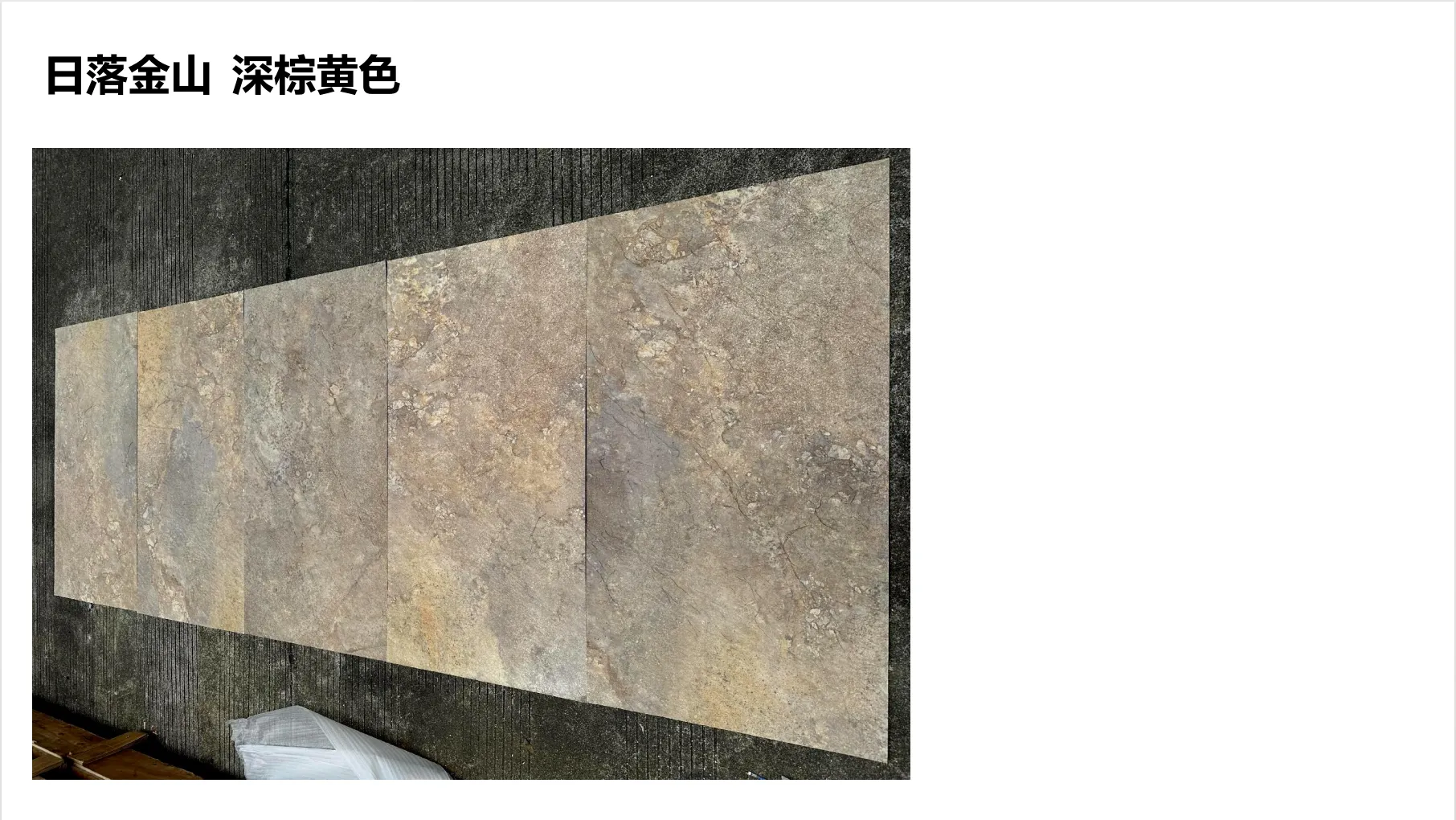
Let's start with the basics: weight. A typical natural stone slab weighs 15-20 pounds per square foot. MCM panels? Just 3-5 pounds. That's a game-changer for high-rises, where every pound affects construction costs and safety. Then there's flexibility—literally. MCM Flexible Stone bends without cracking, making it ideal for curved walls or unconventional surfaces that would shatter natural stone. And sustainability? MCM uses recycled materials in many of its lines, and its lightweight nature cuts down on transportation emissions. But the real magic? It looks indistinguishable from the real thing. Run your hand over a MCM Travertine (Starry Blue) panel, and you'll feel the same pitted texture, the same depth of color, as you would with quarried travertine. Golden Sunset Real Photos of MCM's finishes don't just "look like" natural stone—they feel like a sunset captured in a panel, with warm oranges and golds that glow under different lights.
| Aspect | Natural Stone (e.g., Travertine, Marble) | MCM Project Board Series | Why It Matters for Designers |
|---|---|---|---|
| Aesthetics | Unique veining, organic textures, one-of-a-kind patterns. | Replicates natural textures (e.g., Lunar Peak's metallic sheen, Travertine Starry's twinkling flecks) with consistent quality. | Natural stone offers "imperfect perfection," but MCM ensures your vision stays consistent across large projects. |
| Weight | Heavy (15-20 lbs/sq ft); requires structural reinforcement. | Lightweight (3-5 lbs/sq ft); no extra structural support needed. | MCM opens doors for designs on high floors, curved surfaces, or existing buildings with weight restrictions. |
| Durability | Prone to staining, chipping, and weathering (e.g., limestone dissolves in acid rain). | Waterproof, scratch-resistant, and UV-stable; MCM Flexible Stone bends without breaking. | Spaces like hotels, airports, or outdoor patios need materials that last—MCM delivers without sacrificing style. |
| Sustainability | Quarrying disrupts ecosystems; high carbon footprint from transportation. | Uses recycled materials; lightweight design reduces shipping emissions; 3D Printing Series minimizes waste. | Clients increasingly demand eco-friendly options—MCM lets you meet green goals without compromising aesthetics. |
| Installation | Requires specialized labor and heavy machinery; long lead times for custom cuts. | Easy to install with standard tools; panels can be cut on-site; faster project timelines. | Tight deadlines? MCM reduces installation time by up to 50%, keeping projects on track. |
MCM doesn't just mimic natural stone—it elevates it, offering textures and colors that nature might take centuries to create. Let's zoom in on a few standout series that have designers buzzing:
The Lunar Peak line—Silvery, Golden, and Black—feels like bringing a piece of the moon down to earth. Imagine a boutique hotel lobby with walls clad in Lunar Peak Golden: its metallic finish shimmers like sunlight on a mountain top, but unlike real gold leaf or metal panels, it's lightweight and affordable. Designers love using it for accent walls or reception desks, where the warm glow instantly makes guests feel welcome. One architect I spoke with used Lunar Peak Silvery in a tech startup office, pairing it with Fair-faced Concrete panels for a "future-meets-industry" vibe. "It looks like polished steel," they said, "but we didn't need to worry about fingerprints or rust."
Travertine is beloved for its porous, honeycomb texture, but MCM's Starry variants take it to another level. Travertine (Starry Green) has tiny iridescent flecks that catch the light, like moss growing over a stone that's been kissed by starlight. Travertine (Starry Blue) feels oceanic, with deep blues and silver hints that evoke twilight over water. These panels are a hit in hospitality—imagine a restaurant with a back bar clad in Travertine (Starry Red), where the red flecks mimic embers in a fireplace. Unlike natural travertine, which needs constant sealing to prevent staining, MCM's version repels liquids, so that accidental wine spill? Wipe it off, no problem.
Here's where MCM truly shines: flexibility. Traditional stone is rigid—bend it, and it breaks. MCM Flexible Stone, though? It can curve around columns, wrap over arches, or even be used as ceiling panels. A recent project in a yoga studio used Flexible Stone in Rona Yellow, curving it along the walls to create a sense of flow and calm. "Natural stone would have required cutting dozens of small pieces to fit the curve," the designer explained, "but with MCM, we rolled the panel into place like wallpaper. The result? A seamless, organic space that feels like it was carved from a single block of stone."
Let's ground this in real-world examples. Take the "Golden Sunset" trend—warm, nostalgic hues that make spaces feel cozy yet elevated. MCM's Golden Sunset Real Photos showcase panels that mimic the gradient of a sunset, from soft orange to deep amber. A boutique hotel in Bali used these panels in their lobby, pairing them with Bamboo Mat Board for a tropical-meets-warmth vibe. Guests often comment on how the walls "glow" at dusk, just like the island's famous sunsets. But here's the kicker: those panels weigh a fraction of real stone, so the hotel didn't need to reinforce the second-floor ceiling where they're installed.
For projects that need to honor heritage, MCM's Historical Pathfinders Stone is a revelation. A renovation of a 1920s theater in Chicago used these panels to replicate the original masonry stonework, which had deteriorated over time. The result? The theater looks untouched by time, but the MCM panels are fire-resistant and sound-absorbent—modern upgrades that keep the space safe without losing its historic charm. "We could have sourced reclaimed stone," the preservation architect noted, "but it would have been inconsistent and fragile. MCM let us preserve the theater's soul while bringing it into the 21st century."
Industrial design isn't going anywhere, but raw metal can feel cold. MCM's Foamed Aluminium Alloy Board (Vintage Silver and Vintage Gold) adds warmth to the trend. A co-working space in Berlin used Vintage Gold panels for their kitchen backsplash, pairing them with Wood Grain Board for a "factory-chic" look that still feels inviting. The panels are scratch-resistant, so even with daily use, they've maintained their luster—a far cry from real aluminum, which dents and tarnishes easily.
Let's be clear: natural stone will always have a place in design. There's nothing like the uniqueness of a one-of-a-kind marble slab or the patina of a centuries-old limestone wall. But MCM Project Board Series isn't trying to replace that—it's offering a new tool in the designer's toolkit. It's for the architect who wants the look of Roman travertine in a skyscraper without the structural headache. For the homeowner who craves the warmth of Golden Sunset stone in their kitchen but doesn't want to stress about stains. For the sustainability-focused brand that refuses to choose between beauty and eco-responsibility.
In the end, materials are about storytelling. Natural stone tells stories of the earth's history; MCM tells stories of innovation, possibility, and design without limits. When you look at Golden Sunset Real Photos of MCM panels, you're not just seeing a surface—you're seeing a future where beauty and practicality walk hand in hand. And isn't that what great design is all about?
Recommend Products












