
Choosing materials for a space—whether it's your home, a café, or an office building—feels a lot like picking out a wardrobe for a loved one. You want it to reflect personality, stand the test of time, and maybe even tell a story. But in the rush to make spaces "pop," we often default to the familiar: paint. It's quick, affordable, and comes in a million shades. But what if the very thing we rely on to refresh our walls is quietly letting us down—environmentally, aesthetically, and practically? Enter MCM materials: a collection of surfaces that blend sustainability, durability, and raw beauty in a way paint never could. Let's dive into why these materials, from the warm glow of travertine (starry orange) to the sleek versatility of foamed aluminium alloy board (vintage gold) , are redefining how we build and design.
Paint has its place, of course. A can of white paint can make a small room feel airy, or a bold red can add energy to a hallway. But let's talk about the fine print. Most conventional paints are loaded with volatile organic compounds (VOCs)—chemicals that off-gas into the air long after the "new paint smell" fades, contributing to indoor air pollution and respiratory issues. Then there's the lifespan: even the best paint chips, fades, or peels after 3-5 years, especially in high-traffic areas or harsh weather. That means repainting, again and again, generating waste from old paint cans, scraped-off debris, and the energy used to produce new paint.
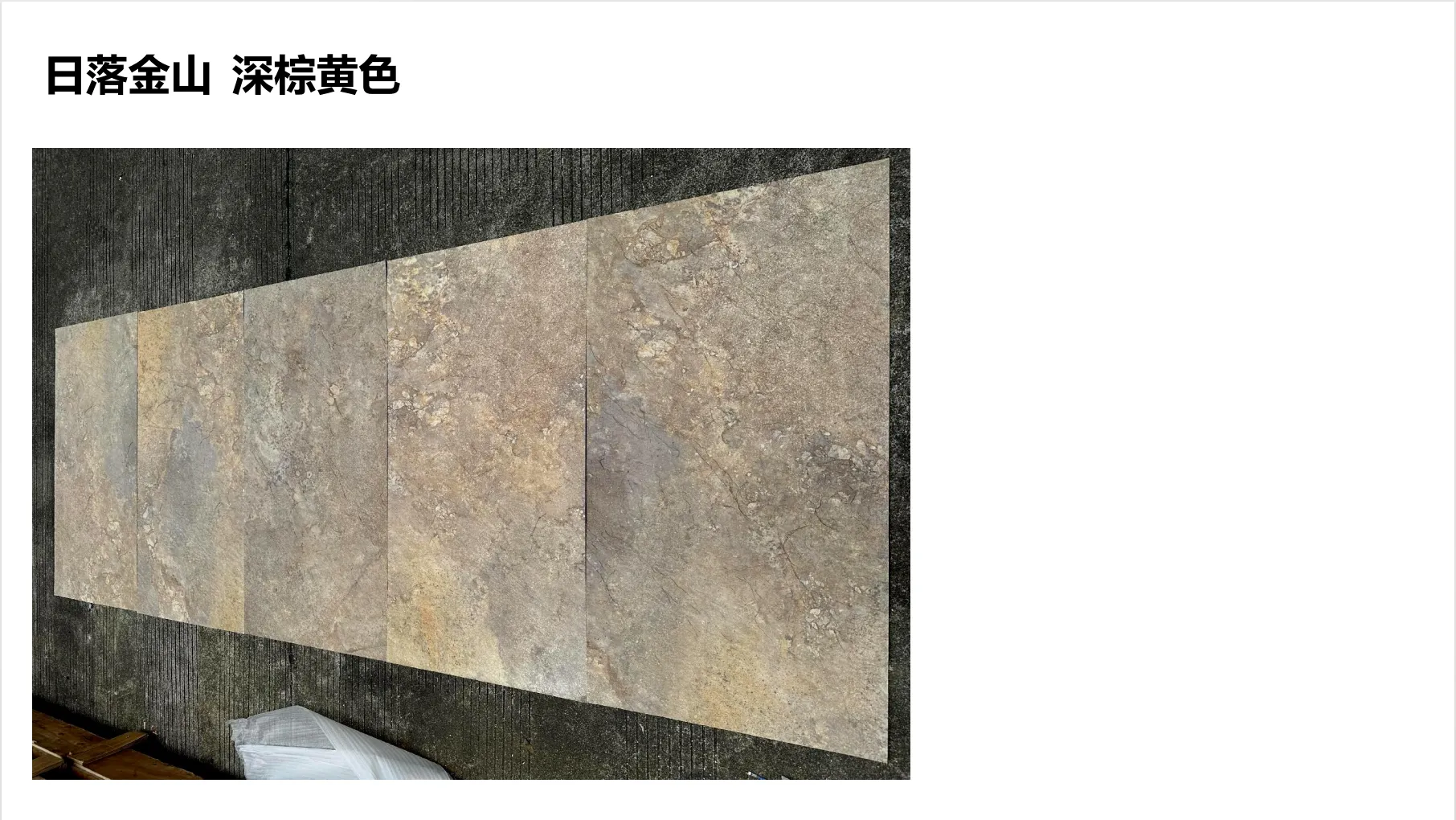
And let's not forget texture. Paint is flat. It can mimic depth with techniques like sponging or ragging, but it's a trick of the eye. Walk into a room with painted walls, and your hand skims a smooth, unyielding surface. Compare that to running your fingers over MCM flexible stone —a material that captures the natural pits, veins, and warmth of real stone, but without the weight or fragility. Suddenly, "texture" isn't just a design buzzword; it's a sensory experience.
MCM (Modified Composite Material) surfaces are engineered to solve the pitfalls of traditional building materials—think stone that's lightweight, metal that's corrosion-resistant, and concrete that's both durable and design-forward. But what truly sets them apart is their commitment to sustainability. Most MCM products are made from recycled or low-impact materials, require minimal processing, and last decades without losing their luster. No VOCs, no frequent replacements, no hidden environmental costs.
Take fair-faced concrete , for example. Unlike painted concrete, which needs regular sealing and touch-ups, fair-faced concrete is finished to be exposed, showcasing its natural gray tones and subtle grain. It's fire-resistant, weatherproof, and ages gracefully—developing a soft patina over time that feels like a living, breathing part of the space. Or consider rammed earth board (gradient) , which mimics the layered, earthy hues of traditional rammed earth but in a lightweight, easy-to-install panel. It's made from natural clays and minerals, so it regulates humidity and temperature, reducing energy use for heating and cooling.
| Material | Lifespan (Avg.) | Sustainability Highlights | Texture & Aesthetic | Maintenance Needs |
|---|---|---|---|---|
| Conventional Paint | 3-5 years | High VOCs; frequent repainting creates waste | Flat, uniform; limited texture options | Frequent cleaning, touch-ups, full repaints |
| MCM Flexible Stone | 20-30 years | Recycled stone aggregates; low embodied carbon | Natural stone texture (pits, veins, grain); lightweight | Occasional wiping with mild soap; no sealing |
| Foamed Aluminium Alloy (Vintage Gold) | 30+ years | Recyclable aluminium; energy-efficient production | Metallic sheen with matte vintage finish; sleek, modern | Resistant to rust/scratches; dust with dry cloth |
| Rammed Earth Board (Gradient) | 25-40 years | Natural clay/minerals; carbon-negative production | Layered, earthy hues; soft, tactile surface | Water-resistant; avoid harsh chemicals |
One of the joys of MCM materials is their ability to adapt to any design vision. Whether you're craving the warmth of a desert sunset or the cool edge of an urban loft, there's an MCM surface that fits. Let's start with travertine (starry orange) —a nod to those golden hour moments when the sky bleeds amber and pink. This travertine variant features tiny, star-like pits that catch light, creating a surface that feels alive. Imagine it in a kitchen backsplash: as morning light streams in, the orange tones glow softly, and in the evening, under warm pendant lights, it mimics the coziness of a sunset. Unlike painted walls, which can feel static, this travertine shifts with the light, making the space feel dynamic and connected to the outdoors.
For a more modern vibe, foamed aluminium alloy board (vintage gold) is a showstopper. Its lightweight, rigid panels are perfect for accent walls, storefronts, or even furniture. The vintage gold finish has a soft, brushed texture that avoids the brashness of shiny metal—think of it as the "brushed leather" of building materials. A boutique hotel in Barcelona recently used it for their lobby ceiling, pairing it with warm wood floors and greenery. The result? A space that feels both luxurious and approachable, with a material that's tough enough to handle daily foot traffic and climate fluctuations.
Then there's MCM flexible stone , the chameleon of the bunch. It comes in dozens of finishes, from rough-hewn granite to smooth marble veining, but what makes it revolutionary is its flexibility. Traditional stone slabs are heavy and brittle, limiting where they can be used—think countertops or floors. MCM flexible stone, though? It bends. That means you can wrap it around curved walls, line the interior of a custom bookshelf, or even use it as a backsplash in a bathroom with odd angles. A homeowner in Portland, Oregon, used it to clad their fireplace, choosing a finish that mimics river rock. Now, when they sit by the fire, the stone's texture feels like a piece of the Pacific Northwest brought indoors—no heavy machinery or structural reinforcements needed.
Buildings and spaces aren't just functional—they're narratives. The materials we choose whisper (or shout) about who we are, what we value, and how we want to live. Paint, for all its color options, is a blank canvas. MCM materials, though, come with built-in stories. Rammed earth board (gradient) , for instance, carries the legacy of ancient construction techniques, updated for the modern world. It's a nod to sustainability and tradition, making it perfect for a home that wants to honor the past while looking to the future.
Fair-faced concrete , on the other hand, tells a story of industrial innovation. Its raw, unadorned surface speaks to honesty and simplicity—qualities that resonate in today's world of overstimulation. A co-working space in Berlin used it for their walls, pairing it with black metal fixtures and large windows. The result? A space that feels productive but not sterile, where the concrete's subtle variations (a small air bubble here, a slight color shift there) add character without distraction.
Choosing MCM materials isn't just about upgrading from paint—it's about investing in a future where our buildings are healthier, more durable, and more beautiful. As we become more conscious of our environmental footprint, the "quick fix" of paint is losing its appeal. MCM materials offer a better deal: less waste, fewer chemicals, and surfaces that age with grace. They turn spaces from "painted" to "crafted," from "temporary" to "timeless."
So the next time you're planning a renovation or designing a new space, ask yourself: Do I want a surface that fades, chips, and needs replacing every few years? Or do I want something that tells a story, stands up to life's messes, and leaves the planet a little better off? With MCM materials—whether it's the sunset glow of travertine (starry orange) , the versatility of MCM flexible stone , or the modern edge of foamed aluminium alloy board (vintage gold) —the answer feels clear. This isn't just building material. It's building better.
Recommend Products












