
There's a moment just before dusk when the world seems to hold its breath. The sun dips low, painting the sky in strokes of amber and rose, and suddenly, even the most ordinary things—a cracked sidewalk, a weathered fence, a patch of grass—glow with a quiet magic. It's the kind of beauty that feels both fleeting and eternal, a reminder of nature's artistry. For designers and architects, capturing that magic isn't just about aesthetics; it's about creating spaces that feel alive, connected to the world outside, and gentle on the planet we call home. That's where MCM (Modified Composite Material) steps in—not just as a building material, but as a bridge between human ingenuity and nature's wisdom.
In a world grappling with climate change, the choices we make about the materials that shape our homes, offices, and cities matter more than ever. Traditional building materials often come with hidden costs: quarrying stone disrupts ecosystems, mining metals leaves scars on the land, and processing wood can deplete forests. MCM, though, is a revolution in that story. These modified composite materials are engineered to mimic the texture, color, and character of natural elements—stone, wood, earth—while slashing the environmental footprint. They're lightweight, durable, and often made with recycled or low-impact materials, turning the idea of "sustainable design" from a buzzword into something tangible, something you can touch, see, and live with.
Let's be honest: there's a reason we're drawn to natural materials. A slab of marble feels cool underfoot on a hot day; rough-hewn stone walls evoke a sense of permanence; wood paneling wraps a room in warmth. But here's the catch: extracting these materials often means disrupting the very landscapes that inspire us. MCM flips the script. Instead of taking from nature, it honors nature—using technology to replicate its most stunning features without the harm. Think of it as nature's greatest hits, remastered for a sustainable future.
Take mcm flexible stone , for example. Run your hand over it, and you'll swear it's the real thing—the porous surface, the subtle variations in color, the way light catches its texture like sunlight on a rocky cliff. But unlike traditional stone, which requires heavy machinery to quarry and transport (adding tons of carbon to the atmosphere), MCM flexible stone is lightweight enough to be carried by two people. It bends, too—fitting around curves and corners that would crack natural stone—making it perfect for innovative designs, from a curved fireplace surround to a wavy accent wall. And because it's made with a blend of recycled minerals and polymers, it reduces waste, too. It's nature's resilience, reimagined.
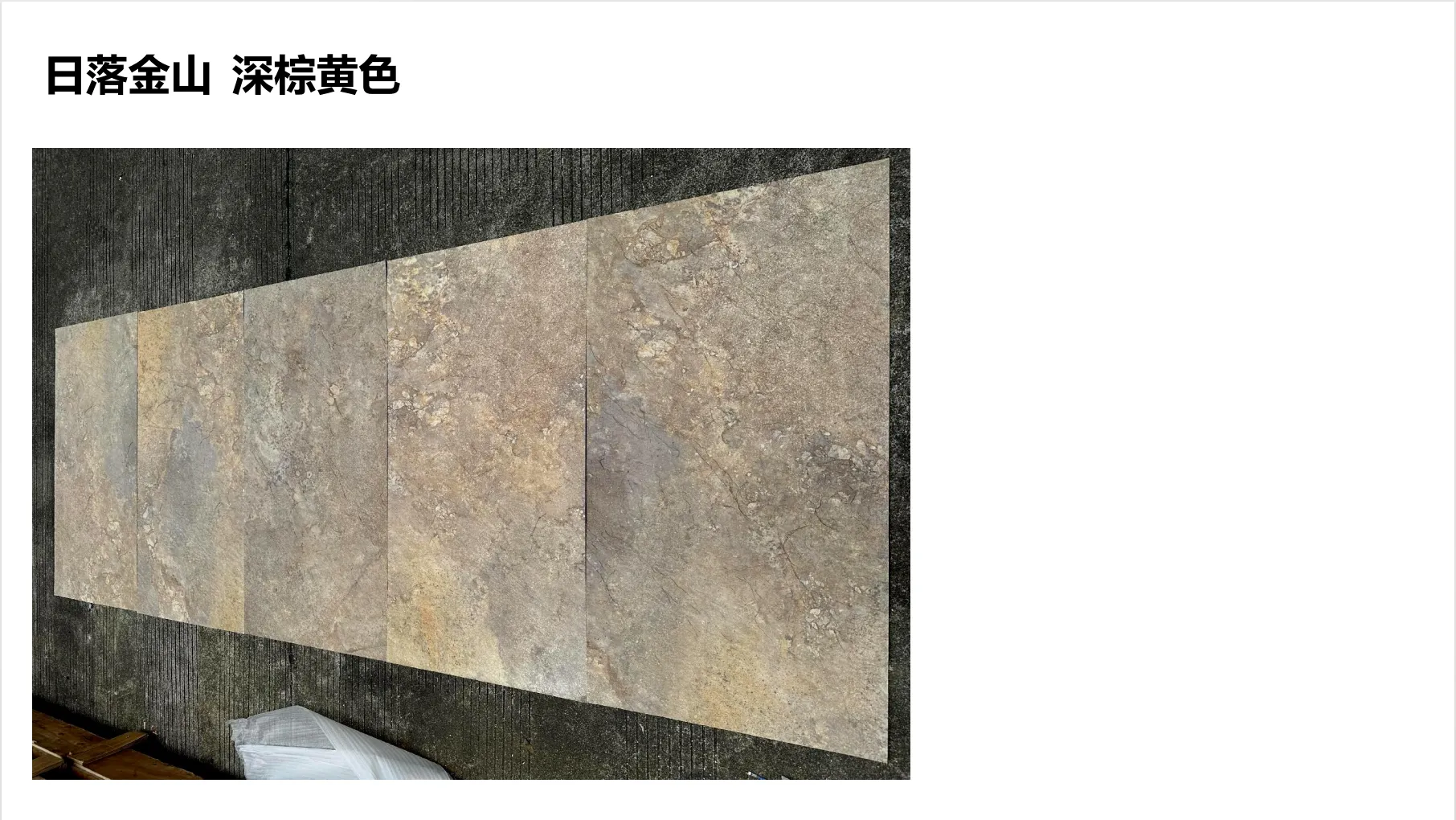
One of the most striking things about MCM is how it borrows from nature's color wheel—not just copying, but interpreting. The Golden Sunset real photos collection, for instance, isn't just a paint job. It's a study in the way light transforms color: the soft gold of sunlight filtering through clouds, the deep amber of a setting sun touching dry grass, the warm peach of the sky just before nightfall. Imagine a kitchen backsplash in this finish—every time you brew your morning coffee, the light hits it, and suddenly your countertop is glowing like a summer evening. Or a restaurant wall, where the Golden Sunset panels turn a busy dinner service into something almost poetic, as if the room itself is blushing with the day's last light.
Then there's travertine (starry orange) —a material that feels like a conversation between day and night. Travertine, in its natural form, is a sedimentary rock formed by mineral-rich water, known for its pitted surface and earthy tones. MCM's take? They've added a "starry" twist: tiny flecks of metallic orange and gold that catch the light, like the first stars winking on as the sun dips below the horizon. It's not gaudy—just enough to make you pause. Picture it in a home office: a desk backed by starry orange travertine, turning a mundane Zoom call into a moment where you feel connected to something bigger, something cosmic. It's the kind of detail that doesn't just decorate a space; it elevates it.
Color is just part of the story—texture is where MCM really shines. Nature isn't smooth or uniform; it's rough, layered, full of surprises. A tree's bark has ridges that tell its age; a desert canyon's walls show the slow dance of wind and water; a river stone is worn smooth by years of current. MCM captures that chaos, that life , in every panel.
Consider foamed aluminium alloy board (vintage gold) . Aluminium is already one of the most recyclable metals on the planet—nearly 75% of all aluminium ever produced is still in use today. MCM takes it further by "foaming" the alloy, creating a lightweight material with a texture that mimics aged brass or weathered gold. Run your fingers over it, and you'll feel tiny indentations, like the surface of a shell polished by the ocean. It's warm, not cold—metallic but not sterile. Use it for a ceiling panel in a living room, and when the afternoon light hits, it casts soft, dappled shadows, like sunlight through leaves. Or as a backsplash in a bathroom, where it adds a touch of luxury without feeling out of place next to natural stone or wood.
And then there's rammed earth board (gradient) —a love letter to the earth itself. Rammed earth is an ancient building technique, where layers of soil, sand, and clay are compressed to form thick, sturdy walls. MCM's gradient version takes that heritage and adds a modern twist: layers of color that shift from soft beige to terracotta to deep ochre, like the strata of a canyon wall at sunset. It's raw, honest, and deeply grounding. Imagine a bedroom with rammed earth gradient walls—waking up to colors that feel like being wrapped in a desert landscape, calm and alive. It's not just a wall; it's a story of the earth's slow, patient creation.
To really understand the magic of MCM, let's dive into a few standout materials—how they're made, how they feel, and how they turn spaces into something special.
| Material | Nature's Inspiration | Sustainability Spotlight | Perfect For |
|---|---|---|---|
| MCM Flexible Stone | Rough-hewn cliff faces, river stones | Made with recycled minerals; 50% lighter than natural stone, reducing transport emissions | Exterior facades, accent walls, fireplace surrounds |
| Golden Sunset Real Photos | Sunset skies, amber fields, autumn leaves | Low-VOC pigments; printable on recycled composite substrates | Kitchen backsplashes, restaurant accent walls, retail displays |
| Travertine (Starry Orange) | Natural travertine stone, twilight skies with early stars | Engineered to use 70% less raw material than quarried travertine | Home offices, hotel lobbies, bathroom walls |
| Foamed Aluminium Alloy Board (Vintage Gold) | Aged brass, sunlit desert dunes | 100% recyclable aluminium; foaming process reduces material use by 40% | Ceiling panels, decorative screens, outdoor patio covers |
| Rammed Earth Board (Gradient) | Canyon strata, layered desert soil, ancient adobe walls | Uses locally sourced clay and recycled binders; zero formaldehyde | Bedrooms, yoga studios, eco-friendly homes |
What really sets MCM apart, though, isn't just its environmental credentials or its good looks—it's how it makes you feel . Walk into a room finished with MCM flexible stone, and you're not just seeing a wall; you're transported to a mountain trail, where the air smells like pine and the rocks tell stories of millions of years. Run your hand over a foamed aluminium vintage gold panel, and it's like touching a piece of history—worn, warm, and full of character. These materials don't just fill space; they enrich it, turning houses into homes and offices into places where creativity thrives.
Take a coffee shop, for example, with rammed earth board (gradient) walls and travertine (starry orange) tabletops. The earthy gradients ground you, while the starry travertine adds a touch of whimsy. Suddenly, sipping a latte isn't just a routine—it's an experience, a moment of calm in a busy day. Or a home where the exterior is clad in MCM flexible stone, blending seamlessly with the surrounding landscape, as if the house grew out of the earth itself. Neighbors stop to admire it not just for its beauty, but for its harmony with the environment.
As we look ahead, MCM isn't just a trend—it's a glimpse of what design can be: intentional, respectful, and deeply human. It's a reminder that we don't have to choose between beauty and sustainability; we can have both. These materials are more than just "eco-friendly"—they're a celebration of nature's infinite creativity, reimagined for a world that needs more care, more connection, and more joy.
So the next time you watch a golden sunset, take a moment to imagine that beauty living on—in the walls of your home, the lobby of your office, the store where you shop. Imagine a world where the materials we build with don't just serve us, but honor the planet that sustains us. That's the promise of MCM: not just building for today, but building for a future where nature and humanity thrive, side by side.
After all, the most beautiful spaces aren't just made of materials—they're made of stories. And MCM is writing a new one: a story of innovation, respect, and the timeless magic of nature, captured in every panel, every texture, every golden hue.
Recommend Products












