
Exploring how modified composite materials capture the soul of nature—one texture, color, and story at a time
Picture this: An architect stands at their drafting table, sunlight slanting through the window, casting golden streaks across blueprints. Their pencil hovers, then moves—sketching a lobby wall that feels like a forest at dawn, a kitchen backsplash that echoes desert sands, a bedroom accent that shimmers like a starry night. For decades, this vision has felt just out of reach. Natural stone is heavy, fragile, and hard to shape; traditional synthetics feel cold, lifeless, like a photocopy of nature rather than the real thing. But then, they discover MCM.
Modified Composite Material (MCM) isn't just a building material—it's a translator. It takes the raw, unscripted beauty of the natural world—the rough bark of an oak, the smooth curve of a river stone, the warm glow of sunset over mountains—and turns it into something architects can hold, mold, and build with. No compromise. No trade-offs. Just pure, unfiltered nature, reimagined for the spaces we live, work, and love in. Today, we're diving into why MCM has become the quiet hero of nature-themed design, and how it's bringing golden sunsets, starry skies, and ancient forests into the heart of modern architecture.
Humans have always craved connection to the natural world. It's in our bones. From the cave paintings of Lascaux to the gardens of ancient Rome, from Frank Lloyd Wright's "organic architecture" to today's biophilic design movement, we keep coming back to one truth: spaces that echo nature feel like home. They calm us. They inspire us. They remind us we're part of something bigger.
But what is it about nature that tugs at us? It's not just color—it's texture. The way moss feels soft underfoot, the way a weathered stone wall has grooves worn by rain, the way sunlight filters through leaves in a pattern that's never quite the same. It's the imperfection, the story, the life in every surface. Architects don't just want to show nature—they want to evoke it. To create spaces where you can close your eyes and almost hear the rustle of trees or the drip of a stream.
Here's the problem: Nature is messy. Real stone is heavy—so heavy it limits where you can use it. It's porous, so it stains. It cracks. It fades. Wood warps, metal rusts, concrete feels sterile. For years, architects have had to choose: either sacrifice durability for beauty, or settle for materials that look "natural" but feel hollow, like a plastic flower in a vase.
Take traditional travertine, for example. Its pitted surface and warm tones are beloved, but it's fragile. A single drop of wine can leave a permanent mark. Or natural wood grain—gorgeous, but in a high-moisture bathroom? It'll swell and rot before your eyes. Architects would sketch a wall of "ancient stone" or a ceiling that mimics "ocean waves," then sigh and swap it for generic drywall because the real thing was too impractical.
Enter MCM. Short for Modified Composite Material, MCM is a revolution in how we build with nature in mind. It's a blend of natural minerals, polymers, and fibers, engineered to capture every nuance of natural textures—without the baggage. Lightweight enough to hang on a second-story wall. Durable enough to withstand rain, foot traffic, and time. And so true to nature's look and feel, you'll find yourself reaching out to touch it, half-expecting it to be cold stone or rough wood.
But MCM isn't just about copying nature—it's about honoring it. The designers behind MCM collections don't just scan a rock and hit "print." They study the way light plays on travertine at dawn, the way wind carves patterns into desert stone, the way moss clings to ancient walls. They're storytellers, and each MCM panel is a chapter—a way to bring the drama of a mountain peak, the serenity of a forest floor, or the vibrancy of a starry sky into everyday spaces.
Walk through an MCM showroom, and you'll feel like you've stumbled into a gallery of natural wonders. Each series has a personality, a mood, a piece of the world captured in composite form. Let's dive into a few that have architects buzzing:
Close your eyes and think of a forest after dark. Fireflies flicker, leaves rustle, and the air smells of damp earth. Now open them—and look at MCM's travertine (starry green). Its base is a deep, mossy green, but embedded in the surface are tiny, iridescent flecks that catch the light like bioluminescent spores. Run your hand over it, and you'll feel the classic travertine pitting—rough, organic, like stone that's been kissed by rain for centuries. It's not just a panel; it's a night hike, bottled.
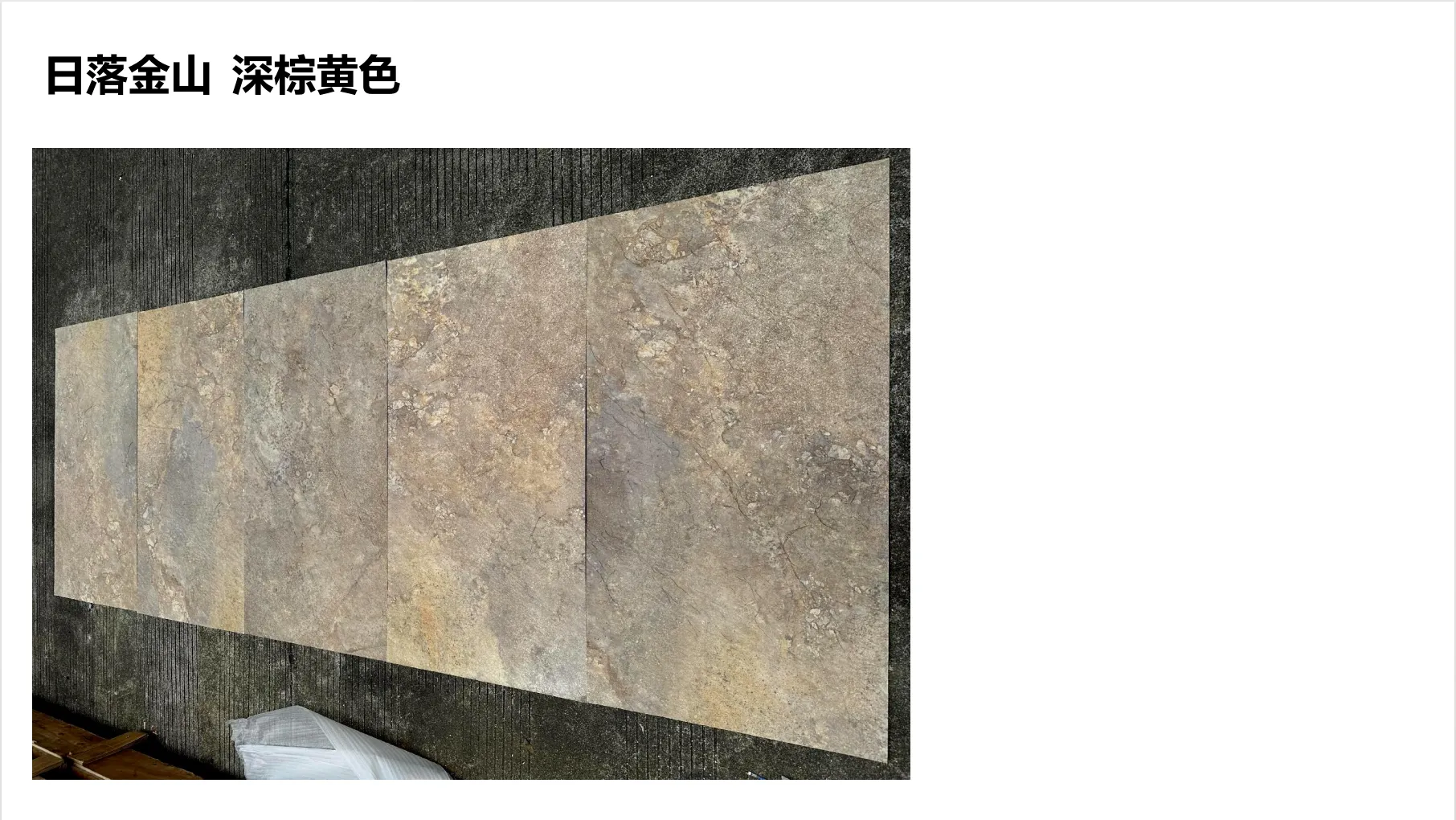
Mountains have a way of making you feel small—and alive. MCM's lunar peak golden series captures that magic. Imagine the first light of day hitting a mountain range: the stone shifts from shadowy gray to honeyed gold, then to burnished copper as the sun climbs higher. That's exactly what this panel does. Its surface has the rough, hewn texture of mountain stone, but the color shifts with light, warm and inviting. Architects are using it in lobbies and living rooms, creating accent walls that feel like standing at a summit at dawn—no hiking boots required.
Rammed earth has been around for millennia—think ancient Chinese fortresses, African mud-brick homes. It's earthy, grounding, and deeply calming. But traditional rammed earth is heavy, fragile, and hard to install in modern buildings. MCM's rammed earth board (matcha green) fixes that. It's lightweight, but the texture? It's exact —the slight unevenness, the way the green hue deepens and lightens like soil after rain. It feels like walking into a sunlit tea garden, where the air is still and the only sound is a distant stream. Designers are using it in spas and meditation rooms, and honestly? We can see why. Just looking at it makes our heart rates slow down.
Wood is the original "home" material. It's warm, it's familiar, it makes spaces feel lived-in. But real wood? It's a diva. It warps, it scratches, it fades. MCM's wood grain board? It's the best of both worlds. Run your fingers over it, and you'll swear it's reclaimed oak—knots, grain, even the slight dip where a branch once grew. But it's water-resistant, scratch-proof, and colorfast. It's the cozy cabin feel, minus the worry of a spilled cup of coffee ruining everything. Architects are using it in kitchens, bedrooms, even bathrooms—anywhere they want to wrap a space in that "hug from a tree" warmth.
Concrete gets a bad rap—cold, industrial, boring. But fair-faced concrete? It's concrete with soul. MCM's take on fair-faced concrete isn't the gray slab you'd find in a parking garage. It's warm, with subtle variations in tone—like the way sun and shadow play on a concrete wall in an old warehouse. There are tiny air bubbles, faint streaks, a texture that feels both solid and alive. It's the beauty of imperfection, and architects are obsessed. They're pairing it with wood grain boards for a "rustic meets modern" vibe, or using it alone in minimalist spaces where the concrete itself becomes the art.
Still not convinced? Let's put MCM head-to-head with traditional natural materials. It's not just about practicality—it's about feeling .
| What Matters to You | Traditional Natural Stone/Wood | MCM Nature-Inspired Panels |
|---|---|---|
| Texture Authenticity | Feels real, but fades or wears over time—like a favorite sweater that loses its softness. | Feels exactly like the real thing, but stays that way. Run your hand over it in 10 years, and it'll still have the same rough, earthy texture as day one. |
| Weight & Installation | Heavy—requires reinforced walls, cranes, and muscle. Limits where you can dream big. | Light as a feather (well, almost). Install it on any wall, ceiling, or even furniture. Design freedom? Unlocked. |
| Durability | Stains, cracks, warps. Beautiful, but high-maintenance—like a vintage car that needs constant tuning. | Scratch-resistant, water-resistant, fade-proof. It's the friend who shows up, no matter the weather. |
| Sustainability | Mining stone or cutting down trees can harm ecosystems. It's taking from nature, not honoring it. | Made with recycled materials and low-impact processes. It's nature-inspired, and nature-friendly—no guilt, just good design. |
| Mood | Can feel precious, like you're walking on eggshells. Beautiful, but not always "lived-in." | Inviting, warm, and unpretentious. It's the kind of material that makes you want to lean against the wall, kick off your shoes, and stay awhile. |
Architects don't choose materials lightly. They're artists, but they're also problem-solvers. They want to create spaces that make people feel something—and MCM lets them do that without compromise. Here's why it's become their secret weapon:
One architect we spoke to called MCM "a storytelling tool." Instead of using generic materials, they can design a restaurant wall that feels like a Moroccan market (thank you, MCM's bali stone), or a hotel lobby that echoes the serenity of a Japanese garden (hello, wood grain board and rammed earth). "Clients don't just want a building," they said. "They want an experience. MCM helps me build that experience, one texture at a time."
Today's architects aren't just building for now—they're building for the planet. MCM's low environmental impact checks a huge box. "I can't in good conscience specify materials that harm ecosystems," another architect told us. "With MCM, I get the beauty of natural stone without the guilt. It's a win for design, and a win for the earth."
Architects dream big. Curved walls, floating ceilings, accent pieces that look like they're growing out of the floor. Traditional materials? They'll break, or sag, or just plain refuse to bend. MCM? It's flexible—literally. Panels can be cut, shaped, and curved to fit even the wildest designs. "I no longer have to say, 'We can't do that,'" one designer laughed. "Now, I say, 'Let's try.'"
Enough talk—let's look at how MCM is transforming spaces. These aren't just renderings; they're real projects, where architects used MCM to turn "what if?" into "wow."
In Portland, Oregon, a small café wanted to feel like a cozy mountain lodge—without the log-cabin clichés. The architect used MCM's lunar peak golden panels on the main wall, paired with wood grain board for the counters. Now, when customers sip their lattes, they're surrounded by the warm glow of "mountain stone" and the familiar texture of "reclaimed wood." The owner says, "People stay longer. They take photos. It's not just a café anymore—it's a destination."
Working from home can feel isolating. One architect designed a home office for a client using MCM's travertine (starry green) on the back wall and fair-faced concrete for the desk. The result? A space that feels like working in a forest clearing—calm, inspiring, and just a little magical. "I used to dread logging on," the client said. "Now? I can't wait to sit down and look at that starry green wall. It's like having a window to the woods, even in the middle of the city."
In Arizona, a boutique hotel wanted to honor the local desert landscape—without feeling like a kitschy western movie set. The architect chose MCM's gobi panel (inspired by desert stone) and rammed earth board (matcha green) for the lobby. The result is a space that feels vast and serene, with textures that echo sand dunes and rocky outcrops. Guests often comment on how "grounded" they feel as soon as they walk in. "It's the desert, but softer," the architect explained. "Welcoming, not harsh."
At the end of the day, architecture isn't just about buildings. It's about how spaces make us feel. And nothing makes us feel more alive than nature. MCM doesn't just mimic the look of stone, wood, or earth—it captures their essence . It's the warmth of a sunset, the calm of a forest, the resilience of a mountain—all wrapped up in a panel that's as practical as it is beautiful.
So when architects choose MCM for nature-themed designs, they're not just choosing a material. They're choosing to build spaces that nurture us, inspire us, and remind us of the world outside our windows. They're choosing to bring golden sunsets, starry skies, and ancient forests into the places we live, work, and love. And really? Isn't that what great design is all about?
The next time you walk into a space that makes you think, "This feels like home," take a closer look. Chances are, MCM is there—quietly, beautifully, bridging the gap between design and nature. And that? That's the magic of MCM.
Recommend Products












