
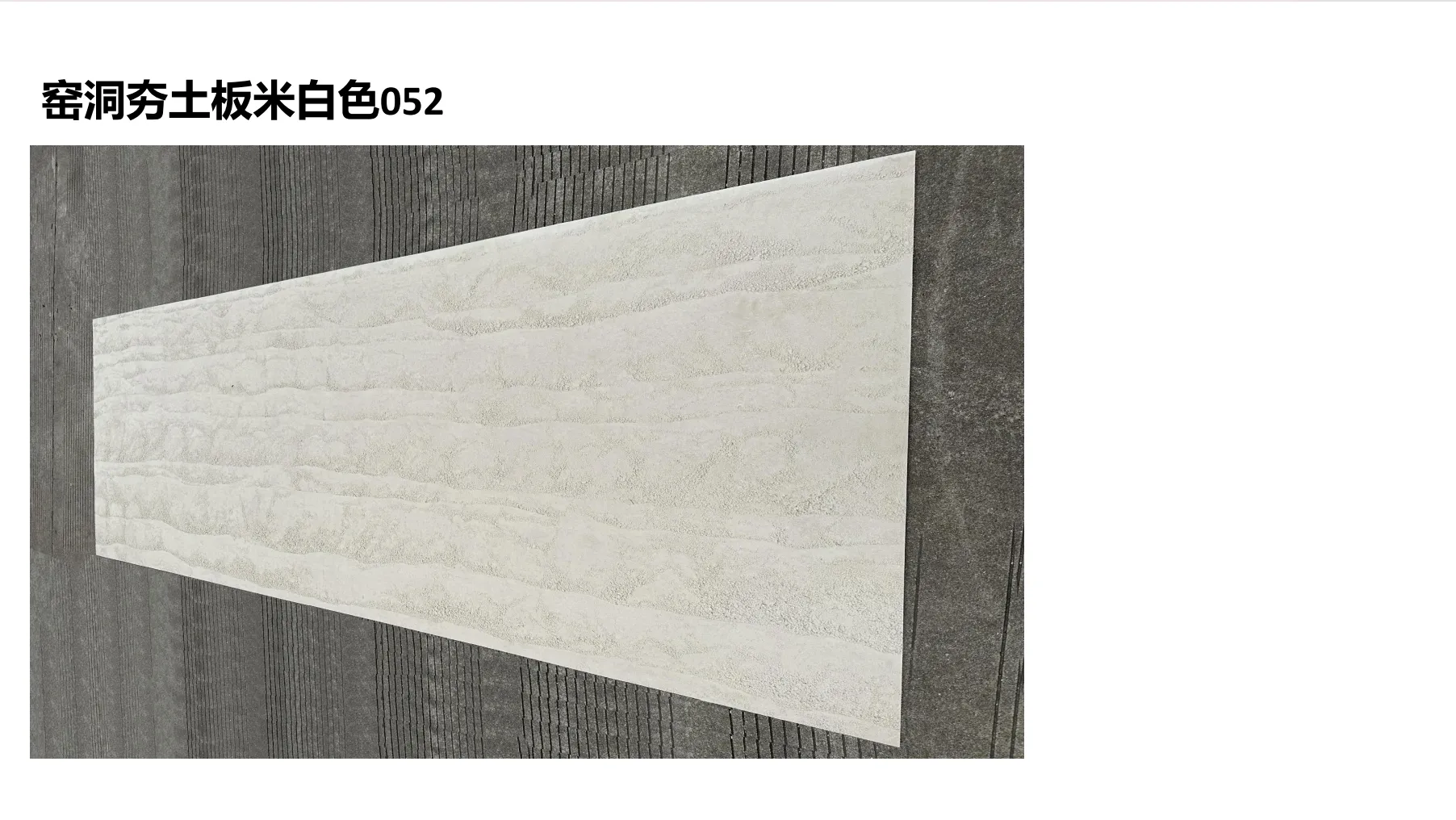
Architecture has always been a dialogue between the past and the future—between the materials that have shaped civilizations for centuries and the technologies that push the boundaries of what's possible. Today, that dialogue is being rewritten by materials like Gradient Color Rammed Earth Board , a modern twist on an ancient craft, and when paired with 3D printing, it's not just building walls—it's crafting stories. This isn't just about construction; it's about creating spaces that breathe, evolve, and reflect the unique personalities of those who inhabit them.
Rammed earth isn't new. For millennia, civilizations from China's Great Wall to Africa's mud-brick villages have used this technique—compacting layers of earth, gravel, and clay—to build structures that stand the test of time. But traditional rammed earth has its limits: rigid color palettes, uniform textures, and a lack of flexibility in design. Enter Gradient Color Rammed Earth Board , a material that honors the past while embracing the future. What makes it different? It's alive with color. Imagine walls that shift from soft sage green to deep olive, or from blush pink to terracotta, mimicking the natural gradients found in canyons, deserts, and mountain ranges. These aren't just colors printed on the surface; they're mixed into the very earth itself, creating depth that feels organic, like the earth's own skin.
But it's not just about aesthetics. This material is a sustainability champion. Made from locally sourced soil, natural pigments, and minimal binders, it reduces the carbon footprint of construction by cutting down on transportation and industrial processing. It's breathable, too—regulating humidity and temperature to keep spaces cool in summer and warm in winter, reducing reliance on HVAC systems. For architects and homeowners alike, it's a way to build with the planet, not against it.
If Gradient Color Rammed Earth Board is the canvas, 3D printing is the brush that unlocks its full potential. Traditional rammed earth requires skilled labor to compact layers by hand, limiting the complexity of designs. 3D printing changes that. Using robotic arms or gantry systems, layers of colored earth are deposited with millimeter precision, allowing for curves, angles, and gradients that were once impossible. Want a wall that flows like a river, with colors blending seamlessly from top to bottom? Or a ceiling that mimics a starry night, with speckles of deep blue and silver? 3D printing makes it possible—no two projects need ever be the same.
The magic lies in the marriage of technology and nature. Unlike synthetic materials that feel cold and sterile, 3D printed Gradient Color Rammed Earth Board retains the warmth and texture of natural earth. Run your hand along a wall, and you'll feel the subtle ridges of each printed layer, like the rings of a tree, telling the story of how it was made. It's a tactile experience that synthetic alternatives can't replicate—one that connects us to the earth in a way that feels primal, yet fresh.
| Feature | Traditional Rammed Earth | 3D Printed Gradient Color Rammed Earth Board |
|---|---|---|
| Design Flexibility | Limited to straight lines and simple shapes | Curves, angles, and complex geometries |
| Color Gradation | Single color or block color layers | Seamless, custom gradients (unlimited color combinations) |
| Production Time | Weeks (hand-compacted layers) | Days (automated 3D printing) |
| Sustainability | Eco-friendly but limited by labor intensity | Reduced waste, energy-efficient, and locally sourced |
| Customization | Minimal (standardized forms) | Unlimited (tailored to project/ client vision) |
Gradient Color Rammed Earth Board and 3D printing are powerful on their own, but their true potential shines when paired with other innovative materials. Take MCM Flexible Stone , for example. Lightweight yet durable, MCM (Modified Composite Material) stone panels can be curved, cut, or layered to add texture and contrast to rammed earth walls. Imagine a kitchen where Gradient Color Rammed Earth forms the backsplash, shifting from soft cream to warm brown, while MCM Flexible Stone in a sleek Granite Portoro finish tops the countertops—blending earthy warmth with modern sophistication.
For exterior spaces, Boulder Slab series adds drama. Available in vintage silver, gold, and black, these large-format slabs mimic the rugged beauty of natural boulders but with the precision of modern manufacturing. Used as cladding on a commercial building, they complement Gradient Color Rammed Earth walls, creating a facade that feels both grounded and futuristic. Meanwhile, the Lunar Peak series—with its silvery, golden, and black hues—evokes the otherworldly beauty of moonlit landscapes, perfect for accent walls or ceiling features that add a touch of celestial wonder to a room.
And let's not forget the classics reimagined. Travertine , a timeless stone, gets a modern update with vintage silver, gold, and black finishes, as well as starry red, orange, and blue variants that sparkle like distant galaxies. When paired with Gradient Color Rammed Earth, it's a conversation between old and new—proof that tradition and innovation can coexist beautifully.
At the end of the day, architecture is about people. It's about creating spaces that make us feel safe, inspired, and connected—to each other and to the world around us. Gradient Color Rammed Earth Board, 3D printing, and materials like MCM Flexible Stone and Lunar Peak do just that. They're not just building materials; they're tools for storytelling. A home with gradient walls might reflect a family's journey, with colors chosen to represent their roots and aspirations. A community center using Boulder Slab and rammed earth could become a gathering place that feels both grand and intimate, a symbol of unity and strength.
Consider a hypothetical cultural center in a coastal city. The main hall features 3D printed Gradient Color Rammed Earth walls that shift from pale blue (mimicking the ocean) to soft sand (echoing the beach), with embedded Weaving (Khaki) panels that add texture like driftwood. The exterior uses Gobi Panel for its rugged, desert-inspired look, while the entrance is framed by Lunar Peak Silvery columns that catch the light like moonlight on water. Inside, Travertine (Starry Blue) floors sparkle like the night sky, guiding visitors through the space. Every material choice tells a story of the city's relationship with land and sea, creating an experience that's not just seen, but felt.
As we look to the future, the possibilities are endless. Imagine entire neighborhoods built with 3D printed Gradient Color Rammed Earth Board, each home with its own unique color story, yet blending harmoniously with the landscape. Or public parks where benches and pathways are printed from the same earth beneath them, blurring the line between man-made and natural. With advancements in 3D printing technology, we might soon see even more complex designs—floating staircases, undulating ceilings, and interactive walls that change color with the light.
But perhaps the most exciting part is that these innovations are rooted in sustainability. In a world grappling with climate change, materials that are low-carbon, recyclable, and locally sourced aren't just a trend—they're a necessity. Gradient Color Rammed Earth Board, MCM Flexible Stone, and their counterparts offer a way forward, proving that we don't have to sacrifice beauty for sustainability. In fact, they enhance each other.
Architecture is more than walls and roofs. It's about creating environments that shape how we live, work, and connect. Gradient Color Rammed Earth Board, powered by 3D printing, is redefining what's possible, turning buildings into canvases and spaces into stories. Whether paired with MCM Flexible Stone, Boulder Slab, Lunar Peak, or classic travertine, it's a material that honors the past, embraces the present, and paves the way for a future where architecture feels less like a construction project and more like a living, breathing work of art.
So the next time you step into a space built with these materials, take a moment to notice the details—the shift of color on a wall, the texture of a printed layer, the way the light plays on a stone surface. These aren't just design choices; they're a love letter to the earth, to innovation, and to the endless potential of human creativity. And in that, we find something truly timeless.
Recommend Products












