
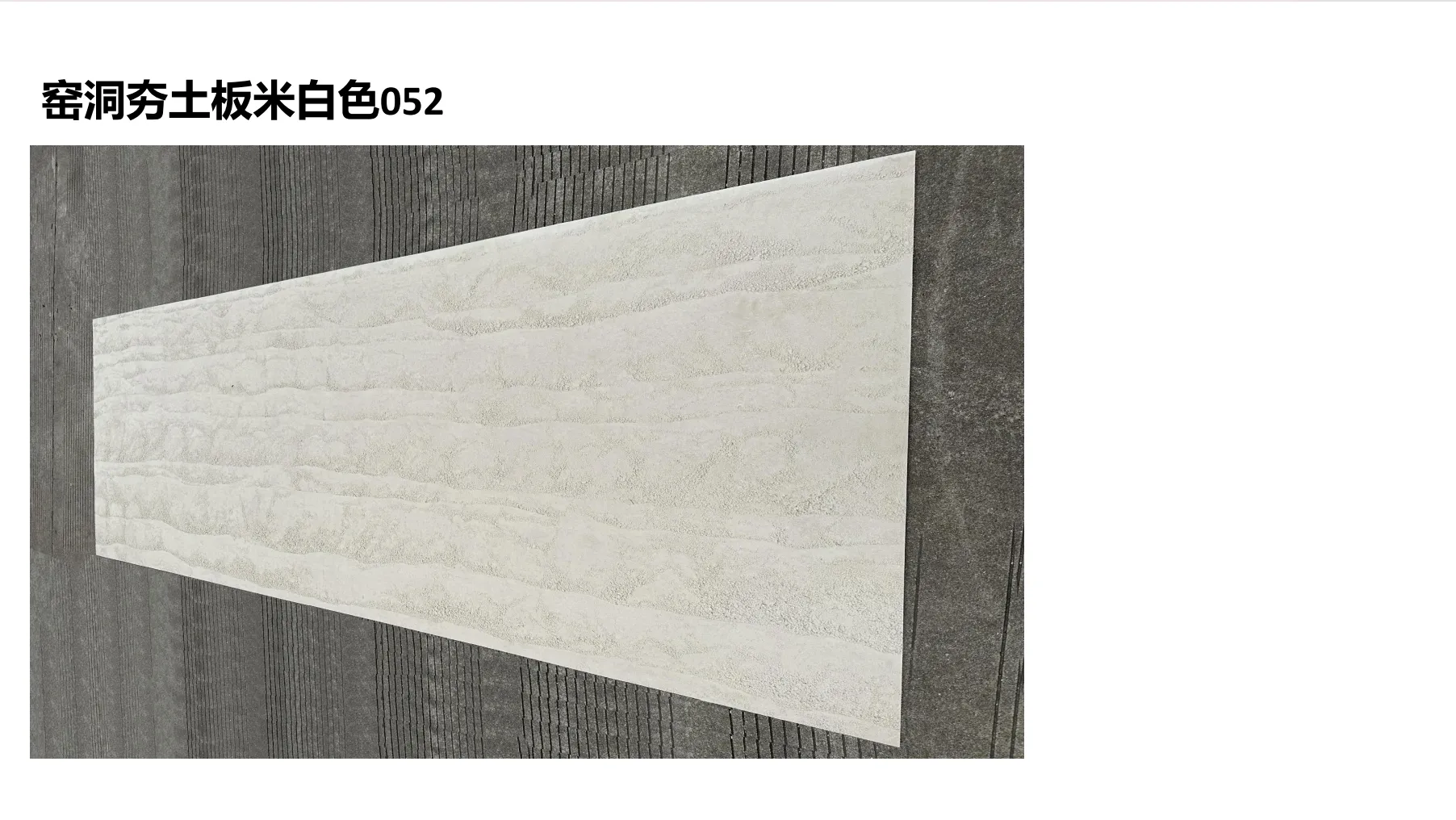
Step into a modern co-working space, a boutique hotel lobby, or even a thoughtfully designed home these days, and you might find yourself pausing to admire walls that seem to tell a story through color—soft terracottas melting into warm beiges, muted sage greens fading into earthy browns, or pale yellows blending into rich rusts. That visual poetry? It's likely the work of gradient color rammed earth board. More than just a feast for the eyes, this material has quietly become a favorite among architects and designers not only for its stunning aesthetics but for something far more practical: its exceptional soundproofing abilities. In a world where noise pollution—from bustling city streets to the hum of office chatter—feels inescapable, gradient rammed earth board is emerging as a solution that marries beauty with function. Let's dive into why this material is redefining acoustic comfort in spaces we live, work, and unwind in.
First, a quick refresher: gradient color rammed earth board is a contemporary take on traditional rammed earth, a building technique dating back centuries where layers of earth, sand, gravel, and natural binders are compacted under high pressure to form solid, dense panels. What sets the "gradient color" variant apart is its intentional layering of pigments—think subtle shifts in hue that mimic the way sunlight fades rock formations or how soil changes color with depth. But here's the surprise: those same layers that catch the eye also work overtime to catch sound. Today, we're exploring how this material's unique structure translates to impressive soundproofing, why it outperforms some common alternatives, and how it's transforming spaces into havens of quiet.
Before we get into what makes gradient rammed earth board special, let's break down how soundproofing actually works. Sound travels in waves—think of them as invisible ripples moving through the air, bouncing off surfaces, and seeping through cracks. To block these waves, a material needs to do two key things: absorb sound (soak up the energy of the waves) and block sound (prevent waves from passing through entirely). The best soundproofing materials excel at both, thanks to a mix of mass, density, and texture.
Mass matters because heavier materials are harder for sound waves to vibrate—think of a thick concrete wall versus a thin plywood partition. Density helps too; tightly packed materials leave less space for sound to sneak through. But texture plays a role, too: porous or uneven surfaces can scatter sound waves, turning loud echoes into soft murmurs. The magic of gradient color rammed earth board lies in how it balances all three: it's dense enough to block, textured enough to absorb, and layered in a way that disrupts sound in unique ways.
At its core, gradient color rammed earth board is built to perform. Unlike uniform concrete slabs or smooth drywall, it's crafted by compressing layers of earth, natural pigments, and minimal binders (like lime or cement) at high pressure. Each layer is slightly different—whether in color, particle size, or density—to create that gradual hue shift. But those variations aren't just for show: they create a "disruptive density" that sound waves struggle to penetrate.
Imagine sound hitting a wall of gradient rammed earth. The first layer, maybe a coarser, denser mix, hits the wave with mass, slowing it down. The next layer, slightly less dense but with finer particles, absorbs the remaining energy, like a sponge catching water. Then another layer, with a different texture, scatters any leftover vibrations so they don't bounce back into the room as echo. It's a one-two-three punch that traditional single-layer materials can't match. And because the layers are fused together under pressure, there are no gaps for sound to leak through—unlike drywall, which can have seams or weak points around outlets.
Another advantage? The natural materials. Rammed earth relies on clay, sand, and gravel—elements that have been used in construction for millennia for their durability and, yes, sound-dampening properties. Unlike synthetic soundproofing materials that can off-gas chemicals, gradient rammed earth is low-VOC and breathable, making it ideal for spaces where air quality matters, like nurseries or wellness centers. It's a win-win: your walls block noise and keep the air clean.
To really appreciate gradient rammed earth's acoustic benefits, let's compare it to two popular building materials: fair-faced concrete and wood grain board. Both are widely used in modern design, but how do they hold up when it comes to soundproofing?
| Material | STC Rating (Sound Transmission Class) | Density (kg/m³) | Key Acoustic Features | Best For |
|---|---|---|---|---|
| Gradient Color Rammed Earth Board | 45–50 | 1,800–2,200 | Layered density disrupts sound waves; natural porosity absorbs echoes; high mass blocks transmission | Home theaters, bedrooms, offices, restaurants |
| Fair-Faced Concrete | 40–45 | 2,300–2,500 | High mass blocks sound but reflects echoes; smooth surface reduces absorption | Industrial spaces, garages, load-bearing walls |
| Wood Grain Board | 25–35 | 600–900 | Low density allows sound transmission; soft texture absorbs some high frequencies but lacks mass | Accent walls, non-critical noise areas, decorative panels |
*STC Rating: A higher number means better soundproofing. A rating of 45+ blocks most speech and everyday noise; 50+ blocks loud music or machinery.
What stands out? Gradient rammed earth board hits that sweet spot: its STC rating (45–50) is higher than fair-faced concrete (40–45) and far above wood grain board (25–35). That means in a bedroom with gradient rammed earth walls, you're less likely to hear the neighbor's TV or the street below compared to concrete. And unlike concrete, which can make a room feel echoey (thanks to its smooth, hard surface), gradient rammed earth's slightly porous texture softens sound, making spaces feel cozier and more intimate.
Wood grain board, while warm and stylish, simply doesn't have the mass to block serious noise. It might work for a home office where you just need to muffle a printer, but not for a baby's nursery or a home theater. Gradient rammed earth, on the other hand, brings both style and substance—you don't have to sacrifice aesthetics for peace and quiet.
Gradient color rammed earth board isn't just a theoretical winner—it's making a difference in spaces where noise control is critical. Let's look at a few examples:
Anyone who's tried to watch a movie at full volume knows the struggle: the bass shakes the walls, and suddenly the neighbors are knocking. Gradient rammed earth's high STC rating (45–50) blocks that rumble from escaping, while its echo-absorbing texture keeps the sound crisp inside the room. Pair it with travertine (beige) flooring for a warm, earthy vibe, and you've got a theater that feels like a luxury retreat—no noise complaints included.
Open offices are great for collaboration, but the constant buzz of chatter, phones, and printers can drain focus. Gradient rammed earth partition walls act as "sound buffers," reducing cross-talk between teams without closing off the space. Unlike drywall dividers, which feel flimsy and do little for noise, these panels add visual interest (thanks to their gradient hues) while creating zones of calm. Employees report feeling less distracted, and meetings stay private—no more worrying about sensitive conversations leaking out.
In hospitality, ambiance is everything. A noisy restaurant feels chaotic; a hotel hallway where every door slam echoes feels unrefined. Gradient rammed earth walls in dining areas absorb clinking dishes and laughter, keeping the atmosphere lively but not overwhelming. In hotel rooms, they block hallway noise, so guests sleep soundly. Designers love it because it adds a unique, organic texture—no two panels look exactly alike—making spaces feel one-of-a-kind.
For musicians and podcasters, soundproofing is non-negotiable. External noise (like a passing car or a barking dog) can ruin a take, and internal sound (a loud drum kit) can annoy neighbors. Gradient rammed earth's layered structure creates a "dead zone" for sound, preventing leakage in both directions. Unlike synthetic soundproofing foam, which looks industrial, these panels add warmth to the studio—turning a functional space into an inspiring one.
Soundproofing is a star feature, but gradient color rammed earth board has plenty more to offer. Let's talk about why designers and homeowners are falling for it beyond just noise control.
Gradient colors aren't just a trend—they're a design tool. Imagine a living room wall that fades from soft "rammed earth board (khaki)" to warm "rammed earth board (light yellow)," mimicking a sunset. Or a commercial space with "gradient color rammed earth board (gradient c)" that shifts from deep gray to muted blue, evoking a calm ocean vibe. The possibilities are endless: custom pigment blends mean you can match any palette, from earthy neutrals to bold statement hues. It's a wall that doubles as art.
In an era of eco-conscious design, gradient rammed earth checks all the boxes. It uses locally sourced earth (reducing transportation emissions), minimal synthetic binders, and requires little energy to produce (unlike fired brick or steel). It's also biodegradable at the end of its life, leaving a tiny environmental footprint. For LEED-certified buildings or homeowners aiming for a green home, this material is a no-brainer.
Rammed earth has been used for centuries in structures like the Great Wall of China and ancient Roman buildings—and for good reason: it's tough. Gradient rammed earth board resists scratches, dents, and moisture (when sealed properly), making it ideal for high-traffic areas like hallways or kids' rooms. Unlike wood, it doesn't warp or rot; unlike paint, it won't chip or fade. A quick wipe with a damp cloth is all it needs to stay looking fresh for decades.
Soundproofing and thermal insulation often go hand in hand, and gradient rammed earth is no exception. Its dense structure slows heat transfer, keeping rooms cool in summer and warm in winter. That means lower energy bills (less reliance on AC and heating) and a more comfortable living environment. In regions with extreme temperatures, this can be a game-changer for both comfort and cost.
Gradient color rammed earth board isn't just a building material—it's a solution to a modern problem. In a world where noise is constant, where we crave both beauty and peace, it delivers on all fronts. Its acoustic properties make it a standout for soundproofing, outperforming common alternatives like fair-faced concrete and wood grain board. Its aesthetic versatility turns walls into focal points, adding depth and warmth to any space. And its sustainability and durability make it a smart, long-term investment.
Whether you're designing a home theater, an office, or a hotel, gradient rammed earth board proves that you don't have to choose between form and function. It's a material that works as hard as you do—blocking noise, inspiring creativity, and standing the test of time. So the next time you're planning a space where quiet matters, remember: the walls that look like art might just be the ones that sound like silence.
Recommend Products












