
Where Timeless Craft Meets Modern Luxury
In the heart of Riyadh, where desert horizons meet futuristic skylines, a new luxury hotel has risen—one that doesn't just accommodate guests, but wraps them in a narrative of earth, light, and heritage. At its core lies a material that defies convention: Gradient Color Rammed Earth Board . More than a cladding choice, it's a bridge between Saudi Arabia's ancient architectural roots and the sleek demands of contemporary design. This case study explores how this unassuming material became the soul of the project, working in harmony with names like Lunar Peak Golden , Travertine (Starry Blue) , and Fair-Faced Concrete to redefine luxury as something tactile, authentic, and deeply human.
The hotel's design team, led by award-winning architect Amal Al-Mansoori, began with a question: How do we create a space that feels both globally luxurious and uniquely Saudi? The answer lay in the land itself. "Riyadh's beauty isn't just in its modern towers," Al-Mansoori explains. "It's in the way the desert changes color from dawn to dusk—soft gold at sunrise, terracotta at noon, deep amber at sunset. We wanted to bottle that magic and let guests live inside it."
Early material explorations included marble and polished stone, but they felt "cold, borrowed," says interior designer Karim Hassan. "We needed something with memory—something that had been shaped by hand, not just machines." That's when they stumbled on MCM's Gradient Color Rammed Earth Board . "It wasn't just a panel," Hassan recalls. "It was a landscape compressed into stone. The way the colors bled into each other—from sand to terracotta to burnt sienna—it was exactly the desert gradient we'd been sketching."
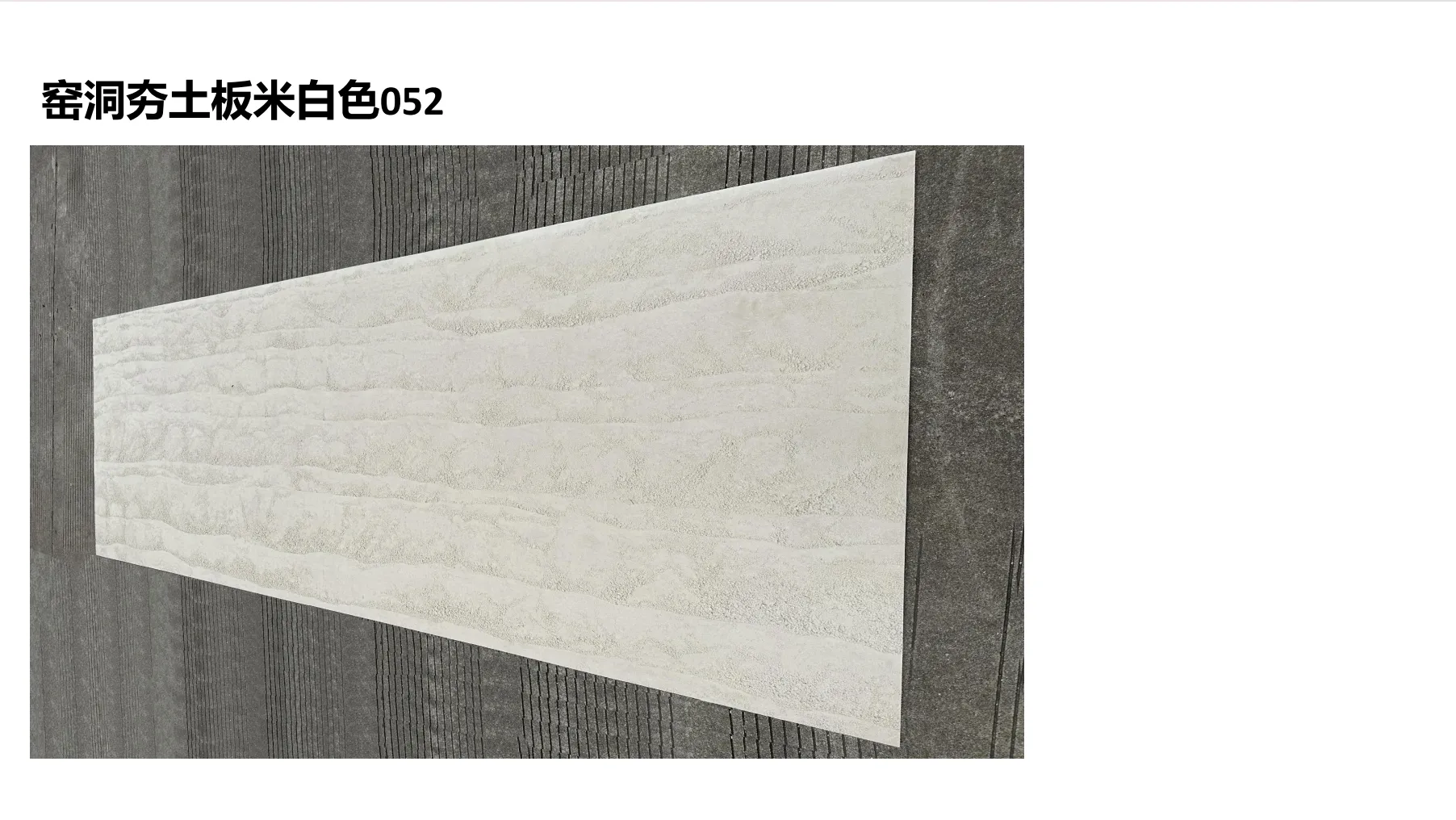
Rammed earth is an ancient technique—layers of soil, clay, and straw compressed into walls—but MCM's modern iteration is anything but primitive. The Gradient Color Rammed Earth Board marries tradition with innovation: locally sourced Saudi sand (70% of the mix) is blended with natural pigments and a proprietary binder that strengthens the material without sacrificing its earthy texture. The result? Panels that weigh 30% less than traditional rammed earth, resist Riyadh's harsh UV rays, and maintain their gradient vibrancy for decades.
But it's the aesthetics that steal the show. Run your hand along the surface, and you'll feel the texture—rough enough to hint at its handcrafted origins, smooth enough to invite touch. "Guests can't help but reach out," says hotel manager Layla Faraj. "A couple from Paris spent 10 minutes tracing the color transitions in the lobby. They said it felt 'alive,' like the wall was breathing."
The gradient itself is a feat of precision. MCM's artisans layer pigmented soil mixes by hand, adjusting the ratio of sand to pigment millimeters at a time. "It's like painting with dirt," jokes MCM's lead craftsman, Omar Khalid. "One mistake, and the whole gradient skews. But when it works? You get that sunset effect—soft, not stark. It's why the hotel's lobby wall, which stretches 20 meters, looks like a single, seamless horizon."
The gradient rammed earth doesn't stand alone. It's part of a carefully curated material palette that balances warmth with edge, tradition with modernity. Here's how it plays with its co-stars:
| Material | Application | Role in the Design Story |
|---|---|---|
| Lunar Peak Golden | Reception desk countertop | "The rammed earth is the desert; Lunar Peak Golden is the sun," says Al-Mansoori. The metallic, iridescent finish of this MCM stone catches light, mirroring the gradient's gold tones and adding a touch of opulence. |
| Travertine (Starry Blue) | Guest room accent walls | While the lobby leans into desert warmth, guest rooms cool things down with Travertine (Starry Blue) —a stone dotted with tiny, iridescent flecks that mimic a night sky. "It's the gradient rammed earth's quiet counterpart," Hassan notes. "Day vs. night, sun vs. stars—they tell a 24-hour story." |
| Fair-Faced Concrete | Ceiling beams and pillars | Raw, industrial, and intentionally unpolished, Fair-Faced Concrete grounds the space. "The rammed earth is soft; the concrete is strong," Al-Mansoori explains. "Together, they feel like a hug—warm but secure." |
| Bali Stone | Outdoor terrace flooring | Imported from Indonesia, Bali Stone has a weathered, salt-kissed texture that contrasts with the rammed earth's desert dryness. "It's a nod to global travel," Faraj says, "but paired with the gradient earth, it never feels out of place—just like a guest from Bali might feel at home here." |
The magic lies in the transitions. In the restaurant, for example, gradient rammed earth walls meet a Fair-Faced Concrete ceiling, with Lunar Peak Golden light fixtures hanging between them. "It's not about matching," Hassan says. "It's about conversation. The earth says, 'I'm here, rooted.' The concrete says, 'I'm here, strong.' Together, they say, 'You're safe.'"
Riyadh isn't kind to building materials. Summer temperatures soar to 45°C (113°F); sandstorms pelt surfaces with grit; humidity drops to single digits. "We needed the gradient rammed earth to survive all that and still look beautiful," says project engineer Ahmed Tariq. "At first, we worried the color would fade, or the panels would crack."
MCM's solution? A two-part defense. First, the binder: a lime-based additive that seeps into the soil particles, creating a microscopic shield against UV rays. "Traditional rammed earth fades in 5–7 years here," Tariq notes. "MCM's panels? They're warrantied for 25. We tested samples in a climate chamber for 1,000 hours—simulating 10 years of Riyadh weather—and the gradient was still crisp."
Second, installation precision. The panels were cut to size in MCM's Jeddah factory, then transported to Riyadh and mounted on a steel subframe with 2mm gaps to allow for thermal expansion. "Desert heat makes materials expand; cold nights make them contract," Tariq explains. "The gaps prevent warping, and the subframe keeps moisture out—critical in a city where rain is rare but dust is relentless."
One unexpected bonus? The rammed earth's thermal mass. "It acts like a natural insulator," says sustainability consultant Noor Amin. "During the day, it absorbs heat; at night, it releases it slowly. We've seen a 15% reduction in AC use in the lobby compared to similar hotels—all because of those earth panels."
For all the technical talk, the real test is in how guests feel. Take Maria Gonzalez, a travel blogger from Mexico City, who stayed in the hotel last spring: "The lobby took my breath away. The wall—this huge, sweeping gradient—it wasn't just decoration. It was like standing at the edge of the desert, but inside a five-star hotel. I kept going back to it, morning and night, just to watch how the light changed it. At sunrise, it was all soft gold; by sunset, it looked like it was on fire. I've stayed in hotels with marble and crystal, but nothing felt as… alive as that wall."
Business traveler James Wilson, visiting from London, was equally impressed: "I'm used to sterile conference rooms, but the hotel's meeting spaces have these rammed earth accents. They're rough, but warm—like being in a really nice cabin, not a hotel. I closed a big deal there, and I swear the room had something to do with it. It felt calm, grounded. People listen better when they're not on edge."
Even the staff has fallen for it. "Housekeepers tell me guests ask about the material all the time," Faraj laughs. "They want to know where to buy it for their homes! One guest even tried to take a tiny chip—we had to gently explain it's part of the hotel's art."
Luxury today isn't just about comfort—it's about conscience. The hotel's owner, a Saudi conglomerate with a green mandate, prioritized materials with low environmental impact. Gradient Color Rammed Earth Board checked every box:
It's a point of pride for the hotel, which now markets itself as "Eco-Luxury Redefined." "Guests don't just want to feel pampered," Faraj says. "They want to feel like their stay is doing good. When we tell them the wall they're admiring helped save trees? That makes the luxury mean more."
As the sun sets over Riyadh, casting the hotel's lobby wall in a warm glow, it's clear: Gradient Color Rammed Earth Board isn't just a building product. It's a storyteller. It tells of the desert's patience, of craftsmen's hands, of a design philosophy that says luxury doesn't have to be cold or distant—it can be rooted, tactile, and deeply connected to place.
"We didn't set out to use rammed earth," Al-Mansoori reflects. "We set out to create emotion. And sometimes, the most emotional materials are the ones that feel like they've been around forever—like they belong."
In the end, that's the project's greatest achievement: proving that luxury isn't about being flashy. It's about being authentic. And in a world that often feels disconnected, there's nothing more luxurious than feeling truly, beautifully grounded.
Recommend Products












