
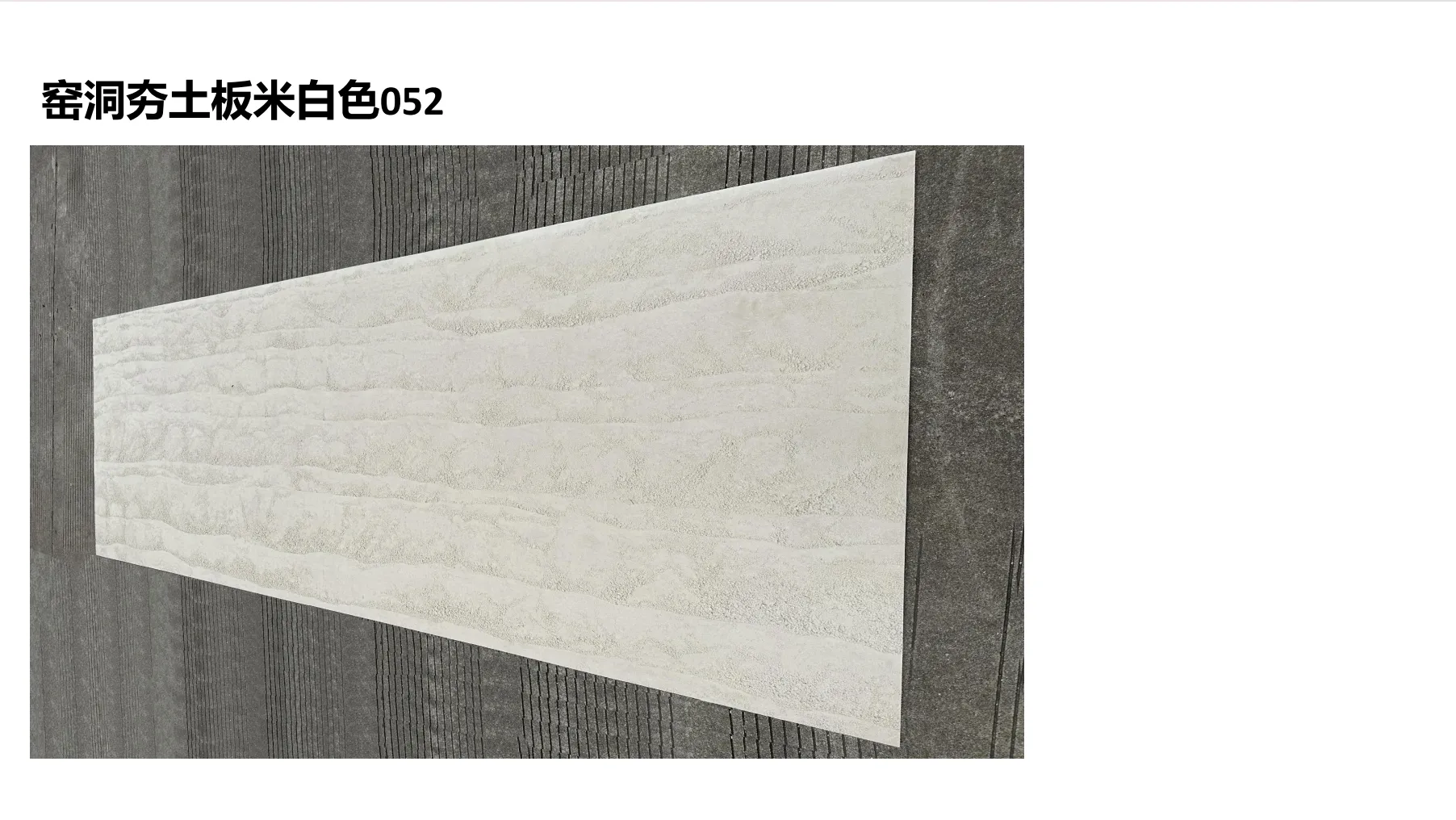
In the world of architecture and construction, every material choice is a story—a balance between immediate budget constraints and the quiet, long-term impact on both your wallet and the spaces you create. Today, we're diving into a material that's been turning heads for its ability to marry artistry with practicality: gradient color rammed earth board. It's not just a building material; it's a bridge between the warmth of natural textures and the savvy of forward-thinking design. But like any meaningful investment, it raises a critical question: Is the initial cost justified by the savings down the line? Let's unpack this, step by step, to help you see beyond the price tag and into the decades of value it might bring.
Before we talk numbers, let's get to know the star of the show. Gradient color rammed earth boards are a modern take on traditional rammed earth—a technique as old as human civilization, where layers of earth are compacted to form sturdy walls. But these boards aren't just chunks of dirt; they're engineered for today's needs. Imagine layers of natural pigments blending seamlessly, creating soft transitions from, say, warm terracotta to muted sage, or deep umber to pale sand. Each board carries the organic, tactile quality of handcrafted earth, but with the consistency and durability that modern construction demands.
What sets them apart? Unlike flat, uniform materials like fair-faced concrete, which leans into industrial minimalism, gradient color rammed earth boards celebrate variation. Their surface tells a story of color movement, making them a favorite for spaces that crave character—whether it's a home's accent wall, a restaurant's facade, or a public building's exterior. And while they nod to tradition, they're built to last in ways that old-world rammed earth sometimes couldn't, thanks to additives that boost weather resistance and structural integrity.
Let's cut to the chase: gradient color rammed earth boards aren't the cheapest option on the shelf. But "expensive" is relative, especially when you factor in what you're getting. Let's break down the initial costs into three key categories: material, labor, and customization.
At the core of the upfront expense is the material itself. Gradient color rammed earth boards are crafted with precision: high-quality soil blends (often a mix of clay, sand, and gravel), natural pigments for that signature gradient effect, and stabilizing agents to ensure longevity. On average, you're looking at $45–$75 per square foot for the boards alone, depending on the complexity of the gradient (more color transitions mean more labor in production) and the thickness of the board (thicker boards, used for load-bearing walls, cost more than thinner, decorative panels).
Compare that to something like fair-faced concrete, which might run $30–$50 per square foot, or basic drywall at $1–$3 per square foot. At first glance, gradient rammed earth seems steep—but remember, we're comparing apples to oranges here. Drywall is temporary, fair-faced concrete lacks the organic warmth, and neither offers the same gradient visual appeal. For a material that doubles as both structure and art, the baseline cost starts to make sense.
Installation isn't a job for just any contractor. Gradient color rammed earth boards are heavier than standard wall panels, and their texture demands careful handling to avoid chipping or color distortion. Skilled installers familiar with rammed earth techniques will charge $15–$25 per square foot for labor. This includes cutting boards to fit, securing them to framing, and sealing the seams for weatherproofing (critical for exteriors).
Again, this is higher than drywall installation ($2–$4 per square foot) or even fair-faced concrete ($10–$20 per square foot). But here's the catch: a botched installation can ruin the boards' appearance or compromise their durability. Investing in skilled labor upfront prevents costly repairs later—a classic case of "pay now or pay more later."
One of the biggest draws of gradient color rammed earth boards is customization. Want a gradient that mimics a desert sunset, with oranges bleeding into purples? Or a subtle shift from warm beige to cool gray to match your interior palette? Custom color blending, unique board sizes, or edge detailing (like beveled or curved edges) can add 10–30% to the total cost. For example, a standard gradient with two colors might cost $50 per square foot, while a multi-hued "ombre" effect with four colors could push that to $70 per square foot.
Is customization worth it? For many homeowners and designers, yes. A space that feels uniquely yours—one that tells your aesthetic story—has intangible value that goes beyond dollars. But it's important to factor this into your initial budget if you're set on a one-of-a-kind look.
| Cost Component | Low End | High End | Average |
|---|---|---|---|
| Material (Boards) | $45 | $75 | $60 |
| Labor (Installation) | $15 | $25 | $20 |
| Customization (Color, Size, Edges) | $5 | $25 | $15 |
| Total Initial Cost | $65 | $125 | $95 |
Now, let's shift our focus from the upfront sticker shock to the decades of savings that gradient color rammed earth boards deliver. This is where the material truly shines—not just as a pretty face, but as a financial workhorse.
Traditional rammed earth structures have stood for centuries—think ancient forts in Africa or historic adobe homes in the American Southwest. Gradient color rammed earth boards, reinforced with modern stabilizers, are no different. They're designed to last 50–100 years with minimal degradation, even in harsh climates. Rain, snow, UV rays, and temperature swings? These boards laugh them off. Unlike wood, they don't rot or attract pests. Unlike drywall, they won't crack from humidity or need replacement after a leak. And unlike painted surfaces, their color runs through the material—so scratches or chips are barely noticeable, no touch-ups required.
Let's put this in perspective: A typical drywall wall might need repainting every 5–7 years ($3–$5 per square foot per repaint) and full replacement every 20–30 years ($10–$20 per square foot). Over 50 years, that's 7 repaints ($35 per square foot) plus 1 replacement ($15 per square foot)—a total of $50 per square foot in maintenance and replacement costs. Gradient rammed earth boards? Maybe a light power wash every 5 years ($0.50 per square foot) and zero replacements. Over 50 years, that's $5 per square foot total. The savings here? A staggering $45 per square foot over half a century.
Beyond durability, gradient color rammed earth boards are low-maintenance by nature. No need for annual sealing (unlike wood or some stone), no repainting, no patching. For exteriors, a simple annual rinse with a hose is usually enough to keep them looking fresh. For interiors, a damp cloth wipes away dust. Even in high-traffic areas like hallways or commercial lobbies, their dense, compacted surface resists scuffs and stains. Compare this to, say, historical pathfinders stone—a beautiful but porous material that often requires regular sealing ($2–$4 per square foot annually) to prevent water damage and staining. Over 10 years, that's $20–$40 per square foot in sealing costs alone. Gradient rammed earth? $0.50 per square foot over the same period. The convenience factor is priceless too—no scheduling contractors, no living with the smell of paint or sealant, no stress about "ruining" the material with everyday use.
Here's a hidden gem: gradient color rammed earth boards are natural insulators. The dense earth core traps air, creating a thermal mass that regulates indoor temperatures. In summer, it absorbs heat during the day and releases it slowly at night, keeping interiors cool without cranking the AC. In winter, it retains warmth, reducing heating costs. Studies have shown that rammed earth walls can lower energy bills by 15–30% compared to standard drywall or even fair-faced concrete (which has lower thermal mass). For a 2,000-square-foot home, that's $300–$600 in annual energy savings. Over 20 years, that's $6,000–$12,000 back in your pocket—more than enough to offset the initial material cost premium.
Finally, let's talk about resale value. Homes and buildings with unique, high-quality materials like gradient color rammed earth boards stand out in the market. Potential buyers are drawn to the combination of durability, beauty, and low maintenance—qualities that translate to higher asking prices. Real estate agents estimate that unique, sustainable materials can boost resale value by 5–10%. For a $500,000 home, that's an extra $25,000–$50,000 at sale time. Even if you never sell, there's value in knowing your space is both timeless and resilient—a sanctuary that grows more valuable, not less, as the years pass.
To truly understand the value of gradient color rammed earth boards, let's compare them side-by-side with three popular alternatives: fair-faced concrete, mcm flexible stone, and historical pathfinders stone. We'll look at initial cost, 50-year maintenance/replacement costs, energy savings, and lifespan.
| Material | Initial Cost (Per Sq Ft) | 50-Year Maintenance/Replacement (Per Sq Ft) | Annual Energy Savings (Per 2,000 Sq Ft Home) | Estimated Lifespan |
|---|---|---|---|---|
| Gradient Color Rammed Earth Board | $65–$125 (Avg $95) | $5 | $300–$600 | 50–100 years |
| Fair-Faced Concrete | $30–$50 (Avg $40) | $20 (sealing + minor repairs) | $100–$200 (lower thermal mass) | 50–80 years |
| MCM Flexible Stone | $50–$80 (Avg $65) | $15 (occasional panel replacement) | $150–$300 (moderate insulation) | 30–50 years |
| Historical Pathfinders Stone | $70–$100 (Avg $85) | $40 (annual sealing + repairs) | $200–$400 (good insulation) | 40–70 years |
*Costs are approximate and vary by location, customization, and installation quality.
What jumps out? Gradient rammed earth has a higher initial cost, but its minimal maintenance, strong energy savings, and long lifespan make it the most cost-effective over 50 years. Even with the highest initial price ($125 per square foot), the $5 maintenance cost and $600 annual energy savings quickly close the gap. Fair-faced concrete is cheaper upfront, but its lower energy savings and higher maintenance add up. MCM flexible stone has a similar initial cost but a shorter lifespan. Historical pathfinders stone, while beautiful, is weighed down by high maintenance costs.
Numbers tell a story, but real-life examples bring it home. Let's look at the Desert Bloom Community Center in Tucson, Arizona—a 10,000-square-foot facility built in 2010 with gradient color rammed earth board exteriors. The initial investment for the rammed earth panels was $850,000 (approximately $85 per square foot, including labor and customization for a sunset-inspired gradient). At the time, the board debated using fair-faced concrete instead, which would have cost $400,000 (half the price).
Fast forward to 2023. The center's energy bills have averaged $2,400 per year, compared to an estimated $4,000 per year with fair-faced concrete (savings of $1,600 annually, or $20,800 over 13 years). Maintenance costs? Just $500 total over 13 years (for occasional power washing). The fair-faced concrete alternative would have required annual sealing ($2,000 per year) and minor crack repairs ($1,000 every 5 years)—totaling $28,000 over 13 years. So far, the rammed earth has saved the center $20,800 (energy) + $27,500 (maintenance) = $48,300. At this rate, by year 30, the initial $450,000 price difference will be fully recouped, and the savings will only grow. Plus, the center's unique exterior has become a local landmark, boosting community engagement and event bookings—a priceless bonus.
At the end of the day, choosing gradient color rammed earth boards isn't just about dollars and cents—it's about investing in a material that aligns with how we want to live: with intention, durability, and beauty. Yes, the initial cost is higher than some alternatives, but the long-term savings in maintenance, energy, and replacement costs are undeniable. More than that, these boards bring a sense of rootedness to a space—warmth that can't be replicated by cold concrete or synthetic materials. They're a testament to the idea that "quality over quantity" applies to building materials too.
Whether you're designing a home, a commercial space, or a community project, gradient color rammed earth boards offer something rare: a material that looks good, lasts long, and saves you money in the process. They're not just boards—they're a promise of stability in a world of quick fixes and disposable trends. And in the end, isn't that the best kind of investment?
Recommend Products












