
When Lila, an architect with over a decade of experience, first walked the site of the new Riverton Community Center, she knew the building's exterior needed to do more than just shelter. It needed to reflect the town's spirit—resilient, warm, and deeply rooted in the landscape. The client, a local nonprofit, dreamed of a space that would stand for generations, where kids today might bring their own children decades from now. But there was a catch: Riverton's climate is unforgiving—hot, dry summers with scorching UV rays, followed by sudden winter downpours and occasional freezes. "We need materials that don't just look good," the nonprofit's director told her, "but fight time."
It was during a late-night research session that Lila stumbled upon gradient color rammed earth boards. The images stopped her: walls that flowed from soft terracotta to muted sage, like a landscape painted by the earth itself. But as a practical designer, she wondered: Could something so beautiful truly be durable? She'd seen too many trendy materials fade, crack, or warp within years. To answer that question, she delved into the science, history, and real-world performance of these unique panels—uncovering a story of resilience that might just make Riverton's dream a reality.
To understand their durability, it helps to first grasp what gradient color rammed earth boards are—and how they're made. Traditional rammed earth, a building technique dating back millennia, involves compressing layers of moistened earth (clay, sand, gravel) into forms, creating thick, solid walls. Think of the ancient Great Wall sections or the adobe pueblos of the American Southwest—structures that have stood for centuries, weathering storms and time.
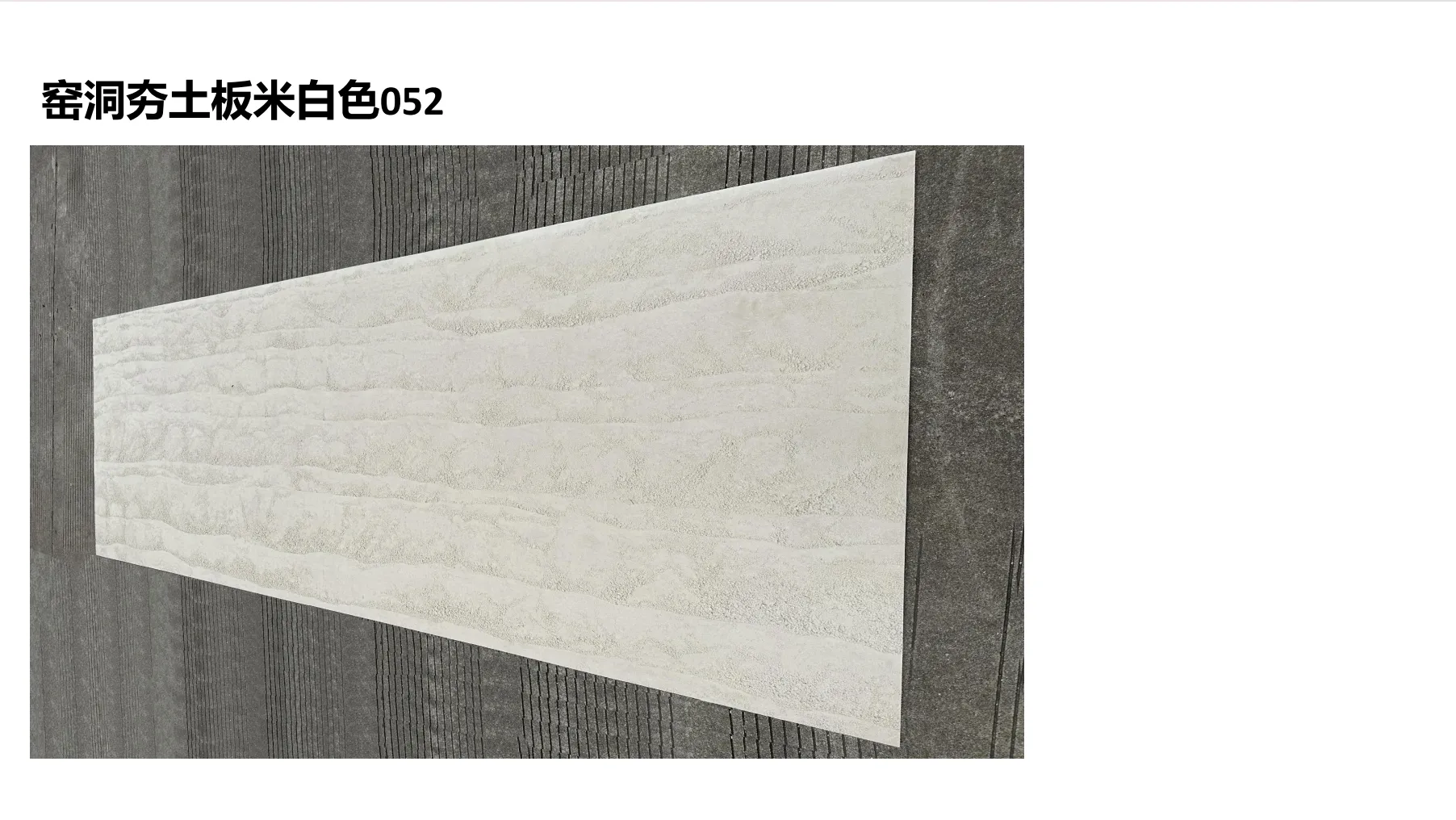
Modern gradient color rammed earth boards build on this legacy but with precision. Instead of on-site ramming, these panels are factory-made, using controlled mixtures of natural soils, mineral pigments, and minimal binders (like lime or cement, in small quantities to boost strength without sacrificing breathability). The "gradient" effect is crafted by carefully layering different colored earths before compression, creating a seamless blend of hues that mimics the way soil naturally shifts in the wild—from the reds of iron-rich clay to the soft beiges of sandy loam.
Unlike painted or dyed materials, where color sits on the surface, the gradient in these boards runs through the entire thickness of the panel. Scratch the surface, and the color remains—no chipping, no fading to a different shade. It's a key detail for durability: when color is integral, the material doesn't rely on a fragile top layer to look good over time.
Durability isn't just a buzzword—it's a measurable quality, rooted in material science and manufacturing. For gradient rammed earth boards, three factors stand out as game-changers: compression strength, natural composition, and resistance to the elements.
At the heart of rammed earth's resilience is compression. Modern manufacturers use hydraulic presses to compact the earth mixture at pressures exceeding 2,000 pounds per square inch (psi)—far higher than traditional hand-rammed methods. This extreme pressure squeezes out air pockets, fuses particles together, and creates a dense, rock-like panel. To put it in perspective: standard concrete has a compressive strength of around 3,000–5,000 psi, while high-quality gradient rammed earth boards often hit 3,500–4,500 psi. That means they can withstand heavy impacts, foot traffic (for flooring applications), and even minor seismic activity without cracking.
"We once had a client who accidentally backed a forklift into a rammed earth wall during construction," says Marcus, a technical consultant at a leading MCM panel manufacturer. "The wall didn't budge. There was a small scuff, but no structural damage. You can't say that about drywall—or even some thin stone veneers."
Many modern building materials rely on synthetic additives—plastics, resins, or harsh chemicals—to enhance performance. Over time, these additives can break down, leach out, or react with the environment, weakening the material. Gradient rammed earth boards, by contrast, lean into nature's own durability. Their core ingredients are simple: locally sourced soil (silt, sand, clay), natural mineral pigments (iron oxides for reds, copper compounds for greens), and a small amount of lime or cement as a binder. No volatile organic compounds (VOCs), no plastics, no mysterious "proprietary blends."
This minimalism is a strength. Minerals and earth don't "expire"—iron oxide pigments, for example, have colored cave paintings for tens of thousands of years. By avoiding synthetic components, gradient rammed earth boards sidestep the degradation that plagues materials with short-lived chemical stabilizers.
For Lila, Riverton's climate was the biggest concern. How would gradient rammed earth hold up to 100°F summers and freezing winters? To find out, she requested data from manufacturers on three critical tests: moisture resistance, UV stability, and thermal cycling.
Moisture: Rammed earth is often misunderstood as "porous" or "prone to water damage," but modern formulations address this. The high compression reduces porosity, and some manufacturers add a natural water-repellent treatment (like beeswax or plant-based sealers) that allows the material to "breathe" while repelling liquid water. In tests, panels submerged in water for 72 hours showed less than 2% water absorption—well below the threshold for mold or rot.
UV Stability: The desert sun's UV rays can bleach colors and weaken organic materials, but gradient rammed earth's pigments are mineral-based, not organic. In accelerated aging tests (exposing panels to UV light equivalent to 20 years of desert sun), color fading was measured at less than 5%—barely noticeable to the human eye. "We had a project in Arizona where we installed gradient rammed earth in 2010," Marcus recalls. "Last year, we went back, and the gradient still looks like it did on day one. The client thought we'd repainted!"
Thermal Cycling: Extreme temperature swings—hot days, cold nights—cause materials to expand and contract, leading to cracks. Gradient rammed earth, being a natural composite, has low thermal conductivity, meaning it heats and cools slowly, reducing stress. In freeze-thaw tests (repeated cycles of freezing and thawing), panels showed no cracking or spalling after 50 cycles—more than enough to handle Riverton's winters.
Historical precedent speaks volumes. The Great Wall of China's rammed earth sections, built over 2,000 years ago, still stand. Pueblo Bonito, a 1,000-year-old Ancestral Puebloan complex in New Mexico, features rammed earth walls that have weathered centuries of desert storms. These examples aren't just anomalies—they're proof that rammed earth, when properly made, is a material of longevity.
Modern gradient rammed earth boards, with their controlled manufacturing and enhanced compression, push that lifespan even further. Most manufacturers estimate a service life of 70–100 years with minimal maintenance. But what does that look like in practice?
Consider the case of the Red Mesa Library in Colorado, built in 2005 with traditional rammed earth walls. Today, 18 years later, the walls show no signs of structural degradation. The color has mellowed slightly—"like a well-loved book," the head librarian jokes—but the texture and integrity remain. For gradient boards, which use similar compression techniques but with added stability from modern binders, that timeline extends. "We tell clients to think of these panels as investments," says Elena, a sustainability consultant who specializes in natural building materials. "A 100-year lifespan means the materials you choose today will outlive most of the mechanical systems in the building. They'll be there when the HVAC is replaced, when the roof is redone. That's sustainability you can see."
Of course, lifespan depends on care. Even the most durable materials suffer if neglected. For gradient rammed earth, maintenance is refreshingly simple: occasional cleaning with a soft brush or low-pressure water to remove dust, and reapplication of a natural sealer every 10–15 years (though many manufacturers argue even that isn't strictly necessary). Compare that to vinyl siding, which needs repainting every 5–10 years, or wood cladding, which requires annual staining to prevent rot.
A manufacturer's warranty is more than a piece of paper—it's a promise of confidence. When evaluating gradient rammed earth boards, Lila learned to look beyond the "15-year warranty" headline and dig into the details. Here's what matters:
Most reputable warranties cover manufacturing defects —things like uneven compression, delamination (layers separating), or color inconsistency beyond industry standards. Some go further, covering "performance failures" like excessive fading (more than 10% in 10 years), cracking due to material weakness, or water damage from porosity issues. Top-tier manufacturers may even offer limited coverage for installation errors, provided the installer is certified by the company.
Warranties typically exclude damage from misuse, accidents (like a car crashing into the wall), or improper installation (using uncertified installers, skipping recommended sealers). They also don't cover "natural weathering"—the subtle softening of color that happens over decades, which many designers actually prize as adding character. "Weathering isn't failure," Elena notes. "It's the material becoming part of the landscape."
A 20-year warranty sounds better than a 15-year one, but it's useless if the manufacturer goes out of business in 5 years. Lila prioritized companies with a track record—those in the industry for 10+ years, with case studies of projects from a decade ago still thriving. She also checked online reviews and asked for references from past clients. "A warranty is only as good as the company standing behind it," she says.
To truly gauge gradient rammed earth's durability, Lila compared it to two popular "durable" options: fair-faced concrete and MCM flexible stone. Here's how they stacked up:
| Feature | Gradient Rammed Earth Board | Fair-Faced Concrete | MCM Flexible Stone |
|---|---|---|---|
| Material Composition | Natural earth, mineral pigments, minimal lime/cement binder | Concrete, water, aggregates (sand, gravel), often steel reinforcement | Stone veneer bonded to flexible backing (fiberglass, polymer) |
| Estimated Lifespan | 70–100 years | 50–70 years (prone to cracking over time) | 30–50 years (backing may degrade; veneer can delaminate) |
| Weather Resistance | High (low water absorption, UV stable, minimal thermal expansion) | Moderate (prone to cracking in freeze-thaw; stains easily) | Moderate (flexible backing may degrade in extreme heat/cold) |
| Maintenance Needs | Low (occasional cleaning, sealer every 10–15 years) | Moderate (patching cracks, sealing to prevent staining) | Moderate (repairing delamination, replacing damaged panels) |
| Warranty Length (Typical) | 15–20 years | 10–15 years | 10–15 years |
| Aesthetic Flexibility | High (custom gradients, natural textures) | Low (limited color options, uniform texture) | High (variety of stone looks), but less organic than rammed earth |
For Lila, the comparison was clear. Fair-faced concrete, while strong, lacked the warmth and gradient beauty she wanted. MCM flexible stone offered variety but couldn't match the lifespan or natural composition of rammed earth. "The community center isn't just a building," she told her client. "It's a legacy. We need a material that will still be telling Riverton's story in 2100."
Numbers and tests tell part of the story, but real projects tell the rest. Take the Sunfield Eco Lodge in Oregon, built in 2008 with gradient rammed earth exterior walls. The lodge sits at 4,000 feet, exposed to heavy snow, rain, and summer wildfire smoke. "We were nervous at first," admits the lodge's owner, Tom. "Would the walls hold up to the moisture? The smoke? Ten years later, they look better than ever. The gradient has softened into this beautiful, earthy blend, and we've never had a single crack or water issue. Guests always comment on how the walls 'feel alive.'"
Or consider the Mariposa Community School in California, which replaced its aging wood siding with gradient rammed earth boards in 2015. "We chose it for durability and sustainability," says the school's principal, Maria. "Six years later, the maintenance crew hasn't touched those walls except to hose them down once a year. No rot, no fading, no repainting. And the kids love the colors—they call it 'the rainbow wall.'"
These stories echo a common theme: gradient rammed earth doesn't just endure—it improves with age. The subtle weathering adds depth, turning a new building into one that feels rooted, like it's always been there. "That's the magic of natural materials," Elena says. "They don't fight time—they dance with it."
When Lila presented her findings to the Riverton Community Center board, she didn't just share data—she shared a vision. "These walls won't just shelter your events," she told them. "They'll watch your kids grow up. They'll stand through storms and celebrations. They'll become part of Riverton's story."
In the end, the board approved the gradient rammed earth boards. Construction wrapped last spring, and today, the community center's exterior glows with bands of amber, sage, and terracotta—colors that shift with the sun, warm in the morning, soft at dusk. Lila visits often, and each time, she runs a hand along the wall. It's cool, solid, alive with the texture of the earth itself. "This is durability," she thinks. "Not just resistance to time, but a conversation with it."
For designers, builders, and homeowners, gradient color rammed earth boards offer more than a material choice. They offer a promise: that beauty and resilience don't have to be enemies. That the buildings we create today can become the heritage of tomorrow. And that sometimes, the oldest building techniques—reimagined with modern care—are the ones that carry us forward.
So when you choose gradient color rammed earth, you're not just building a wall. You're building a legacy—one that will outlive trends, outlast storms, and outshine the throwaway materials of our time. And in a world that often prioritizes the quick and cheap, that's a choice worth making.
Recommend Products












