
The construction industry has long been a double-edged sword—while it builds the homes, offices, and cities we rely on, it also generates a staggering amount of waste. In fact, according to the United Nations Environment Programme, construction and demolition waste accounts for nearly 30% of global waste generation. From excess materials tossed aside during building to energy-heavy production processes, the industry's footprint is hard to ignore. But what if there was a material that didn't just minimize waste, but actively reimagined how we build? Enter the gradient color rammed earth board —a modern take on an ancient building technique that's quietly revolutionizing sustainability in construction. Let's dive into how this material, alongside innovations like MCM flexible stone and big slab board series, is turning the tide on construction waste.
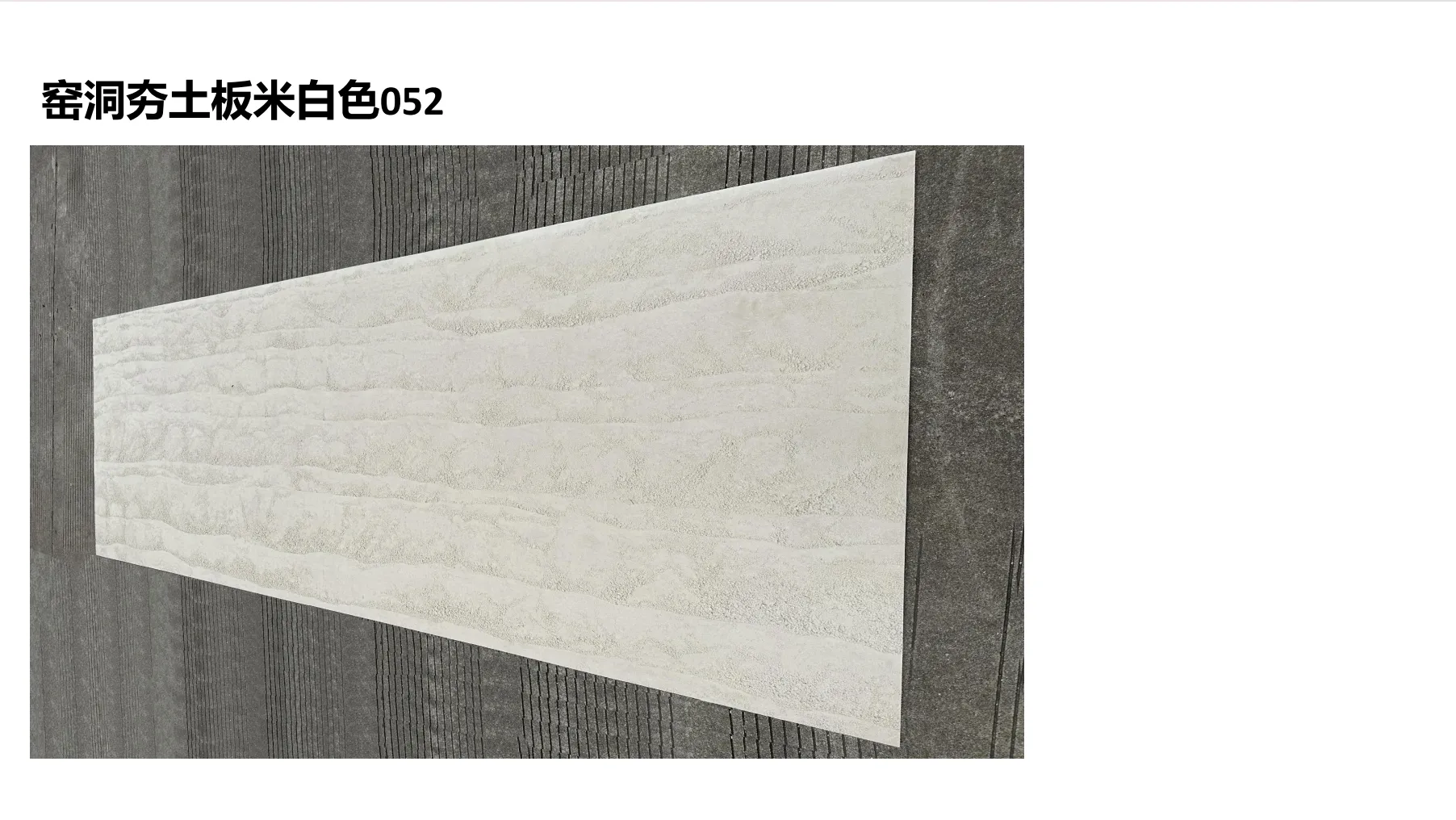
Rammed earth isn't new. For centuries, civilizations from the Great Wall of China to the cliff dwellings of the American Southwest have used this method: compressing layers of earth, sand, and gravel into dense, durable walls. But traditional rammed earth had its limits—limited color options, heavy weight, and slow installation made it less appealing for today's fast-paced construction projects. That's where gradient color rammed earth board steps in. By blending natural pigments with locally sourced soil and binding agents, manufacturers can create boards with soft, flowing color transitions—think warm terracottas fading into muted sage greens, or soft beiges melting into dusty rose. These boards aren't just beautiful; they're engineered to be lighter, stronger, and easier to install than their traditional counterparts.
What makes gradient color rammed earth board so special? It starts with the ingredients. Unlike synthetic materials that rely on petroleum-based products, these boards use earthy components—clay, sand, and silt—often sourced from construction sites themselves. Imagine a building project where the soil dug up for the foundation isn't hauled off to a landfill, but instead processed, mixed with natural pigments, and pressed into panels. That's the reality with gradient rammed earth: waste from one part of the project becomes a resource for another. It's a circular approach that drastically cuts down on the "embodied waste" of construction—the waste generated before a single wall is even built.
Gradient color rammed earth board doesn't work alone. To truly transform construction waste, it often teams up with other innovative materials, like MCM flexible stone and MCM big slab board series . MCM, short for Modified Composite Material, is a game-changer for sustainability. Made by bonding natural stone veneers to a lightweight, flexible backing, MCM flexible stone offers the look of real stone without the heft—or the waste. Traditional stone cladding requires cutting large blocks of stone into thin slices, often leaving 50% or more of the original block as scrap. MCM flexible stone, by contrast, uses a precision process that maximizes the use of each stone slab, reducing waste by up to 70%. And because it's flexible, it can be applied to curved surfaces without breaking, meaning fewer offcuts during installation.
Then there's the MCM big slab board series—large-format panels that cover more surface area with fewer seams. Think about it: if you're cladding a wall with small tiles, you need more pieces, more grout, and more cuts to fit around corners or windows. Each cut means more waste. Big slab boards, some as large as 1.2m x 2.4m, minimize those cuts. A single slab can cover a section of wall that would otherwise require dozens of smaller tiles, slashing the amount of offcut waste generated on-site. When paired with gradient rammed earth boards, these slabs create a cohesive, low-waste building envelope—walls that are both stunning and responsible.
Talk of sustainability is meaningful, but let's get concrete (pun intended). How much waste does gradient color rammed earth board actually save? To put it in perspective, let's compare it to two common building materials: traditional brick and standard drywall.
| Material | Waste Generated During Production | Waste Generated During Installation | Embodied Energy (MJ/kg) | End-of-Life Disposal |
|---|---|---|---|---|
| Traditional Brick | 15-20% (due to firing defects) | 8-10% (broken bricks, mortar waste) | 3.5-5.0 | Mostly landfilled; non-biodegradable |
| Standard Drywall | 10-12% (cutting scraps in production) | 15-20% (cutting to size, damaged sheets) | 2.0-2.5 | Often landfilled; gypsum can be recycled, but paper backing limits reuse |
| Gradient Color Rammed Earth Board | 3-5% (minimal scrap from pressing) | 2-4% (precision-cut panels, fewer offcuts) | 0.8-1.2 | Biodegradable; can be crushed and reused as soil amendment |
The numbers speak for themselves. Gradient rammed earth board generates just 3-5% waste during production—far less than brick or drywall. During installation, its precision-cut panels mean only 2-4% waste, compared to drywall's 15-20%. And when the building eventually reaches the end of its life? Unlike brick or drywall, which often end up in landfills, rammed earth boards can be broken down and returned to the earth, closing the loop entirely. It's a lifecycle approach that considers waste at every stage, not just during building.
The environmental benefits of gradient color rammed earth board go beyond waste reduction. Its thermal mass—ability to absorb and store heat—means buildings stay cooler in summer and warmer in winter, reducing the need for heating and cooling. This cuts energy use, which in turn lowers carbon emissions. Pair that with foamed aluminium alloy board (another low-waste material, made by expanding aluminium into a lightweight, insulating foam) for roofing or cladding, and you've got a building that's not just low-waste, but energy-efficient too.
Then there's indoor air quality. Traditional construction materials often off-gas volatile organic compounds (VOCs), which can cause headaches, allergies, and long-term health issues. Gradient rammed earth boards, made from natural materials, are VOC-free. They even regulate humidity by absorbing and releasing moisture, keeping indoor air balanced and reducing the need for dehumidifiers. It's a small detail, but one that makes a big difference for the people inside the building—proof that sustainability and livability can go hand in hand.
It's one thing to talk about sustainability in theory; it's another to see it in action. Take the "EcoVillage" development in Portland, Oregon, where 12 townhomes were built using gradient color rammed earth boards, MCM flexible stone, and big slab boards. During construction, over 80% of the excavated soil was repurposed into rammed earth panels, diverting 200+ tons of waste from landfills. The project also used foamed aluminium alloy board for exterior accents, cutting energy use by 35% compared to similar-sized homes. Homeowners report lower utility bills, and the development has become a model for sustainable urban living.
Across the globe, in Barcelona, the "Green Office Hub" chose gradient rammed earth boards for its lobby walls, paired with fair-faced concrete (a finish that requires no additional cladding, thus reducing material use). The result? A space that feels warm and earthy, with waste from construction totaling just 5% of the project's total material weight—far below the industry average of 15-20%. Visitors often comment on the "calming" effect of the gradient walls, proving that sustainability doesn't have to sacrifice aesthetics.
Of course, no material is perfect. Gradient color rammed earth board does have limitations: it's not ideal for extremely wet climates (though waterproof sealants are improving), and upfront costs can be higher than traditional materials. But as demand grows, manufacturers are scaling production, driving down prices. Innovations in pigment technology are also expanding color options, making the material more versatile for different architectural styles.
The biggest challenge? Education. Many architects and builders are still unfamiliar with gradient rammed earth and MCM products. That's why industry groups are hosting workshops, creating case studies, and partnering with universities to train the next generation of builders. As more professionals experience these materials firsthand—feeling their texture, seeing their durability, and crunching the numbers on waste reduction—adoption will grow.
The gradient color rammed earth board isn't just a building material—it's a statement. It says that we don't have to choose between progress and planet, between beauty and responsibility. When paired with MCM flexible stone, big slab boards, foamed aluminium alloy, and fair-faced concrete, it's part of a larger movement: a construction industry that's learning to work with the earth, not against it.
Reducing construction waste isn't a niche goal—it's a necessity. With global population growing and urbanization accelerating, the demand for new buildings will only increase. By embracing materials that prioritize circularity, we can build cities that are greener, healthier, and more resilient. So the next time you walk past a construction site, take a closer look. Maybe those walls aren't just walls—they're a step toward a world where waste is a thing of the past. And that, perhaps, is the most beautiful gradient of all: progress, one sustainable panel at a time.
Recommend Products












