
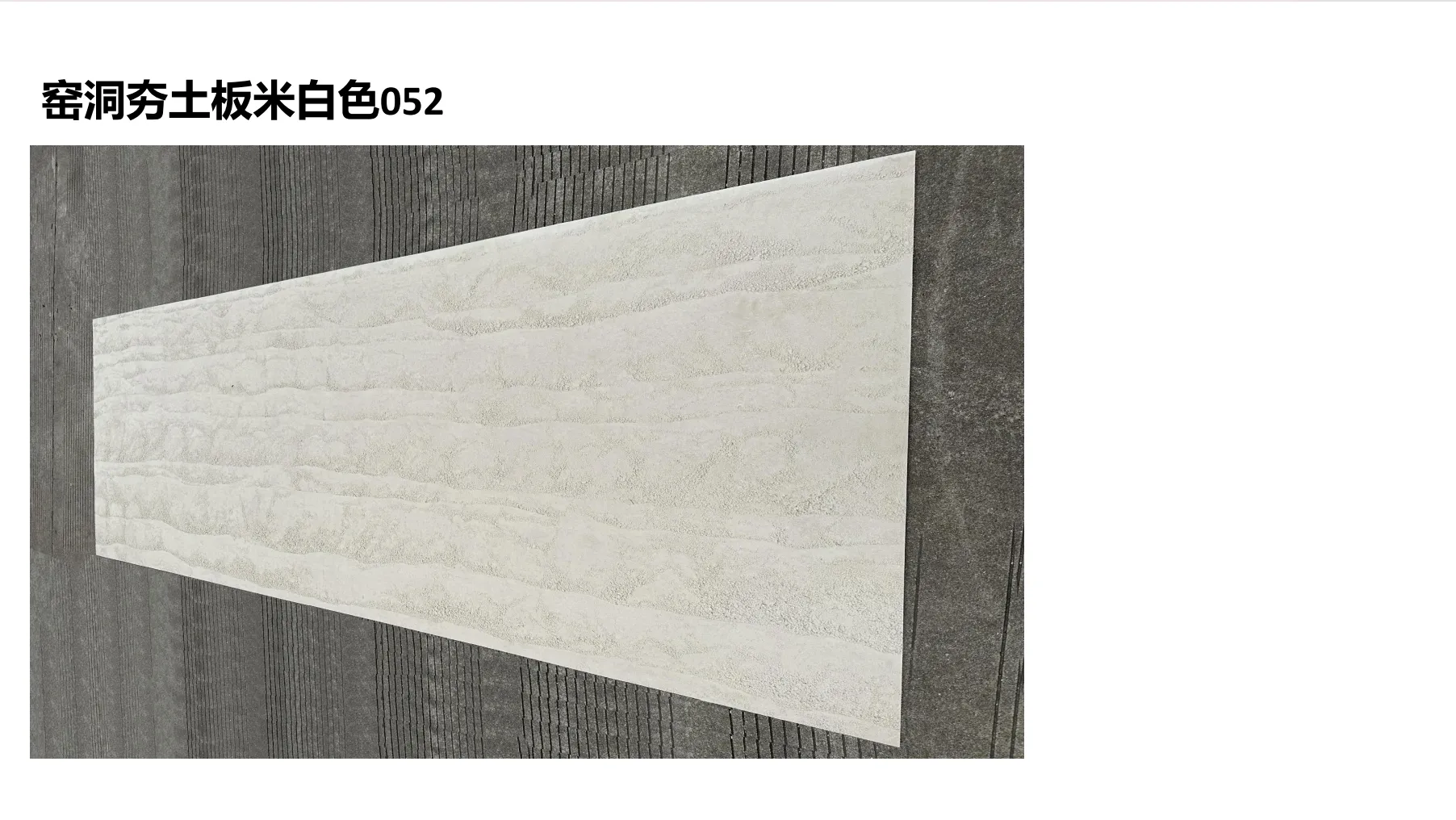
Building materials are more than just the bones of a structure—they're the storytellers of space. They shape how we feel when we walk into a room, how a building interacts with its environment, and yes, how safe we are when the unexpected happens. In recent years, one material has been turning heads for its ability to blend artistry with functionality: gradient color rammed earth board. With its soft, flowing hues that mimic the natural transitions of desert sunsets or mountain horizons, it's no wonder architects and designers are falling in love. But here's the thing: beauty shouldn't come at the cost of safety. That's why today, we're diving deep into a topic that matters just as much as aesthetics: fire resistance. How does this stunning material hold up when flames are involved? What safety ratings does it meet? And how does it stack up against other popular options like fair-faced concrete or foamed aluminium alloy board? Let's explore.
First, let's get to know the star of the show. Gradient color rammed earth board is a modern take on a centuries-old building technique. Traditional rammed earth involves compressing layers of moistened earth (clay, sand, gravel) into forms to create solid walls—think of the ancient Great Wall sections or adobe structures in the American Southwest. But gradient color rammed earth board elevates this by adding carefully blended pigments that fade from one shade to another, creating a visual flow that feels both organic and intentional.
Imagine walls that shift from soft terracotta at the base to warm sandstone at the top, or from muted sage green to pale cream—each panel is a canvas of natural color. And it's not just about looks. These boards are dense, durable, and made with minimal synthetic additives, aligning with the growing demand for sustainable, low-VOC (volatile organic compound) building materials. But what really sets it apart, especially in safety-conscious industries, is its inherent fire resistance. Let's unpack why that matters.
When we pick materials for our homes, offices, or public spaces, we often prioritize style, cost, or sustainability. But fire resistance? It's easy to overlook—until disaster strikes. Fires in buildings can start from electrical faults, kitchen accidents, or even external sources like wildfires, and the right materials can mean the difference between a small incident and a catastrophic loss.
Fire-resistant materials slow the spread of flames, reduce smoke production (which is often more deadly than the fire itself), and give occupants crucial time to evacuate. They also help protect the structural integrity of a building, allowing firefighters to do their jobs safely. That's why building codes around the world—from the International Building Code (IBC) in the U.S. to Eurocodes in the EU—mandate specific fire safety ratings for materials used in walls, ceilings, and floors. Ignoring these standards isn't just risky; it's illegal.
For gradient color rammed earth board, which is often used in high-visibility areas like lobbies, exteriors, or boutique interiors, balancing aesthetics with fire safety is key. Designers don't want to sacrifice beauty for compliance, and luckily, they don't have to. Let's break down what fire safety ratings actually mean, so we can see how this material measures up.
Fire safety ratings can feel like a alphabet soup of acronyms: ASTM, ISO, UL, EN… But at their core, they're designed to answer two big questions: How quickly does a material catch fire and spread flames? and How much smoke does it produce when burning?
The most common standard in North America is ASTM E84, also known as the "Steiner Tunnel Test." In this test, a 20-foot-long sample of the material is exposed to a controlled flame, and two key metrics are measured: Flame Spread Index (FSI) and Smoke Developed Index (SDI) . The scale for FSI runs from 0 (asbestos, a non-combustible material) to 100 (red oak, a highly combustible material). Materials with an FSI of 0-25 are classified as Class A (the highest rating), 26-75 as Class B, and 76-200 as Class C.
In Europe, the EN 13501-1 standard is widely used. It classifies materials into reaction-to-fire classes like A1 (non-combustible), A2 (limited combustibility), B, C, D, E, or F (lowest). For example, A1 materials don't contribute to fire at all, while A2 might produce some smoke but no flames. These ratings aren't just about the material itself—they also consider how it's installed (e.g., a material might be Class A on its own but drop in rating if installed with flammable adhesives).
So when we talk about gradient color rammed earth board's fire resistance, we're looking at where it falls on these scales. Spoiler: It's impressive, but let's get into the details.
What makes gradient color rammed earth board so fire-resistant? It starts with its composition. Traditional rammed earth is made from natural materials—clay, sand, gravel, and sometimes a small amount of stabilizer like lime or cement. These are all inorganic, non-combustible materials. When compressed into dense boards, they form a solid mass that doesn't ignite easily and resists flame spread.
Testing data from independent labs (we'll get to certifications later) shows that gradient color rammed earth board typically achieves an ASTM E84 Class A rating , with an FSI of less than 25 and SDI of less than 450. That puts it in the same category as brick, stone, and concrete—materials we've trusted for centuries to stand up to fire. The gradient color pigments, which are often mineral-based (think iron oxides for reds, chromium oxides for greens), are also non-combustible and don't affect the material's fire performance. Unlike some synthetic paints or coatings that can melt or release toxic fumes when heated, these pigments are stable under high temperatures.
Another factor is thermal mass. Rammed earth has high thermal mass, meaning it absorbs and stores heat slowly. In a fire, this helps prevent the material from reaching ignition temperatures quickly, buying time for evacuation. It also doesn't produce dripping molten material, which can spread fire to lower levels—a common hazard with plastics or some metals.
But don't just take our word for it. Let's compare it to two other popular materials: fair-faced concrete and foamed aluminium alloy board (vintage silver).
To really understand gradient color rammed earth board's fire resistance, it helps to see how it stacks up against alternatives. Let's create a quick comparison table with three materials: gradient color rammed earth board, fair-faced concrete (a staple in modern architecture), and foamed aluminium alloy board (vintage silver) (a lightweight, trendy option).
| Material | ASTM E84 Rating | EN 13501-1 Class | Key Fire Resistance Features | Aesthetic Notes |
|---|---|---|---|---|
| Gradient Color Rammed Earth Board | Class A (FSI ~10-20) | A2-s1, d0 (non-combustible, low smoke, no droplets) | High thermal mass, non-combustible minerals, low smoke production | Natural gradient colors, earthy texture, warm aesthetic |
| Fair-Faced Concrete | Class A (FSI ~5-15) | A1 (non-combustible) | Inorganic composition, high thermal mass, no toxic fumes | Industrial, minimalist look; gray tone, smooth or textured finish |
| Foamed Aluminium Alloy Board (Vintage Silver) | Class A (FSI ~10-30) | A2 (limited combustibility) | Lightweight, heat-resistant alloy; melts at high temps (~660°C) but doesn't burn | Metallic sheen, vintage silver finish; modern, sleek appearance |
As you can see, all three materials earn top marks for fire resistance, but they differ in aesthetics and secondary properties. Fair-faced concrete is a tried-and-true non-combustible option, but its gray, industrial look might not suit every design vision. Foamed aluminium alloy board offers a modern metallic finish and is lightweight, making it easier to install, but it can melt at very high temperatures (though it won't catch fire). Gradient color rammed earth board, meanwhile, brings the best of both worlds: the fire safety of concrete with the warmth and uniqueness of natural, gradient color.
One key advantage of gradient rammed earth is its low smoke production. In fires, smoke inhalation is responsible for most fatalities, so materials with low SDI (Smoke Developed Index) are critical. Tests show gradient rammed earth typically has an SDI below 100, which is significantly lower than many synthetic materials. Foamed aluminium can produce some smoke if its coating burns, and while concrete is low-smoke, its density can make it heavier to work with in construction.
Fire resistance ratings are only meaningful if they're backed by third-party testing and certification. When specifying gradient color rammed earth board for a project, look for these key certifications to ensure compliance with local codes:
It's also important to check that the certification applies to the specific product, not just the generic material. Some manufacturers might claim "rammed earth is fire-resistant," but gradient color variants with added pigments or binders could have different properties. Always ask for test reports from accredited labs (like Intertek, SGS, or UL) for the exact product you're considering.
Even the most fire-resistant material can underperform if installed or maintained incorrectly. Here's how to ensure your gradient color rammed earth board retains its fire safety properties for decades:
The good news? Unlike wood or some metals, gradient rammed earth requires minimal maintenance. Its natural density and composition mean it resists rot, pests, and decay—so once installed correctly, it's a set-it-and-forget-it material when it comes to safety.
To see gradient color rammed earth board in action, let's look at a few case studies where fire resistance was a top priority:
Nestled in the Sonoran Desert, this boutique lodge faces high wildfire risk during dry seasons. The architects chose gradient color rammed earth board for the exterior walls, citing its Class A fire rating and ability to blend with the desert landscape. The boards, which gradient from terracotta to pale sand, not only resist flames but also provide natural insulation, keeping the lodge cool in summer. During a nearby wildfire in 2023, the lodge's exterior walls remained intact, protecting guests and staff until firefighters arrived.
This modern cultural center wanted a sustainable, fire-safe material for its atrium walls. Gradient color rammed earth board (featuring soft greens and creams) was selected for its EN 13501-1 A2-s1, d0 rating, which complies with strict EU fire codes for public assembly spaces. The material's low smoke production was a key factor, as the atrium is a high-traffic area with limited exits. Today, the center hosts art exhibitions and events, with visitors often commenting on the walls' "calming, earthy vibe"—proof that safety and beauty can coexist.
As the building industry shifts toward greener practices, gradient color rammed earth board is poised to play a bigger role. Its natural composition (often sourced locally, reducing carbon footprint), low embodied energy (minimal processing), and fire resistance align with the triple bottom line of sustainability: people, planet, and profit.
Manufacturers are also innovating, with new formulations incorporating recycled aggregates (like crushed glass or reclaimed stone) without compromising fire performance. Some are even exploring "smart" gradient rammed earth, which could include additives that release fire-suppressant gases when heated—though the core material's natural resistance remains the foundation.
For designers and builders, the message is clear: you don't have to choose between a material that looks good and one that keeps people safe. Gradient color rammed earth board proves that fire resistance can be beautiful, and beauty can be safe.
Gradient color rammed earth board isn't just a building material—it's a statement. It says you care about where your materials come from, how they make people feel, and most importantly, how they protect what matters most. Its Class A fire rating, low smoke production, and compliance with global safety standards make it a top choice for architects and builders who refuse to compromise.
Whether you're designing a home in a wildfire-prone area, a hotel that wants to stand out, or a public space that prioritizes safety, gradient color rammed earth board delivers. It's a bridge between the past (centuries of rammed earth wisdom) and the future (sustainable, fire-safe design). And in a world where we're all looking for materials that do more, that's something worth celebrating.
So the next time you walk into a building and pause to admire the walls—their color, texture, and warmth—take a moment to appreciate the thought that went into choosing them. If they're gradient color rammed earth, you can bet safety was part of that beauty from the start.
Recommend Products












