
Think about the last time you visited a shopping mall. Chances are, the walls didn't stick in your memory. They were probably white, or maybe a neutral gray—practical, but forgettable. The same goes for many office lobbies: sleek, but sterile. Hotels, too, often default to "luxury" tropes—marble, chrome, maybe some generic artwork—but rarely do these choices feel personal. The problem? Commercial spaces have long prioritized function over feeling. Durability, cost, and ease of maintenance have dominated, leaving little room for materials that evoke emotion.
But that's changing. Today's businesses—hotels chasing unique guest experiences, malls competing for foot traffic, offices aiming to boost employee well-being—know that design isn't just about looks. It's about connection. A hotel guest is more likely to remember a lobby with walls that feel like they "belong" to the space, not just fill it. A mall shopper might linger longer in a corridor where the textures invite them to slow down. An office worker might feel more creative in a space that doesn't feel like a corporate box. Enter gradient color rammed earth board: a material that checks the boxes for durability and practicality, but does so with heart.
Let's start with the basics. Rammed earth itself is an ancient building technique—think of the Great Wall of China, or traditional adobe homes. It's made by compressing layers of soil, gravel, and sometimes clay into solid walls. Strong, sustainable, and deeply connected to the earth, it's stood the test of time. But traditional rammed earth has limits: it's heavy, hard to transport, and color options are often limited to the natural hues of the soil used.
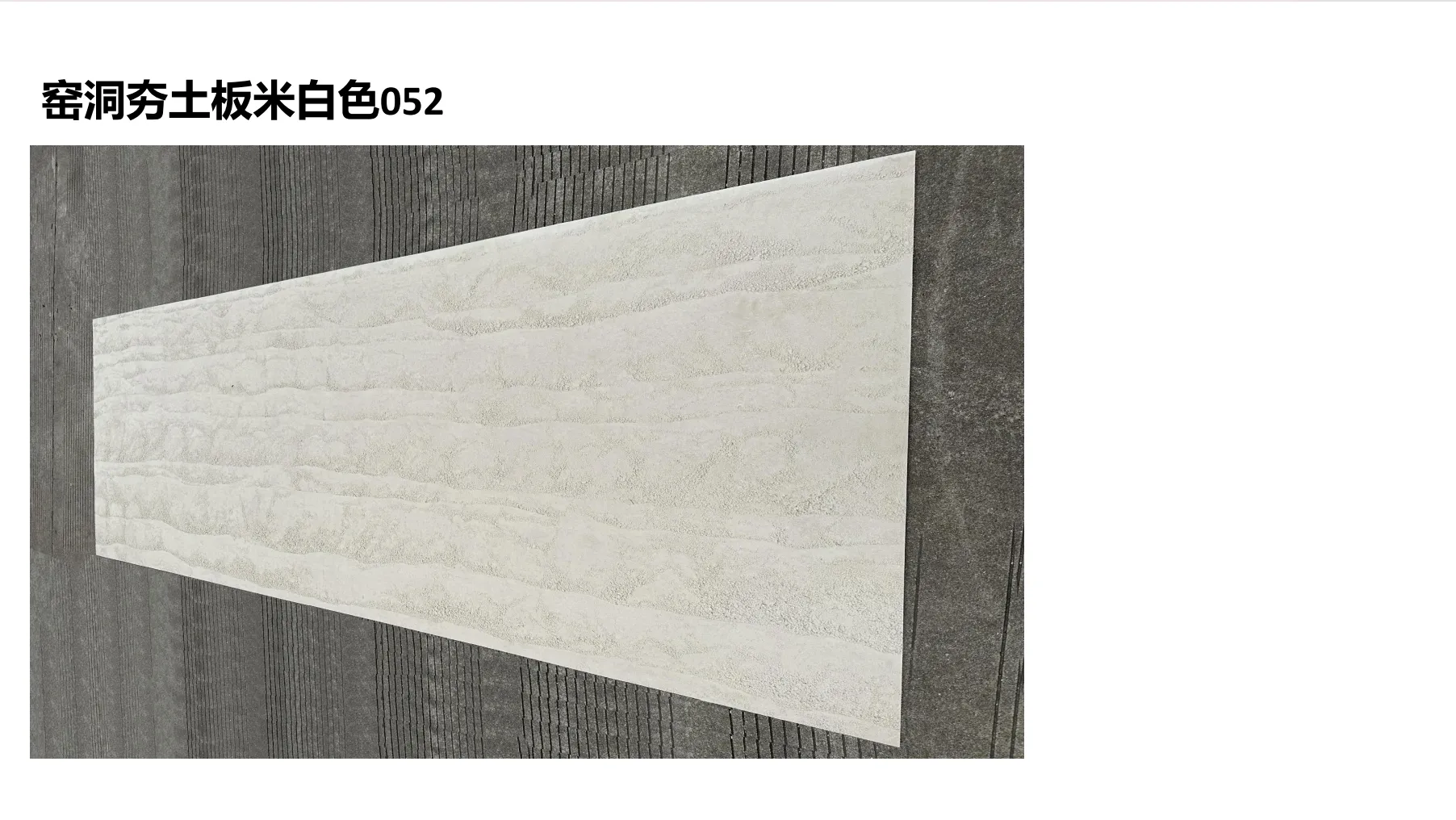
Gradient color rammed earth board reimagines this old technique for the modern world. It's still rooted in natural materials—think mineral-rich soils, natural pigments, and sustainable binders—but with a high-tech twist. Manufacturers use precision machinery to layer and compress these materials, allowing for controlled color blending. The result? Thin, lightweight panels (easy to install in commercial settings) with soft, seamless gradients that shift from one hue to another. Unlike paint, which sits on the surface, the color here is part of the material itself—no chipping, no fading, just depth.
Take, for example, a panel that fades from "rammed earth board (matcha green)" at the bottom to "rammed earth board (light yellow)" at the top. The transition isn't stark; it's gradual, like sunlight filtering through leaves. Run your hand over it, and you'll feel the texture—subtle ridges from the compression process, tiny specks of stone that catch the light. It's not smooth like marble or cold like concrete. It feels… alive. Like holding a piece of the earth, but shaped to fit the modern world.
Color is a language. We all know this intuitively: red feels energetic, blue calming, green grounding. But gradients—colors that blend into one another—speak a more nuanced dialect. They don't shout; they whisper. A gradient from soft beige to warm terracotta in a hotel lobby doesn't just "look nice"—it guides the eye, creates flow, and evokes a sense of journey. It's why artists use gradients to create depth in paintings, and why designers are now using them to create depth in buildings.
Consider the psychology: a solid color can feel flat, even oppressive, in large spaces. A gradient, by contrast, feels dynamic. It mimics the natural world—sunrises, sunsets, the way light fades through clouds—and our brains respond positively to that familiarity. In a hotel, this can translate to guests feeling more relaxed, more at home. In a mall, it can make long corridors feel less endless, encouraging shoppers to explore. In an office, it can reduce the sterility of a white-walled cubicle, boosting focus and creativity.
And then there's uniqueness. In a market flooded with "cookie-cutter" commercial designs, a gradient color rammed earth wall is a statement. It says, "We care about details. We want this space to feel special." For boutique hotels, that can mean standing out in a crowded industry. For luxury malls, it can reinforce a brand's commitment to craftsmanship. For tech offices, it can signal a culture that values innovation over tradition.
Let's get practical. Commercial spaces need materials that can handle the chaos: high foot traffic, spills, humidity, even the occasional bump from a luggage cart or a shopping bag. Gradient color rammed earth board isn't just pretty—it's tough. Here's why it works:
Curious how gradient color rammed earth board compares to other go-to commercial materials? Let's break it down:
| Material | Aesthetic | Durability | Sustainability | Best For |
|---|---|---|---|---|
| Gradient Color Rammed Earth Board | Warm, textured, with seamless color transitions; earthy and organic. | High (resistant to scratches, moisture, and wear). | Excellent (natural materials, low carbon footprint). | Hotel lobbies, boutique malls, creative offices, wellness spaces. |
| Fair-Faced Concrete | Modern, industrial, sleek; neutral gray tones. | Very high (dense, fire-resistant). | Good (minimal processing), but lacks warmth. | Tech offices, modern retail, minimalist hotels. |
| Travertine (Starry Blue) | Polished, with unique veining and "starry" flecks; luxurious but formal. | Medium (prone to staining if not sealed). | Moderate (natural stone, but quarrying has environmental impact). | High-end hotel bathrooms, luxury retail counters. |
| Lunar Peak Silvery | Metallic, futuristic; cool, silvery sheen. | High (resistant to corrosion). | Moderate (alloy-based, energy-intensive production). | Tech hubs, sci-fi themed spaces, modern lobbies. |
The takeaway? Each material has its place, but gradient color rammed earth board is the rare option that balances warmth, durability, and sustainability. It's not trying to be "modern" or "luxurious" in a generic way—it's trying to be human .
Enough theory—let's talk real-world applications. Here's how businesses are using gradient color rammed earth board to transform their spaces:
Imagine checking into a boutique hotel in Santa Fe, New Mexico. The lobby isn't just a waiting area—it's a destination. The walls are clad in gradient rammed earth panels, fading from a deep "rammed earth board (khaki)" at the floor to a soft "rammed earth board (light yellow)" near the ceiling, mimicking the desert landscape outside. Sunlight streams through large windows, catching the texture of the walls and casting warm patterns across the wooden reception desk. To one side, a seating area with plush, earth-toned couches invites guests to linger, while "lunar peak silvery" pendant lights hang above, adding a subtle modern contrast. The effect? You don't just feel like a guest—you feel like you've stepped into a space that honors the land it stands on.
For hotels, gradient rammed earth board also solves a common problem: balancing luxury with approachability. Marble can feel cold; chrome can feel sterile. But rammed earth? It's luxurious in its craftsmanship, but warm in its vibe. A beachfront resort might use a gradient from "stream limestone (claybank)" to "oasis stone foge" to echo the sand and sea. A mountain lodge could blend "rock cut stone (dark grey)" with "rammed earth board (gradient)" to mirror the nearby peaks. Either way, it creates a sense of place—a hotel that doesn't just exist in a location, but embodies it.
Malls are all about flow—getting shoppers from store to store, keeping them engaged, and making sure they don't feel like they're just walking through a tunnel. Gradient rammed earth board is a secret weapon here. Take a mid-sized mall in Portland, Oregon, that recently renovated its food court. Previously, the walls were plain white, and the space felt cramped and utilitarian. Now, one entire wall is covered in gradient rammed earth panels, shifting from "travertine (starry blue)" at the top (echoing the city's rainy skies) down to "gold sand" at the bottom (like sunlight breaking through). The effect? Shoppers slow down. Kids point at the color shifts. Parents snap photos. Even the food vendors report longer stays—people aren't just grabbing lunch and leaving; they're staying to enjoy the space.
Malls also love gradient rammed earth for its versatility. A luxury wing might use a subtle gradient of "dolomitic travertine (dark grey)" to "dolomitic travertine (claybank)" to complement high-end stores. A family-friendly zone could opt for brighter hues—"travertine (starry orange)" fading to "travertine (starry red)"—to keep the energy up. And because the panels are durable, they stand up to the chaos of strollers, shopping carts, and spilled soda. It's design that works as hard as the mall does.
Offices have come a long way from the cubicle farms of the '90s. Today, they're designed to foster collaboration, creativity, and well-being. Gradient rammed earth board fits right in. Take a tech startup in Austin, Texas, that wanted its office to feel less like a "workplace" and more like a "creative hub." The reception area features a statement wall of gradient rammed earth, blending "rammed earth board (matcha green)" (calming, energizing) with "rammed earth board (gradient c)" (a soft, sunlit yellow). Employees say it sets the tone for the day—walking in, they feel less stressed, more inspired. Nearby, the breakout room uses the same material but in a bolder gradient—"rusty red" to "cloud-dragon"—encouraging brainstorming and lively discussion.
For larger corporations, gradient rammed earth board is a way to humanize big, impersonal spaces. A financial firm in Chicago replaced the sterile white walls of its 30th-floor lobby with panels that fade from "fair-faced concrete" (a nod to the city's industrial roots) to "travertine (vintage gold)" (adding warmth). Clients now comment on how "approachable" the space feels—a small change that's translated to better meetings and stronger relationships. And for open-plan offices, the material helps with acoustics, too: its porous texture absorbs sound, reducing the echo that can make large spaces feel chaotic.
Gradient color rammed earth board is a team player. It doesn't need to be the only star in the show—in fact, it shines brightest when paired with complementary materials. Here are some winning combinations:
As businesses continue to prioritize experience over just function, materials like gradient color rammed earth board will only grow in popularity. They're sustainable, durable, and—most importantly—they tell a story. In a world where consumers and employees alike crave authenticity, that's invaluable.
Think about it: a hotel that uses gradient rammed earth isn't just choosing a wall material. It's choosing to honor tradition (rammed earth's ancient roots) while embracing innovation (modern color gradients). A mall that installs it isn't just updating its decor; it's investing in creating moments of joy for shoppers. An office that incorporates it isn't just sprucing up the lobby; it's saying, "We care about how our team feels."
So the next time you walk into a commercial space and find yourself pausing to admire the walls—really see them—chances are, gradient color rammed earth board is behind that feeling. It's not just a material. It's a reminder that the best buildings aren't just built—they're felt.
Recommend Products












