
Walk into any modern architectural marvel, and you'll likely be drawn to the soft, flowing lines of curved walls. They're not just structures—they're stories. A gentle arch can evoke warmth, a sweeping curve can create drama, and a spiral can feel like a journey through space. But for architects and designers, these curves have long been a love-hate relationship. Traditional building materials—heavy, rigid, and unforgiving—often turn those dreamy sketches into frustrating compromises. Stone is too brittle, concrete too stiff, and wood too prone to warping. So what if there was a material that could bend without breaking, that could mimic the earthy texture of rammed earth while hugging the most organic of curves? Enter the gradient color rammed earth board —a star player in the world of MCM (Modified Composite Material) solutions.
In this article, we're diving deep into how this innovative material is revolutionizing curved wall design. We'll explore its origins, its unique properties, and why it's quickly becoming a favorite among architects who refuse to choose between aesthetics and functionality. We'll also touch on other MCM heroes like mcm flexible stone and mcm big slab board series , showing how they work in harmony to turn impossible curves into tangible reality. Whether you're a designer hunting for the next big thing or a homeowner curious about upgrading your space, this is your guide to the future of wall materials.
First things first: What makes this material different from your average wall panel? To understand, let's start with the basics. Rammed earth itself is an ancient technique—think of the Great Wall of China or the adobe homes of the American Southwest. It's made by compressing layers of soil, clay, and other natural materials into dense, durable walls. Beautiful, right? But traditional rammed earth is heavy, thick, and about as flexible as a brick. That's where MCM steps in.
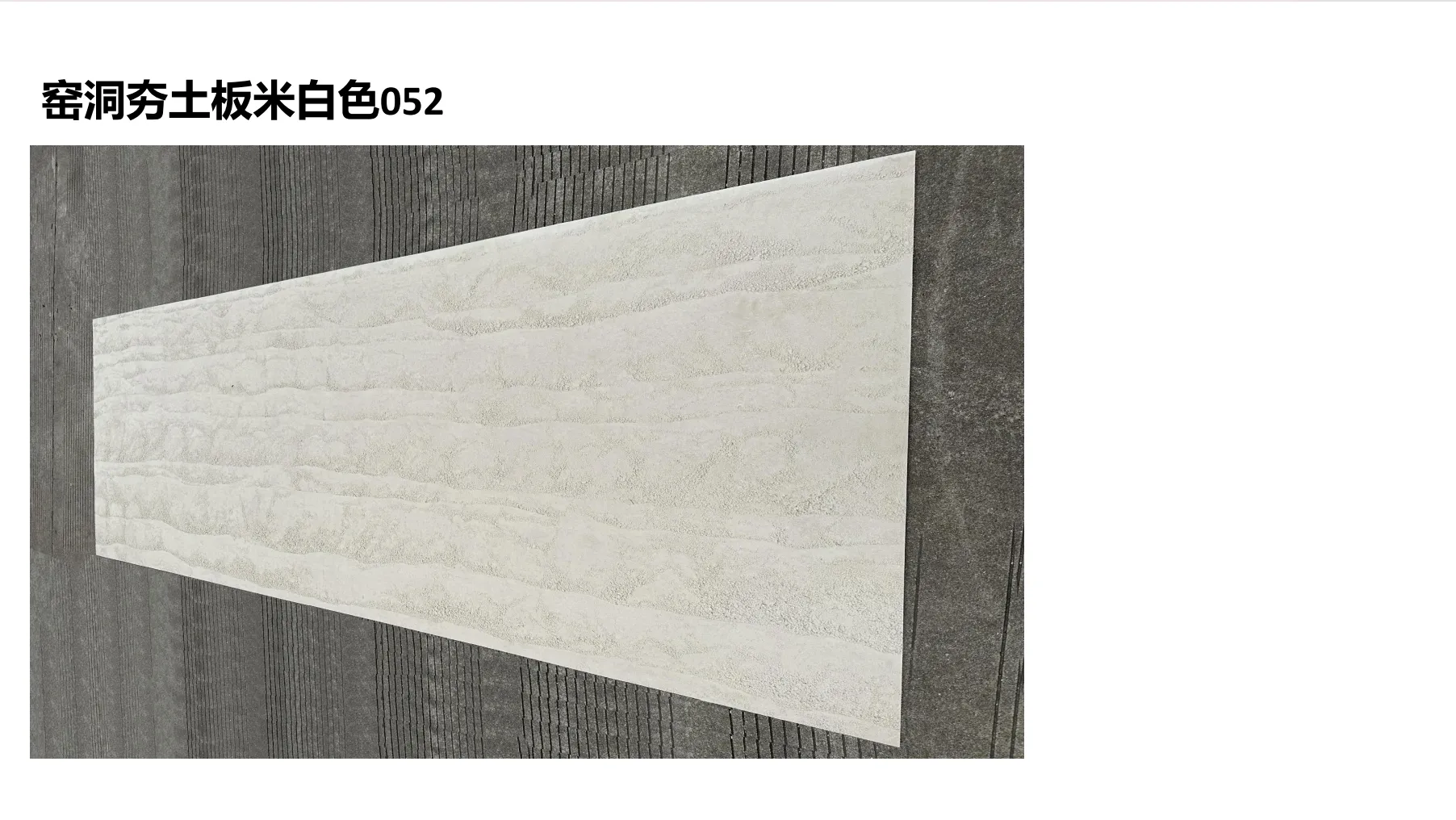
MCM, or Modified Composite Material, is a blend of natural minerals and high-performance polymers. It takes the best of nature—like the texture of stone or the warmth of earth—and pairs it with the strength and flexibility of modern science. Gradient color rammed earth board is a prime example. It starts with a base of natural clay, sand, and minerals, then adds a polymer binder that gives it flexibility without sacrificing that raw, earthy look. The "gradient color" part? That's the artistic touch. Instead of a single flat hue, these boards fade from one tone to another—say, from soft terracotta to warm amber, or from sage green to dusty rose—mimicking the way sunlight plays on desert landscapes or the changing colors of a hillside at dusk.
But here's the kicker: Unlike traditional rammed earth, which can weigh up to 150 pounds per square foot, these MCM boards are lightweight—usually around 8-12 pounds per square foot. That means they're easy to transport, install, and, most importantly, bend. Imagine holding a thin, flexible sheet that looks like it was carved from the earth but can curve around a corner as smoothly as a piece of fabric. That's the magic of gradient color rammed earth board.
Let's talk about the elephant in the room: curved walls are hard. To build one with traditional materials, you often need custom-cut stone or concrete forms, which are expensive, time-consuming, and risky. One wrong move, and the whole structure cracks. But mcm flexible stone changes the game. These stones are engineered to flex up to 30 degrees without breaking—a feat that would make marble or granite crumble. How? The polymer binder acts like a invisible spring, allowing the material to bend and then hold its shape once installed.
Gradient color rammed earth board takes this flexibility a step further. Because it's a panel (not individual stones), it can be applied in larger sheets, reducing seams and creating a seamless, flowing look. Architects love this because it means fewer interruptions in the gradient color pattern. Imagine a curved wall in a hotel lobby that fades from deep ochre at the base to pale cream at the top—no grout lines, no awkward breaks, just a smooth transition that feels like a natural landscape. That's the kind of drama flexible MCM makes possible.
And it's not just about looks. Flexible MCM is also a workhorse. It's water-resistant, fire-retardant, and resistant to mold and mildew—perfect for high-moisture areas like bathrooms or outdoor patios. It's also lightweight enough to be installed on existing walls without needing extra structural support. So if you have an old brick wall that's seen better days, you can cover it with gradient color rammed earth board and instantly transform it into a curved masterpiece. No demolition, no mess, just a fresh, modern look that pays homage to nature.
Flexibility is great, but when you're working with large curved surfaces—think a museum's sweeping facade or a restaurant's circular bar—you need more than just bendable panels. You need size. That's where the mcm big slab board series comes in. These slabs are huge—some as large as 4 feet by 10 feet—and they're designed to cover massive areas with minimal joints. Pair that with gradient color rammed earth board, and you've got a match made in design heaven.
Let's say you're designing a yoga studio with a curved wall that wraps around the meditation space. You want the wall to feel like a cocoon, warm and inviting. Using small tiles would create a busy, fragmented look, but with a big slab of gradient color rammed earth board, you can cover the entire curve in one or two pieces. The gradient color flows uninterrupted, creating a sense of calm and continuity. It's like bringing the outdoors in, but with the precision of modern engineering.
Big slabs also save time and money. Traditional stone or tile installation requires cutting, grouting, and aligning hundreds of pieces. With MCM big slabs, you measure, cut (if needed), and stick—thanks to their lightweight design and easy-to-use adhesive. Contractors report cutting installation time by up to 50% on curved wall projects using these slabs. That means faster project turnarounds, happier clients, and more room in the budget for other design elements—like that custom lighting fixture you've been eyeing.
We get it: you're probably thinking, "But what about other trendy materials? Foamed aluminium? Travertine?" Let's put gradient color rammed earth board head-to-head with a few popular options to see why it stands out.
| Material | Flexibility | Weight (per sq ft) | Aesthetic | Cost |
|---|---|---|---|---|
| Gradient Color Rammed Earth Board (MCM) | High (bends up to 30°) | 8-12 lbs | Organic, earthy gradients; natural texture | Mid-range ($15-25/sq ft) |
| Foamed Aluminium Alloy Board (Vintage Silver) | Medium (bends up to 15°) | 10-14 lbs | Metallic, industrial; sleek and modern | High ($25-35/sq ft) |
| Travertine (Starry Green) | Low (brittle, minimal bend) | 25-30 lbs | Natural stone with unique veining; luxurious | High ($30-45/sq ft) |
| Traditional Rammed Earth | Very Low (rigid) | 100-150 lbs | Authentic earthy texture; rustic | Very High (custom installation) |
As you can see, gradient color rammed earth board hits the sweet spot: it's more flexible than foamed aluminium, lighter than travertine, and far more affordable than traditional rammed earth. And when it comes to aesthetics, it offers something none of the others do: that gradient color shift. Travertine (starry green) is stunning, with its deep green tones and fossil-like veining, but it can't mimic the soft color transitions of MCM rammed earth. Foamed aluminium has a cool, industrial vibe, but it lacks the warmth of natural materials. For designers who want the best of both worlds—natural beauty and modern functionality—gradient color rammed earth board is the clear winner.
Enough theory—let's talk real projects. From boutique hotels to residential homes, gradient color rammed earth board is popping up everywhere designers want to make a statement with curved walls.
Take the "Desert Bloom" boutique hotel in Arizona. The lobby features a sweeping curved wall that greets guests, fading from terracotta to sandstone to mimic the Arizona desert at sunset. The designers used mcm big slab board series panels in gradient colors, installing them in just three days (a project that would have taken two weeks with traditional stone). The result? A space that feels both grand and intimate, like stepping into a natural amphitheater.
Or consider a private home in Portland, Oregon, where the owner wanted a curved indoor garden wall. Traditional materials would have been too heavy for the second floor, but gradient color rammed earth boards were light enough to install without reinforcing the floor. The wall curves around the plants, its green-to-cream gradient complementing the foliage and creating a serene, greenhouse-like atmosphere.
Even commercial spaces are getting in on the action. A coffee shop in Seattle used flexible MCM stone (paired with gradient rammed earth) to create a curved counter that wraps around the barista station. The warm, earthy tones make customers feel at home, while the seamless curve maximizes space in the small shop. It's a win-win: better design, better functionality.
You might be wondering, "This sounds great, but is it a nightmare to install?" Fear not. MCM boards are designed with DIYers and professionals in mind. Most come with a peel-and-stick backing or require a simple adhesive (like construction glue), so you don't need special tools or training. For curved walls, the process is straightforward: measure the curve, mark the panels, cut them with a utility knife or jigsaw, and press them into place. It's like putting up large wallpaper, but with the durability of stone.
Maintenance is just as easy. Unlike natural stone, which needs sealing, or wood, which needs staining, gradient color rammed earth board is low-maintenance. A quick wipe with a damp cloth is usually enough to clean it. It's resistant to scratches, so you don't have to panic if a chair bumps against it. And because it's moisture-resistant, it's safe for bathrooms, kitchens, and even outdoor covered areas (just avoid direct, prolonged rain exposure).
Pro tip: If you're installing outdoors, pair it with foamed aluminium alloy board (vintage silver) accents for a modern twist. The metallic silver complements the earthy gradients, creating a look that's both rustic and contemporary.
As architects and designers push the boundaries of what's possible, materials like gradient color rammed earth board, mcm flexible stone , and mcm big slab board series are becoming essential tools. They're not just materials—they're enablers. They let us build walls that feel alive, that respond to light and movement, that tell stories. In a world where so much of our built environment feels cold and sterile, MCM brings warmth and humanity back to design.
And it's only getting better. Manufacturers are constantly innovating, adding new gradient colors (think starry night-inspired blues and purples) and improving flexibility. Some are even experimenting with 3D-printed MCM panels, which can create even more complex curves and textures. The future of curved walls isn't just flexible—it's limitless.
Curved walls are more than a trend—they're a celebration of nature's beauty and human creativity. And with gradient color rammed earth board and other MCM solutions, you don't have to choose between art and engineering. Whether you're designing a skyscraper or a small home office, these materials let you dream big and build bigger.
So the next time you look at a curved wall, ask yourself: What story could this tell? With MCM, the answer is whatever you want it to be. The earthy gradients, the flexible curves, the seamless slabs—they're all tools to turn your vision into reality. And isn't that what good design is all about?
Ready to start your project? Do your research, talk to suppliers, and don't be afraid to experiment. Curved walls are waiting—and with MCM, they're finally within reach.
Recommend Products












