
Where walls become storytellers, and learning spaces breathe with warmth
Walk into a classroom, and what do you see? Desks, whiteboards, maybe a poster of the periodic table. But what about the walls? For too long, school buildings have treated walls as afterthoughts—flat, neutral, and forgettable. But here's the truth: the spaces we learn in shape how we learn. A cold, sterile hallway might make a student hurry past; a warm, textured wall might make them pause, breathe, and feel at home. That's where gradient color rammed earth board comes in—a material that doesn't just enclose educational spaces, but nurtures them.
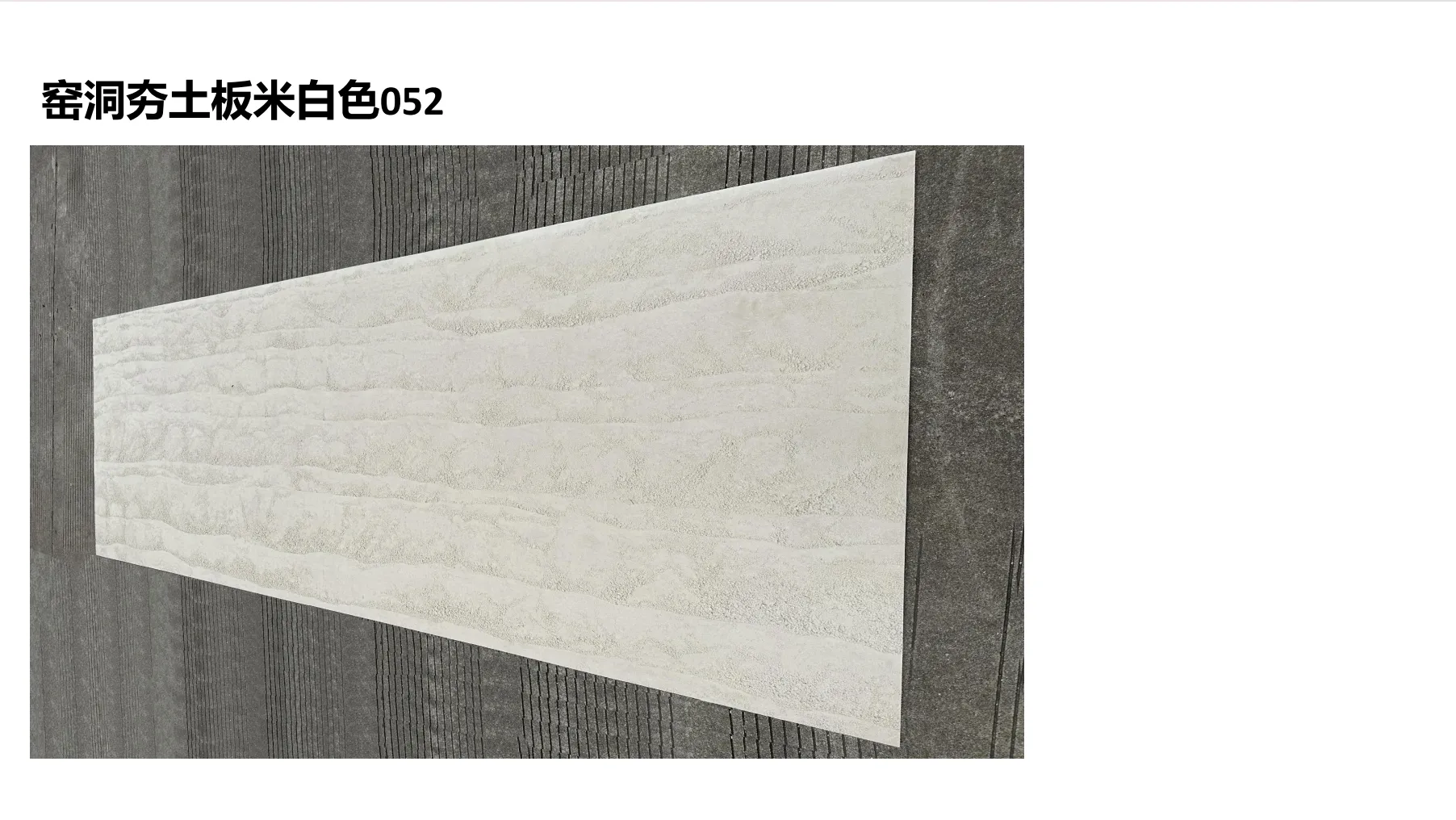
Rammed earth itself is an ancient craft—humans have been packing soil, sand, and clay into walls for millennia. But gradient color rammed earth board? That's where tradition meets artistry. Imagine layers of earthy hues—soft beiges, warm terracottas, muted sage greens, or gentle greys—compressed together, not in sharp lines, but in a seamless blend. It's like capturing a sunset in a wall, or the slow shift of seasons in a single panel. No two boards are exactly alike; the natural variations in soil pigments create a living, breathing texture that feels less like construction and more like a piece of nature brought indoors.
Take, for example, a gradient that fades from "rammed earth board (khaki)" at the base to "rammed earth board (gradient)" at the top—swirling from sandy yellow to soft terracotta, then melting into a whisper of sage. Stand back, and it's as if the wall is telling a story of a desert at dawn, or a forest path in autumn. Lean in, and you'll notice the granular texture—tiny flecks of stone, bits of organic matter—that make it tactile, inviting. It's not a surface you just look at; it's one you want to reach out and touch, a subtle reminder of the world beyond the classroom windows.
Let's talk about students. A 10-year-old in math class, fidgeting because the room feels too bright and loud. A high schooler stressed about exams, craving a quiet corner to recharge. A teacher trying to keep a class engaged, competing with the distraction of a blank, uninviting wall. These are everyday struggles in education—and gradient color rammed earth board addresses them in a surprisingly simple way: by bringing nature inside.
Biophilic design—the idea that humans thrive when connected to nature—isn't just a trend. Studies show it reduces stress, boosts focus, and even improves test scores. Gradient rammed earth checks all those boxes. Its earthy tones mimic the natural world (think: the soft fade of a canyon wall, or the layered colors of a riverbank), triggering a subconscious sense of calm. Unlike harsh whites or stark grays, which can overstimulate, the gradient's gentle transitions create visual "rest stops" for the eyes. In a busy cafeteria, that might mean fewer arguments. In a library, it might mean more students staying to study.
Teachers notice the difference, too. "Our new art wing has gradient rammed earth walls, and I've seen a shift," says Ms. Lina, an art teacher at a middle school in Oregon. "Before, kids would rush through projects, eager to leave. Now, they linger. They'll sit on the floor, sketching the color shifts in the walls. One student even said, 'It feels like painting outside, but inside.' That's the magic—these walls don't just hold up the roof; they inspire."
Eco-friendly, beautiful, and… budget-friendly? It sounds too good to be true, but gradient color rammed earth board delivers. Let's break down the practical side—because schools need materials that work as hard as the educators inside them.
| Feature | Gradient Rammed Earth Board | Standard Drywall |
|---|---|---|
| Durability | Withstands scuffs, dents, and years of student traffic | Prone to cracks; needs repainting every 3-5 years |
| Energy Efficiency | Thermal mass regulates temperature; reduces HVAC costs by 20-30% | Poor insulation; relies on heating/cooling to maintain comfort |
| Sustainability | Made from local soil; low carbon footprint; biodegradable at end-of-life | Contains synthetic binders; contributes to landfill waste |
Schools also love that gradient rammed earth plays well with others. Pair it with fair-faced concrete for a modern, industrial edge in a STEM lab, or contrast it with travertine (starry blue) accents in a music room to create a celestial vibe. The gradient acts as a neutral backbone, letting other materials shine without overwhelming the space. And because it's prefabricated into boards, installation is faster than traditional rammed earth—meaning less disruption to classes during renovations.
Let's step into Riverview High, a fictional school that renovated its main hallway with gradient color rammed earth board last year. The walls here shift from "rammed earth board (light yellow)" at the bottom to "rammed earth board (khaki)" at the top, with hints of terracotta peeking through—like sunlight filtering through a wheat field at dawn.
7:30 AM: Mia, a freshman, walks in late, flustered. Normally, the harsh fluorescent lights and blank gray walls would make her feel more anxious. But today, she pauses. The hallway walls glow softly, the colors blending like a watercolor painting. She takes a deep breath. "Okay," she thinks, "today's not so bad."
10:00 AM: Mr. Torres, a history teacher, leads his class to the auditorium for a guest lecture. The auditorium's back wall is gradient rammed earth, fading from deep sienna to soft sage. "See how the colors layer?" he says, gesturing. "That's like history—each era builds on the last, no sharp breaks." A student raises her hand: "Is that why it feels so… calm in here?" He smiles. "Exactly."
2:00 PM: The cafeteria is chaos—until the lunch bell rings. As students file out, a group lingers by the gradient wall, taking selfies. "It looks like a sunset!" one says. Another adds, "Better than the old gray walls, that's for sure." The principal, passing by, overhears. He remembers the complaints about the "depressing" cafeteria. Now? Kids actually want to be there.
Let's talk money. Yes, gradient color rammed earth board costs more upfront than drywall. But consider this: a school in Colorado that installed it 15 years ago hasn't repainted or repaired those walls once. Meanwhile, their neighboring school has repainted its drywall four times, costing thousands each time. Add in energy savings—rammed earth's thermal mass keeps classrooms cool in summer and warm in winter—and the numbers start to make sense.
Plus, green building certifications like LEED can earn schools grants or tax breaks. And beyond the budget, there's the human cost of uninspired spaces. When students feel calm, focused, and connected to their environment, they learn better. When teachers feel supported by their workspace, they teach better. That's an investment no spreadsheet can measure.
Recommend Products












