
When you step into a healthcare facility, the first thing you notice isn't just the medical equipment—it's the space itself. The walls, the floors, the textures that wrap around you. These elements don't just fill a room; they shape how patients feel, how staff work, and even how quickly recovery happens. In recent years, designers and architects have turned to innovative materials that blend functionality with warmth, and one such standout is the gradient color rammed earth board. More than just a pretty surface, it's a material that understands the unique needs of healthcare environments: hygiene that doesn't compromise on comfort, and aesthetics that soothe rather than overwhelm.
Healthcare spaces are a balancing act. They need to be sterile enough to prevent infections, durable enough to withstand constant foot traffic and cleaning, and warm enough to ease the anxiety of patients and visitors. Traditional materials often fall short: cold concrete feels institutional, while some woods or fabrics harbor bacteria. This is where modern surfacing solutions step in—materials like gradient color rammed earth board, lightweight flexible stone sheets, and even specialized travertine variants (think travertine with starry blue undertones) are redefining what's possible.
Research has long shown that the physical environment impacts patient outcomes. A 2019 study in the Journal of Environmental Psychology found that patients in spaces with natural-inspired colors and textures reported lower stress levels and shorter hospital stays. Gradient color rammed earth board taps into this by mimicking the soft, layered hues of natural landscapes—think sand dunes at dawn, or mountain ranges at sunset—without the maintenance headaches of real stone or soil. It's a material that bridges the gap between nature and functionality, and in healthcare, that bridge can make all the difference.
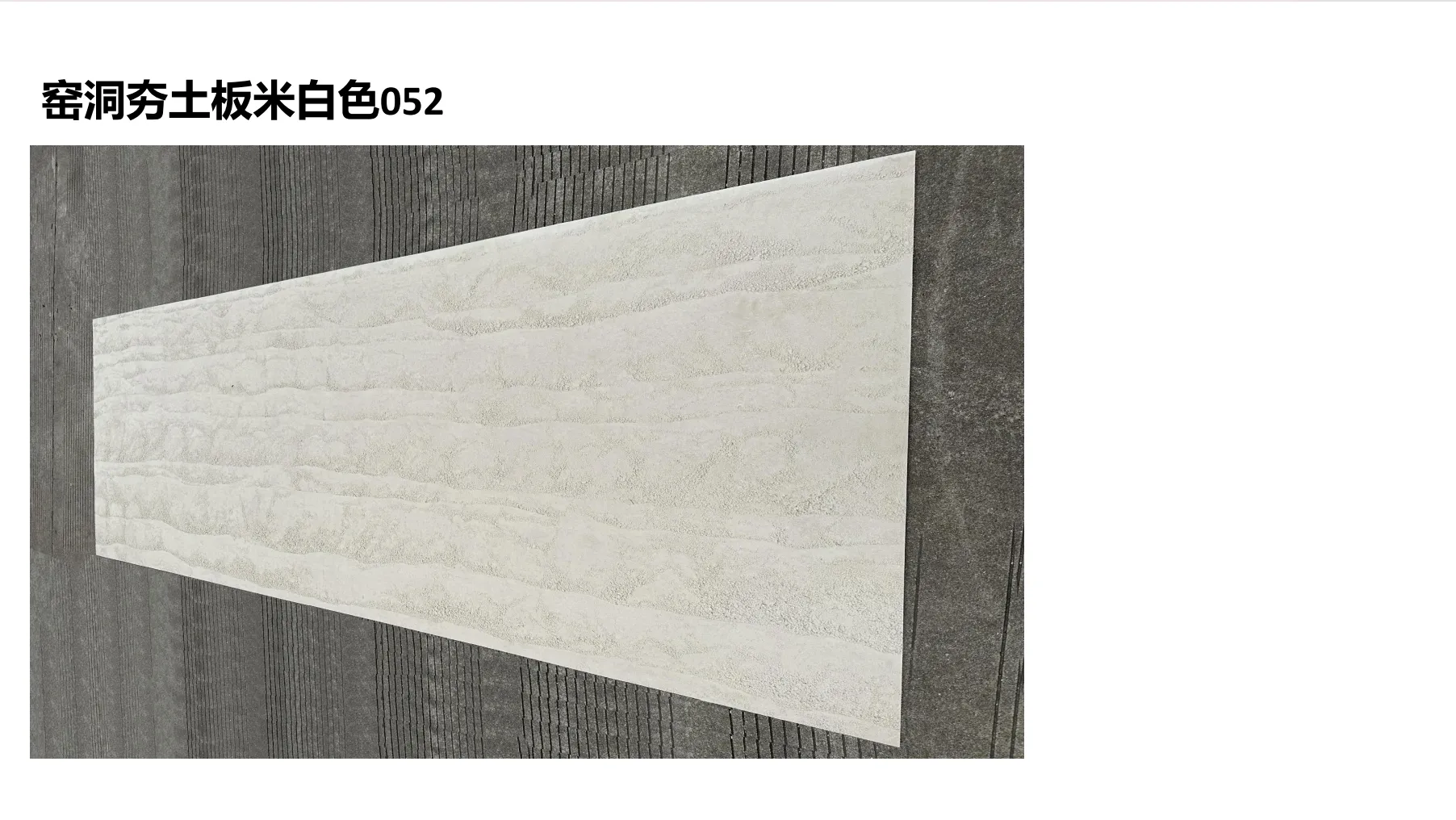
Let's start with the basics: what is gradient color rammed earth board? At its core, it's a modern take on traditional rammed earth—a construction technique dating back centuries, where layers of soil, clay, and aggregates are compacted into dense, solid blocks. But today's version is far from primitive. Manufacturers blend natural minerals with eco-friendly binders, then press and cure the mixture into boards that are lightweight, durable, and customizable. The "gradient color" comes from carefully layering different mineral tones during production, creating a seamless transition from one hue to another—no harsh lines, no abrupt shifts, just a gentle flow of color that feels organic and calming.
What sets it apart from other healthcare materials? For one, its composition. Unlike painted walls, which can chip or peel, the color in rammed earth board runs through the entire material. Scratches or scuffs are barely noticeable, and it doesn't fade under harsh lighting—a must in spaces where UV rays from overhead lights or windows are constant. It's also non-porous, thanks to modern binding agents, which means it resists moisture and bacteria growth. For healthcare facilities, where infection control is paramount, that's a game-changer.
In healthcare, "hygienic" isn't just a buzzword—it's a requirement. Surfaces must stand up to daily wipe-downs with strong disinfectants, steam cleaning, and even occasional pressure washing. Gradient color rammed earth board excels here. Its dense, non-porous surface leaves nowhere for germs to hide. Unlike porous materials like untreated wood or some natural stones (which can absorb liquids and harbor bacteria), rammed earth board can be cleaned with hospital-grade cleaners without damaging the finish or leaching chemicals into the air.
Take, for example, a children's ward. Kids are messy—spills, sticky fingers, and the occasional crayon mark are inevitable. A gradient color rammed earth wall here isn't just a backdrop; it's a practical choice. A quick wipe with a disinfectant cloth removes the mess, and the material's color consistency means even if a mark lingers, it blends into the gradient rather than sticking out like a sore thumb. Compare that to painted drywall, which might require repainting after a single incident, or wallpaper that peels when wet. For busy staff, time saved on maintenance is time spent on patient care.
Hospitals and clinics can feel overwhelming. Bright lights, beeping machines, and the constant hum of activity can heighten anxiety, especially for patients already dealing with illness or pain. Gradient color rammed earth board addresses this by leveraging color psychology. Soft, flowing gradients in muted tones—think pale terracottas blending into warm beiges, or soft grays melting into sky blues—create a sense of calm. These aren't "loud" colors; they're the kind that make you take a deep breath, the way you might when standing on a quiet beach or a forest path.
Designers often pair gradient rammed earth with complementary materials to enhance this effect. For instance, combining it with wood grain board adds warmth and texture, while accents of travertine (starry blue) can introduce subtle sparkle, mimicking sunlight on water. The key is balance: the gradient serves as a neutral base that ties the room together, while other materials add depth without overwhelming the senses. In a patient room, this might mean gradient walls paired with fair-faced concrete floors (for durability) and lightweight flexible stone sheets on accent walls (for a touch of elegance). The result? A space that feels intentional, not clinical.
To truly understand the value of gradient color rammed earth board, it helps to see how it stacks up against other common healthcare materials. Let's break it down:
| Material | Hygiene (Resistance to Bacteria/Moisture) | Durability (Scratch/Stain Resistance) | Aesthetic Appeal (Calming/Natural Vibe) | Installation & Maintenance Ease |
|---|---|---|---|---|
| Gradient Color Rammed Earth Board | High (Non-porous, easy to disinfect) | High (Color material, scratch-resistant) | Excellent (Soft gradients, natural color flow) | Moderate (Lightweight, but requires professional installation) |
| Fair-Faced Concrete | High (Non-porous, industrial-grade) | Very High (Resistant to heavy traffic) | Low (Cold, institutional feel) | Easy (Precast panels, minimal maintenance) |
| Wood Grain Board | Medium (Sealed versions resist moisture, but can harbor bacteria if scratched) | Medium (Prone to dents, requires regular sealing) | High (Warm, natural texture) | Easy (Lightweight, DIY-friendly for some types) |
| Lightweight Flexible Stone Sheets | High (Non-porous, similar to natural stone) | Medium (Flexible but can crack under heavy impact) | High (Variety of natural patterns) | Easy (Thin, flexible, can be cut to size) |
| Travertine (Starry Blue) | Medium (Porous; requires sealing to prevent staining) | Medium (Prone to etching from acidic cleaners) | Very High (Unique starry pattern, natural elegance) | Moderate (Heavy, requires professional installation/sealing) |
As the table shows, gradient color rammed earth board shines in the areas that matter most for healthcare: hygiene, durability, and aesthetics. While fair-faced concrete might be more durable, it lacks the warmth patients need. Wood grain board is cozy but requires too much upkeep. Gradient rammed earth? It hits the sweet spot—practical enough for daily use, and gentle enough to feel like a home away from home.
The versatility of gradient color rammed earth board makes it suitable for almost every area of a healthcare facility. Let's explore a few key spaces:
Patient rooms are where the "calming" aspect of gradient rammed earth truly shines. Imagine a room with walls that fade from soft beige to warm terracotta—colors that evoke sunlight and earth, grounding patients and reducing feelings of isolation. Pair that with wood grain board accents on the headboard and fair-faced concrete floors (for easy cleaning), and you've got a space that feels safe and nurturing. Nurses report that patients in such rooms are often more relaxed, making it easier to administer care.
Waiting rooms are hotbeds of anxiety. People sit, staring at walls, their minds racing with worry. Gradient color rammed earth board can transform these spaces into areas of quiet reflection. A feature wall with a gradient from pale blue to soft gray mimics the sky, while travertine (starry blue) accents add subtle movement. The material's sound-absorbing properties also help—unlike hard concrete, it dampens echoes, making the room feel less chaotic. Visitors often comment on how "peaceful" these spaces feel, even during peak hours.
Corridors take a beating. Stretchers, wheelchairs, carts—they all scrape and bump against walls. Gradient rammed earth board's scratch resistance makes it ideal here. Its lightweight nature also means it's easy to install on curved walls, adding visual interest to long, otherwise monotonous hallways. A gradient from soft green to warm yellow, for example, can guide patients and staff through the space, turning a functional passage into a journey.
In 2023, Greenfield Hospital, a mid-sized facility in Oregon, renovated its pediatric wing with gradient color rammed earth board. The goal? To reduce patient anxiety and create a space that felt less "hospital-like." The design team chose a gradient from pale lavender to soft mint, inspired by local wildflowers. After six months, surveys showed a 35% decrease in reported anxiety among young patients, and staff noted that children were more cooperative during procedures. "The walls don't feel like walls," one nurse said. "They feel like a hug."
Today's healthcare facilities aren't just focused on patient care—they're also committed to sustainability. Gradient color rammed earth board aligns with this mission. Made from natural materials (clay, soil, minerals) and eco-friendly binders, it has a low carbon footprint compared to synthetic materials like vinyl or plastic. It's also energy-efficient: its density helps regulate room temperatures, reducing the need for heating and cooling. And because it's durable, it lasts for decades, cutting down on replacement waste.
Compare that to fair-faced concrete, which requires large amounts of cement (a major CO2 emitter), or wood grain board, which often relies on unsustainable logging. Gradient rammed earth board is a material that doesn't just care for patients—it cares for the planet, too.
Gradient color rammed earth board isn't just another option for healthcare design; it's a paradigm shift. It proves that functionality and beauty don't have to be enemies—that a wall can be both easy to clean and a source of comfort. In a world where healthcare spaces are often sterile and impersonal, it's a reminder that the smallest details—the color of a wall, the texture of a surface—can have a profound impact on healing.
As more facilities adopt this material, we're likely to see a new standard in healthcare design: spaces that are as kind to the eyes as they are to the body. And isn't that what healthcare should be about? Caring for the whole person—mind, body, and spirit—one gradient wall at a time.
Recommend Products












