
Walk down any historic street, and you'll notice the buildings that feel alive —the ones where the bricks have softened with rain, the stone has faded like a well-loved book, and every crack tells a story. Then there are the others: restored with shiny new materials that scream "modern," their edges too crisp, their colors too uniform, as if they've never known the touch of time. Renovating a historic structure is a balancing act, isn't it? We want to preserve the past, but we also need buildings that work for today's world. The problem? Too often, the "new" and "old" clash, leaving us with spaces that feel disjointed—like a grandparent wearing a teenager's clothes. But what if there was a material that didn't just coexist with history, but danced with it? Enter gradient color rammed earth board—a material that feels like a handshake between centuries.
Let's talk about the elephant in the room: historic renovation can break your heart. I once visited a 18th-century townhouse in Prague that had been "restored" with fair-faced concrete—a material praised for its raw, industrial look. From a distance, it was sleek; up close, it was devastating. The original stone facade, with its soft, weathered edges, had been replaced with slabs so smooth they looked plastic. Locals called it "the tombstone"; it didn't blend in—it stuck out , a modern interloper in a street of stories. That's the risk we run: using materials that prioritize function over feeling, durability over soul. Old buildings aren't just walls and roofs; they're living connections to the people who built them, the lives that unfolded inside. When we slap on something that doesn't "breathe" like the original, we lose that connection.
And it's not just about looks. Many modern materials are too heavy for aging structures, or too rigid to handle the subtle shifts of old foundations. I've seen projects where contractors used epoch stone—sturdy, yes, but with a uniform gray tone that drained the warmth from a 1920s theater. The lobby, once glowing with terracotta and wood, felt cold, like a hospital waiting room. The problem wasn't the intent; it was the choice of material. We need something that can adapt —something that understands the language of historic architecture, but speaks the grammar of today.
Rammed earth has been around for millennia. The ancient Chinese built the Great Wall with it; Native American pueblos rose from its sturdy layers. There's a reason it's endured: it's earthy, breathable, and ages like fine wine. But traditional rammed earth has limits—limited color options, heavy weight, and a tendency to crack in harsh climates. That's where gradient color rammed earth board comes in. Think of it as traditional rammed earth's evolved cousin—still rooted in history, but with a modern twist.
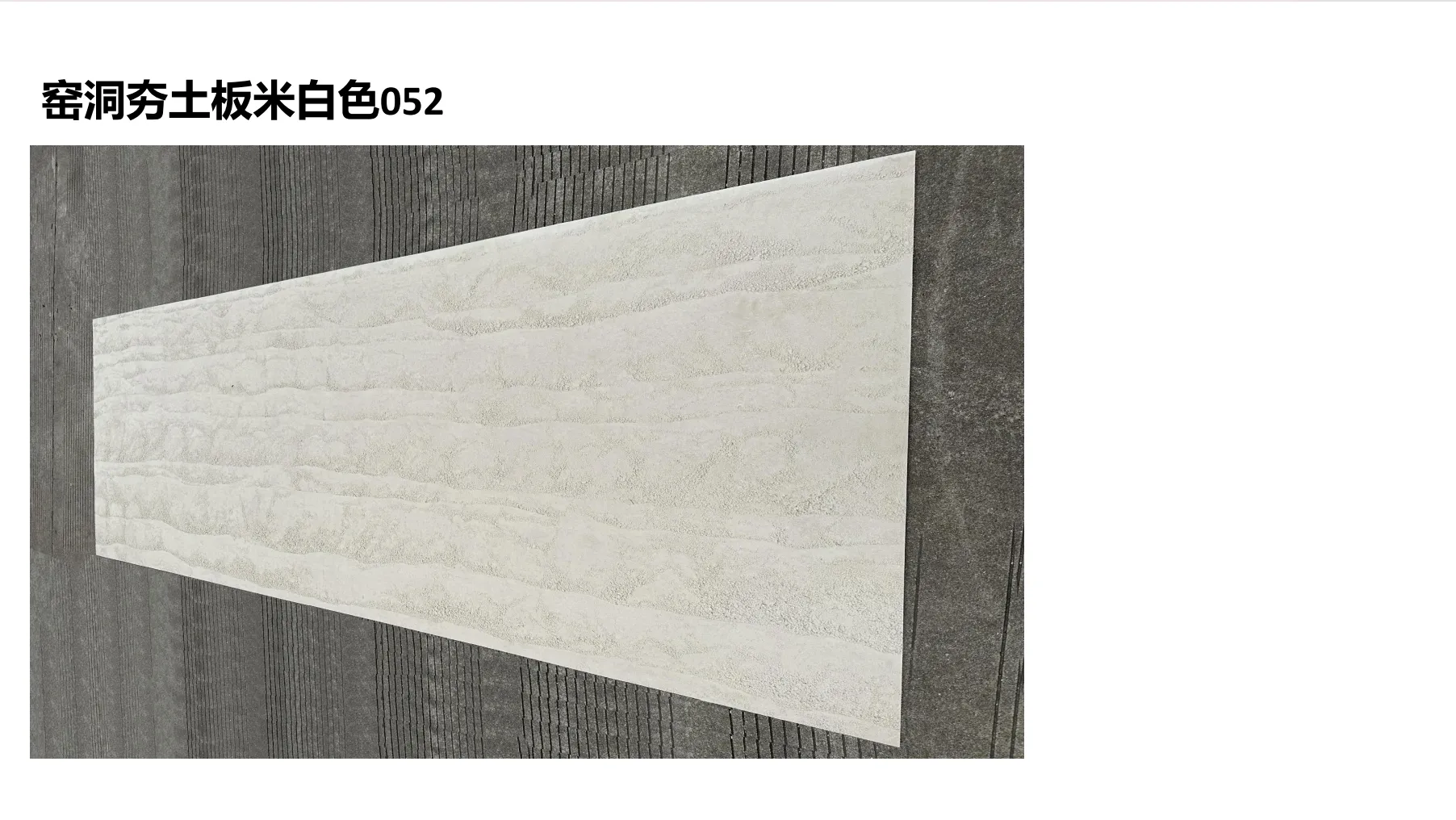
What makes it "gradient"? Instead of a single, flat color, the board shifts slowly from one hue to another—like the way sunlight fades a wall from gold to amber at sunset, or how rainwater darkens stone from top to bottom. Imagine a facade that starts as a deep terracotta at the base, softens to a warm sand, and melts into a pale cream at the roofline. It's not just color; it's a narrative —a visual representation of time passing. And because it's made with MCM flexible stone technology, it's lightweight and bendable, making it perfect for historic structures that can't handle heavy materials. No more worrying about crumbling foundations or cracked walls; this stuff hugs the old architecture like a gentle hand.
I visited a workshop where they make this board once, and watching the process felt almost meditative. Workers layer earth, pigments, and a touch of modern binders, then compress them with machines that mimic the human-powered rams of old. The result? A surface that looks handcrafted—no two boards are exactly alike. Run your fingers over it, and you'll feel the texture: gritty but smooth, with tiny indentations that catch the light, just like natural stone. It doesn't just look old; it feels old—like it's been there all along.
Historic buildings have their own "vocabulary"—details like arched doorways, weathered lintels, and uneven mortar lines that make them unique. The best renovation materials don't just "fit in"; they respond to that vocabulary. Gradient color rammed earth board does exactly that. Let's say you're restoring a 19th-century schoolhouse with red brick walls. Traditional red brick is hard to match—modern bricks are too uniform, too bright. But gradient rammed earth? You could choose a board that shifts from a deep brick red (matching the original) to a softer, faded pink (mimicking the bricks that have been bleached by sun). It doesn't copy the brick; it complements it, like a harmony in a song.
Compare that to something like epoch stone , a popular modern material known for its sleek, uniform finish. Epoch stone is great for new builds, but plop it next to 200-year-old stone, and it feels jarring—like a smartphone at a vintage tea party. Gradient rammed earth, on the other hand, has the same "imperfect perfection" as historic materials. Its color variations mirror the way natural stone fades, and its texture echoes the hand-laid bricks of old. It's not trying to be "better" than the past; it's trying to partner with it.
Take historical pathfinders stone , for example—a material often used in heritage projects for its rough, "found" look. Pair it with gradient rammed earth board, and you've got a match made in renovation heaven. The pathfinders stone adds rugged, ancient character (think: the base of a castle wall), while the gradient board softens the look with its flowing colors. Together, they tell a story: "This building has been here for centuries, and it's still growing."
To really see why gradient color rammed earth board stands out, let's compare it to two other common materials in historic renovation: historical pathfinders stone and fair-faced concrete. Each has its strengths, but only one truly bridges the gap between old and new.
| Feature | Gradient Color Rammed Earth Board | Historical Pathfinders Stone | Fair-Faced Concrete |
|---|---|---|---|
| Texture | Softly varied, with gradient color shifts and handcrafted grit | Rough, uneven, and "found" (mimics ancient quarried stone) | Smooth, uniform, and industrial (minimal texture) |
| Color Range | Multi-hued gradients (e.g., terracotta → sand → cream) | Single, earthy tones (browns, grays, beiges) | Typically gray or off-white (limited custom colors) |
| Compatibility with Historic Structures | Lightweight (MCM flexible stone tech) and adaptable to uneven walls | Heavy; may require structural reinforcement | Heavy and rigid; risks damaging old foundations |
| Aging Process | Ages gracefully, blending with existing weathering | Looks "old" immediately but doesn't evolve over time | Stays bright and uniform; shows stains easily |
| Sustainability | Made with local earth and low-carbon binders | Quarried stone (high embodied carbon) | Requires cement (high CO2 emissions) |
See the difference? Historical pathfinders stone nails the "old" vibe, but it's limited to single colors and can be too heavy. Fair-faced concrete is durable, but it feels cold and out of place in historic settings. Gradient color rammed earth board, though? It has the texture of something ancient, the flexibility of something modern, and the color story of something that's been loved for decades. It doesn't just fit ; it belongs .
Let's talk about a real project: a derelict cotton warehouse in Savannah, Georgia, built in 1923. For decades, it had sat empty, its red brick facade crumbling, its wooden beams rotting, its windows shattered. Developers wanted to turn it into apartments, but they didn't want to erase its history. The original brick was too damaged to save, so they needed a replacement that would honor the warehouse's industrial past while making it livable for today's residents.
First, they tried fair-faced concrete. The walls went up, and… it looked like a parking garage. The smooth gray slabs clashed with the remaining original wooden beams, which were rough and warm. Then they considered historical pathfinders stone—beautifully rugged, but the weight would have required reinforcing the foundation, adding months to the timeline and thousands to the budget. Finally, they found gradient color rammed earth board.
They chose a gradient that started as a deep, rusty red (matching the original brick's hue) at the base, faded to a soft orange, and lightened to a warm cream at the top. The MCM flexible stone technology let them wrap the board around the warehouse's uneven edges, following the curves of the old brickwork. They paired it with reclaimed wooden windows and metal accents, and the result? Today, the warehouse feels like it's been reborn, not rebuilt. Tenants talk about how the light plays on the gradient walls at sunrise, turning the lobby into a spectrum of color. Neighbors stop to take photos, saying it "looks like it's always been there, but better." That's the magic of this material: it doesn't just restore buildings—it restores their spirit .
At the end of the day, gradient color rammed earth board isn't just about aesthetics. It's about sustainability, too. Traditional rammed earth uses local soil, reducing transportation emissions, and the MCM flexible stone binders are low in VOCs. Unlike fair-faced concrete, which relies on cement (a major CO2 emitter), this material treads lightly on the planet. And because it ages so well, it won't need to be replaced every decade—saving money and reducing waste in the long run.
But the real reason it matters is emotional. Historic buildings are more than bricks and mortar; they're anchors for our communities. They remind us where we came from, and they shape how we see ourselves. When we renovate them with care—using materials that honor their past while embracing the present—we're not just preserving walls. We're preserving stories. We're saying, "This place matters. Its history matters. And so do the people who will love it next."
Renovating a historic building shouldn't mean choosing between "old" and "new." It should mean creating something that is both. Gradient color rammed earth board does exactly that—with its earthy roots, modern gradient colors, and flexible MCM technology, it's a material that speaks to both the past and the future. It's not just a building material; it's a storyteller. And in a world that's always rushing forward, isn't it nice to have something that takes the time to look back?
The next time you walk past a renovated historic building, take a closer look. If the walls feel warm, if the colors shift like memory, if you can almost hear the whispers of the past mingling with the hum of the present, chances are, you're looking at gradient color rammed earth board. And isn't that the best kind of renovation? The kind that makes you think, "They didn't just save this building—they gave it a new chapter."
Recommend Products












