
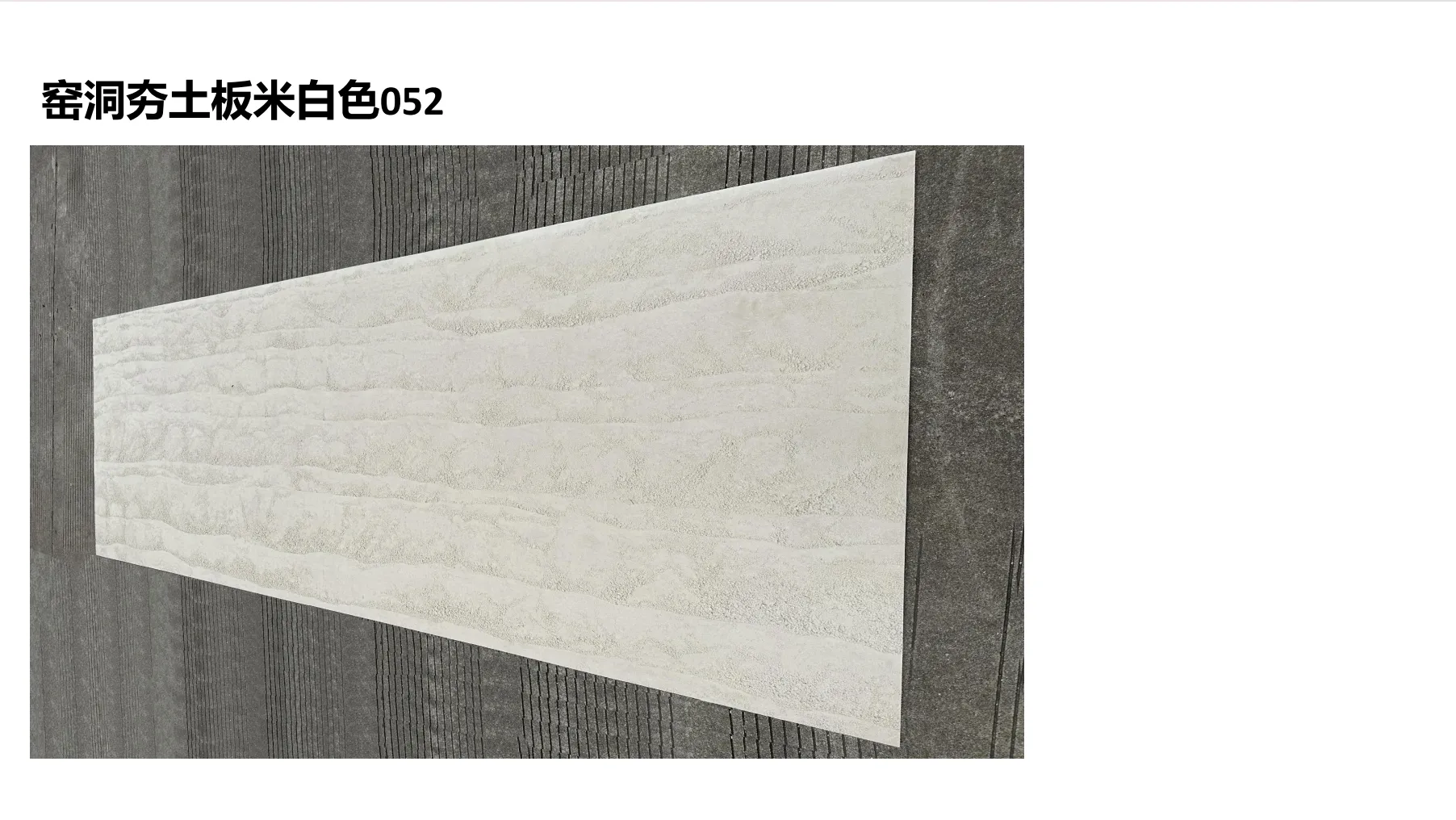
At its core, rammed earth is an ancient building technique—think of the Great Wall of China or the cliff dwellings of the American Southwest—where layers of moistened earth (clay, sand, gravel) are compacted into dense, durable walls. But Gradient Color Rammed Earth Board isn't just a throwback; it's a modern masterpiece of craftsmanship. Artisans blend natural pigments—ochres, terracottas, soft greens, and warm beiges—into the earth mixture, then layer and compact them to create seamless, flowing color transitions. The result? Walls that shift like a desert sunset or a forest at dawn, with no two sections exactly alike.
Unlike synthetic materials that scream "manufactured," gradient rammed earth feels lived-in —warm to the touch, slightly textured, and full of character. Run your hand along its surface, and you'll feel the faint ridges of the compaction process, a tactile reminder of the human hands that shaped it. And because it's made from locally sourced, natural materials (often including recycled aggregates), it aligns with the eco-conscious values of today's luxury travelers—who want to indulge without leaving a heavy footprint.
Luxury resorts thrive on exclusivity, but in 2025, "exclusive" no longer means "untouchable." It means "unrepeatable." Gradient Color Rammed Earth Board delivers that in spades. Here's why it's become a staple in high-end hospitality design:
Modern luxury travelers are savvy. They research a resort's environmental practices before booking, and they're drawn to brands that prioritize planet over profit. Gradient rammed earth checks every box: low carbon footprint (no energy-heavy manufacturing), minimal waste (scrap materials are often reused), and natural insulation properties that reduce reliance on HVAC systems. A resort in Costa Rica, for example, reported a 23% drop in energy costs after using gradient rammed earth in its lobby—all while marketing itself as "a sanctuary where luxury and nature coexist."
Walk into a room with flat, painted drywall, and your brain registers "generic." Walk into a space wrapped in gradient rammed earth, and suddenly your senses wake up. The color shifts—say, from soft terracotta at the base to pale sand at the ceiling—guide the eye upward, making rooms feel larger. The texture invites touch; guests often find themselves running fingers over the walls, remarking on how "alive" the space feels. Even the acoustics are different: rammed earth absorbs sound, creating a quiet, cocoon-like atmosphere that's perfect for relaxation areas, spas, or intimate dining spaces.
Every gradient is a narrative. A resort in the Arizona desert might use rusty reds fading into golden yellows, mirroring the surrounding canyons. One in the Swiss Alps could opt for cool grays blending into snow-white, echoing the mountain peaks. These color stories create an immediate emotional connection: guests don't just see the locale—they feel it, even indoors. As one designer put it, "Gradient rammed earth doesn't just complement the landscape; it extends it. It turns a hotel stay into a journey through place."
Gradient Color Rammed Earth Board rarely steals the show alone. Its magic lies in how it harmonizes with other materials, creating layered, multidimensional spaces. Let's explore how it plays with some of the most sought-after materials in resort design:
| Material | Why They Work Together | Resort Application Example |
|---|---|---|
| Lunar Peak Silvery | The cool, metallic sheen of Lunar Peak Silvery contrasts beautifully with warm gradient tones, adding a touch of modern elegance without feeling cold. | A Thai resort used gradient rammed earth (soft golds and beiges) in its poolside cabanas, accented with Lunar Peak Silvery railings. The result? A blend of earthy warmth and subtle luxury that felt both tropical and refined. |
| Travertine (Starry Green) | Travertine's natural veining and slight shimmer (especially the "Starry Green" variant, with its flecks of iridescent mineral) complement the organic gradients of rammed earth, adding depth and a hint of whimsy. | A wellness resort in Bali paired gradient rammed earth walls (mossy greens fading to pale stone) with Travertine (Starry Green) flooring in its yoga pavilion. Guests described the space as "a forest clearing brought indoors." |
| Fair-faced Concrete | Raw, industrial fair-faced concrete adds edge to gradient rammed earth's softness, creating a "rustic-modern" vibe that appeals to design-forward travelers. | A boutique resort in Portugal combined gradient rammed earth (terracotta to cream) with fair-faced concrete beams in its restaurant. The contrast made the space feel both cozy and contemporary—perfect for Instagram-worthy meals. |
Luxury is in the details, and gradient rammed earth turns everyday moments into memories. Here are a few ways resorts are using it to create "wow" experiences:
Natural light transforms gradient rammed earth. A resort in Santorini, with its whitewashed exteriors and blue domes, lined its lobby with gradient rammed earth in soft pinks and golds. At sunrise, the walls glow peach; at sunset, they deepen to rose—guests gather by the windows daily, coffee in hand, to watch the "color show." One guest wrote in a review: "I came for the views, but I'll remember the lobby walls most. They felt like a living painting."
Spas are all about relaxation, and gradient rammed earth amplifies that. A resort in Sedona, Arizona, used gradient walls (rust red to pale sand) in its treatment rooms, paired with soft lighting and the scent of cedarwood. Guests report feeling "grounded" and "calmer" after treatments, with many attributing it to the "warm, earthy energy" of the walls. The spa director noted a 15% increase in repeat bookings—proof that the material isn't just decorative, but therapeutic.
Generic hotel rooms feel like temporary stops; unique spaces feel like home. A resort in the Maldives offers overwater villas with gradient rammed earth walls (sandy beiges blending into oceanic blues). From the bed, guests wake to walls that mirror the sea outside—a seamless connection between indoors and out. "It's like sleeping in a seashell," one traveler raved on social media, alongside a photo of the sunrise hitting the gradient wall.
How Gradient Rammed Earth Became the Resort's "Soul"
Nestled along Mexico's Yucatán Peninsula, Serenity Sands Resort & Spa was struggling to stand out in a crowded market of all-inclusive beach resorts. In 2023, they underwent a $12M renovation, with one bold move: replacing 60% of their interior walls with Gradient Color Rammed Earth Board in custom "Caribbean Sunset" gradients (coral fading to gold, then to pale blue). The results were transformative:
The resort's general manager, Elena Mendez, put it best: "We didn't just update our decor—we gave our guests something to talk about . They don't just post photos of the beach anymore; they post photos of the lobby walls at sunset. That's the power of a material that tells a story."
As travelers crave deeper connections—to place, to culture, to authenticity—materials like Gradient Color Rammed Earth Board will only grow in demand. They're not just "trendy"; they're a return to what luxury has always been at its best: meaningful . A wall that was crafted by hand, that tells a story of place, that feels alive with color and texture—these are the elements that turn a stay into an experience, and a guest into a loyal advocate.
So the next time you step into a luxury resort and find yourself pausing, running a hand over a wall, and thinking, "This feels different"—chances are, you're touching Gradient Color Rammed Earth. And in that moment, you're not just a guest. You're part of the story.
Recommend Products












