
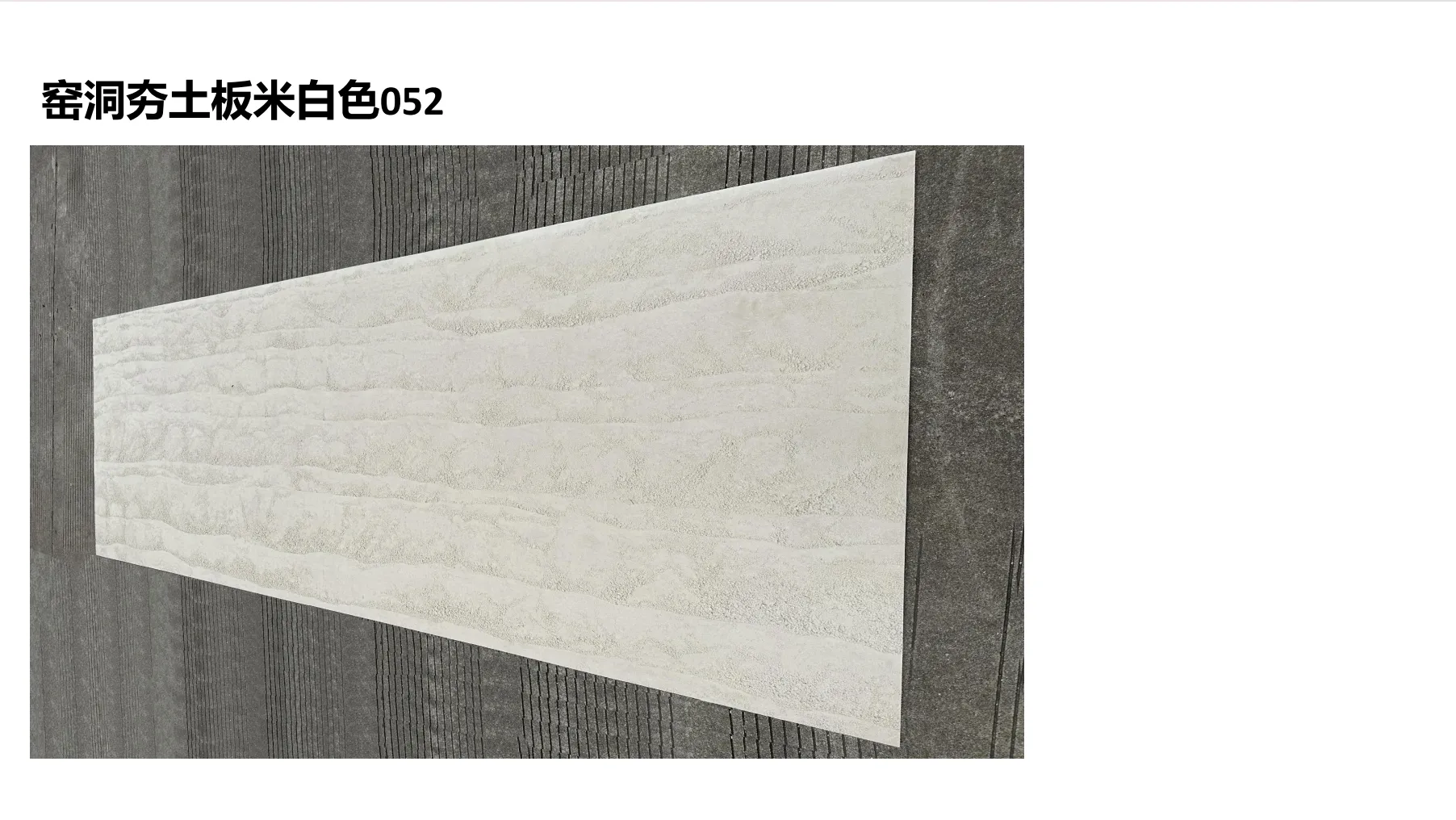
Saudi Arabia's architectural landscape is undergoing a quiet revolution. Beyond the glittering skyscrapers of Riyadh and the futuristic skyline of Neom, there's a growing movement to root modern design in the land itself—drawing on the desert's hues, the warmth of ancient mud-brick traditions, and the resilience of materials shaped by centuries of harsh climate. At the heart of this shift lies a material that feels both timeless and (pioneering): the Gradient Color Rammed Earth Board . More than just a building material, it's a storyteller—weaving together the past, present, and future of Saudi architecture, one textured, color-kissed panel at a time.
To understand the allure of Gradient Color Rammed Earth Board, imagine pressing your palm against a wall that seems to hold the desert's sunset. Swirls of terracotta bleed into soft sand, deepening to warm amber and fading again to the pale gold of dawn—all in a single panel. This isn't just paint or a digital print; it's the result of layering natural earth pigments, compressed and cured to create a surface that's as durable as it is evocative. For Saudi architects and designers, it's a dream come true: a material that honors the country's bedouin heritage (think of traditional barasti huts and mud-brick forts) while offering the precision and versatility needed for contemporary projects.
"In Saudi, we've always had a deep connection to the land," says Amal Al-Harbi, a Riyadh-based architect whose firm specializes in cultural heritage projects. "But for too long, modern buildings felt like they were imported—shiny, cold, disconnected from our environment. Gradient Rammed Earth changes that. It's earth that's been reimagined. You can almost feel the desert wind in its texture, and the color gradients? They mirror the way light plays on our dunes from sunrise to sunset."
Nestled at the edge of Al-Ula's ancient Nabataean ruins—a UNESCO World Heritage site famous for its rock-cut tombs and desert vistas—the Al-Ula Heritage Visitor Center was tasked with a delicate mission: welcome modern tourists without overshadowing the area's 2,000-year-old history. The solution? A design that feels like it was carved from the same sandstone hills surrounding it, with Gradient Color Rammed Earth Board as its star material.
"We wanted the center to be a 'silent guide,'" explains Karim Hassan, lead designer at the project's architectural firm. "It should frame the ruins, not compete with them. Gradient Rammed Earth was the obvious choice. We worked with local artisans to source clay from the nearby Wadi Al-Ula, mixed with natural iron oxides to create gradients that shift from the pale pink of dawn (matching the ruins' hue at sunrise) to the deep rust of midday (echoing the desert's heat)."
The result is a building that seems to rise gently from the desert floor. The main facade, clad in 3-meter-tall Gradient Rammed Earth panels, curves like a sand dune, with embedded Historical Pathfinders Stone accents—rough-hewn blocks that mimic the weathered stone of Nabataean inscriptions. Inside, the visitor center uses Foamed Aluminium Alloy Board (Vintage Gold) for handrails and display frames, adding a subtle metallic warmth that contrasts beautifully with the earthy walls. "The gold tones pick up the sunlight and reflect it onto the rammed earth," Hassan notes, "making the gradients even more dynamic throughout the day."
The community response has been overwhelming. "Before, the visitor center was just a boxy concrete building," says Fatima Al-Saleh, a local tour guide. "Now, people stop to take photos of the walls themselves! They say, 'This feels like Al-Ula.' It's brought pride back to our heritage."
If Al-Ula's project is about blending with history, Jeddah's Corniche Community Hub is about reimagining public space for modern life—all while respecting the city's coastal desert ecosystem. Located along the Red Sea, this vibrant hub includes a library, outdoor amphitheater, and children's play area, all wrapped in a design that celebrates Jeddah's dual identity: a port city with desert roots.
"Jeddah is where the desert kisses the sea," says Lina Faraj, the hub's landscape architect. "We wanted materials that could bridge those two worlds. Gradient Rammed Earth was perfect for the amphitheater's seating tiers—warm, earthy, inviting. But we paired it with Gobi Panel for the stage backdrop, which has this rough, wind-scoured texture that feels like it was plucked from the Empty Quarter. Together, they tell Jeddah's story: desert (tenacity) meets coastal openness."
The amphitheater's Gradient Rammed Earth panels use a unique "coastal gradient" palette: starting with the pale beige of desert sand, blending into soft blue-gray (echoing the Red Sea's shallows), and finishing with a warm terracotta (a nod to Jeddah's historic coral-stone buildings). For durability, the panels were treated with a natural sealant derived from date palm wax—locally sourced, of course—to resist salt spray from the sea.
"Parents love it," Faraj laughs. "Kids climb on the rammed earth seats, and it doesn't scratch or chip. It's like a giant, beautiful playground. And in summer, when Jeddah is sweltering, the earth stays cool—no more burning thighs on metal benches!"
| Material | Aesthetic Appeal | Climate Resilience | Sustainability |
|---|---|---|---|
| Traditional Mud Bricks | Warm, earthy, but limited color range; prone to fading. | Good insulation, but vulnerable to moisture and erosion. | Locally sourced, but requires frequent replacement. |
| Gradient Color Rammed Earth Board | Dynamic color gradients; natural texture; customizable hues. | Highly resistant to heat, sand, and salt; minimal maintenance. | 90% locally sourced materials; low carbon footprint; long lifespan (50+ years). |
| Imported Marble | Sleek, uniform, but cold; often clashes with desert landscapes. | Poor insulation; prone to cracking in extreme temperature shifts. | High transportation emissions; requires chemical sealants. |
Creating Gradient Color Rammed Earth Board is equal parts science and craftsmanship. It starts with selecting the right soil: a mix of clay, sand, and silt (ideally 30% clay, 60% sand, 10% silt) to ensure compressibility and strength. In Saudi Arabia, most manufacturers source soil from the Najd Plateau or the outskirts of Riyadh, where the earth has the perfect balance of minerals for rich coloration.
"The gradient effect is all in the layering," explains Dr. Majid Al-Zahrani, a materials engineer at King Saud University who consults with local manufacturers. "We don't just mix colors; we layer them. For a sunset gradient, we'll start with a base layer of pale sand, then add a thin layer of terracotta pigment, then amber, then deep rust—each layer compressed at 10 MPa (megapascals) to bind them together. The curing process (28 days in controlled humidity) ensures the colors don't bleed or fade, even in Saudi's harsh UV light."
The result is a material that's not just beautiful, but practical. Tests at the Saudi Building Code Organization (SABCO) show Gradient Rammed Earth Board can withstand temperatures from -10°C to 70°C (14°F to 158°F), resist sand abrasion (thanks to its compressed density of 2.2 g/cm³), and even act as a natural sound insulator—making it ideal for busy urban areas like Riyadh's King Abdullah Financial District.
As Saudi Arabia pushes forward with Vision 2030—its plan to diversify the economy and build thriving, sustainable cities—materials like Gradient Color Rammed Earth Board are poised to play a starring role. From the futuristic eco-districts of Neom to the heritage renovations in Diriyah, architects are increasingly turning to earth-based materials to create spaces that are both globally competitive and uniquely Saudi.
"Vision 2030 talks about 'authenticity,'" says Al-Harbi, the Riyadh architect. "What's more authentic than building with the earth beneath our feet? Gradient Rammed Earth isn't just a trend—it's a statement. It says, 'We can be modern without forgetting who we are.'"
Upcoming projects include a public school in Mecca that will use Gradient Rammed Earth for its exterior walls, paired with Lunar Peak Silvery for window frames (a nod to the moon's importance in Islamic culture), and a luxury resort in Al-Qassim that will blend the material with Bali Stone to create "desert-meets-tropical" villas. Even commercial developers are taking notice: a new office complex in Jeddah's North Corniche will feature a facade of Gradient Rammed Earth and Travertine (Starry Blue) , aiming to attract eco-conscious businesses.
In a world of mass-produced, cookie-cutter buildings, Gradient Color Rammed Earth Board stands out as a reminder that architecture can be deeply personal—rooted in place, history, and the natural world. In Saudi Arabia, it's more than a material; it's a bridge between generations, a way to honor the past while building a future that feels like home.
"The desert isn't just a landscape here—it's our story," says Al-Saleh, the Al-Ula tour guide. "Gradient Rammed Earth? It's how we're writing the next chapter."
Recommend Products












