
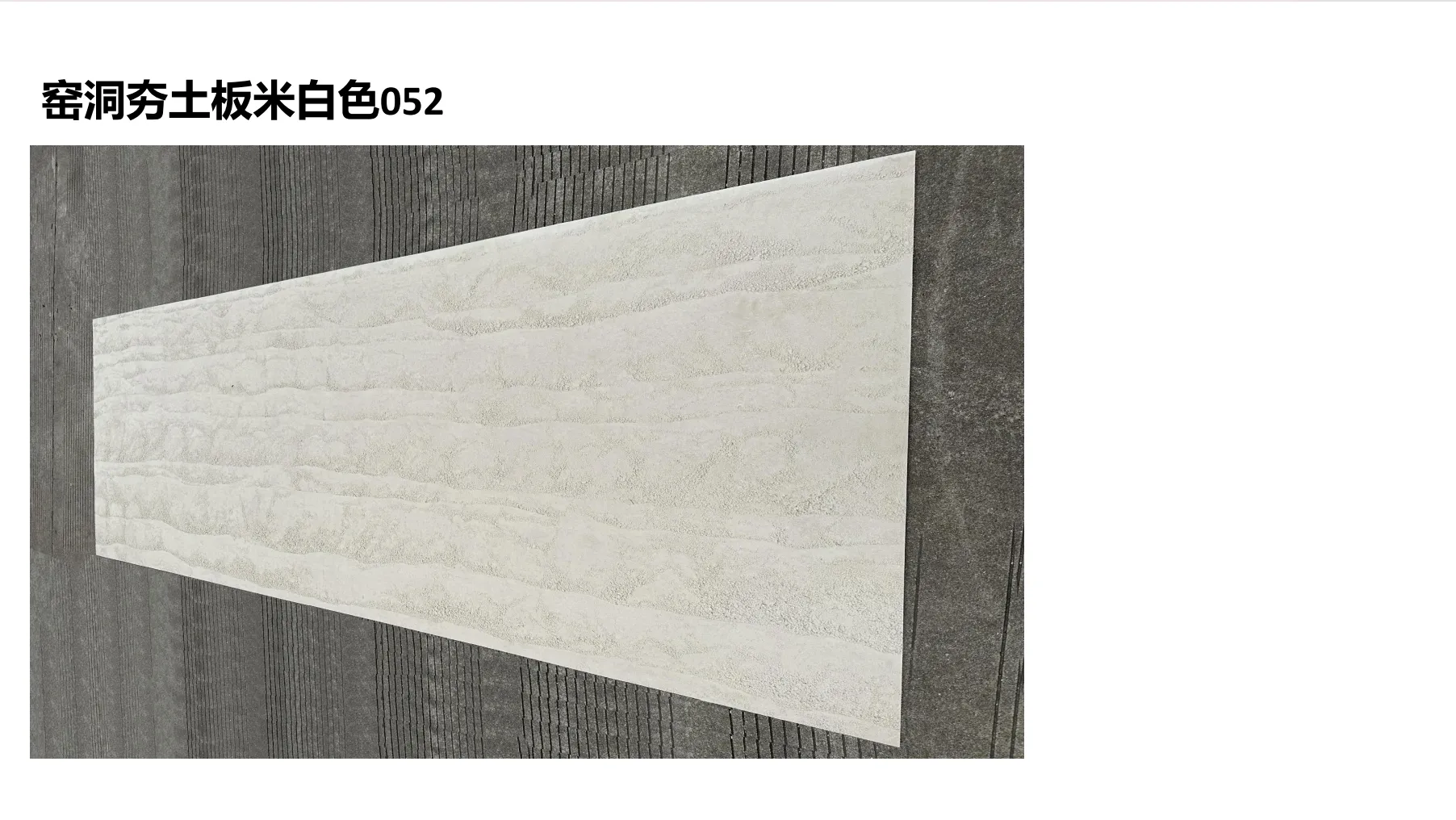
We've all been there: standing in front of a soaring energy bill, wondering where the dollars went. Maybe it's the middle of winter, and your heater's been running nonstop to keep the cold at bay. Or perhaps it's summer, and your AC is working overtime to combat the swelter. What if the solution to those sky-high costs wasn't just a better thermostat or energy-efficient appliances—but the very walls around you? Enter Gradient Color Rammed Earth Board —a material that marries age-old craftsmanship with modern innovation, all while quietly revolutionizing how our buildings keep us comfortable. Let's dive into how this unassuming building panel is becoming a hero for energy efficiency, one gradient-hued wall at a time.
First, let's take a step back. Rammed earth isn't new. For centuries, civilizations from China to Africa have used this technique—compacting layers of damp soil, gravel, and sand into sturdy walls—to build homes that stood the test of time. But Gradient Color Rammed Earth Board? That's where tradition meets a modern makeover. Imagine the rustic charm of rammed earth, but with a twist: instead of a single earthy tone, the board features soft, flowing gradients of natural pigments—think warm terracottas blending into soft beiges, or cool grays melting into misty whites. It's not just about looks, though; those gradient layers do double duty, enhancing both visual appeal and, as we'll see, thermal performance.
So how is it made? Today's manufacturers start with a base of natural aggregates—think locally sourced clay, sand, and gravel—mixed with a minimal, eco-friendly binder (often lime or cement, but in far smaller quantities than traditional concrete). Then, they add natural pigments in carefully measured layers, compacting each stratum under high pressure to create a dense, solid panel. The result? A board that's not just strong and durable, but also breathable, fire-resistant, and—crucially—excellent at regulating temperature. It's like if your grandma's cozy adobe house got a trendy, energy-smart upgrade.
Let's talk about why thermal insulation matters. In simple terms, it's all about slowing down heat transfer. In winter, we want to keep the warm air inside; in summer, we want to block the hot air from seeping in. Most traditional building materials—like fair-faced concrete , for example—are great at being tough but not so great at this. Concrete conducts heat easily, meaning on a cold day, your heater has to work overtime to replace the warmth leaking through the walls. Gradient Color Rammed Earth Board, though? It's built to fight that.
Here's the secret: the compacted layers of natural aggregates create tiny air pockets within the material. Air is a poor conductor of heat, so these pockets act like mini insulators, trapping warmth in winter and keeping heat out in summer. But there's more—rammed earth has "thermal mass," a fancy term for its ability to absorb, store, and slowly release heat. Picture this: on a sunny winter day, the board soaks up the sun's warmth, then gently releases it into your home as the temperature drops at night. No sudden spikes, no wasted energy—just a steady, cozy glow. In summer, it does the opposite, absorbing heat from the air during the day and releasing it outside once the sun sets. It's like having a built-in temperature buffer, working 24/7 to keep your space balanced.
To put it in numbers: while standard fair-faced concrete has a thermal conductivity (how well heat passes through it) of around 1.5–2.0 W/(m·K), Gradient Color Rammed Earth Board clocks in at a much lower 0.3–0.5 W/(m·K). That might sound like just numbers, but in real life? It means less heat escapes, less AC runs, and your energy meter spins a whole lot slower.
Okay, so it insulates well—but how does that translate to real benefits for you? Let's break it down.
Let's start with the obvious: money. According to the U.S. Department of Energy, heating and cooling account for about 42% of the average household's energy bills. That's a huge chunk! But homes built with Gradient Color Rammed Earth Board can see reductions in these costs by 20–30%, depending on climate. In colder regions, imagine your furnace kicking on half as often because the walls are holding onto that warmth. In hot, humid areas, your AC might run for hours less each day, thanks to the board blocking out the sun's rays. Over time, those savings add up—enough to fund a vacation, a home upgrade, or just a little extra peace of mind.
Ever walked into a room and felt a cold draft near the window, or a stuffy, overheated corner by the heater? Traditional materials like drywall or even some modern panels can't always prevent these temperature inconsistencies. But Gradient Color Rammed Earth Board's density and thermal mass mean fewer drafts and more even temperatures throughout your space. No more huddling by the vent or avoiding the "cold wall"—every corner feels just right. It's the kind of comfort that makes you want to stay home, and who doesn't love that?
Energy efficiency isn't just about saving money—it's about saving the planet, too. Every kilowatt-hour you don't use means less coal burned, fewer greenhouse gases released, and a smaller carbon footprint. Gradient Color Rammed Earth Board takes this a step further: it's made from natural, locally sourced materials (no long-haul shipping!) and requires minimal processing, so its "embodied energy" (the energy used to make it) is way lower than synthetic insulation or fair-faced concrete . Plus, its durability means it won't need to be replaced for decades, reducing waste. It's a win-win for your wallet and the world.
You might be thinking, "Sure, it sounds great, but how does it compare to other popular building materials?" Let's put it head-to-head with a few common options, including some you might recognize from the keyword list.
| Material | Thermal Conductivity (W/(m·K)) | Energy Efficiency | Sustainability | Visual Appeal |
|---|---|---|---|---|
| Gradient Color Rammed Earth Board | 0.3–0.5 | Excellent (thermal mass + insulation) | High (natural materials, low embodied energy) | Unique gradient hues, rustic-modern charm |
| Fair-faced Concrete | 1.5–2.0 | Moderate (some thermal mass, poor insulation) | Moderate (high cement use, durable) | Sleek, industrial, but monochromatic |
| MCM Flexible Stone | 0.7–1.0 | Good (lightweight, some insulation) | Moderate (synthetic backing, but flexible for less waste) | Realistic stone look, versatile designs |
| Bamboo Mat Board | 0.15–0.25 | Very good (excellent insulation, low thermal mass) | Very high (renewable, fast-growing bamboo) | Natural, woven texture, warm wood tones |
As the table shows, Gradient Color Rammed Earth Board holds its own—and then some. While Bamboo Mat Board has slightly better insulation, it lacks the thermal mass to regulate temperatures over time, meaning you might still need extra heating or cooling. MCM Flexible Stone is great for flexibility and style, but its thermal conductivity is higher, making it less efficient. And fair-faced concrete ? Sturdy, yes, but it's no match for the gradient board's ability to keep energy use in check.
Okay, so the science checks out—but does it work in real buildings? Let's visit a few hypothetical (but totally plausible) spaces where Gradient Color Rammed Earth Board is making a difference.
Imagine a small cabin nestled in the Rockies, where winters are frigid and summers are mild. The owners wanted something that felt "of the earth" but didn't require a fortune in heating oil. They chose Gradient Color Rammed Earth Board in warm terracotta-to-beige gradients for the walls. Now, even on -10°F days, the interior stays a steady 68°F with minimal furnace use. The thermal mass soaks up the sun through south-facing windows, and the low conductivity keeps the cold from seeping in. "We used to go through a tank of oil every month," says the owner. "Now? We're refilling every six weeks. And the walls? They're like a piece of art. Guests can't stop taking photos."
In a bustling city, a new café wanted to stand out—both for its lattes and its sustainability. They opted for Gradient Color Rammed Earth Board in cool gray-to-white gradients for their interior walls, paired with Lunar Peak Silvery accents for a modern, ethereal vibe. The result? Even during heatwaves, the café stays 10 degrees cooler than the sidewalk outside, so they've cut AC use by 30%. "Our customers comment on how 'fresh' the space feels," the manager notes. "And as a bonus, the natural colors make the lighting look amazing—perfect for Instagram."
What I love most about Gradient Color Rammed Earth Board isn't just the energy savings—it's the way it connects us to something bigger. In a world of generic drywall and plastic panels, here's a material that feels… alive. Its gradients tell a story of layers, of time, of the earth itself. It's durable enough to last generations, yet gentle enough to blend into nature. And when you walk into a room lined with it, you don't just feel comfortable—you feel grounded. Like you're in a space that cares about you, and about the planet.
So the next time you're thinking about building or renovating, consider this: your walls do more than just hold up the roof. They can be partners in your daily life, working quietly to keep you warm, save you money, and remind you of the beauty in simplicity. Gradient Color Rammed Earth Board isn't just a building material—it's a choice to live more intentionally, more comfortably, and more connected to the world around us. And in a time when every little bit helps, that's a choice worth making.
At the end of the day, Gradient Color Rammed Earth Board is more than the sum of its parts. It's thermal insulation that doesn't feel like insulation. It's energy efficiency that looks like art. It's tradition reimagined for a world that needs both comfort and conscience. Whether you're building a tiny home, a commercial space, or just dreaming of your future forever house, this material invites you to build smarter—not just for your wallet, but for the life you want to live. Because when your walls work with you, every day feels a little cozier, a little greener, and a whole lot more beautiful.
Recommend Products












