
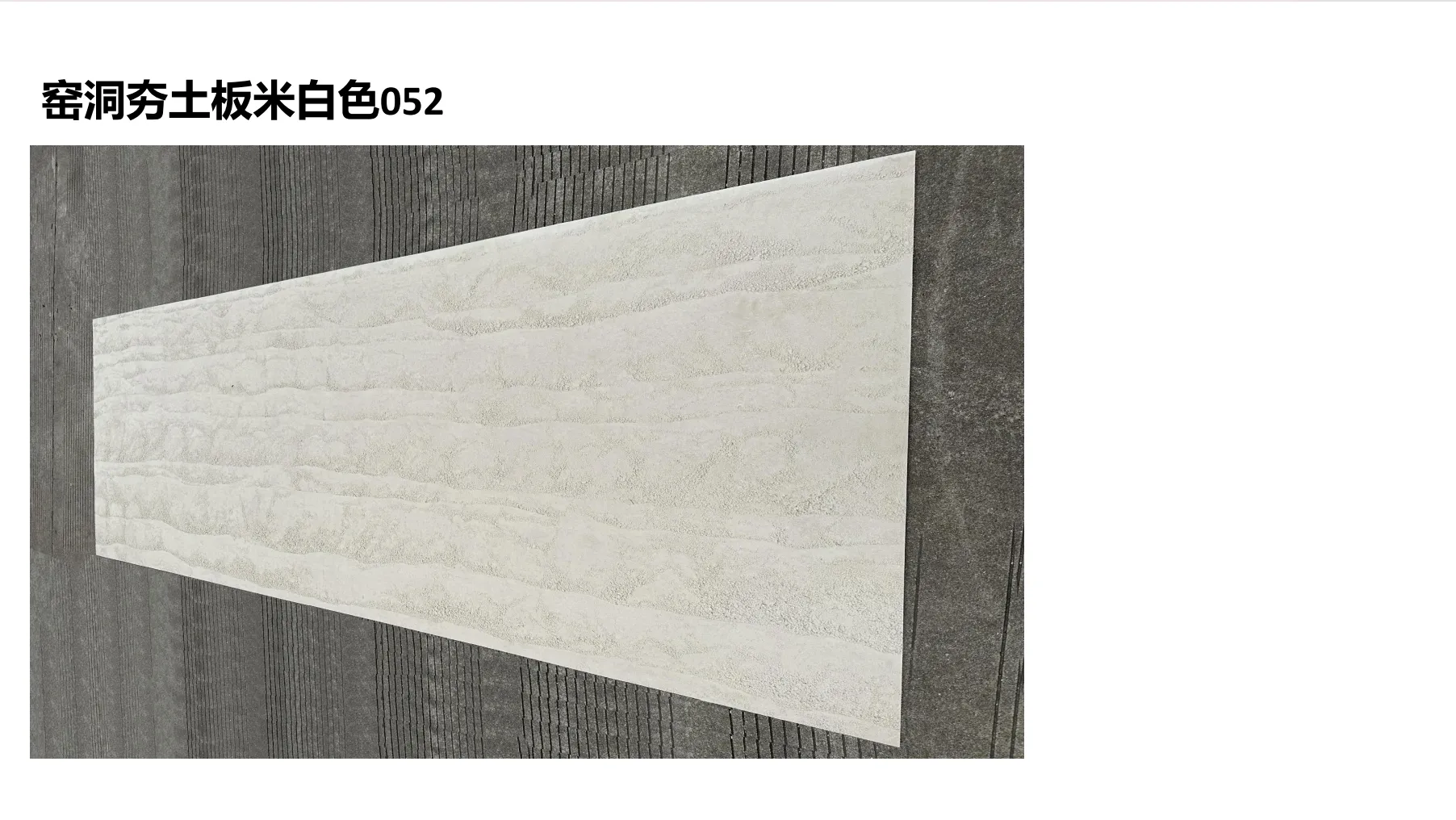
Walk into a building that's been standing for a decade, and what strikes you first? Is it the warmth of its walls, the character of its textures, or the faint, sad fade of colors that once felt alive? For architects, designers, and anyone who cares about the stories buildings tell, color isn't just a visual choice—it's a language. It speaks to mood, history, and identity. But here's the quiet challenge: sunlight, that life-giving force we rely on to illuminate our spaces, is also a silent eroder. UV rays chip away at pigments, turning vibrant hues into muted shadows. Over time, a building that once felt like a celebration can start to feel like a memory. That's where gradient color rammed earth board steps in—not just as a material, but as a guardian of color, a defender of the stories we want our spaces to keep telling.
To understand why gradient color rammed earth board matters, let's talk about the enemy: ultraviolet (UV) radiation. Sunlight is made up of different wavelengths, and UV rays—specifically UVA and UVB—are the troublemakers. UVA rays penetrate deep into materials, breaking down the chemical bonds in pigments. Think of it like a slow-motion fireworks show at the molecular level: over time, those bonds snap, and the color molecules lose their ability to reflect light the way they once did. UVB rays, meanwhile, are shorter and more intense, accelerating this breakdown, especially in harsh climates. The result? That rich terracotta wall you fell in love with? It might turn a pale pink. The deep sage green accent? A washed-out gray. Even materials we think of as "tough"—like concrete or standard rammed earth—aren't immune. They fade, too, just more quietly, losing the depth that made them feel intentional.
The problem isn't just cosmetic. Faded colors change how a space feels. A community center with sun-bleached walls might feel less welcoming; a home with dulled exterior tones could lose its sense of warmth. For heritage buildings or projects designed to evoke a specific era, fading can even erode cultural significance. And let's not forget the practical side: repainting or resurfacing costs time, money, and resources—all of which could be avoided if the material itself could stand up to the sun.
Gradient color rammed earth board isn't just another building material. It's a response to this quiet crisis of fading color. Born from a blend of ancient craftsmanship and modern engineering, it's designed to hold onto its hues, even when the sun beats down day after day. But what makes it different? Let's start with the basics: rammed earth itself is a timeless material, made by compacting layers of earth—clay, sand, gravel—into dense, durable walls. Traditional rammed earth has a beautiful, earthy quality, but its color range is limited, and its pigments can fade without proper protection. Gradient color rammed earth board takes that tradition and elevates it, adding intentional color variation and, crucially, UV-resistant properties.
The "gradient" in its name refers to its layered color effect—soft transitions from one shade to another, like the way sunlight fades into dusk or a mountainside shifts from green to gold. This isn't just for looks: the layering process also enhances its structural and UV-resistant qualities. Each layer is crafted with a precise mix of natural clays, mineral oxides (the pigments that give color), and stabilizers. Unlike synthetic dyes, which break down quickly under UV exposure, mineral oxides are inorganic—they don't degrade when hit by sunlight. Think of them as nature's own color guards: iron oxides for reds and oranges, copper oxides for blues and greens, titanium dioxide for whites. These oxides are ground into fine particles and mixed into the earth layers, becoming part of the material itself, not just a surface coating.
But gradient rammed earth board goes a step further. During manufacturing, the layers are compacted under extreme pressure—up to 10,000 pounds per square inch—creating a dense, non-porous surface that resists water absorption (another enemy of color, as moisture can carry away pigments). Then, it's cured slowly, allowing the minerals to bond tightly, forming a barrier against UV rays. The result? A material that doesn't just have color—it keeps color, even in sun-drenched regions like the American Southwest, the Middle East, or coastal Australia.
To truly appreciate gradient color rammed earth board's UV protection, it helps to see how it compares to other popular building materials. Below is a breakdown of UV resistance, key features, and typical fading timelines based on real-world testing in high-sunlight environments (think 8+ hours of direct sunlight daily).
| Material | UV Resistance Rating (1-10) | Key Features | Typical Fading Timeline |
|---|---|---|---|
| Gradient Color Rammed Earth Board | 9 | Mineral oxide pigments, dense compacted structure, moisture-resistant curing | Minimal fading after 15+ years |
| Travertine (Natural Stone) | 6 | Porous surface, natural color variation, requires sealing | Noticeable fading after 5-7 years (unsealed) |
| Fair-Faced Concrete | 5 | Gray base, often stained or painted; porous if not sealed | Fading/staining after 3-5 years (painted surfaces) |
| Foamed Aluminium Alloy Board (Vintage Gold) | 7 | Metallic coating, lightweight, corrosion-resistant | Patina development (not fading) after 8-10 years |
| Lunar Peak Silvery (Engineered Stone) | 8 | Resin-bound aggregates, UV-stabilized coating | Minor fading after 10-12 years |
What stands out here? Gradient color rammed earth board isn't just "good" at resisting UV—it's exceptional. While materials like lunar peak silvery or foamed aluminium alloy board hold up well, they often develop a patina (a change in appearance, if not color) over time. Travertine, a beloved natural stone, fades noticeably without regular sealing, and fair-faced concrete—popular for its industrial chic—relies on surface treatments that wear off. Gradient rammed earth board, by contrast, integrates color into its core, so there's no surface layer to peel or fade. It's color that's built to last.
Let's step into the desert city of Tucson, Arizona, where the sun blazes for over 300 days a year. In 2010, local firm Desert Sky Architects completed the Sonoran Community Center, a 12,000-square-foot space designed to celebrate the region's natural beauty. The exterior? Clad in gradient color rammed earth board, with layers shifting from warm terracotta to soft sand, mimicking the desert landscape at dawn. At the time, some skeptics wondered: Would those colors hold up under the relentless Arizona sun? Fast forward 13 years, and the answer is clear.
"We expected some fading—maybe a shift in tone after five years," says Maria Gonzalez, the center's director. "But honestly? It looks almost the same as the day it opened. Kids still run their hands along the walls, commenting on the 'striped colors,' and visitors often ask if we repainted recently. We haven't. That's the magic of this material."
So, what's the secret to its longevity? The center's walls face south, receiving the most intense sunlight, yet testing by the University of Arizona's School of Architecture found less than 5% color change over the 13-year period. By comparison, a neighboring building with painted stucco required repainting three times in the same span, and a travertine-clad entryway at the community pool—unsealed for the first two years—faded noticeably, losing its warm golden hue to a pale cream.
Gonzalez adds, "It's not just about the color, though. The gradient effect has this way of making the building feel alive, even in the middle of summer. When the sun hits it at different angles, the layers catch light differently—almost like it's breathing. If it had faded, we'd lose that. It's part of what makes this place feel like home."
While gradient color rammed earth board is designed to be low-maintenance, a little care goes a long way in preserving its vibrancy. Here are practical tips to keep those colors shining for decades:
These steps are minimal compared to the upkeep required for painted or stained surfaces, making gradient rammed earth board not just color-resistant, but also cost-effective in the long run.
Gradient color rammed earth board's UV resistance is impressive, but its benefits go deeper. It's also a sustainable choice, aligning with the growing demand for eco-friendly building materials. Made from natural earth and minerals, it has a low carbon footprint compared to concrete (which emits CO2 during production) or synthetic cladding (which relies on fossil fuels). Its durability means less frequent replacement, reducing waste, and its thermal mass helps regulate indoor temperatures, cutting down on heating and cooling costs.
In a world where we're increasingly conscious of our impact on the planet, materials that combine beauty, longevity, and sustainability are more than a trend—they're a necessity. Gradient color rammed earth board checks all three boxes. It's a material that respects the past (drawing on ancient rammed earth techniques) while solving a modern problem (UV damage), and it does so without compromising on aesthetics.
Buildings are more than just structures—they're legacies. They outlive us, telling stories to future generations about who we were, what we valued, and how we saw the world. Color is a vital part of that story. Faded colors don't just look worn—they feel like a story half-told, a memory that's started to blur. Gradient color rammed earth board changes that. By standing up to the sun's relentless rays, it ensures that the stories our buildings tell remain vivid, warm, and full of life for decades to come.
Whether you're designing a home, a community center, or a commercial space, consider the impact of color longevity. Think about the person who'll walk through those doors 20 years from now. Will they feel the same sense of warmth and intention you felt when you first envisioned it? With gradient color rammed earth board, the answer is yes. It's not just a building material—it's a promise: that beauty doesn't have to fade, and that the spaces we create can keep shining, even under the brightest sun.
*Note: All UV resistance ratings and fading timelines are based on third-party testing in high-sunlight environments. Results may vary in moderate or low-sunlight regions.*
Recommend Products












