
Choosing the right material for your space isn't just about checking boxes on a list—it's about crafting a feeling. Whether you're designing a home, a café, or a public square, the walls, floors, and surfaces around us shape how we experience the world. They hold memories, reflect personalities, and even influence our mood. Today, let's dive into two materials that often stand at this crossroads of function and feeling: gradient color rammed earth board and ceramic tiles. One feels like a hug from the earth, the other like a polished story told in glossy fragments. Let's break down how they stack up in cost, durability, and that all-important "heartbeat" of aesthetics.
Let's start with the question that's probably top of mind: what will this actually cost? It's easy to glance at a price per square foot and call it a day, but the true cost of a material wraps in so much more—installation headaches, long-term upkeep, even the emotional cost of replacing something that feels "wrong" after a few years.
Gradient color rammed earth board often raises eyebrows with its initial price. Why? Because it's not just a "material"—it's a craft. Think of it like commissioning a painting versus buying a print. Each board is made by layering colored earth (sometimes mixed with natural pigments, lime, or even straw) and compressing it by hand or with specialized tools. That labor, that attention to the gradient shift from, say, soft terracotta to warm amber, adds up. You might pay anywhere from $25 to $50 per square foot, depending on the complexity of the gradient and the artisan's expertise.
Ceramic tiles, on the other hand, feel more approachable upfront. Basic ceramic tiles can start as low as $3 per square foot, and even high-end designer tiles rarely break $20. But here's the catch: installation. Those tiles need to be cut to fit, grouted, and sealed—tasks that can add $5 to $15 per square foot in labor. And if a tile cracks (which happens more often than you'd think, especially with heavy furniture or accidental drops), replacing it means matching the exact shade and pattern, which can turn into a scavenger hunt. I've seen homeowners spend hours hunting for a single discontinued tile, only to settle for a "close enough" that sticks out like a sore thumb.
Then there's maintenance. Gradient rammed earth board, once sealed properly, needs little more than a gentle wipe-down with a damp cloth. Ceramic tiles? Grout lines are their Achilles' heel. Over time, grout gets dirty, cracks, or pulls away, requiring regrouting every 3–5 years. That's not just time—it's money, and the endless cycle of "fixing" can wear on you. So while gradient rammed earth might ask for more upfront, it often evens out when you factor in the "set it and forget it" peace of mind.
A material can be beautiful, but if it chips, fades, or warps after a single rainy season, it's just a pretty face. Let's talk about resilience—how these two hold up when life happens.
Gradient rammed earth board is a study in quiet strength. Rammed earth itself has been used for centuries (think ancient Chinese fortresses or Moroccan kasbahs)—it's literally earth, compressed to be dense and sturdy. The gradient color version, when properly sealed with a breathable sealer (to prevent moisture from getting trapped), can handle daily wear and tear surprisingly well. It's not impervious—like travertine, it's porous, so spills should be wiped quickly—but it ages gracefully. Scratches or dents often blend into its organic texture, like a tree adding a new ring. I visited a café in Arizona that used gradient rammed earth walls; after five years of kids leaning against them and coffee spills, they still looked warm and lived-in, not worn-out.
Ceramic tiles, on the other hand, are the tough kids on the block. They're fired at high temperatures, making them hard, scratch-resistant, and water-resistant—perfect for bathrooms, kitchens, or high-traffic hallways. Drag a chair across a ceramic tile floor, and it'll barely flinch. But here's the rub: they're brittle. A heavy object dropped on a tile can crack it clean through, and once that happens, you're left with a glaring gap (unless you have spare tiles stashed, which… let's be real, most of us don't). Grout lines, too, are vulnerable—moisture seeps in, mold grows, and suddenly that "easy to clean" tile floor becomes a maintenance project.
Outdoors, the tables turn a bit. Gradient rammed earth, with its breathability, handles temperature swings better than ceramic tiles, which can crack in extreme cold if water seeps into tiny pores and freezes. Ceramic tiles also get slippery when wet, making them tricky for pool decks or rainy climates. Rammed earth? It stays grippy, and that gradient color? It only deepens with sun exposure, like a tan that looks better each year.
| Factor | Gradient Color Rammed Earth Board | Ceramic Tiles |
|---|---|---|
| Initial Cost | Higher ($25–$50/sq ft) due to craftsmanship | Lower ($3–$20/sq ft) for materials |
| Installation Labor | Skilled artisans needed, but less waste (minimal cutting) | Standard labor, but higher waste (tiles break during cutting) |
| Long-Term Maintenance | Low (seal every 5–7 years; minor scratches blend in) | Moderate (regrout every 3–5 years; cracked tiles need replacement) |
| Outdoor Durability | Excellent (breathable, handles temperature swings) | Good but risky (slippery when wet; prone to cracking in cold) |
Here's where the real magic happens. A room's vibe isn't just about color—it's about texture, light, and the stories the materials whisper. Let's talk about how gradient rammed earth board and ceramic tiles make you feel when you walk into a space.
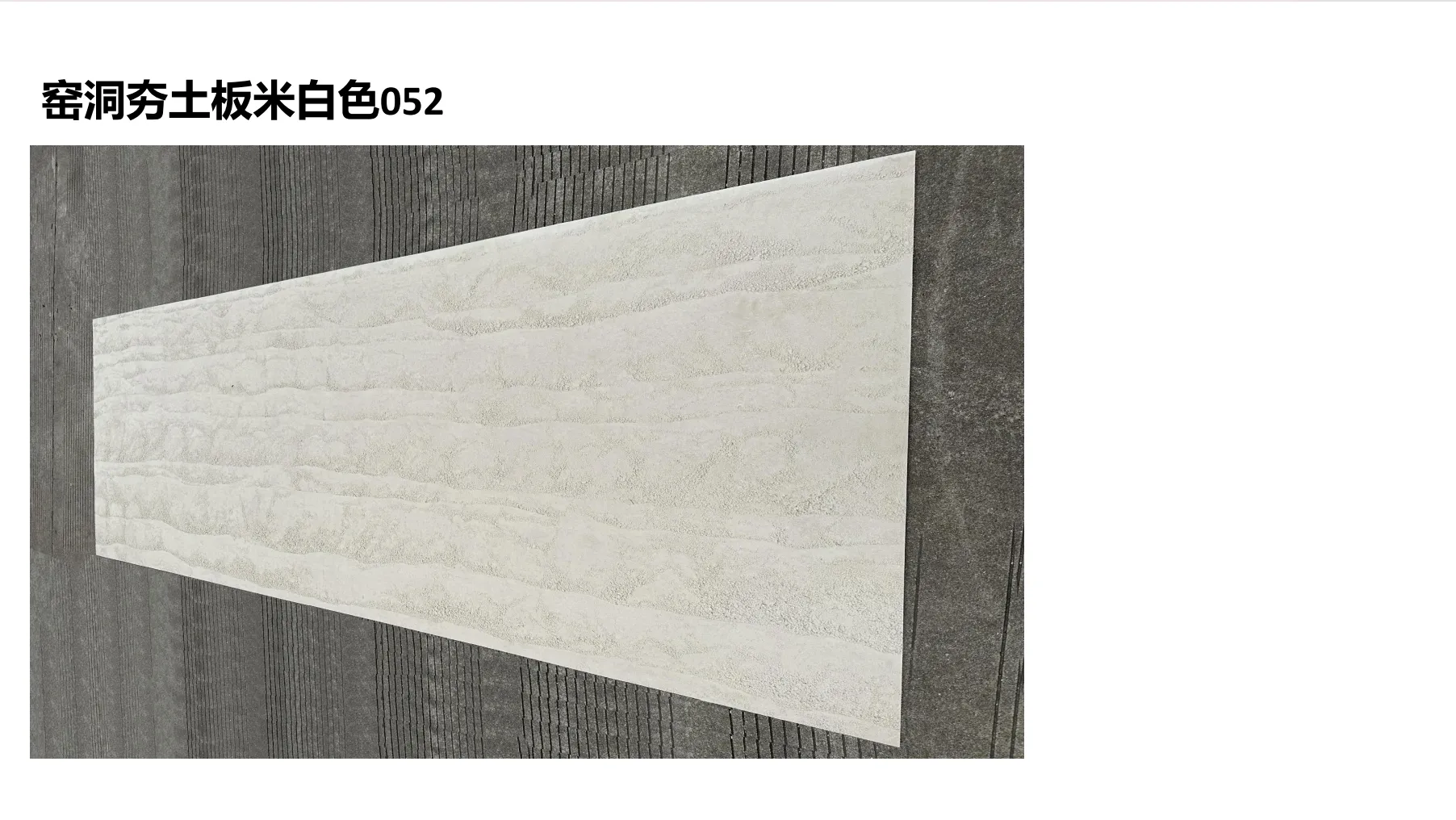
Gradient color rammed earth board is poetry in earth tones. It's not just "brown"—it's a dance of colors, shifting from soft sand to rich terracotta, or pale sage to deep olive, depending on the gradient. The texture is tactile—you want to reach out and run your hand over it, feeling the subtle ridges from the ramming process. It's warm, inviting, and alive with imperfection. No two boards are exactly alike; tiny air bubbles, slight color variations, even the occasional fleck of stone or straw make each piece unique. It's the opposite of sterile. In a bedroom, it feels like sleeping under the stars, grounded and safe. In a restaurant, it wraps you in coziness, making even a quick meal feel like a gathering.
Ceramic tiles, by contrast, are all about precision and variety. Want a floor that looks like wood grain board? There's a tile for that. Prefer the sleekness of marble or the boldness of a geometric pattern? Tiles deliver, crisp and consistent. They're glossy or matte, smooth or textured (think subway tiles vs. Moroccan zellige), but even the most "natural" tile has a polished edge. They're great for creating focal points—a backsplash with iridescent tiles that catch the light, or a bathroom floor with a mosaic that tells a story. But here's the thing: that consistency can sometimes feel… flat. A wall of identical ceramic tiles, no matter how pretty, lacks the "soul" of a gradient rammed earth wall that changes with the light. At noon, the gradient might glow golden; at dusk, it softens to rose. Ceramic tiles, lovely as they are, tend to stay the same.
Let's talk about light, too. Gradient rammed earth has a matte, porous surface that absorbs light gently, creating a soft, diffused glow. It's the kind of light that makes a room feel spacious but intimate, like a sunlit cave. Ceramic tiles, with their glazed finish, reflect light, which can make a small room feel bigger—but it can also feel harsh if there's too much glare. I once visited a kitchen with all-white ceramic tiles and no window coverings; at midday, it felt like standing in a spotlight, not a place to linger over coffee.
And then there's the emotional resonance. Gradient rammed earth feels connected to something ancient—like it carries the memory of the earth it came from. It's grounding, calming, and perfect for spaces where you want to slow down. Ceramic tiles, meanwhile, feel modern and dynamic—great for spaces that buzz with energy, like a café or a home office. They're versatile, but they rarely make you pause and think, "This wall has a story."
At the end of the day, choosing between gradient color rammed earth board and ceramic tiles isn't about "better" or "worse"—it's about what your space needs to say. If you crave warmth, uniqueness, and a material that ages like fine wine, gradient rammed earth is your match. It's an investment in character, in a space that feels like it was made for you , not just built. If you need durability, versatility, and the ability to switch up styles without a full renovation, ceramic tiles are a solid, reliable choice. They're the chameleons of the design world, ready to adapt to whatever story you want to tell.
Whichever you choose, remember: the best materials aren't just about function. They're about how they make you feel when you walk through the door—whether that's "I'm home" or "Let's create something new." And isn't that the point of building, anyway? To craft spaces that don't just exist, but breathe.
Recommend Products












