
In the bustling world of modern architecture, where every line, curve, and surface tells a story, the choice of building materials is more than just a technical decision—it's a narrative choice. Architects and designers today aren't just looking for materials that "work"; they're hunting for ones that breathe life into spaces, that balance the raw honesty of nature with the precision of engineering. Two materials have recently emerged as front-runners in this quest: Gradient Color Rammed Earth Board and Fiber Cement. Both promise to marry aesthetics with performance, but how do they truly stack up when it comes to the nitty-gritty of strength, weight, and real-world application? Let's dive in.
Think about the last building that stopped you in your tracks. Maybe it was a sleek urban high-rise with a facade that shimmered like liquid metal, or a cozy mountain retreat that seemed to grow out of the landscape. Chances are, its materials played a starring role in that first impression. Today's clients—whether they're building a family home, a boutique hotel, or a corporate headquarters—want more than just walls and roofs. They want materials that reflect their values: sustainability, durability, and a unique visual identity.
Enter Gradient Color Rammed Earth Board and Fiber Cement. One draws inspiration from the ancient craft of rammed earth, reimagined with modern technology to create stunning color gradients. The other is a workhorse of the construction world, prized for its resilience and versatility. But when it comes to the nuts and bolts—how strong are they? How heavy? How do they hold up in the chaos of daily life?—the answers might surprise you. Let's start by getting to know each material up close.
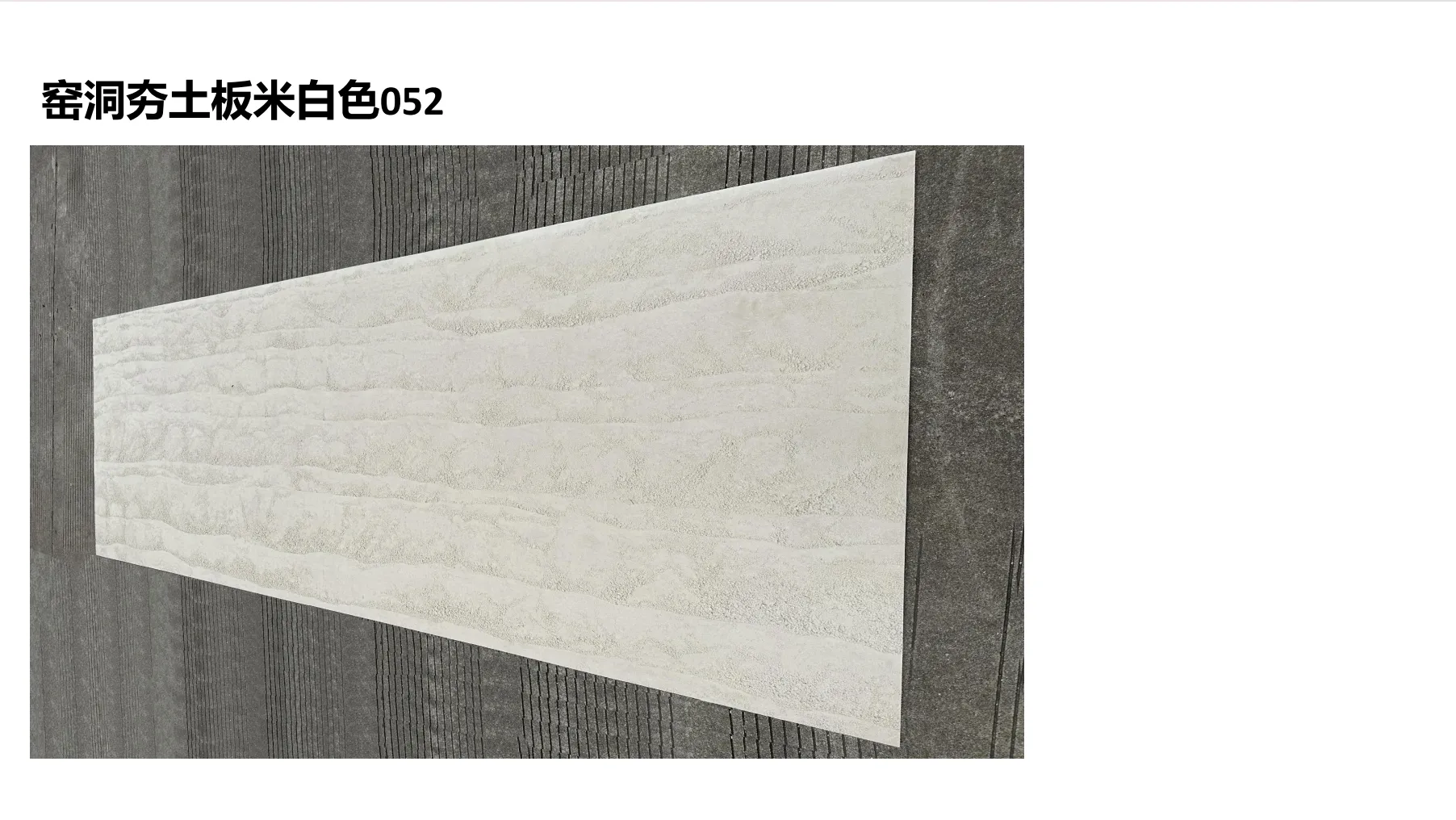
Imagine walking into a room where the walls seem to shift color as you move—from soft terracotta at the base to warm sand at the top, like a sunset frozen in clay. That's the magic of Gradient Color Rammed Earth Board. Unlike traditional rammed earth, which relies on layers of natural soil compressed into formwork, this modern iteration takes the concept to new heights by blending earthy aggregates (think clay, sand, and gravel) with pigments and polymers, then compressing them under high pressure to create panels with seamless, gradient color transitions.
"It's like painting with dirt, but with the precision of a laser," says Elena, a materials designer who specializes in sustainable construction. "Traditional rammed earth has this beautiful, organic texture, but it's limited in color range. Gradient Color Rammed Earth Board changes that. We can mix pigments into each layer—say, a deep rust at the bottom, fading to a soft ochre at the top—and the compression process locks those colors in, so they don't bleed or fade over time."
Key variants of this material include rammed earth board(gradient) , which offers customizable color shifts, as well as specialized options like rammed earth board(matcha green) and rammed earth board(red) for projects needing bold, uniform hues. But it's the gradient effect that truly sets it apart—a visual trick that makes spaces feel larger, more dynamic, and deeply connected to nature.
But aesthetics aside, Gradient Color Rammed Earth Board isn't just a pretty face. Its core composition—natural aggregates bound by minimal cement and eco-friendly polymers—gives it a surprising amount of heft, both literally and figuratively. Let's break down what makes it tick.
Now, shift gears to Fiber Cement—a material that's been quietly revolutionizing construction sites for decades, even if it doesn't always get the spotlight. If Gradient Color Rammed Earth Board is the "artistic soul" of building materials, Fiber Cement is the "reliable workhorse." It's a composite material made by mixing cement, sand, and cellulose fibers (usually wood pulp) with water, then pressing the mixture into sheets and curing it under high heat and pressure.
"I've spec'd Fiber Cement on more projects than I can count," says Marcus, a commercial architect in Chicago. "It's the Swiss Army knife of cladding. Need something that can handle coastal humidity? Fiber Cement. Want a wood-grain finish without the maintenance of real wood? Fiber Cement. It's tough, it's consistent, and it doesn't demand a lot of attention once it's up."
Fiber Cement's claim to fame is its durability. Unlike wood, it doesn't rot or warp. Unlike vinyl, it doesn't crack in extreme cold. And unlike traditional concrete, the cellulose fibers add flexibility, making it resistant to impact and shrinkage. It's available in a range of finishes, from smooth fair-faced concrete looks to textured wood grain board patterns, making it a chameleon in the design world.
But here's the thing: Fiber Cement's strength lies in its simplicity. It's not trying to be a showstopper—it's trying to be a problem-solver. And for many builders, that's exactly what they need. But how does it compare to the newer kid on the block, Gradient Color Rammed Earth Board, when it comes to the metrics that matter most: strength and weight?
Strength in construction isn't a one-size-fits-all term. A material might be great at resisting compression (like the weight of a roof pressing down) but terrible at bending (like a strong wind pushing against a wall). To really understand how Gradient Color Rammed Earth Board and Fiber Cement stack up, we need to look at three key metrics: compressive strength, flexural strength, and impact resistance.
Compressive strength is all about how much weight a material can handle before it crumbles. For load-bearing walls or structural panels, this is non-negotiable. Gradient Color Rammed Earth Board, with its dense, compressed layers of earth and aggregates, shines here. Most modern formulations clock in at 15-25 MPa (megapascals), which is comparable to low-strength concrete. That's more than enough for residential walls or low-rise commercial buildings.
Fiber Cement, on the other hand, typically ranges from 20-30 MPa in compressive strength. "It's not a huge difference, but it adds up," explains Raj, a structural engineer. "If you're building a three-story building with load-bearing walls, Fiber Cement might give you a bit more peace of mind, especially in areas with seismic activity. But for a single-family home? Gradient Rammed Earth is more than capable."
Flexural strength is about bending. Think of a panel on the side of a building: wind pushes against it, and the material needs to flex slightly without cracking. Here, Fiber Cement takes the lead. Thanks to those cellulose fibers, it boasts flexural strengths of 7-9 MPa , compared to Gradient Color Rammed Earth Board's 3-5 MPa .
"This is why you see Fiber Cement on high-rises or coastal buildings," Marcus adds. "Wind loads can be brutal, and a material that bends a little is less likely to snap. Gradient Rammed Earth is stiffer—it doesn't flex as much—so it's better suited for sheltered areas or low-rise structures where wind forces are lower."
Life happens: a stray baseball, a falling tool, a wayward shopping cart. Impact resistance measures how well a material absorbs sudden blows without denting or cracking. Fiber Cement, again, has the edge here, with impact resistance values of 5.0-7.0 kJ/m² , versus Gradient Color Rammed Earth Board's 2.5-4.0 kJ/m² .
"I once had a client who wanted Gradient Rammed Earth on their garage exterior," Elena recalls. "We talked them into adding a Fiber Cement wainscot at the bottom, just to protect against car doors and kids' bikes. It's not that rammed earth is 'weak'—it's just that Fiber Cement is like a tough outer layer, better at taking those everyday knocks."
| Strength Metric | Gradient Color Rammed Earth Board | Fiber Cement |
|---|---|---|
| Compressive Strength (MPa) | 15-25 | 20-30 |
| Flexural Strength (MPa) | 3-5 | 7-9 |
| Impact Resistance (kJ/m²) | 2.5-4.0 | 5.0-7.0 |
Strength is crucial, but weight? That's the unsung hero of construction. A heavy material can strain a building's foundation, drive up shipping costs, and make installation a nightmare. So how do our two contenders weigh in?
Gradient Color Rammed Earth Board is denser, thanks to its compacted earth aggregates. Most panels have a density of 1800-2000 kg/m³ . For a standard 10mm-thick panel (the most common size for cladding), that translates to a weight of 18-20 kg per square meter .
Fiber Cement, by contrast, is lighter. Its density ranges from 1600-1800 kg/m³ , so a 10mm panel weighs in at 16-18 kg per square meter . "That 2-4 kg difference per square meter might not sound like much, but multiply it by a 200-square-meter facade, and suddenly you're talking about 400-800 kg less weight on the structure," Raj explains. "That can mean smaller support beams, lighter foundations, and lower labor costs for installation."
But weight isn't just about the structure—it's about handling. "Carrying a 20kg rammed earth panel up a ladder is a two-person job," says Mike, a construction foreman with 20 years of experience. "Fiber Cement panels? I've seen a single guy carry two at a time. It speeds up the whole process, especially on multi-story projects."
| Material | Density (kg/m³) | Weight per m² (10mm thickness) |
|---|---|---|
| Gradient Color Rammed Earth Board | 1800-2000 | 18-20 kg |
| Fiber Cement | 1600-1800 | 16-18 kg |
That said, Gradient Color Rammed Earth Board's weight isn't all bad. "The mass helps with thermal insulation," Elena points out. "Heavier materials absorb and release heat more slowly, so they keep interiors cooler in summer and warmer in winter. It's a passive energy benefit you don't get as much with lighter Fiber Cement."
Let's be honest: if strength and weight were the only factors, we'd all be building with cinder blocks. But architecture is art, and aesthetics matter. Here, Gradient Color Rammed Earth Board and Fiber Cement couldn't be more different—and that's a good thing. It means there's a material for every vision.
Gradient Color Rammed Earth Board is a visual storyteller. Its layers of pigmented earth create a depth that's impossible to replicate with paint or vinyl. "I used it on a yoga retreat in Colorado, and the clients still talk about how the walls 'glow' at sunrise," Marcus says. "The gradient from deep sienna to pale sand mimics the surrounding mountains—it's like bringing the landscape indoors."
Beyond gradients, there are endless texture options: from smooth, polished surfaces that feel like stone to rough, tactile finishes that invite touch. And because it's made from natural materials, no two panels are exactly alike. "You'll see tiny flecks of mica or bits of gravel that catch the light—that's the beauty of it," Elena adds. "It's imperfect, in the best way."
Pair it with wood grain board accents or mcm flexible stone trim, and you've got a space that feels grounded, warm, and alive. It's perfect for projects that aim to blend with nature: cabins, eco-resorts, or homes with a bohemian vibe.
Fiber Cement, on the other hand, is a master of disguise. It can mimic almost any material—wood, stone, brick, even metal—at a fraction of the cost. "I had a client who wanted the look of fair-faced concrete for their urban loft, but couldn't afford the real thing," Marcus recalls. "Fiber Cement panels with a smooth, gray finish did the trick. No one can tell the difference."
It's also incredibly consistent. If you need 500 panels that all look identical, Fiber Cement delivers. That makes it ideal for large commercial projects where uniformity is key. And with advances in printing technology, the textures are getting more realistic: think linear travertine(claybank) patterns or stream limestone(dark grey) veining that looks hand-carved.
"The downside? It can feel a bit 'manufactured' compared to rammed earth," Elena admits. "But for modern, minimalist designs, that's a plus. It's clean, crisp, and lets the architecture's lines take center stage."
Strength, weight, and looks aside, the real test of a material is how well it performs in the real world. Let's break down where Gradient Color Rammed Earth Board and Fiber Cement thrive.
"I often mix them," Marcus says. "Gradient Rammed Earth for the main facade of a home, Fiber Cement for the garage or shed. It gives the best of both worlds: beauty where it counts, durability where it's needed."
In 2025, "green building" isn't a trend—it's a requirement. Both Gradient Color Rammed Earth Board and Fiber Cement have sustainability credentials, but they approach it from different angles.
At its core, Gradient Color Rammed Earth Board is about simplicity. Its main ingredients—earth, sand, and gravel—are locally sourced, reducing transportation emissions. "We try to use soil from the construction site whenever possible," Elena explains. "It cuts down on waste and keeps the carbon footprint tiny."
It also requires minimal processing. No high-temperature firing (like brick) or energy-intensive manufacturing (like steel). The polymers added for strength are often bio-based, and the pigments are mineral-based, so they won't off-gas harmful chemicals. "It's a material that works with nature, not against it," she adds.
Fiber Cement's sustainability story is more about longevity. "It lasts 50+ years with minimal maintenance," Raj notes. "Compare that to wood siding, which might need replacing every 15-20 years. Less replacement means less waste over time."
That said, its production does have a higher carbon footprint than rammed earth, thanks to cement (a major CO2 emitter). But many manufacturers are offsetting this by using recycled cellulose fibers or renewable energy in production. "Look for brands with third-party certifications like Cradle to Cradle," Marcus advises. "They're more transparent about their environmental impact."
Let's talk numbers. Gradient Color Rammed Earth Board and Fiber Cement vary significantly in upfront cost, but it's important to look at the big picture: installation, maintenance, and lifespan.
Gradient Color Rammed Earth Board is pricier upfront, typically costing $30-50 per square foot for materials and installation. Fiber Cement is more budget-friendly, ranging from $15-30 per square foot .
"The gradient effect adds to the cost," Elena explains. "Each color layer has to be mixed and compacted separately, which takes more labor. Traditional rammed earth is cheaper, but the gradient version is a premium product."
Gradient Color Rammed Earth Board needs occasional sealing (every 5-7 years) to protect against moisture, costing around $2-3 per square foot each time. Fiber Cement is almost maintenance-free—just an occasional wash with soap and water. "I installed Fiber Cement on my own house 10 years ago, and I've never done anything to it," Mike says. "It still looks brand new."
Over a 50-year lifespan, though, the gap narrows. Gradient Color Rammed Earth Board's durability means it rarely needs replacement, while Fiber Cement, though long-lasting, might require repainting or minor repairs after 20-30 years. "It's a trade-off," Raj says. "Pay more now for a material that tells a story, or pay less upfront for one that fades into the background."
So, which is better: Gradient Color Rammed Earth Board or Fiber Cement? The answer, as with most things in architecture, is "it depends."
Choose Gradient Color Rammed Earth Board if you crave warmth, sustainability, and a one-of-a-kind aesthetic. It's for the dreamers, the ones who want their building to feel like a piece of the earth itself. Just be prepared to invest in upfront costs and handle its weight during installation.
Choose Fiber Cement if you need durability, versatility, and affordability. It's for the pragmatists, the ones who want a material that works hard and looks good doing it. It might not have the "wow" factor of rammed earth, but it's a reliable partner for any project.
"At the end of the day, both materials are pushing construction forward," Marcus says. "Gradient Rammed Earth is reimagining the past, and Fiber Cement is perfecting the present. And isn't that what architecture is all about? Honoring where we've been while building where we're going."
So, the next time you stand in front of a blueprint, coffee in hand, remember: the materials you choose aren't just building blocks. They're the words in the story of your space. Choose wisely—and let the story begin.
Recommend Products












