
Let's start with a scenario we've all lived (or at least daydreamed) through: You're standing in an empty room, walls bare, sunlight streaming through windows, and you're imagining what it could be. Maybe it's a cozy mountain cabin, a sleek urban loft, or a family home that feels like a warm hug. But here's the catch: choosing the right wall material isn't just about looks. It's about budget, longevity, how it ages over time, and even how it makes you feel when you walk through the door. Today, we're diving into two materials that often top the wishlist for designers and homeowners alike: Gradient Color Rammed Earth Board and Stone Veneer (think mcm flexible stone or rugged boulder slab ). We'll break down their costs, durability, aesthetics, and sustainability—so by the end, you'll know which one deserves a spot in your dream space.
Before we crunch numbers, let's make sure we're on the same page. These two materials might sound similar (they're both used for walls, after all), but they're worlds apart in origin, texture, and personality.
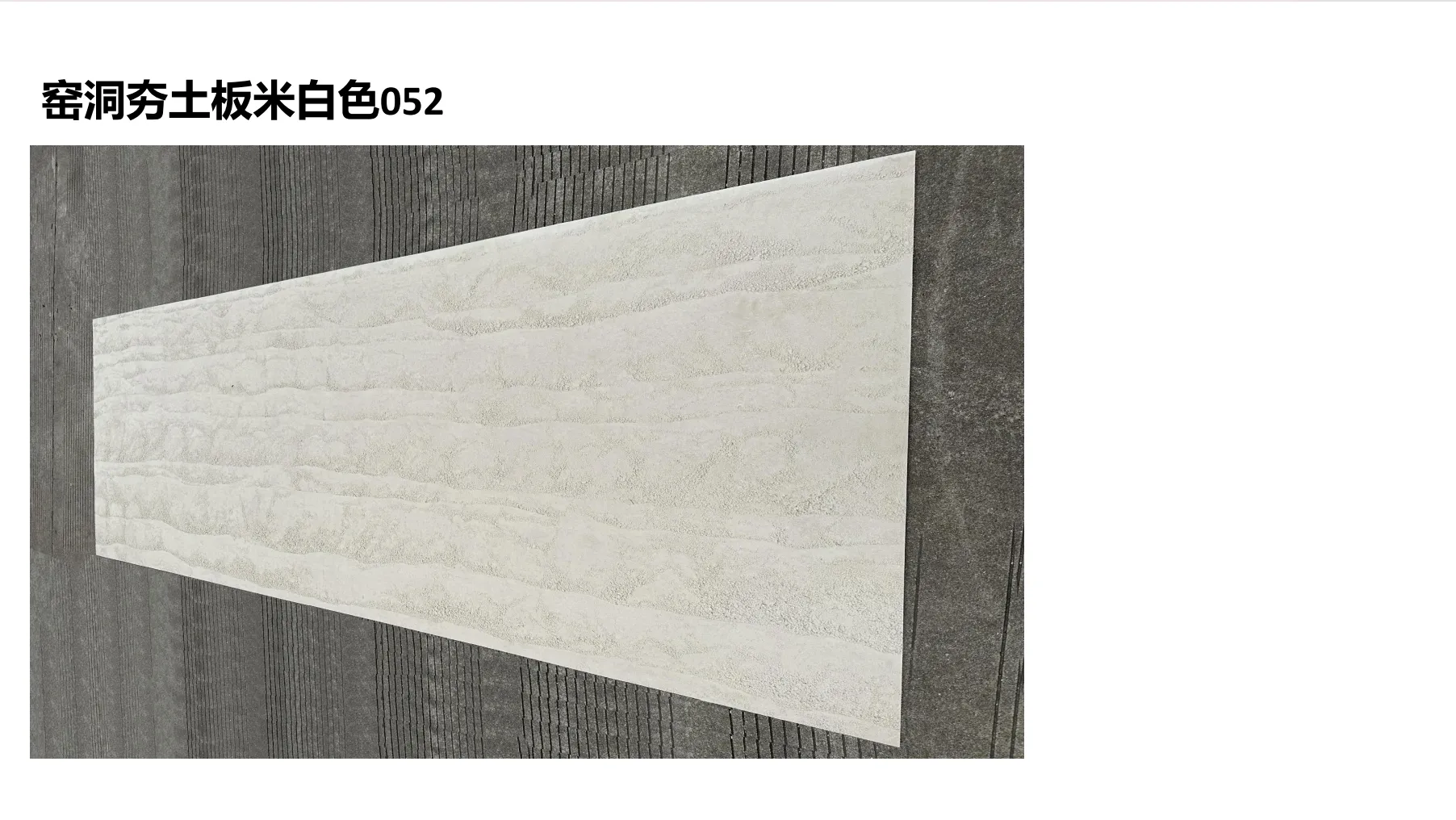
If you've ever visited a historic adobe home or a modern sustainable building, you've probably felt the warmth of rammed earth. But Gradient Color Rammed Earth Board isn't your grandma's mud wall. It's a modern take on a centuries-old technique: layers of natural materials (clay, sand, gravel, and mineral pigments) compressed into dense, lightweight boards. The "gradient" part? That's the fun stuff—subtle shifts in color, like soft terracotta bleeding into sand, or sage green fading to cream, that add depth and movement to walls. Unlike traditional rammed earth, these boards are prefabricated, meaning they're lighter, easier to install, and less messy than mixing and ramming on-site.
Think of it as nature's paintbrush meets engineering. It's earthy, tactile, and surprisingly versatile—you can use it indoors (accent walls, fireplaces) or outdoors (facades, garden walls). And because it's made with natural ingredients, it has a unique ability to "breathe," regulating humidity and keeping spaces cool in summer and warm in winter. Pretty neat, right?
Now, Stone Veneer is the extrovert cousin—bold, elegant, and unapologetically natural. It's exactly what it sounds like: thin slices of real stone (like marble, granite, or mcm flexible stone ) that are glued or nailed to walls, mimicking the look of full-thickness stone without the weight. Take boulder slab , for example: it's a type of stone veneer that mimics the rough, weathered surface of boulders, perfect for a rustic or mountain-inspired vibe. Or mcm flexible stone , which is even thinner and more adaptable, bending to curved walls or unique shapes that solid stone could never handle.
Stone veneer has been around for decades, but modern versions like mcm flexible stone have upped the game. They're lighter than full stone (which means less stress on your home's structure), more affordable than solid stone slabs, and come in a dizzying array of colors and textures—from the sleekness of polished marble to the ruggedness of split-faced granite. It's no wonder it's a go-to for homeowners who want that "high-end" look without the high-end price tag.
Pro Tip: Don't confuse stone veneer with fake stone (looking at you, plastic panels that peel after a year). We're talking real stone here—just sliced thin. That means it has all the durability and natural beauty of the real deal, minus the heft.
Let's get real: budget often makes or breaks a material choice. So let's break down the costs—from the moment you buy the materials to the day you're maintaining them five years later.
First up: the price tag at the store. Gradient Color Rammed Earth Board typically costs between $15–$30 per square foot. Why the range? It depends on the gradient complexity (more color shifts mean more labor) and the thickness (thicker boards for exterior use cost more). But compared to stone veneer, it's generally the more affordable option.
Stone Veneer , on the other hand, starts at $20–$50 per square foot—and that's just for the material. If you opt for premium options like boulder slab or rare marble, you could hit $80+ per square foot. Why the jump? Real stone is mined, cut, and transported, which adds up. Mcm flexible stone is a bit cheaper than solid boulder slab (around $25–$40/sq ft), but it's still pricier than rammed earth board.
But wait—don't let the initial cost scare you. Installation and maintenance play a huge role in the total cost over time. Let's dig into that.
Here's where Gradient Color Rammed Earth Board shines. These boards are lightweight (think 10–15 pounds per square foot) and pre-cut, so installation is more like hanging drywall than building a stone wall. A typical crew can cover 200 square feet in a day, and labor costs hover around $5–$10 per square foot. No need for structural reinforcements, special anchors, or heavy machinery—just some adhesive, screws, and a level. Perfect for DIYers with a little experience, or pros looking to save time.
Stone Veneer is a different beast. Even thin veneer weighs 15–30 pounds per square foot (and boulder slab can hit 40+). That means your walls need to be reinforced to handle the weight—especially for exterior use. You'll also need a moisture barrier, metal lath, mortar, and skilled masons who know how to cut and fit the stone without cracking it. Labor costs? $15–$30 per square foot, easy. For a 500-square-foot exterior facade, that's an extra $7,500–$15,000 in labor alone. Ouch.
Let's fast-forward five years. How much will you spend keeping these materials looking fresh?
Gradient Color Rammed Earth Board is low-maintenance, but not zero-maintenance. It's porous (remember, it "breathes"), so it needs a coat of natural sealant every 3–5 years to protect against moisture and stains. A gallon of sealant costs $30–$50 and covers 100 square feet, so that's $150–$250 every few years. If you live in a rainy climate, you might need to seal it annually, but that's still cheaper than most alternatives. And if a board gets chipped? Just sand it down, apply a little matching pigmented filler, and seal—it's like nothing ever happened.
Stone Veneer is tougher, but not indestructible. Mcm flexible stone and boulder slab are scratch-resistant, but they can chip if hit with heavy objects (looking at you, rogue soccer balls). Repairing a chip means replacing the entire veneer piece, which costs $20–$50 per square foot (material + labor). And while stone doesn't need sealing, grout lines do—especially outdoors. A grout sealer costs $20–$40 per bottle and needs reapplication every 2–3 years. Oh, and if moisture gets behind the veneer (hello, leaks), it can cause mold or rot in the wall—fixing that could cost thousands. Yikes.
| Cost Type | Gradient Color Rammed Earth Board | Stone Veneer (e.g., mcm flexible stone, boulder slab) |
|---|---|---|
| Initial Material Cost | $15–$30/sq ft | $20–$80/sq ft |
| Installation Labor | $5–$10/sq ft | $15–$30/sq ft |
| Annual Maintenance | $5–$10/sq ft (every 3–5 years) | $10–$20/sq ft (repairs + grout sealing) |
| Total 10-Year Cost* | $25–$50/sq ft | $55–$130/sq ft |
*Estimate includes material, installation, and average maintenance costs over 10 years.
Let's talk longevity. You want a material that looks good in 10 years, not one that starts peeling or fading after the first rainstorm.
Rammed earth has been around for millennia—think of ancient Chinese walls or European farmhouses that are still standing. Modern Gradient Color Rammed Earth Board is even stronger, thanks to additives that boost compressive strength (up to 3,000 psi, which is stronger than some concretes). It resists fire, pests (termites hate it), and UV rays (so the gradient colors won't fade in the sun). But—here's the catch—it's porous. Without proper sealing, it can absorb water, leading to cracks in freezing temperatures. In dry climates (Arizona, Colorado), it'll last 50+ years. In humid or rainy areas? With regular sealing, 30–40 years is realistic.
Stone is, well, stone. Mcm flexible stone and boulder slab are made of natural minerals, so they're resistant to fire, scratches, and fading. A well-installed stone veneer can last 100+ years—we're talking generations. But its Achilles' heel is weight. Over time, the mortar holding the veneer can weaken, causing pieces to loosen or fall off. In earthquake-prone areas, this is a bigger risk. And while the stone itself won't rot, moisture trapped behind it can damage the wall structure—so proper installation (moisture barriers, drainage) is non-negotiable.
Real-Life Example: A restaurant in Santa Fe used Gradient Color Rammed Earth Board for its interior walls 15 years ago. Today, the walls still have that warm, earthy glow—they've been sealed twice, and a small chip near the bar was fixed in an afternoon. Down the street, a hotel with boulder slab veneer had to replace 10% of its exterior panels after a heavy storm loosened the mortar. Cost? $12,000. Lesson: stone lasts longer, but rammed earth is more forgiving.
Let's be honest—we don't just build walls; we build feelings. How a material looks and feels can turn a house into a home, or a store into a destination. So how do these two stack up?
If "warmth" had a texture, it would be rammed earth. The gradient colors create depth—no two boards are exactly alike, so your walls have a lived-in, artisanal feel. Imagine a living room with a wall that shifts from soft terracotta at the bottom to pale sand at the top, catching the light and changing throughout the day. It's earthy without being "rustic," modern without being cold. And because it's available in custom gradients (think ocean blues, forest greens, or desert neutrals), you can match it to any style—Bohemian, Scandinavian, even industrial (paired with foamed aluminium alloy board (vintage silver) for contrast).
It's also tactile. Run your hand over it, and you'll feel the subtle ridges from the ramming process—like a fingerprint from the earth itself. Perfect for spaces where you want to feel grounded, like bedrooms, home offices, or reading nooks.
Stone veneer screams "permanence." Mcm flexible stone can mimic the sleek veining of marble for a luxury kitchen backsplash, or the rough texture of boulder slab for a mountain cabin facade. It's versatile, but it's best known for adding drama. A floor-to-ceiling boulder slab fireplace? Instant focal point. A bathroom wrapped in mcm flexible stone in "oceanic blue"? Spa vibes, all day. And because it's real stone, it has a depth that fake materials can't—light catches the crystals in granite, or the pores in travertine, creating a dynamic, ever-changing look.
But here's the thing: stone veneer can feel cold if overused. Pair it with wood or warm lighting to balance the elegance, or use it as an accent (think a single wall) to avoid overwhelming the space.
These days, "green" isn't just a buzzword—it's a priority. Both materials have eco-cred, but one clearly leads the pack.
This one's a no-brainer. Gradient Color Rammed Earth Board is made from natural, locally sourced materials (clay, sand, gravel) and mineral pigments—no toxic chemicals, no synthetic additives. It's energy-efficient to produce (no high-heat firing like brick or tile), and because it's prefabricated, there's minimal waste (scraps can be recycled back into new boards). Plus, its thermal mass helps regulate indoor temperatures, reducing heating and cooling costs by 10–20%—that's less energy use, and fewer carbon emissions. It's no wonder it's often labeled a green building material .
Stone is natural, but mining it isn't exactly eco-friendly. Quarrying disrupts ecosystems, and transporting heavy stone long distances adds to its carbon footprint. Mcm flexible stone is better than solid stone (less waste, lighter to ship), but it's still not as green as rammed earth. On the flip side, stone is 100% recyclable (old veneer can be crushed and used as gravel) and lasts decades, so its "embodied energy" (the energy used to make it) is spread out over a long lifespan. Still, if sustainability is your top priority, rammed earth board is the clear winner.
Let's wrap this up with a quick cheat sheet:
At the end of the day, both materials are excellent—they just serve different needs. Gradient Color Rammed Earth Board is the cozy, budget-friendly friend who grows with you. Stone Veneer is the glamorous, long-lasting partner who makes every day feel like a special occasion. Whichever you choose, remember: the best material is the one that makes your space feel like yours .
Recommend Products












