
Let's start by stepping into the past. Traditional rammed earth isn't just a building method; it's a tradition that spans continents. From the Great Wall of China to the adobe homes of the American Southwest, this technique has sustained communities for millennia. At its core, it's beautifully simple: layers of moistened soil (a mix of sand, clay, silt, and sometimes straw for tensile strength) are compacted into wooden forms, creating thick, solid walls that breathe with the earth. There's an unspoken poetry in its imperfection—the way sunlight plays on its uneven surface, the subtle variations in color that mirror the landscape around it.
But for all its charm, traditional rammed earth has long grappled with durability challenges. Imagine a rural home in a rainy region: after years of heavy downpours, you might notice small cracks snaking across the walls, or patches where water has seeped in, softening the earth. In humid climates, mold can take hold; in arid areas, wind-driven sand slowly erodes the surface. Even with careful maintenance—like regular coats of lime wash—these structures demand constant care to resist the elements. Their compressive strength, while adequate for simple dwellings, often falls short for larger or multi-story buildings. And yet, we love them anyway—for their warmth, their sustainability, their quiet connection to the past.
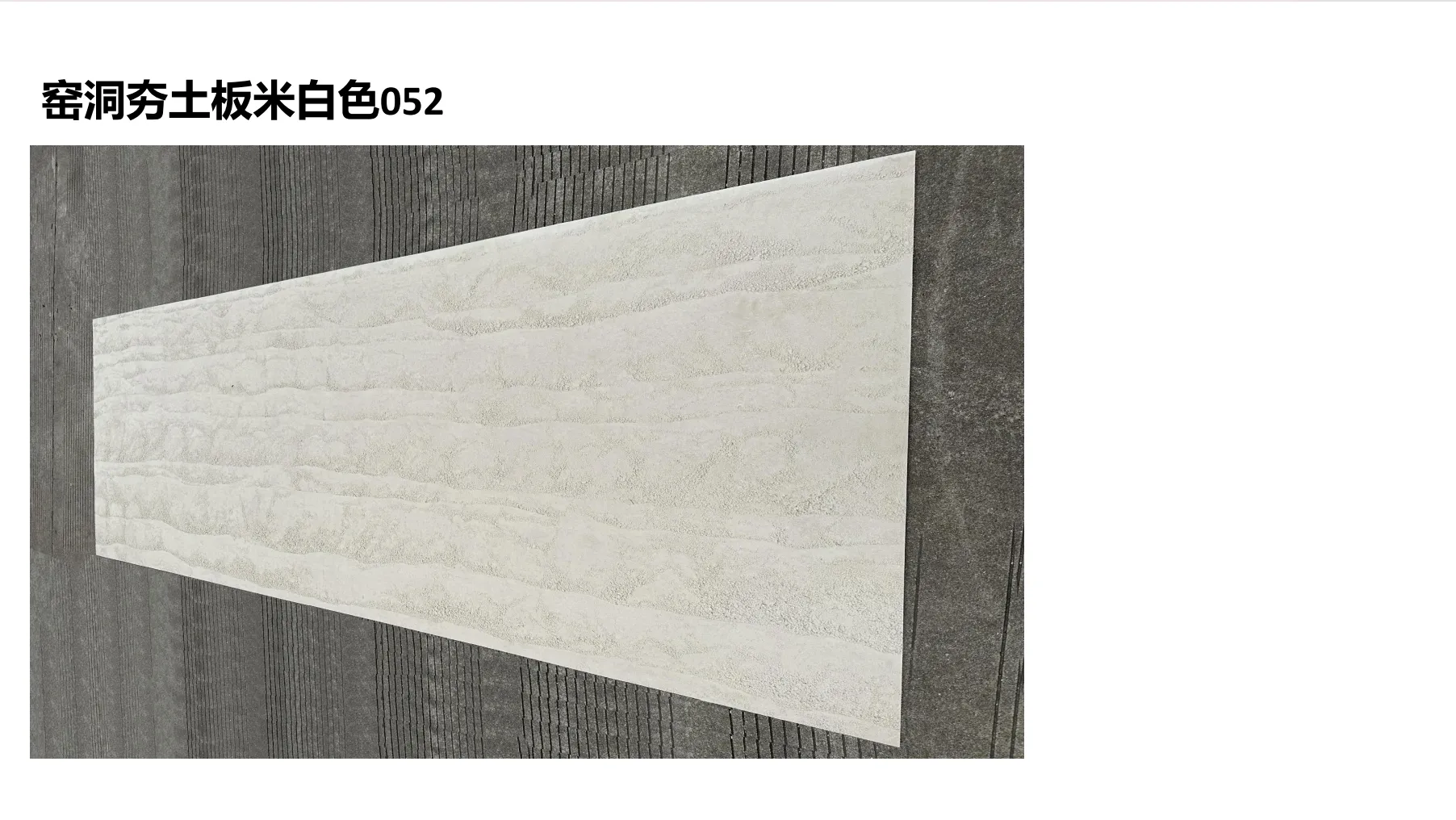
Fast forward to today, and innovation has breathed new life into rammed earth. The gradient color rammed earth board isn't just a "new version"—it's a rethinking of what rammed earth can be. Picture this: instead of on-site ramming, these boards are precision-crafted in controlled environments, layer by layer, with modern additives and engineering. The result? A panel that retains the earthy texture we adore but adds a striking twist: soft, seamless color gradients that shift like dawn over a hillside. But beyond the aesthetics, the real magic lies in how it addresses the durability struggles of its ancestor.
So, what's in these boards? While traditional rammed earth relies on local soil, gradient color boards often start with a base of high-quality aggregates—washed sand, fine gravel—and add binders like Portland cement or lime to boost strength. Fibers (think glass or polypropylene) are mixed in to reduce cracking, and mineral pigments are integrated to create those stunning gradients, ensuring the color runs deep, not just on the surface. The manufacturing process is meticulous: layers are compacted under high pressure, sometimes with vibration, to eliminate air pockets, and curing is controlled to maximize structural integrity. The result is a precast panel that's denser, more uniform, and far more resistant to the elements than traditional rammed earth.
To really understand the difference, let's break down durability into the factors that matter most for a building material—how it stands up to water, weather, time, and everyday wear. Here's a side-by-side look:
| Durability Factor | Traditional Rammed Earth | Gradient Color Rammed Earth Board |
|---|---|---|
| Water Resistance | Vulnerable to moisture; can soften or erode with prolonged exposure. Requires regular waterproofing. | Enhanced with additives; denser structure resists water absorption. Often rated for heavy rain or high humidity. |
| Compressive Strength | Typically 2-5 MPa (megapascals), suitable for low-rise, simple structures. | Often 10-15 MPa or higher, enabling use in multi-story buildings or load-bearing walls. |
| Weathering Resistance | Prone to erosion from wind, sand, or freeze-thaw cycles. Surface can degrade over time. | Additives and dense compaction reduce erosion; better resistance to freeze-thaw and UV radiation. |
| Impact Resistance | Brittle; can crack or chip with moderate impact (e.g., a falling branch). | Fibers and binders improve toughness; better able to withstand accidental impacts. |
| Maintenance Needs | High: Regular sealing, patching cracks, and monitoring for moisture damage. | Low: Minimal sealing required; color and texture resist fading, reducing upkeep. |
Take water resistance, for example. Traditional rammed earth is like a sponge compared to gradient boards. In a study comparing the two, traditional samples absorbed 20% of their weight in water after 24 hours, while gradient boards absorbed less than 5%. That's a game-changer for regions with monsoons or heavy rainfall. Similarly, compressive strength: a gradient color board can support far more weight, making it viable for commercial buildings, not just homes. And those color gradients? They're not just for show—since the pigment is mixed into the material, not painted on, they resist fading from sunlight, ensuring the beauty lasts as long as the structure.
In central Vietnam, where typhoons and salt-laden winds are a yearly challenge, a homeowner faced a dilemma: they wanted the warmth of rammed earth but needed a material that could withstand the harsh coastal climate. They opted for a hybrid approach: traditional rammed earth for interior walls, and gradient color rammed earth boards for the exterior. Five years later, the difference is striking. The interior traditional walls, sheltered from direct weather, look as good as new. But the exterior? The gradient boards show no signs of salt erosion or water damage, while a neighboring home with traditional exterior rammed earth required extensive repairs after just three typhoon seasons. "It's like having the best of both worlds," the homeowner noted. "The inside feels like a cozy earth house, and the outside? It laughs at the rain."
Durability isn't just about surviving the elements—it's about fitting into how we live today. Traditional rammed earth, for all its charm, can be limiting. Its weight requires deep foundations, and its vulnerability to moisture means it's not ideal for basements or bathrooms. Gradient color rammed earth boards, being precast and lighter than solid rammed earth walls, offer more flexibility. They can be used in high-rise buildings, as cladding for steel or concrete frames, or even in wet areas with proper sealing. Imagine a boutique hotel with gradient boards in the shower—earth texture, water-resistant, and stunning to boot.
Another factor? Maintenance. In our busy lives, few of us have the time to regularly lime-wash walls or patch cracks. Gradient color boards reduce that burden. A quick hose-down now and then is often all they need to stay looking fresh. This low-maintenance quality isn't just convenient—it makes the material more sustainable in the long run. When a building requires less upkeep, it's less likely to be replaced or renovated, reducing waste and resource use.
At the end of the day, durability is about more than just how long a material lasts. It's about the stories that building will tell. A home built with gradient color rammed earth boards isn't just a structure—it's a promise to future generations: "I was built to stand, so you can grow here, laugh here, live here, without worrying if the walls will outlast your memories." Traditional rammed earth has always held that promise, but it asked for care in return. The gradient color board? It keeps the promise, but asks for less in return.
That said, let's not romanticize the "new" at the expense of the "old." Traditional rammed earth has a place—in heritage restoration, in low-impact rural homes, in spaces where we want to honor craft above all. It's a material that teaches patience and connection. The gradient color rammed earth board, though, is for those who want to carry that connection forward into a world that demands more resilience. It's not replacing tradition; it's extending it.
Recommend Products












