


Your home's exterior is more than just a wall—it's the first story you tell the world. It's the smile your house wears when neighbors pass by, the silent statement of who you are and what you value. When it comes to choosing exterior cladding, the decision feels personal. You're not just picking a material; you're choosing how your home will weather storms, soak in sunlight, and age over the years. In a market flooded with options—from classic brick to modern innovations like MCM Flexible Stone—two contenders have risen to the top of many homeowners' lists: Gradient Color Rammed Earth Board and Vinyl Siding. One is a nod to ancient building wisdom reimagined for today, the other a budget-friendly staple of suburban landscapes. Let's dive in, side by side, to see which one truly stands the test of time, style, and responsibility.
Aesthetic Appeal: The Art of First Impressions
Let's start with the obvious: how they look. After all, curb appeal isn't just a real estate buzzword—it's about falling in love with your home every time you pull into the driveway.
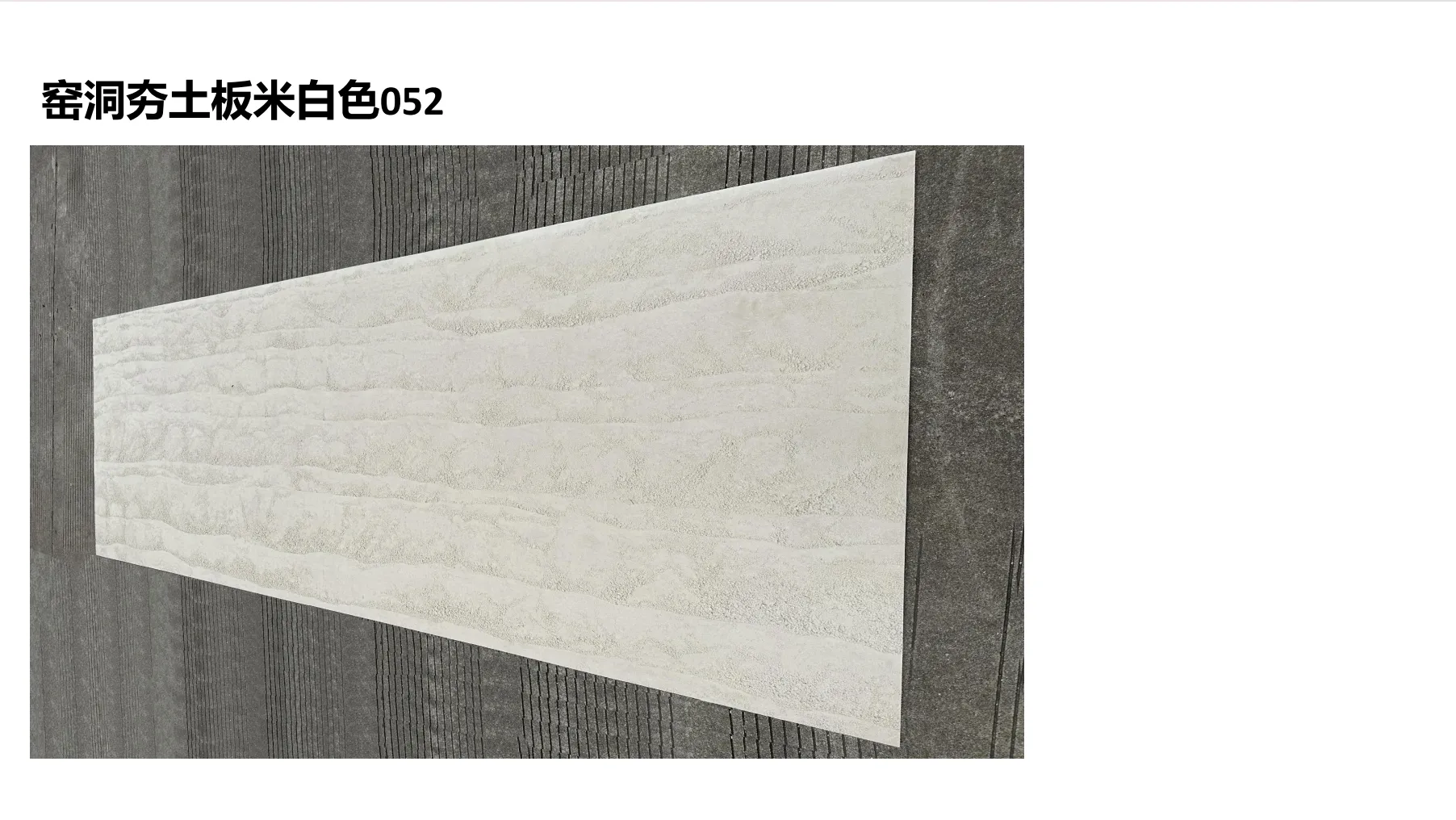
Gradient Color Rammed Earth Board is like bringing a piece of the earth's palette to your walls. Imagine (oops, scratch that) Think of walls that shift from soft terracotta to warm sienna, or gentle sage to deep umber, all in a single panel. The gradients aren't artificial; they're born from the natural blending of soils and pigments, compacted layer by layer. Run your hand over it, and you'll feel the texture—subtle ridges, tiny pebbles, the organic irregularity that makes every panel one of a kind. It's the difference between a painting and a photograph: one feels alive, breathing, while the other, though clear, lacks that human touch. Whether paired with large windows for a modern farmhouse vibe or with wooden accents for a rustic retreat, this material doesn't just cover your home—it elevates it.
Vinyl siding, on the other hand, has long been praised for its "no-fuss" aesthetics. Walk through any suburban neighborhood, and you'll see it in every shade from sky blue to deep gray, often mimicking wood grain or even stone. It's smooth, uniform, and predictable. But here's the catch: that uniformity can veer into artificiality. On a bright, sunny day, vinyl's plastic sheen can look flat, almost clinical. And over time, even the best vinyl fades—not in a charming, weathered way, but in a patchy, "this was once a different color" way. It's the equivalent of wearing a fast-fashion outfit: it looks good at first, but it never quite feels like it belongs, and it doesn't age gracefully.
Material Composition: What's Actually in Your Walls?
Beauty is skin deep, but what's under the surface matters just as much—for your home's health, the planet's health, and your peace of mind.
Gradient Color Rammed Earth Board is a love letter to natural building. At its core, it's a mix of locally sourced soils (think clay, silt, sand), aggregates like gravel or crushed stone, and natural pigments to create those stunning gradients. No synthetic glues, no harsh chemicals—just the earth, compacted under high pressure to form dense, sturdy panels. Some manufacturers add a small amount of eco-friendly resin to enhance durability, but the star of the show is always the raw, unprocessed materials. It's building with the land, not against it. When you run your hand over a panel, you're touching the same elements that form mountains and riverbeds—grounded, authentic, and deeply connected to the environment.
Vinyl siding, by contrast, is a product of the petroleum age. Its main ingredient is polyvinyl chloride (PVC), a type of plastic derived from fossil fuels. To make it flexible, manufacturers add plasticizers; to make it colorful, they mix in synthetic pigments; and to prevent it from breaking down in sunlight, they add stabilizers (often containing heavy metals like lead or cadmium). It's a cocktail of chemicals designed to be cheap and easy to produce, but that comes with a cost. PVC is non-biodegradable, and its production releases dioxins—a group of highly toxic chemicals linked to environmental harm and health risks. When vinyl siding reaches the end of its life, it often ends up in landfills, where it can take centuries to decompose, leaching chemicals into the soil and water.
Sustainability: Building for the Planet, Not Just Today
These days, "sustainable" isn't just a buzzword—it's a responsibility. How we build our homes impacts everything from carbon emissions to local ecosystems. Let's see how these two options stack up.
Gradient Color Rammed Earth Board is a sustainability standout. Start with its embodied energy—the total energy required to extract, process, and transport materials. Since it uses locally sourced soil and aggregates, transportation emissions are minimal. The compaction process uses mechanical pressure, not high-heat manufacturing, so energy use is low compared to synthetic materials. And because it's made from natural ingredients, it's fully recyclable. When your home eventually needs a facelift, those panels can be crushed and reused as aggregate for new construction or returned to the earth without leaving a toxic footprint. Even better, rammed earth is breathable. Unlike vinyl, which traps moisture, it allows walls to "breathe," reducing the risk of mold and mildew and improving indoor air quality. It's a material that works with nature, not against it—something that feels increasingly important in a world grappling with climate change.
Vinyl siding, unfortunately, falls short in the sustainability department. Its production relies on fossil fuels, contributing to greenhouse gas emissions. The PVC manufacturing process is energy-intensive and releases harmful pollutants, including dioxins, which persist in the environment and accumulate in the food chain. And while some vinyl is labeled "recyclable," the reality is that most ends up in landfills. According to the Vinyl Institute, only about 10% of post-consumer vinyl is recycled in the U.S.—the rest lingers, leaching chemicals and adding to the plastic crisis. Even during its lifespan, vinyl can off-gas volatile organic compounds (VOCs), which can irritate the eyes, nose, and throat, and have been linked to long-term health issues. For homeowners who care about reducing their carbon footprint, vinyl siding is a tough choice to justify.
Durability: How Well Do They Stand the Test of Time?
A home's exterior isn't just about looks—it's a shield. It needs to stand up to rain, wind, snow, and the occasional hailstorm. Let's talk about longevity.
Gradient Color Rammed Earth Board is built to last. We're talking generations, not decades. Its dense, compacted structure makes it resistant to fire (it doesn't burn or release toxic fumes), pests (termites and rodents have no interest in soil-based materials), and rot (no organic matter for mold to feed on). It handles extreme temperatures with ease: in hot climates, its thermal mass helps regulate indoor temperatures, keeping homes cool; in cold climates, it resists freezing and thawing cycles that can crack other materials. And unlike vinyl, it doesn't fade dramatically in sunlight. Those rich, earthy tones might mellow slightly over time, but it's a natural, attractive aging—like a well-loved leather jacket, growing more characterful with each year. I've spoken to homeowners with rammed earth exteriors that are 50+ years old, and they still look as striking as the day they were built.
Vinyl siding, by comparison, has a shorter lifespan—typically 20-30 years, and that's with ideal conditions. Cold weather is its worst enemy: PVC becomes brittle in freezing temperatures, making it prone to cracking when hit by hail or even a stray baseball. In hot climates, vinyl can warp or melt if exposed to direct sunlight for long periods, especially near heat sources like grills or HVAC units. And let's not forget about wind: high winds can loosen vinyl panels, leaving gaps that let water seep in, leading to rot and mold behind the siding. Even minor damage can be a hassle—since vinyl panels are often interlocked, replacing one can mean taking off several others, and color matching a faded panel is nearly impossible. It's a material that demands constant vigilance, and eventually, replacement.
Installation & Maintenance: The Hidden Work Behind the Scenes
Installing and maintaining exterior cladding isn't glamorous, but it's a big part of the homeowner experience. Let's break down the effort required for each.
Gradient Color Rammed Earth Board does require a bit more upfront work during installation. The panels are dense and heavy, so you'll need a skilled crew familiar with natural building techniques to ensure proper handling and alignment. They also require a sturdy substructure—your home's framing needs to support the weight, which might mean reinforcing walls if you're retrofitting an older home. But here's the upside: once it's up, it's up. There's no need for painting, sealing, or frequent repairs. Maintenance is minimal: a quick rinse with a garden hose once or twice a year to remove dirt, and maybe a light resealing every 10-15 years if you live in an extremely wet climate. That's it. No scraping, no repainting, no stressing about cracks or warping. It's the kind of low-maintenance that lets you focus on enjoying your home, not fixing it.
Vinyl siding, on the other hand, is often marketed as "DIY-friendly." It's lightweight, so a single person can handle most panels, and it snaps together with interlocking edges, making installation seem straightforward. But looks can be deceiving. Proper installation requires precise measurements, level surfaces, and attention to flashing and ventilation—mistakes here can lead to water damage, mold, or panels that loosen over time. And while it's easy to install, it's even easier to damage during installation (a misplaced hammer strike can crack a panel). As for maintenance? Vinyl needs regular cleaning—at least once a year with a pressure washer or scrub brush to remove mildew, dirt, and grime. If a panel cracks or fades, you'll need to replace it, and as mentioned earlier, color matching is tough. And in humid climates, mildew can grow between panels, requiring regular treatments with bleach or specialized cleaners. It's not "no maintenance"—it's "low effort, but constant upkeep."
Cost Considerations: Short-Term Savings vs. Long-Term Value
Let's talk numbers. Budget is often the first thing homeowners consider, but it's important to look beyond the upfront price tag.
Gradient Color Rammed Earth Board has a higher initial cost. Materials and labor can range from $15 to $30 per square foot, depending on your location, panel thickness, and customizations like gradient pigments. That's significantly more than vinyl, which typically costs $3 to $8 per square foot installed. But here's the thing: rammed earth is a long-term investment. With minimal maintenance and a lifespan of 50+ years, the cost per year drops dramatically. Compare that to vinyl, which might cost $3-$8 per square foot upfront but needs replacement every 20-30 years. Factor in maintenance costs (cleaning supplies, repairs, repainting for severely faded vinyl), and the total cost over time starts to even out—or favor rammed earth. Plus, rammed earth homes often have higher resale value. Homebuyers are increasingly willing to pay a premium for sustainable, durable exteriors that stand out from the cookie-cutter vinyl homes in the neighborhood.
Vinyl siding's main selling point is its low upfront cost. For homeowners on a tight budget or looking to flip a house quickly, it's an attractive option. But those savings come with hidden costs. Let's say you install vinyl at $5 per square foot for a 2,000-square-foot home—total installation cost: $10,000. In 25 years, you'll need to replace it, likely at a higher cost (due to inflation and labor increases). If vinyl costs $7 per square foot then, that's another $14,000. Add in maintenance (cleaning supplies, occasional repairs, mildew treatments) at $200 per year, and over 25 years, that's $5,000. Total cost over 25 years: $29,000. Now, rammed earth at $20 per square foot for the same home: $40,000 upfront. Maintenance: $100 per year (hose cleaning, resealing every 15 years at $500). Over 25 years: $40,000 + $2,500 = $42,500. But rammed earth will last another 25+ years without replacement, while vinyl will need another round. Over 50 years, rammed earth's total cost is roughly $45,000, while vinyl's is $58,000 (two replacements + maintenance). When you look at it that way, the "cheaper" option starts to look like a false economy.
At a Glance: Key Features Compared
| Feature | Gradient Color Rammed Earth Board | Vinyl Siding |
|---|---|---|
| Aesthetic Appeal | Natural gradient earth tones, organic texture, unique panels, ages gracefully with character. | Uniform colors, smooth or wood-grain patterns, prone to artificial appearance and fading. |
| Material | Locally sourced soil, aggregates, natural pigments; minimal synthetic additives. | PVC (polyvinyl chloride), plasticizers, synthetic pigments, derived from fossil fuels. |
| Durability | 50+ year lifespan; fire, pest, and rot resistant; withstands extreme temperatures. | 20-30 year lifespan; prone to cracking (cold), warping (heat), and wind damage. |
| Maintenance | Minimal: annual rinsing, resealing every 10-15 years (optional in dry climates). | Regular cleaning (annual), repairs for cracks/warping, eventual replacement. |
| Sustainability | Low embodied energy, recyclable, locally sourced, breathable, reduces indoor mold. | High embodied energy, non-biodegradable, fossil fuel-dependent, poor recyclability. |
| Cost (Installed) | $15-$30 per square foot (upfront); low long-term cost due to longevity. | $3-$8 per square foot (upfront); higher long-term cost due to replacement and maintenance. |
The Verdict: Choosing What Matters Most
At the end of the day, the choice between Gradient Color Rammed Earth Board and Vinyl Siding comes down to your priorities. If you value sustainability, durability, and a one-of-a-kind exterior that tells a story, rammed earth is the clear winner. It's a material that connects your home to the land, reduces your environmental footprint, and stands the test of time—all while turning heads with its natural beauty.
Vinyl siding, on the other hand, offers short-term savings and easy installation, making it a practical choice for those on a tight budget or looking for a quick fix. But it comes with trade-offs: environmental harm, ongoing maintenance, and a lifespan that pales in comparison to rammed earth.
Your home is more than a building—it's a reflection of who you are and what you care about. When you choose Gradient Color Rammed Earth Board, you're not just choosing a cladding material; you're choosing to build something that will outlast trends, honor the planet, and maybe even become a neighborhood landmark. And isn't that the kind of legacy we all want to leave?










