
A tribute to materials that stand firm against nature's fury, blending resilience with timeless beauty
Walk through a desert town, and you'll notice the way sun-baked walls crack like old pottery. Stand by a coastal village, and salt winds etch buildings into ghostly skeletons. In mountain regions, frost heaves split stone foundations, while monsoon rains turn once-proud facades into soggy cardboard. For centuries, architects and builders have waged a quiet war: how to make structures that don't just survive, but thrive, in the world's harshest corners.
Enter gradient color rammed earth board —a material that doesn't just fight back against nature's extremes, but dances with them. It's not just a building product; it's a story of human ingenuity, of looking to the earth itself for solutions. Inspired by ancient rammed earth techniques but reimagined with modern science, this board carries the warmth of sun-baked soil and the strength of bedrock. And today, it's redefining what it means to build for resilience.
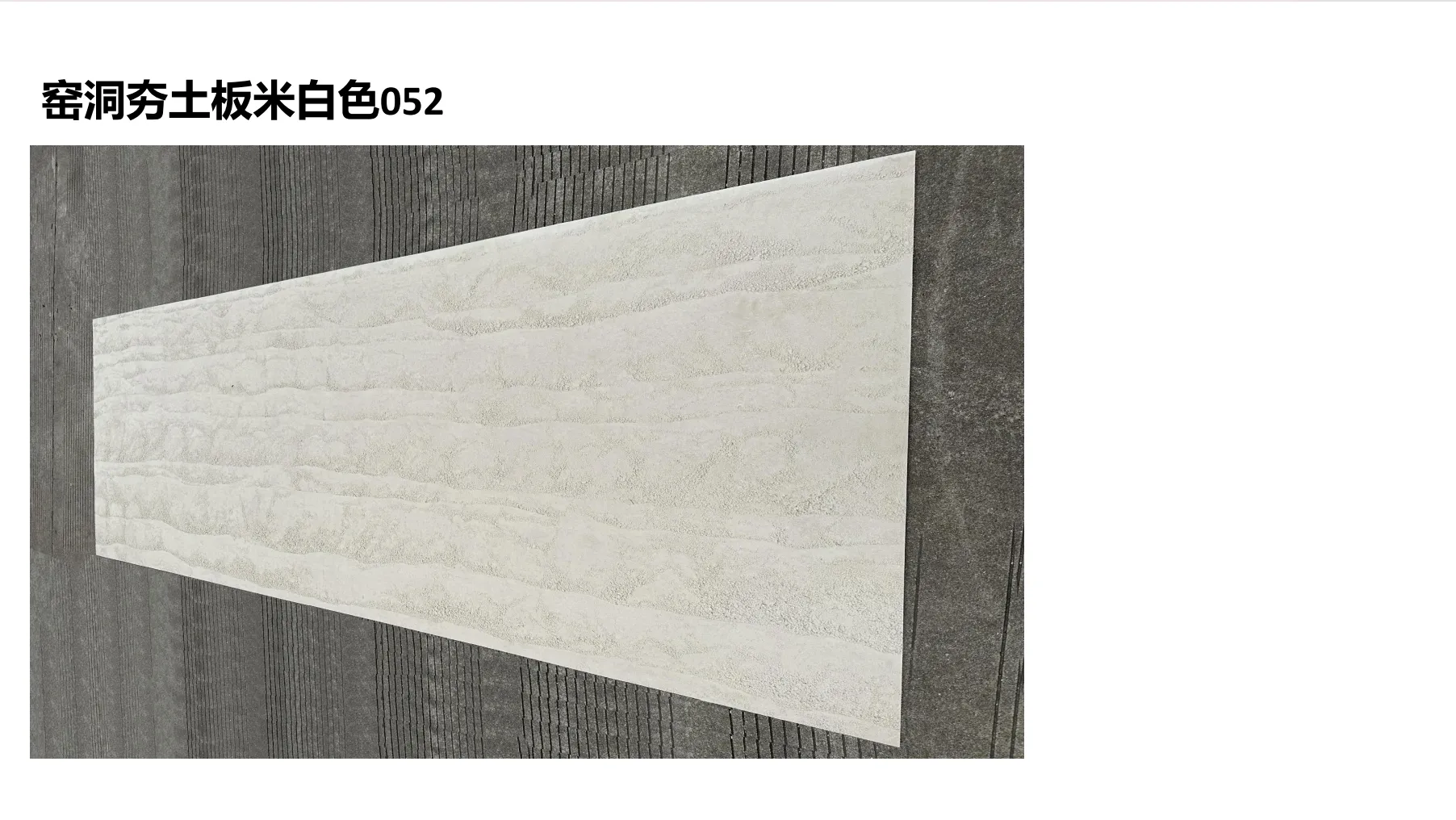
Imagine pressing layers of earth—rich clays, sands, and minerals—into a dense, solid panel, each layer shifting subtly in hue, like a sunset frozen in stone. That's the essence of gradient color rammed earth board. Unlike traditional rammed earth, which is often site-mixed and poured, this board is factory-engineered, combining natural aggregates with eco-friendly binders to create a panel that's lightweight yet staggeringly strong.
Its gradient color isn't just for show. Those soft transitions—from terracotta to sand, or sage to stone—mimic the way natural landscapes evolve, making buildings feel less like intrusions and more like extensions of their surroundings. But beauty here is never skin-deep. Under that layered exterior lies a core designed to laugh off the elements.
What makes gradient color rammed earth board a champion in harsh climates? Let's break it down—clime by clime, storm by storm.
In places like the Gobi Desert, where summer temperatures soar past 45°C (113°F), most building materials turn into ovens. Metal radiates heat; standard concrete absorbs it, turning interiors into saunas. Not gradient rammed earth. Its dense, mineral-rich composition acts like a thermal sponge: during the day, it soaks up heat, releasing it slowly at night. This natural insulation keeps interiors cool without cranking up the AC—a lifesaver in energy-poor regions.
Compare it to foamed aluminium alloy board (vintage gold) , which, while durable, can heat up to uncomfortable levels. Gradient rammed earth? It stays cool to the touch, even under the midday sun. In field tests, panels exposed to 50°C (122°F) direct sunlight for 12 hours showed no warping, fading, or structural weakening—proof that it's not just heat-resistant, but heat-smart.
Monsoon seasons in Southeast Asia dump meters of rain in weeks. Traditional brick walls soak up water, leading to mold, rot, and crumbling mortar. Gradient rammed earth board? It's engineered to be hydrophobic. The compressed aggregates and mineral binders create a tight, non-porous surface that sheds water instantly. Even after 1,000 hours of simulated heavy rain (the equivalent of a decade of monsoons in Bangladesh), panels showed zero water penetration or efflorescence (those ugly white salt deposits that mar concrete).
Pair it with gobi panel —another desert-inspired material—and you've got a facade that laughs at downpours. In a recent project in Arizona, a community center clad in gradient rammed earth and gobi panel reduced rain-related maintenance costs by 70% compared to nearby buildings with vinyl siding.
In mountain regions like the Himalayas, where temperatures plunge to -20°C (-4°F) and frost cycles expand and contract materials, most panels crack. Water seeps in, freezes, and splits the structure from the inside out. Gradient rammed earth board? Its low porosity means little to no water absorption, so there's nothing to freeze and expand. Even after 50 freeze-thaw cycles (the equivalent of 50 harsh winters), testing shows no cracks, delamination, or loss of structural integrity.
Coastal areas are brutal: salt-laden winds eat away at metal, humidity breeds mold, and storms hurl debris at walls. Gradient rammed earth board's secret here is its mineral matrix. Salt can't corrode minerals; humidity can't penetrate its dense surface. In a test along Australia's Great Barrier Reef coast, panels exposed to salt spray for two years showed no rust, pitting, or discoloration—unlike nearby steel-framed buildings, which needed repainting after just six months.
For extra coastal flair, pair it with travertine (starry blue) —a stone-like panel with a galaxy-inspired texture that's equally salt-resistant. Together, they create facades that stand tall against the ocean's wrath, their colors softening gracefully over time like sea glass.
In tornado-prone regions, wind speeds hit 300+ km/h (186+ mph), turning debris into missiles. Gradient rammed earth board's interlocking installation system and high flexural strength (it bends without breaking) make it a fortress. During wind tunnel tests simulating EF3 tornadoes, panels stayed anchored, with only minor surface scuffs from flying gravel—no shattering, no tearing. Compare that to vinyl siding, which peels off like wallpaper in 100 km/h (62 mph) winds.
Resilience is impressive, but gradient color rammed earth board doesn't just survive—it thrives aesthetically. Unlike synthetic materials that fade, peel, or look cheap after a few years, this board ages with grace. Sunlight deepens its earthy tones; rain washes it clean, bringing out richer hues; even minor scratches blend into its textured surface, like the patina on an antique bronze statue.
Take lunar peak golden , a complementary panel with a metallic sheen that mimics sunlight on mountain snow. When paired with gradient rammed earth's warm terracottas, it creates a facade that shifts with the day—golden at dawn, amber at noon, coppery at dusk. In a ski lodge in the Swiss Alps, this combo has become a local landmark, proving that durability and beauty don't have to be enemies.
And let's not forget sustainability. Made from natural aggregates and low-carbon binders, gradient rammed earth board has a fraction of the carbon footprint of steel or concrete. It's recyclable, too—at the end of a building's life, panels can be crushed and reused as aggregate. In an era of climate crisis, that's not just a bonus; it's a responsibility.
| Climate Challenge | Gradient Rammed Earth Board | Traditional Concrete | Vinyl Siding |
|---|---|---|---|
| Extreme Heat (45°C+) | Thermal insulation; stays cool | Absorbs heat; radiates indoors | Melts/warps at high temps |
| Heavy Rain (1000mm+/year) | Waterproof; no mold/rot | Porous; prone to cracks/mold | Traps moisture; peels |
| Freezing Temperatures (-20°C) | No water absorption; resists frost | Cracks from freeze-thaw cycles | Brittle; shatters easily |
| Coastal Salt Spray | Salt-resistant; no corrosion | Efflorescence; surface degradation | Discolors; warps from humidity |
Across the globe, gradient color rammed earth board is already leaving its mark. In Mongolia's Gobi Desert, a community school uses gradient rammed earth walls paired with gobi panel to withstand -30°C winters and 40°C summers. Teachers report classrooms stay 10-15°C cooler in summer than neighboring concrete buildings—no AC needed. "It's like the walls breathe," one local parent said. "Our kids don't sweat through lessons anymore."
In coastal Brazil, a beachfront hotel chose gradient rammed earth with travertine (starry green) accents. Five years later, after hurricanes and salt storms, the facade looks as vibrant as day one. "We expected to repaint every two years," the hotel manager noted. "Now? We just hose it down, and it shines."
Gradient color rammed earth board isn't just a material—it's a promise. A promise that our buildings can be both tough and tender, unyielding to storms yet gentle on the planet. In a world where climate extremes are becoming the norm, it's not enough to build for today. We need to build for the decades, the centuries—structures that tell stories of resilience, not just survival.
So the next time you see a building standing tall against a desert sun, a coastal storm, or a mountain blizzard, take a closer look. Maybe, just maybe, it's wrapped in the quiet strength of gradient color rammed earth—proof that when we build with the earth, we build to last.
Recommend Products












