
Bridging Timeless Elegance and Modern Innovation in Architectural Design
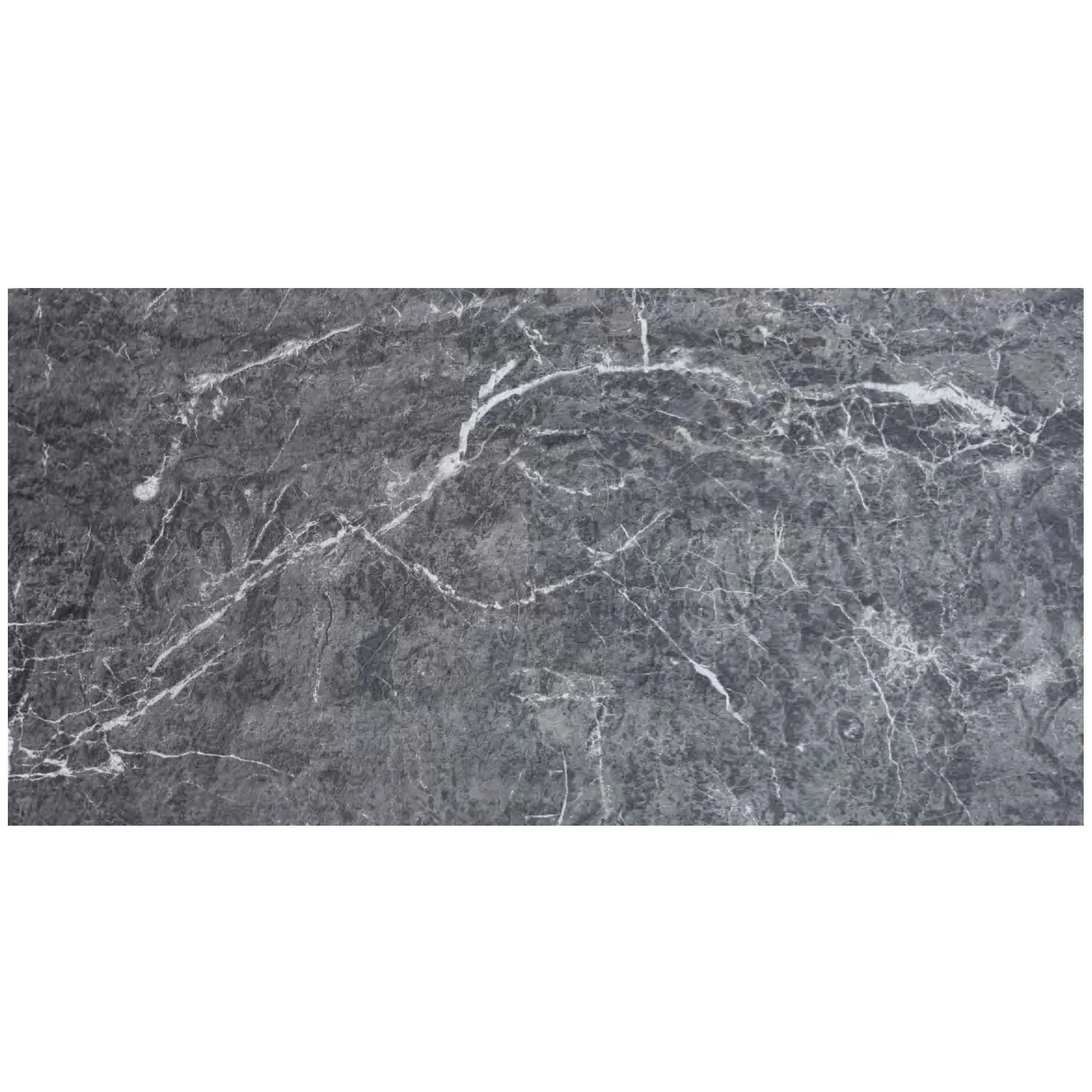
Walk into any thoughtfully designed space—whether a sleek urban café, a grand hotel lobby, or a cozy home—and you'll notice something immediately: the materials chosen to clothe walls, floors, and facades aren't just there to serve a functional purpose. They tell a story. They evoke emotions. They shape how we experience the world around us. In today's architectural landscape, where tradition and innovation dance in constant dialogue, two materials have emerged as unlikely yet perfect partners: Granite Nero Margiua , a stone steeped in geological history, and MCM (Modified Composite Material) panels, the chameleons of modern construction. Together, they're redefining what "hybrid design" means—blending the raw, unyielding beauty of natural stone with the adaptability and forward-thinking spirit of engineered materials.
This article explores how these two materials, seemingly worlds apart, come together to create spaces that feel both rooted in heritage and unapologetically contemporary. We'll dive into their individual personalities, their shared strengths, and the magic that happens when they're paired in design. Along the way, we'll touch on the versatility of MCM flexible stone , the grandeur of MCM big slab board series , and why both materials are becoming staples in the toolkit of architects and designers committed to green building materials and sustainable innovation.
To understand Granite Nero Margiua is to understand the earth's own artistry. Formed deep within the planet over millions of years, this granite is a masterpiece of nature's patience. Its base is a velvety, inky black—so dark it almost absorbs light—punctuated by thin, irregular veins of crystalline white and silver. Run your hand over a polished slab, and you'll feel the cool, dense texture, a reminder of the immense pressure and heat that forged it. It's not just a stone; it's a piece of the earth's crust, frozen in time.
What makes Nero Margiua so beloved in design? For starters, its aesthetic versatility. In a polished finish, it becomes a mirror of sophistication—think luxury retail spaces where floors gleam like obsidian, or hotel reception desks that command attention with their bold, unbroken surfaces. In a honed or brushed finish, it softens, taking on a matte depth that feels more organic, like a river stone smoothed by time. The white veins, which vary from subtle whispers to dramatic streaks, add movement; no two slabs are identical, making each installation a one-of-a-kind canvas.
But Nero Margiua isn't just about looks. Granite, by nature, is one of the hardest, most durable natural stones available. It resists scratches, heat, and stains, making it ideal for high-traffic areas like commercial lobbies, kitchen countertops, or outdoor cladding. Its density also means it ages gracefully—unlike softer stones that may etch or fade, Nero Margiua develops a patina over time, growing more characterful with each passing year. It's a material that outlives trends, making it a favorite for projects aiming for longevity.
Yet, for all its strengths, Nero Margiua has limitations. Its weight—natural stone is heavy—can complicate installation, requiring structural support and specialized labor. Its rigidity means it can't bend or curve, limiting its use in designs with organic shapes. And while its natural origin is a selling point for authenticity, sourcing large quantities can raise questions about environmental impact if not done responsibly. These are the gaps that MCM materials step in to fill.
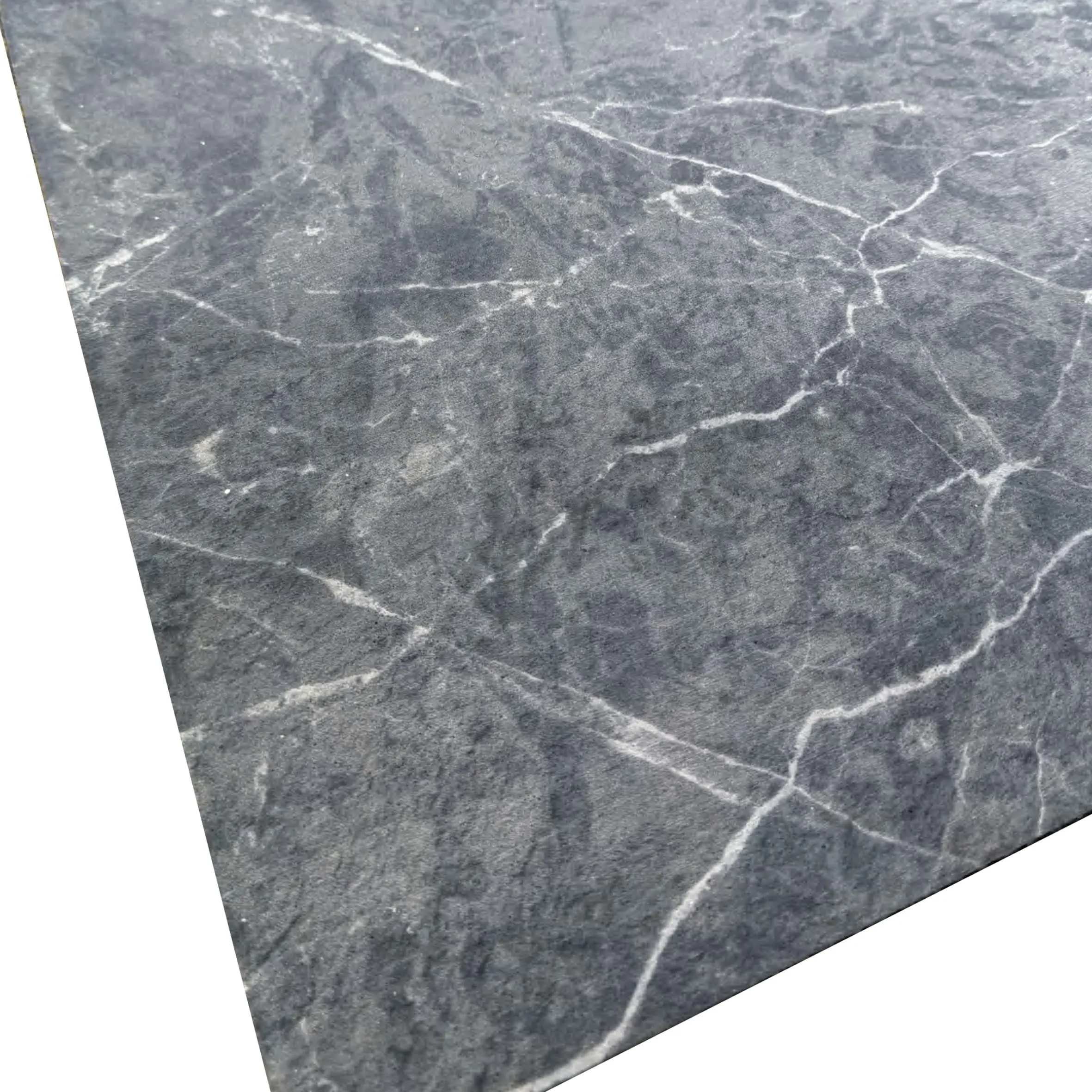
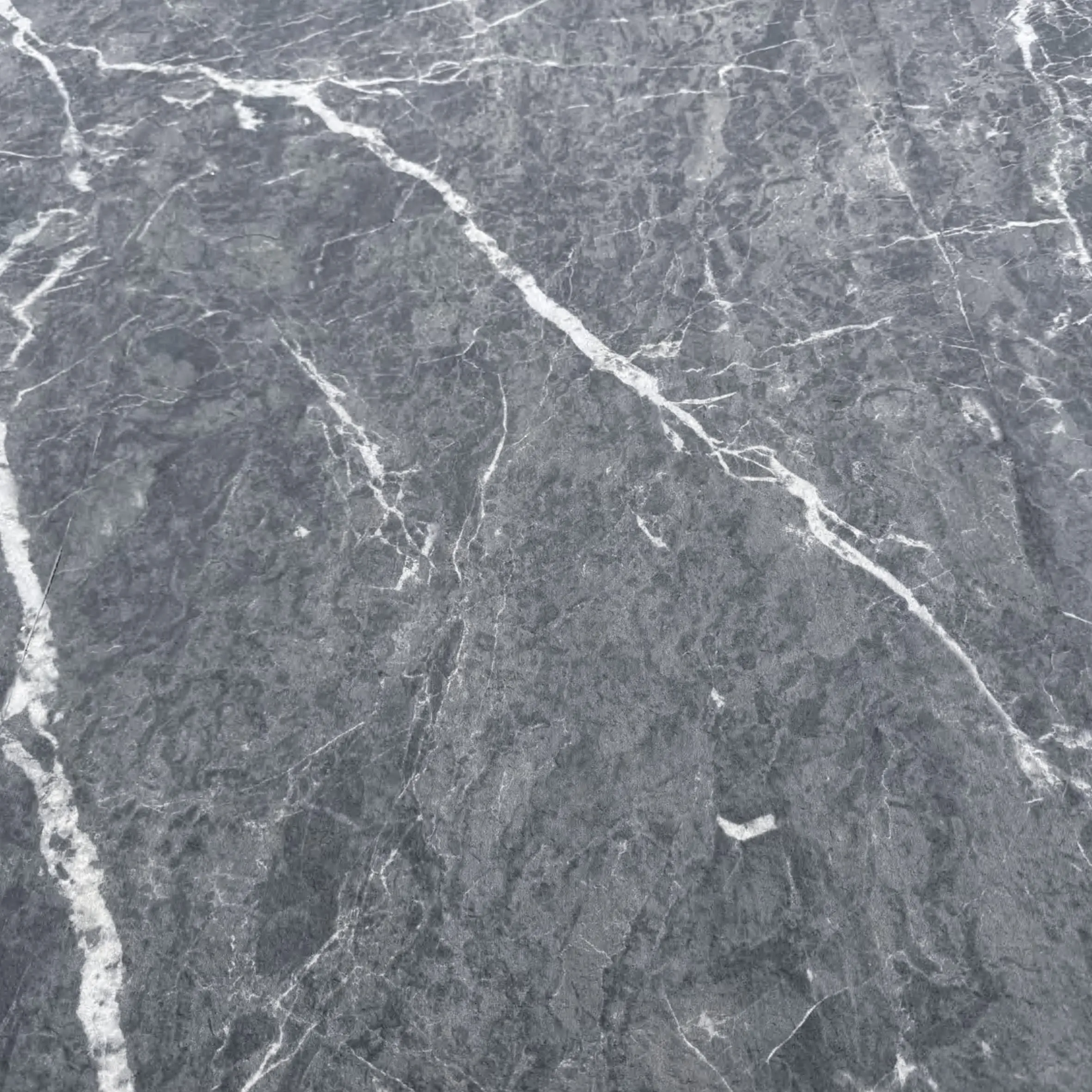
If Granite Nero Margiua is the wise elder of building materials, MCM is the innovative newcomer—curious, adaptable, and unafraid to challenge conventions. Short for Modified Composite Material, MCM is an engineered panel made by bonding natural mineral aggregates (like stone powder, sand, or glass) with a lightweight, flexible backing (often fiberglass or polymer). The result? A material that captures the look and texture of natural stone, wood, or metal—without the bulk, brittleness, or environmental footprint.
Let's start with MCM flexible stone —perhaps the most exciting member of the MCM family. Imagine a sheet of material that looks like rough-hewn travertine or weathered slate but can bend like fabric. That's MCM flexible stone. It's thin (often just 3-5mm thick), lightweight (around 3-5 kg per square meter), and remarkably durable, thanks to its composite structure. This flexibility opens up a world of design possibilities: curved walls that mimic the flow of natural landscapes, cylindrical columns wrapped in stone-like texture, or even furniture pieces with organic, sculptural forms. Traditional stone would crack under such bends, but MCM flexible stone embraces them, turning structural constraints into creative opportunities.
Then there's the MCM big slab board series —for when bigger really is better. These panels come in massive formats (up to 3 meters in length and 1.5 meters in width), allowing for seamless, joint-free surfaces that create a sense of expansiveness. Picture a commercial facade clad in MCM big slabs finished to look like aged copper or lunar-inspired stone; from a distance, it reads as a single, monolithic statement, unbroken by unsightly grout lines. Indoors, they're perfect for feature walls in airports, convention centers, or luxury apartments, where the goal is to make a bold, clean impression without overwhelming the space.
What truly sets MCM apart, though, is its commitment to sustainability—a core tenet of green building materials . Many MCM panels are made using recycled aggregates, reducing the need for virgin materials. Their lightweight nature also cuts down on transportation emissions and structural support requirements, lowering a project's carbon footprint. And because they're resistant to moisture, mold, and fading, they last longer, reducing the need for frequent replacements. In an era where architects and clients alike prioritize eco-conscious design, MCM checks all the boxes.
| Property | Granite Nero Margiua | MCM Flexible Stone | MCM Big Slab Board Series |
|---|---|---|---|
| Composition | Natural granite (quartz, feldspar, mica) | Mineral aggregates + flexible polymer/fiberglass backing | Mineral aggregates + rigid polymer core |
| Texture | Dense, cool, with crystalline veining; polished/honed/rough finishes | Varied (stone, wood, metal); soft to the touch, with subtle depth | Sleek, uniform; mimics natural materials with seamless consistency |
| Weight | Heavy (25-30 kg/m²) | Lightweight (3-5 kg/m²) | Moderate (8-12 kg/m²) |
| Durability | Exceptional (resistant to scratches, heat, stains) | High (moisture/mold/fade resistant; flexible, not brittle) | Very high (impact resistant; weatherproof for exteriors) |
| Installation | Requires structural support; specialized labor for cutting/fitting | Easy (can be cut with standard tools; adhesive-backed for quick application) | Moderate (light enough for standard framing; large format requires team lifting) |
| Design Flexibility | Limited (rigid, cannot bend; best for flat/straight surfaces) | Excellent (bends around curves; suitable for complex shapes) | High (large format allows for seamless, custom designs) |
| Sustainability | Depends on sourcing (natural, but mining can impact ecosystems) | High (recycled materials; low embodied carbon) | High (recycled aggregates; energy-efficient production) |
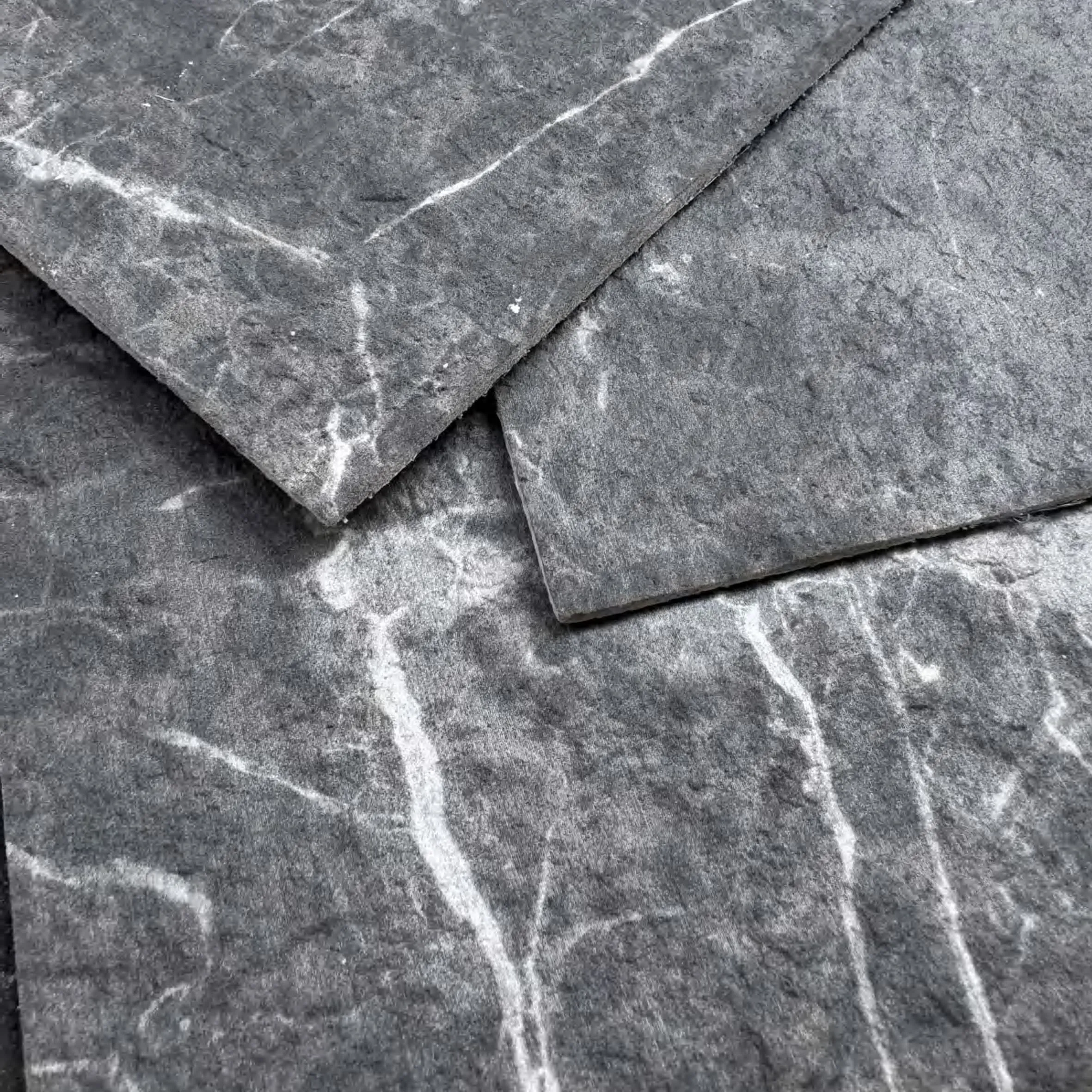
On paper, Granite Nero Margiua and MCM might seem like an odd couple—one rooted in the earth's ancient past, the other in cutting-edge engineering. But in practice, they're a match made in design heaven. Their differences create balance; their shared commitment to quality ensures longevity. Let's explore how they come together in real-world scenarios, transforming spaces from ordinary to extraordinary.
Imagine stepping into a five-star hotel lobby. The floor beneath your feet is a sea of polished Granite Nero Margiua, its deep black surface reflecting the warm glow of pendant lights above, the white veins catching the light like scattered stars. To your left, a sweeping curved wall rises three stories, clad in MCM flexible stone finished to mimic travertine (starry blue)—a nod to the night sky outside, but soft and tactile where the Nero Margiua is hard and glossy. Behind the reception desk, a backdrop of MCM big slab board series in a metallic, lunar-inspired finish adds a futuristic sheen, while a fireplace hearth made from rough-hewn Nero Margiua anchors the space with rustic warmth.
Here, the pairing works because it plays with contrast and harmony. The Nero Margiua grounds the space, evoking luxury and timelessness, while the MCM elements add movement and softness, preventing the lobby from feeling cold or imposing. The flexible stone's curve softens the lobby's geometric architecture, and the big slabs' seamless surface draws the eye upward, making the space feel taller and more open. Together, they create an atmosphere that's both grand and welcoming—a place where guests feel they've arrived somewhere special.
In dense city centers, where space is tight and every square meter counts, residential buildings need to balance aesthetics with functionality. Enter a 12-story apartment complex clad in a mix of Nero Margiua and MCM. The ground floor, which houses retail spaces, features large Nero Margiua slabs around storefronts—durable enough to withstand foot traffic and delivery trucks, and visually striking enough to attract passersby. Above, the facade shifts to MCM big slab board series in a warm, earthy tone (think lime stone (beige) ), broken up by vertical accents of Nero Margiua that echo the building's structural columns.
Why this combination? Nero Margiua's durability makes it ideal for the ground floor, where wear and tear are inevitable. But using it for the entire facade would be impractical—its weight would require a reinforced structure, driving up costs. The MCM big slabs, lightweight and easy to install, reduce the building's load while still offering a high-end look. The vertical Nero Margiua accents add rhythm to the facade, breaking up the monotony of the large slabs and creating a sense of hierarchy. From the street, the building reads as modern and sophisticated, but approachable—a reflection of the urban professionals who call it home.
Cultural centers often strive to honor the past while embracing the future, and materials play a key role in that narrative. Take a new museum dedicated to local history: its exterior combines fair-faced concrete (raw, industrial, a nod to the city's manufacturing roots), Granite Nero Margiua (timeless, solid, representing the community's enduring spirit), and MCM flexible stone woven in a textured pattern (khaki) that mimics traditional basketry—paying homage to the region's indigenous crafts.
Inside, the main gallery features walls lined with MCM big slab board series in a neutral, slate veil white finish, providing a blank canvas for exhibits. The floors alternate between polished Nero Margiua and wood grain board MCM panels, creating a path that guides visitors through the space—dark stone for "historical" sections, warm wood for "cultural" areas. A central atrium is dominated by a spiral staircase with Nero Margiua treads and MCM flexible stone risers finished in travertine (starry red) , symbolizing the journey from past to present.
Here, the materials don't just serve a design purpose—they tell a story. The Nero Margiua represents strength and continuity, the MCM flexible stone adds cultural depth and texture, and the big slabs provide a modern, uncluttered backdrop. Together, they create a space that feels both rooted in heritage and open to innovation—exactly what a museum should be.
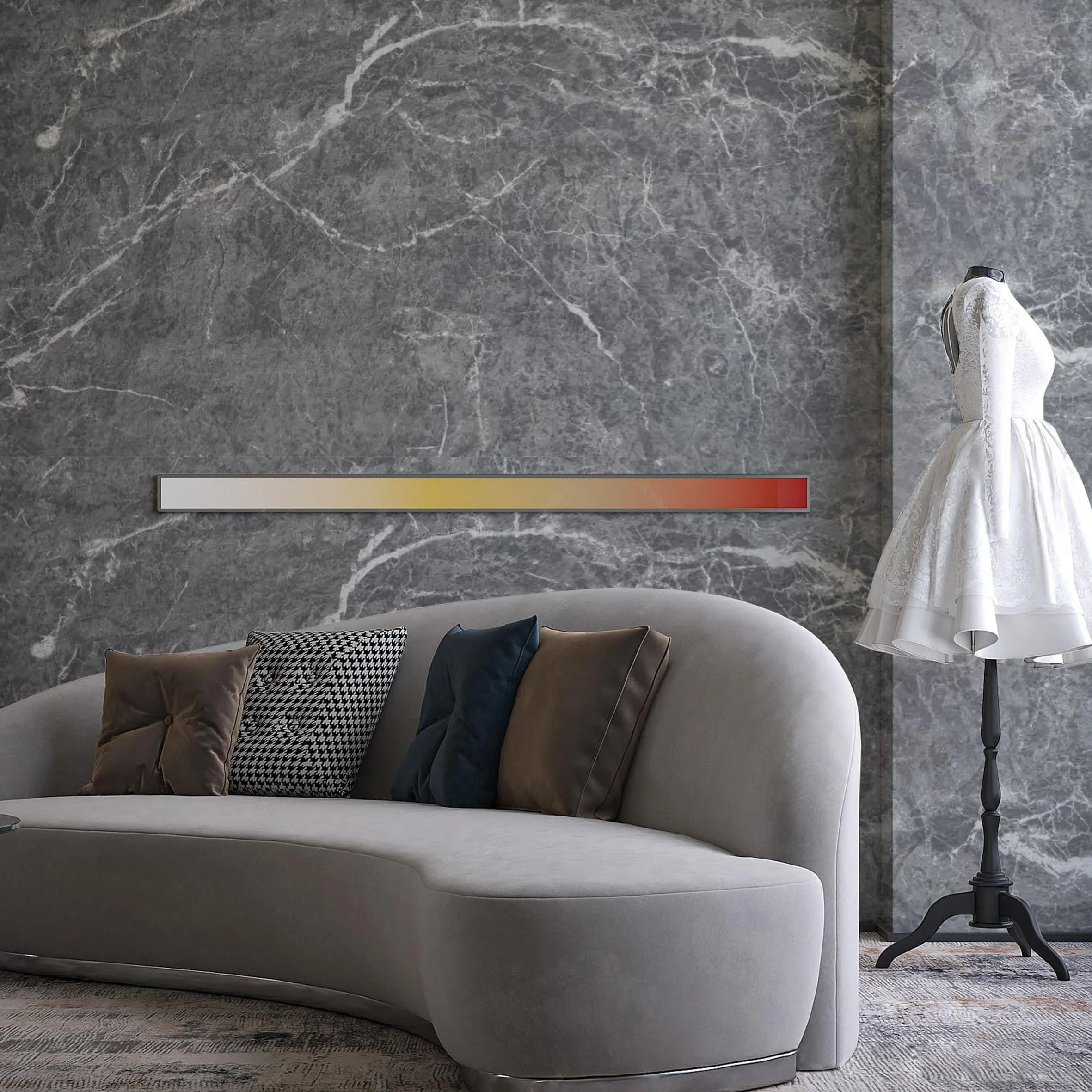
In today's design world, beauty alone isn't enough—materials must also align with sustainability goals. Both Granite Nero Margiua and MCM rise to this challenge, albeit in different ways.
For Nero Margiua, sustainability starts with responsible sourcing. Reputable quarries now prioritize eco-friendly mining practices: reforestation of mined areas, water recycling, and reduced energy use in processing. Additionally, because natural stone is incredibly durable, it rarely needs to be replaced, reducing waste over a building's lifetime. When a project uses Nero Margiua, it's investing in a material that will last for decades, if not centuries—minimizing the need for frequent renovations and the associated environmental impact.
MCM, meanwhile, is a poster child for green building materials . Many manufacturers use recycled stone powder, glass, and polymers in their panels, diverting waste from landfills. The lightweight nature of MCM also reduces transportation emissions; a truck can carry far more MCM panels than natural stone slabs, cutting down on fuel use. Installation is less labor-intensive, too, requiring fewer resources and less energy on-site. And because MCM is resistant to moisture and rot, it reduces the need for chemical treatments or sealants, making it safer for both occupants and the environment.
Together, Nero Margiua and MCM offer a sustainable solution for projects aiming to meet LEED, BREEAM, or other green building certifications. They prove that luxury and sustainability don't have to be mutually exclusive—that you can create beautiful, functional spaces without compromising the planet.
As architects and designers continue to push the boundaries of what's possible, the partnership between Granite Nero Margiua and MCM will only grow stronger. Imagine a zero-waste office building where Nero Margiua countertops are paired with MCM flexible stone partitions made from 100% recycled materials. Or a coastal home where MCM big slabs (vintage silver) withstand saltwater corrosion, while Nero Margiua accents add a touch of luxury to the interior. The possibilities are limited only by imagination.
What makes this pairing so enduring is its ability to adapt. Nero Margiua will always be a symbol of timeless elegance, but MCM is constantly evolving—new finishes, new textures, new sustainability features. Tomorrow's MCM panels might mimic rare marbles or ancient woods, or incorporate smart technology like integrated lighting or air-purifying properties. And through it all, Nero Margiua will stand as a steady, reliable partner, grounding these innovations in the natural world.
In the end, architecture is about more than just buildings—it's about creating spaces that inspire, comfort, and connect us. Granite Nero Margiua and MCM do just that. They remind us that the best designs are those that honor the past while embracing the future—materials that, like the spaces they shape, are both rooted and reaching.
Recommend Products












