
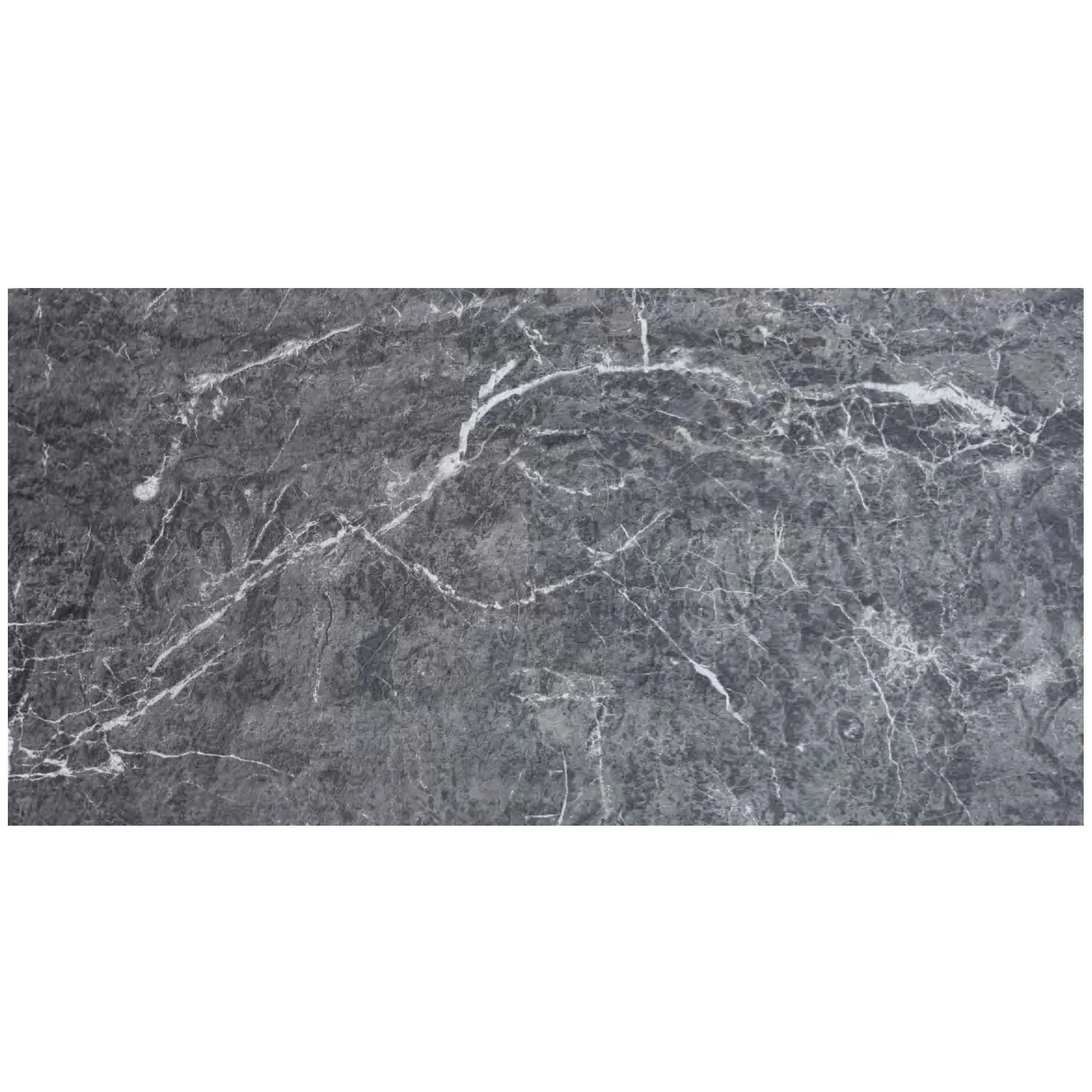
Walk into a space and close your eyes. What do you feel? The air, the light, but perhaps most vividly—the texture beneath your fingertips or the way it catches the eye from across the room. Texture is the silent storyteller of design, turning walls, floors, and surfaces into narratives of elegance, ruggedness, or warmth. Among the most captivating textures in natural stone is Granite Nero Margiua—a stone that feels like a piece of the earth's core, with deep blacks, swirling grays, and flecks of silver that mimic a starry night. But for decades, bringing this beauty into homes, offices, or public spaces came with a heavy price—literally. Natural stone is bulky, fragile, and often impractical for modern construction. Enter MCM flexible stone: a revolutionary material that doesn't just replicate the look of Granite Nero Margiua, but captures its very soul. Let's dive into how this magic happens, and why it's changing the game for designers and homeowners alike.
First, let's talk about the star of the show: Granite Nero Margiua. Picture a slab of stone pulled from the depths of a quarry, its surface a canvas of contrasts. The base is a rich, inky black—so deep it almost absorbs light—interrupted by veins of charcoal gray that twist and turn like rivers on a map. Scattered across this dark landscape are tiny, glittering mineral deposits that catch the light, giving the stone an otherworldly shimmer. It's bold yet sophisticated, rugged yet refined. In natural form, it's been used for centuries in palaces, cathedrals, and luxury homes, a symbol of timelessness and strength.
But what truly sets Nero Margiua apart is its texture. Run your hand over a polished slab, and you'll feel the slight resistance of the stone's crystalline structure—cool to the touch, with a subtle grain that tells the story of millions of years of geological pressure. It's not just a surface; it's an experience. Designers love it for fireplaces, accent walls, and even flooring, where it adds depth and drama. "There's something primal about it," says Elena, an interior designer with 15 years of experience. "Clients often say they want a space that 'feels grounded,' and Nero Margiua delivers that. It's like bringing a piece of the mountains indoors."
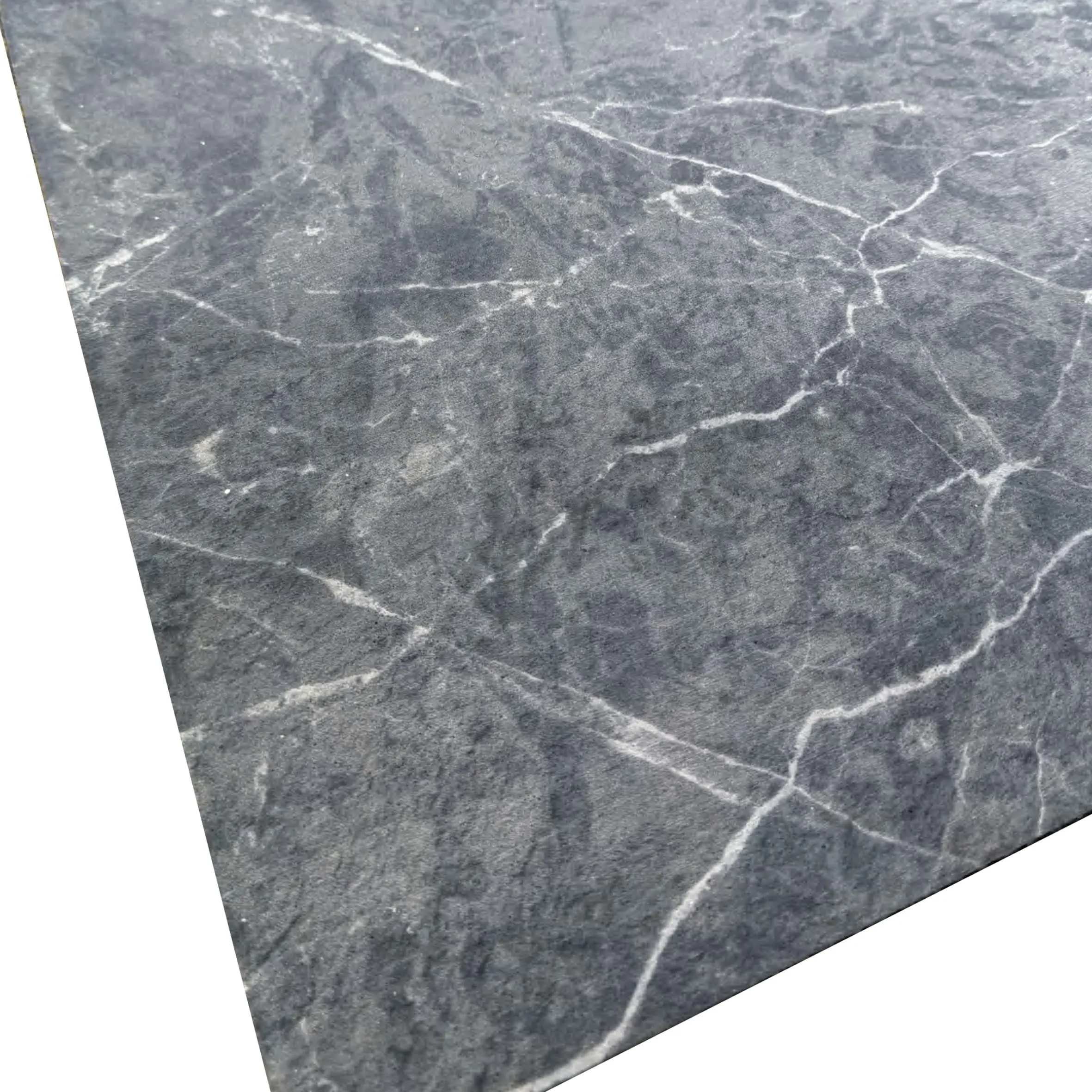
As much as we adore natural Granite Nero Margiua, it's not without its flaws. Let's start with weight. A single slab of natural granite can weigh upwards of 200 pounds per square meter—heavy enough to require structural reinforcement in walls and floors. For high-rise buildings or older homes, this isn't just inconvenient; it can be impossible. Then there's fragility: despite its reputation for hardness, natural stone is prone to cracking during transportation or installation, and once in place, it's susceptible to chips, stains, and weathering. Spill a glass of red wine on a natural Nero Margiua floor, and you might be looking at permanent damage.
Cost is another hurdle. Quarrying, cutting, and transporting large slabs of natural stone is labor-intensive, driving up prices. And because each slab is unique, achieving consistency across a large surface—say, a commercial lobby wall—is a designer's nightmare. One slab might have more silver flecks, another a thicker gray vein, leaving the final result looking disjointed. "I once worked on a project where the client fell in love with Nero Margiua for their kitchen backsplash," Elena recalls. "We ordered five slabs, and none matched. We ended up using three, and the rest went to waste. It was heartbreaking for both the budget and the design vision."
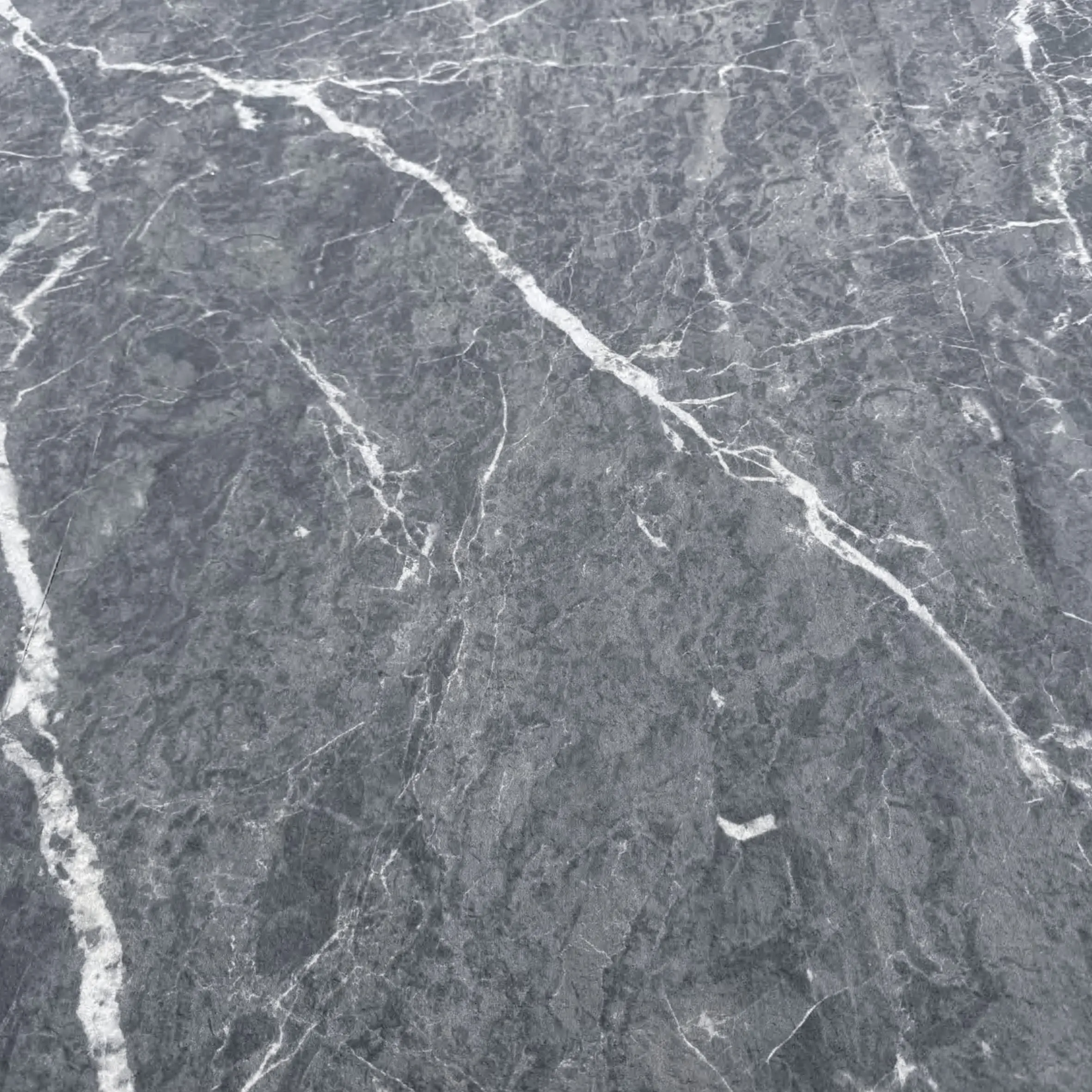
This is where MCM flexible stone steps in. Short for Modified Composite Material, MCM is a blend of natural minerals, polymers, and fibers engineered to mimic the look and feel of stone—without the weight, fragility, or cost. Think of it as stone reimagined: thin (as little as 3-5mm thick), lightweight (around 5-8 kg per square meter), and flexible enough to bend around corners or curve over arches. But MCM isn't just a "fake" stone; it's a high-tech replication that honors the original material's essence. And when it comes to Granite Nero Margiua, MCM doesn't just copy the pattern—it captures the way light plays on its surface, the coolness of its touch, and even the slight irregularities that make natural stone feel alive.
What makes MCM different from other imitations (like laminate or vinyl)? It starts with the materials. Unlike synthetic alternatives, MCM uses a high percentage of natural minerals—up to 70%—giving it the authentic density and texture of stone. The polymers and fibers add flexibility and strength, making it resistant to impact, moisture, and UV rays. "It's the best of both worlds," says Marcus, a materials engineer who specializes in sustainable construction. "You get the aesthetic of natural stone, but with the performance of a modern composite. It's like if stone and plastic had a very smart baby."
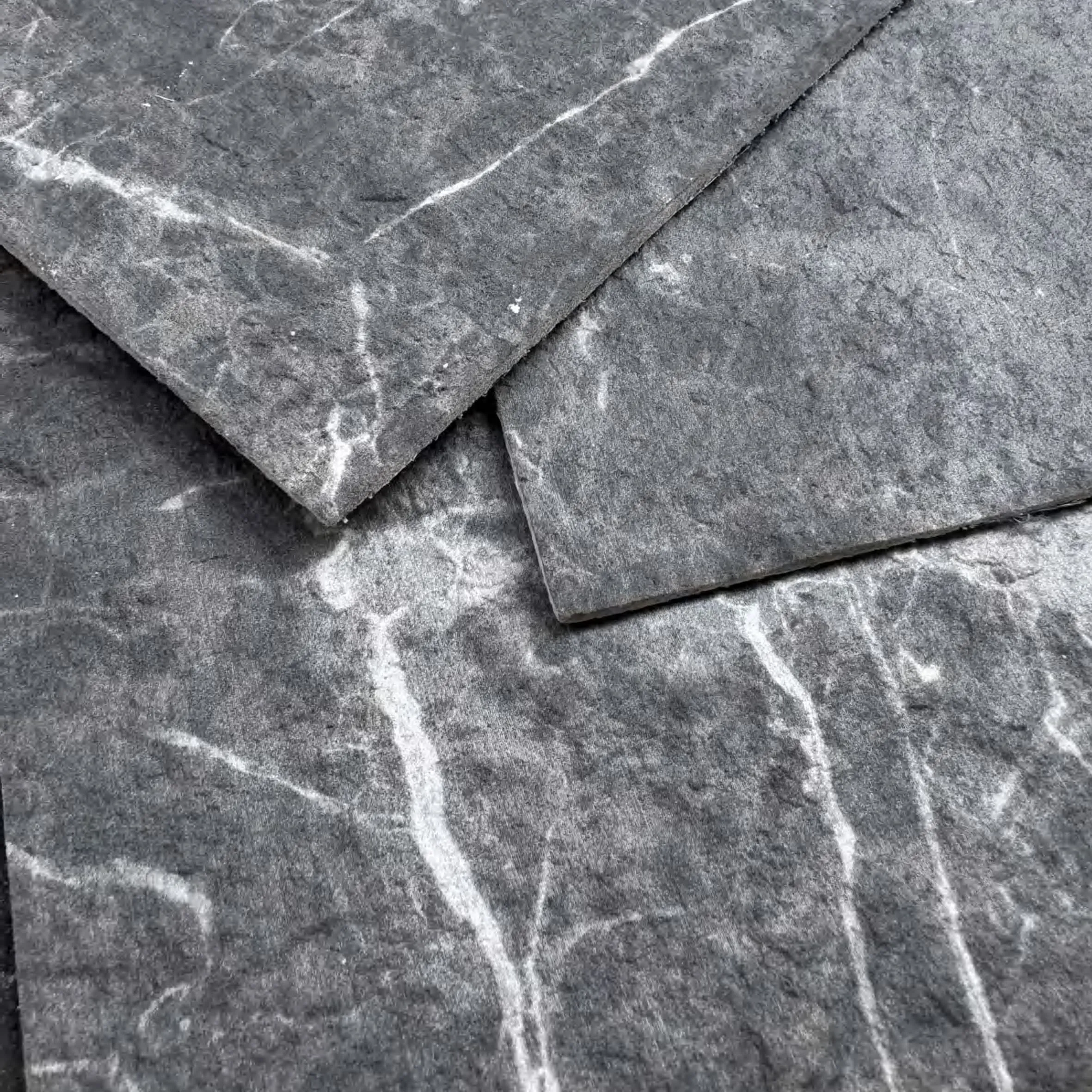
Creating MCM flexible stone that looks and feels like Granite Nero Margiua is a mix of art and science. It's not just about slapping a print on a surface; it's a multi-step process that starts with studying the natural stone and ends with a product that fools even the most discerning eye. Let's break down the key techniques:
The journey begins with a perfect sample of natural Granite Nero Margiua. Designers and engineers select a slab that exemplifies the stone's best features—the ideal balance of black, gray, and silver, with veins that flow naturally. Then, using high-resolution 3D scanning technology, they create a digital model of the stone's surface. This isn't just a 2D image; it's a 3D map that records every bump, dip, and texture variation down to the micrometer. Imagine scanning your fingerprint, but on a grand scale—capturing the way the stone's surface rises slightly along a gray vein, or dips subtly in a patch of black. This scan becomes the blueprint for the replication process.
Next, it's time to craft the material itself. MCM's base is a blend of natural stone powder (often from leftover quarry waste, making it eco-friendly) and a polymer binder. For Granite Nero Margiua, the stone powder is sourced to match the mineral composition of the original granite, ensuring the same density and feel. The polymer binder is carefully chosen for flexibility and durability—think of it as the "glue" that holds the minerals together while allowing the material to bend without breaking. Fibers like glass or carbon are added for extra strength, making the final product resistant to tearing or cracking.
What's fascinating is how the material is mixed. Engineers adjust the ratio of minerals to polymers to mimic the heft of natural stone—so when you pick up an MCM panel, it doesn't feel or cheap. "We did blind tests with designers," Marcus laughs. "We handed them a natural Nero Margiua slab and an MCM panel, and asked them to close their eyes and feel which was which. Half couldn't tell the difference. That's when we knew we'd nailed it."
Once the material is mixed, it's time to shape it using the 3D scan. The digital model is used to create a physical mold—often made of silicone or metal—that mirrors the scanned stone's texture. The MCM mixture is then pressed into this mold under high pressure and heat, transferring every tiny detail from the scan to the panel. This isn't a one-and-done process, though. Engineers test multiple molds to ensure the texture depth is just right—not too shallow (which would look flat) or too deep (which could trap dirt). For Nero Margiua, they focus on replicating the contrast between the smooth black base and the slightly raised gray veins, which catch light differently and create that signature depth.
Perhaps the trickiest part of replication is color. Natural Granite Nero Margiua isn't just "black and gray"—it's a spectrum of hues, from jet black to charcoal, ash gray to silver, with undertones that shift depending on the light. To match this, MCM manufacturers use advanced color-matching software that analyzes the scanned stone's pigmentation, then mix custom dyes and pigments into the material. But it's not all machines; human eyes play a crucial role too. "We have a team of color specialists who compare the MCM panels to the original stone under different lighting—natural daylight, warm incandescent, cool LED," Marcus explains. "A computer can get the RGB values right, but a human can tell if the silver flecks have the right 'sparkle' or if the black has that subtle blue undertone that makes Nero Margiua so unique."
The result? An MCM panel that looks so much like natural Granite Nero Margiua that even Elena, with her years of experience, admits she's done a double-take: "I visited a showroom last year and ran my hand over what I thought was a Nero Margiua slab. The sales rep laughed and said, 'That's MCM.' I couldn't believe it—it had the same coolness, the same texture. I called my client right then and there and told her we could finally do her kitchen backsplash."
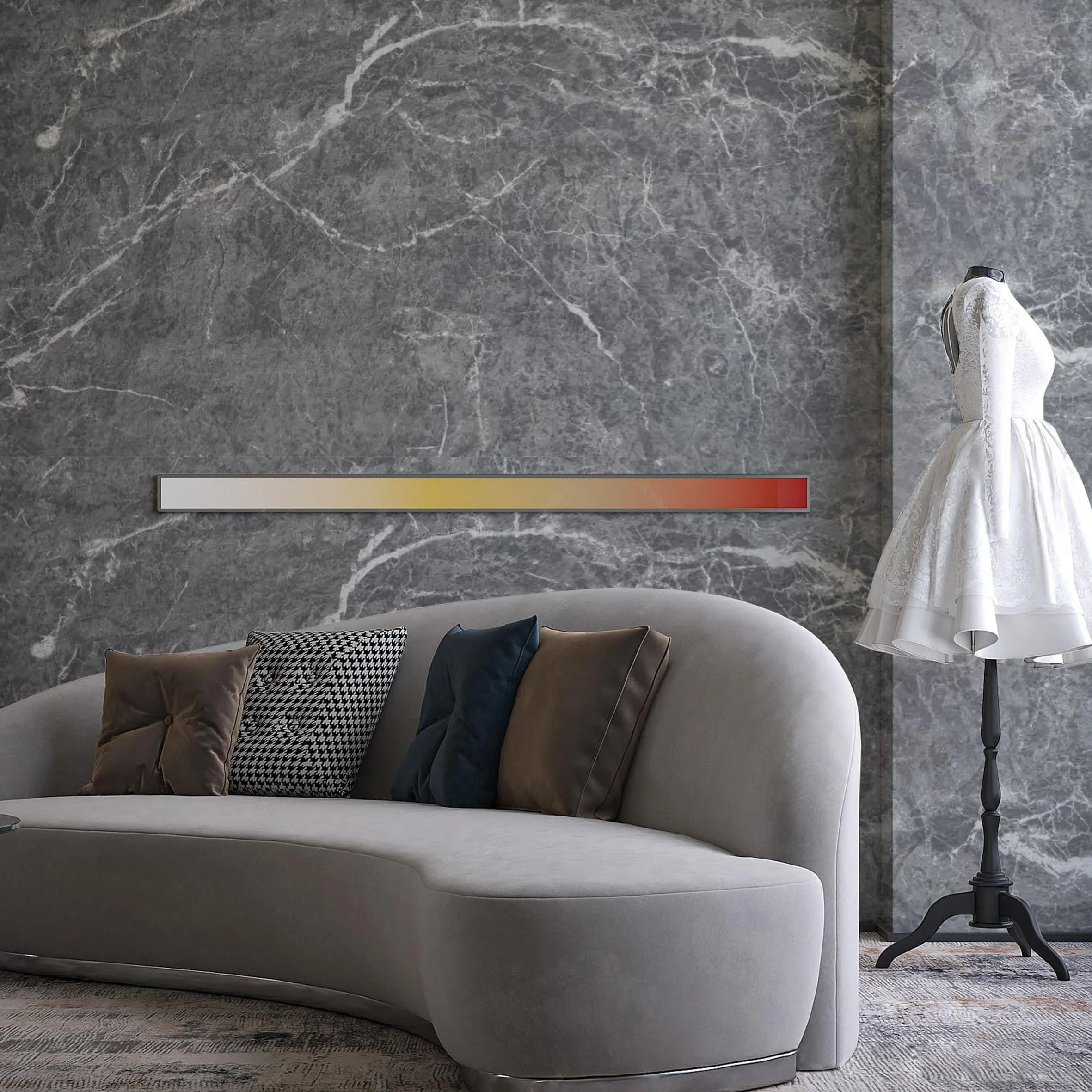
So, we know MCM looks and feels like the real deal—but what else makes it worth choosing? Let's break down the benefits:
At 5-8 kg per square meter, MCM panels are a fraction of the weight of natural stone. This means no structural reinforcement is needed—installers can carry panels by hand, and walls don't require extra support. "Installing natural Nero Margiua used to take a team of four people and a crane," Elena says. "With MCM, two people can do a whole wall in a day. It's a game-changer for tight deadlines."
MCM is resistant to scratches, stains, and moisture—no need for sealants or special cleaners. Spill wine on it? Wipe it up with a damp cloth. Live in a rainy climate? MCM won't absorb water or crack in freezing temperatures. "I have a client who used MCM Nero Margiua for their outdoor patio," Elena notes. "After three years of rain, snow, and kids running around, it still looks brand new. Natural stone would have faded or chipped by now."
Unlike natural stone, MCM panels are identical in pattern and color, ensuring a seamless look across large surfaces. And because they're flexible, they can be used in places natural stone can't: curved walls, ceiling accents, furniture fronts, even elevator interiors. "I designed a boutique hotel lobby with a curved Nero Margiua feature wall," Elena says. "With natural stone, that curve would have required custom-cutting 20 slabs and would have cost a fortune. With MCM, we bent the panels on-site. The result was a smooth, flowing wall that became the hotel's signature."
MCM is also a greener choice. By using recycled stone powder and reducing waste (no more mismatched slabs), it minimizes the environmental impact of quarrying. Plus, its lightweight nature cuts down on transportation emissions, and its durability means less replacement over time. "Sustainability is a top priority for my clients now," Marcus says. "They don't just want beauty—they want to feel good about their choices. MCM checks that box."
While Granite Nero Margiua is a standout, MCM flexible stone isn't a one-trick pony. The technology that replicates Nero Margiua is used to create a wide range of textures, from the rustic charm of wood grain board to the industrial chic of fair-faced concrete. Let's take a quick tour of two fan favorites:
If Nero Margiua is the "night sky" of textures, wood grain board is the "cozy cabin." MCM wood grain panels mimic the look of oak, walnut, pine, and more—complete with knots, grain patterns, and even the slight color variations of real wood. But unlike natural wood, they're resistant to rot, pests, and warping, making them perfect for bathrooms, kitchens, or outdoor decks. "I had a client who wanted a wood accent wall in their bathroom," Elena says. "Natural wood would have turned moldy in months. MCM wood grain board gave them the warmth they wanted, with zero maintenance. Now they take bubble baths and admire their 'wood' wall without worry."
For lovers of minimalist, industrial design, MCM fair-faced concrete panels are a dream. They replicate the raw, unpolished look of concrete—with its subtle pores, color variations, and matte finish—but without the weight or cracking issues of real concrete. "Concrete is trendy, but pouring large concrete walls is messy and expensive," Marcus explains. "MCM fair-faced concrete panels install in hours, not days, and they don't require sealing. I've seen them used in restaurants, offices, even bedrooms—adding that perfect 'urban loft' vibe without the hassle."
For large-scale projects—think shopping mall facades, hotel lobbies, or convention center walls—size matters. That's where the MCM big slab board series comes in. These panels, available in sizes up to 1200x2400mm, allow designers to create seamless, expansive surfaces that make a bold statement. Imagine a commercial building with a Nero Margiua big slab exterior: the deep black panels stretch from ground to roof, their uniform pattern creating a sense of grandeur, while their lightweight nature keeps structural costs low.
"Big slabs eliminate the 'tile effect'—those unsightly grout lines that break up a surface," Elena says. "I used MCM big slab Nero Margiua for a corporate headquarters' reception area. The wall is 20 feet tall and 40 feet wide, and it looks like a single, massive slab of stone. Visitors walk in and gasp. It's the first thing they mention in feedback. That's the power of scale, paired with the beauty of Nero Margiua."
Curious how MCM Granite Nero Margiua stacks up against the real thing? Let's break it down:
| Feature | Natural Granite Nero Margiua | MCM Flexible Stone Nero Margiua |
|---|---|---|
| Weight | ~200 kg/sqm | ~5-8 kg/sqm |
| Thickness | 20-30mm | 3–5mm |
| Flexibility | Rigid; prone to cracking | Flexible; bends up to 90 degrees |
| Installation | Requires structural support; specialized labor | Lightweight; DIY-friendly for small projects |
| Cost | High ($80–$150/sqm) | Moderate ($30–$60/sqm) |
| Maintenance | Needs sealing; prone to stains/scratches | Sealant-free; easy to clean |
| Consistency | Unique slabs; no two match | Uniform pattern/color |
| Sustainability | High quarrying impact; wasteful | Uses recycled materials; low waste |
Let's bring this to life with a real-world example. Meet Sarah, a homeowner in Chicago who wanted to transform her small apartment into a "modern sanctuary" with a touch of luxury. Her wishlist: a Nero Margiua accent wall in the living room, wood grain floors in the bedroom, and a fair-faced concrete backsplash in the kitchen. Budget? Tight. Timeline? Six weeks.
"I fell in love with Nero Margiua after seeing it in a design magazine," Sarah says. "But when I priced natural stone, it was way out of my budget, and my contractor said the wall couldn't support the weight. I was devastated—until I discovered MCM." With MCM, Sarah got her Nero Margiua accent wall for a third of the cost, installed in a day. The wood grain board floors went down in two days, and the fair-faced concrete backsplash added industrial flair without the mess of pouring real concrete. "Now, when friends come over, they can't believe the accent wall isn't real stone," Sarah laughs. "I let them touch it, and they're shocked by how cool and textured it feels. It's exactly what I wanted—a space that feels luxurious, personal, and uniquely mine."
As technology advances, MCM flexible stone continues to evolve. New replication techniques are capturing even finer details—like the way light refracts off Nero Margiua's silver flecks or the subtle (unevenness) of wood grain. And with a growing focus on customization, designers can now tweak textures to fit specific moods: a "softer" Nero Margiua for a bedroom, a "more rugged" version for a man cave.
But at the end of the day, MCM's real power isn't in its technology—it's in its ability to connect with people. It allows us to bring the textures we love into our lives without compromise, turning houses into homes and commercial spaces into experiences. Whether it's the drama of Granite Nero Margiua, the warmth of wood grain board, or the edge of fair-faced concrete, MCM flexible stone isn't just replicating texture—it's helping us tell our stories.
Granite Nero Margiua is more than a stone; it's a feeling—a sense of timelessness, strength, and quiet luxury. For too long, that feeling was out of reach for many, trapped by the limitations of natural stone. MCM flexible stone changes that. By blending science and art, it captures the essence of Nero Margiua in a material that's accessible, practical, and sustainable. It's not just a product; it's a bridge between nature and innovation, between beauty and functionality.
So, the next time you walk into a space and feel that rush of "this is perfect," take a closer look. It might just be MCM flexible stone, working its magic—proving that sometimes, the best way to honor nature is to reimagine it. And in that reimagining, we find something even more valuable: texture that doesn't just look good, but feels like home.
Recommend Products












