
In the world of architecture and interior design, materials are more than just building blocks—they are the language that speaks to style, functionality, and emotion. Two materials have recently sparked conversations among designers: the timeless Granite Nero Margiua, a stalwart of natural stone elegance, and the innovative MCM 3D Printing Series, a product of cutting-edge technology. While one draws on centuries of geological artistry, the other leverages modern engineering to redefine what's possible. Today, we're exploring how these two stack up in the ultimate design showdown: flexibility.
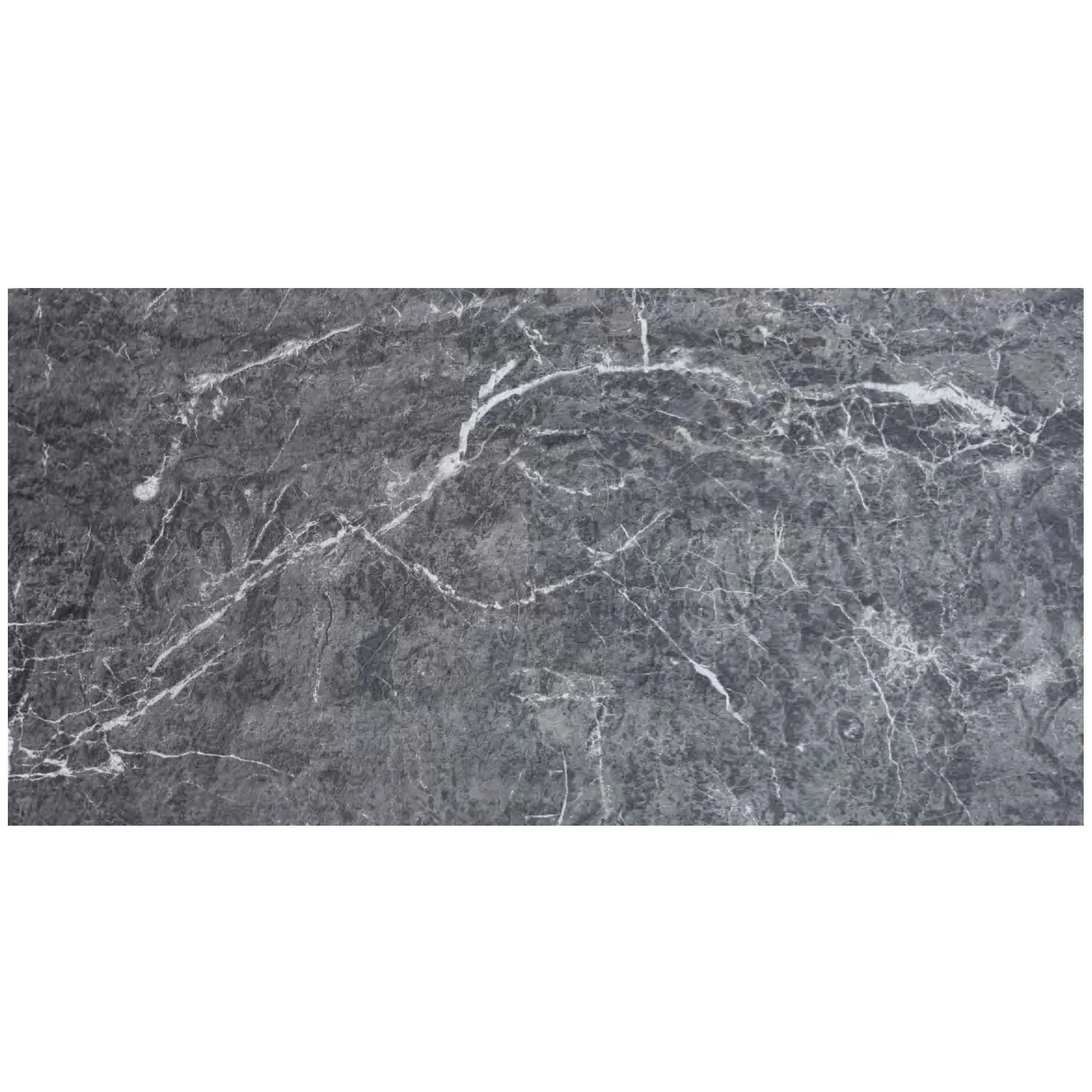
First, let's step into the world of natural stone with Granite Nero Margiua. Mined from quarries where time itself has crafted its beauty, this granite is celebrated for its deep, moody palette—think inky blacks swirled with flecks of silver and gray, like a starry night frozen in stone. Its allure lies in its authenticity: no two slabs are identical, each bearing the unique marks of mineral deposits and geological shifts over millennia.
As a building material, Granite Nero Margiua is a workhorse. Its density (up to 2.7 g/cm³) and compressive strength (over 200 MPa) make it virtually indestructible, resistant to scratches, heat, and even harsh weather. These traits have made it a favorite for high-traffic spaces: luxury hotel lobbies, upscale kitchen countertops, and grand fireplace surrounds. There's a reason it's been a status symbol for decades—it exudes permanence and refined luxury.
But here's the catch: nature's artistry comes with constraints. Granite Nero Margiua is heavy—slabs can weigh over 150 kg per square meter—limiting where and how it can be installed. Its rigidity means it struggles with curves, angles, or intricate shapes; you're largely confined to straight lines and flat surfaces. Customization is also a challenge. Want a specific pattern or texture? You're at the mercy of what the quarry yields. For designers dreaming of bold, unconventional forms, this can feel like painting with a very precise, but unyielding, brush.
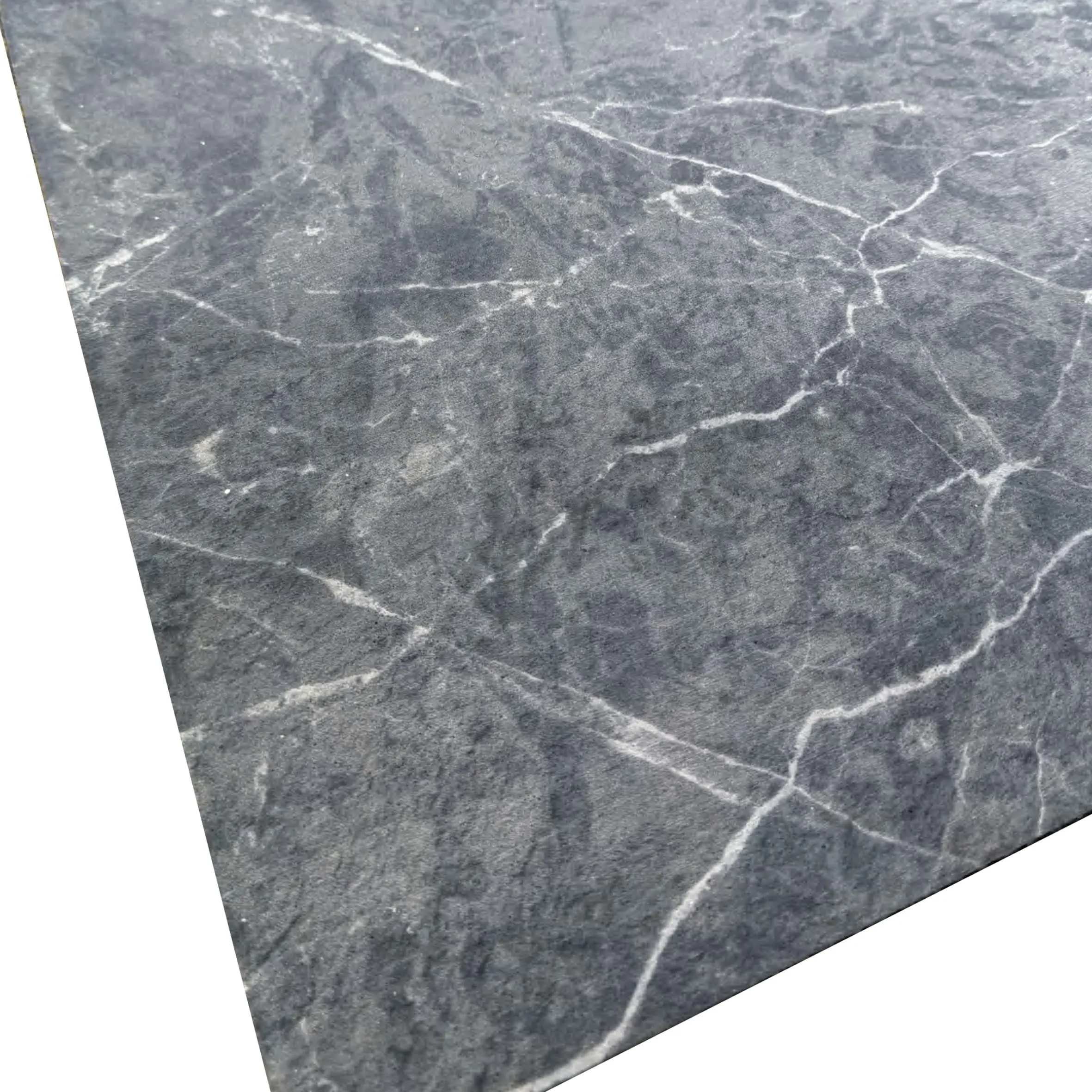
Now, enter the MCM 3D Printing Series—a material that feels like it's from the future, yet grounded in practicality. MCM, short for Modified Composite Material, is a blend of natural minerals, polymers, and fibers, engineered to be lightweight, durable, and—most importantly—adaptable. When paired with 3D printing technology, it transforms into a designer's playground.
Unlike traditional stone, MCM isn't mined—it's crafted. The 3D printing process allows for layer-by-layer construction, meaning every detail, from texture to shape, is intentional. Take the MCM flexible stone variant, for example: it bends without breaking, making it ideal for curved walls or cylindrical structures that would crack natural granite. Then there's the MCM big slab board series, which offers expansive panels (up to 3 meters in length) with seamless edges, eliminating the need for unsightly grout lines in large installations.
The magic of MCM 3D printing lies in its versatility. Want a surface that mimics the rough-hewn texture of ancient stone? Done. Prefer a smooth, polished finish with geometric patterns? No problem. The technology can replicate natural textures (like the grain of wood or the pockmarks of travertine) or create entirely new ones—think honeycomb lattices, wave-like undulations, or even custom logos embedded into the material. And because it's lightweight (as little as 6 kg per square meter), it opens doors for installations that would be impossible with stone: hanging facades, ceiling panels, or even floating art pieces.
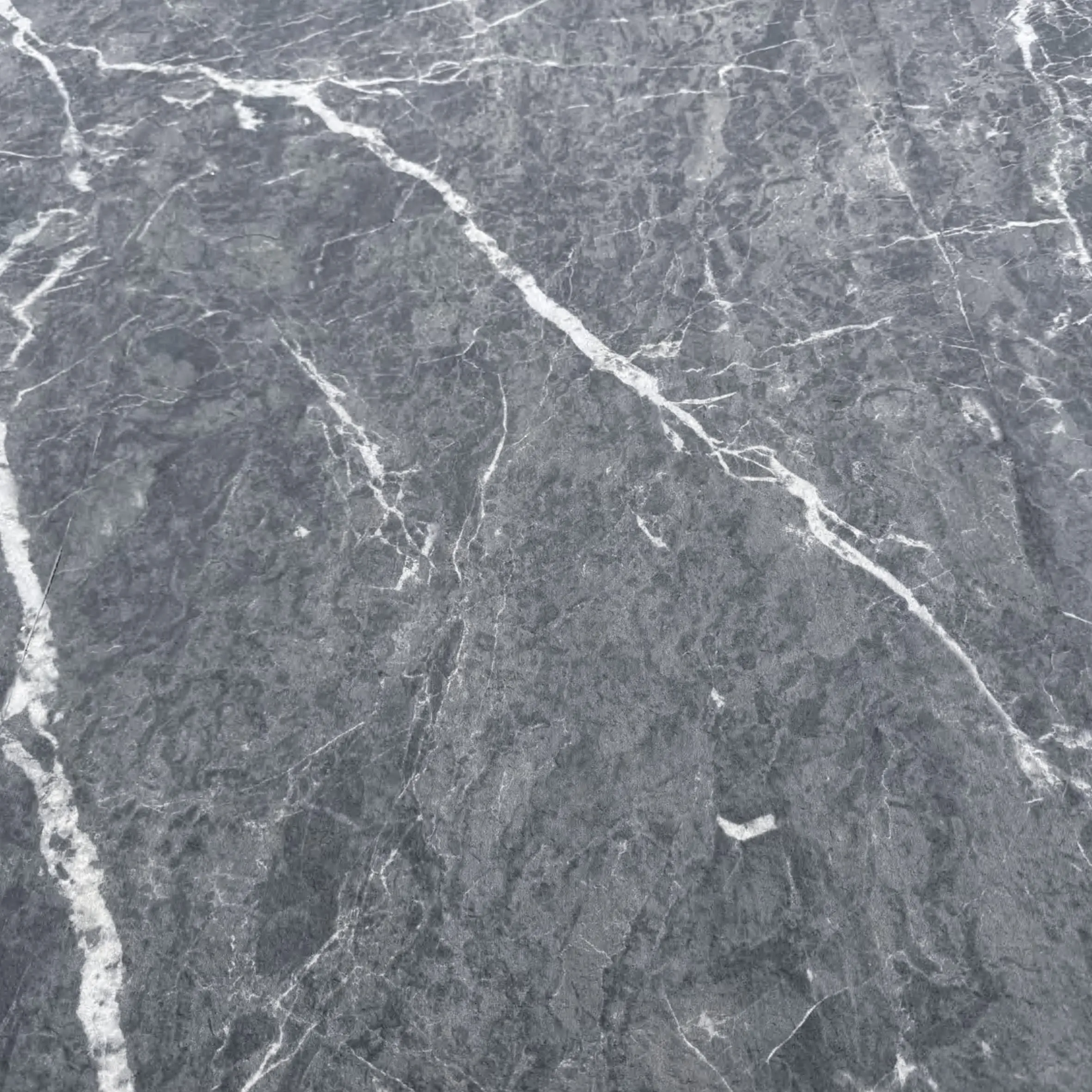
To truly understand the gap in flexibility, let's break down key areas where design meets material capability. The table below (compares) Granite Nero Margiua and the MCM 3D Printing Series across critical factors:
| Factor | Granite Nero Margiua | MCM 3D Printing Series |
|---|---|---|
| Customization Range | Limited to natural slab variations; patterns and colors are pre-determined by quarry. | Virtually unlimited: custom textures, colors, and patterns can be programmed into 3D models. |
| Form Adaptability | Restricted to flat or slightly sloped surfaces; cannot bend or curve without risking fracture. | Flexible enough for complex geometries: curves, arches, undulations, and even 3D sculptural elements. |
| Texture Diversity | Natural textures only (polished, honed, or flamed); limited by stone's inherent grain. | Endless options: from ultra-smooth to rough, porous to patterned—including 3D-printed textures like waves or grids (see MCM flexible stone's tactile variations). |
| Installation Flexibility | Requires heavy machinery and structural reinforcement due to weight; limited to load-bearing surfaces. | Lightweight (up to 80% lighter than natural stone) allows for installation on walls, ceilings, and even temporary structures with minimal support. |
| Sustainability in Design | Quarrying has environmental impacts; excess material from cutting is often wasted. | 3D printing minimizes waste (only material needed is used); MCM's composition includes recycled minerals, aligning with green building trends. |
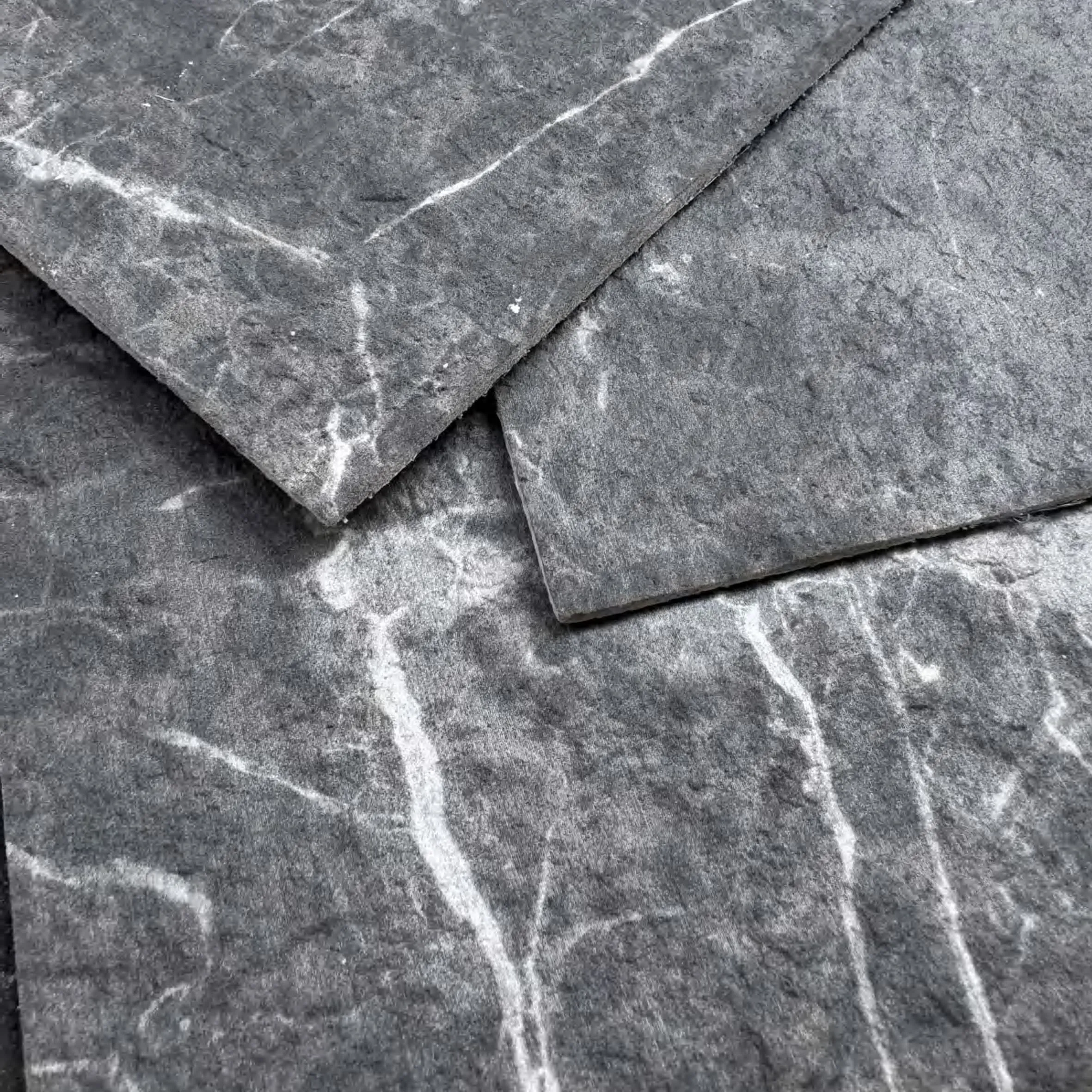
To see these differences in action, let's look at real scenarios.
Granite Nero Margiua in Action: Walk into a high-end restaurant, and you might find Granite Nero Margiua gracing the bar top—its sleek, polished surface reflecting ambient light, its durability standing up to daily spills and scratches. In a luxury home, it could line a straight fireplace wall, the natural veining adding warmth to an otherwise minimalist space. Here, its strength and timeless beauty are assets; the design doesn't demand curves or complexity, so its limitations fade into the background.
MCM 3D Printing Series in Action: Now, picture a contemporary art museum with a facade that seems to ripple like water. That's MCM 3D printing at work. The MCM big slab board series allows for large, seamless panels shaped into gentle waves, while 3D-printed textures mimic the play of light on a lake. Or consider a boutique hotel lobby with a curved reception desk—no straight edges, just a fluid arc wrapped in MCM flexible stone, its surface embossed with a custom geometric pattern that tells the hotel's brand story. These are designs that would be impossible with Granite Nero Margiua.
Does this mean Granite Nero Margiua is obsolete? Far from it. There's a tactile, emotional connection to natural stone that technology can't replicate—the coolness of granite underfoot, the way light plays off its unique veining. For projects where tradition and permanence are non-negotiable, it remains unmatched.
But the MCM 3D Printing Series isn't here to replace natural stone; it's here to expand the designer's toolkit. Imagine a space where Granite Nero Margiua forms the foundation—thick, sturdy flooring—while MCM 3D-printed elements climb the walls, curving overhead to create a ceiling that feels like a cloud. Or a retail store where a Granite Nero Margiua display counter anchors the space, and MCM flexible stone panels behind it shift color with lighting, creating an ever-changing backdrop.
When it comes to design flexibility, the MCM 3D Printing Series is in a league of its own. Its ability to adapt to form, texture, and function makes it a dream for designers pushing boundaries. Granite Nero Margiua, with its timeless elegance, will always have a place in luxury design—but it's a material of constraints, beautiful but unyielding.
At the end of the day, the choice depends on the story you want to tell. Do you want to honor tradition with a material that's stood the test of time? Go with Granite Nero Margiua. Do you want to write a new chapter in design, one where shapes and textures are limited only by imagination? The MCM 3D Printing Series is ready to turn that vision into reality.
As design continues to evolve, materials like MCM 3D printing remind us that the future of architecture isn't just about building—it's about creating spaces that feel alive, adaptive, and uniquely human. And isn't that the ultimate goal of great design?
Recommend Products












