
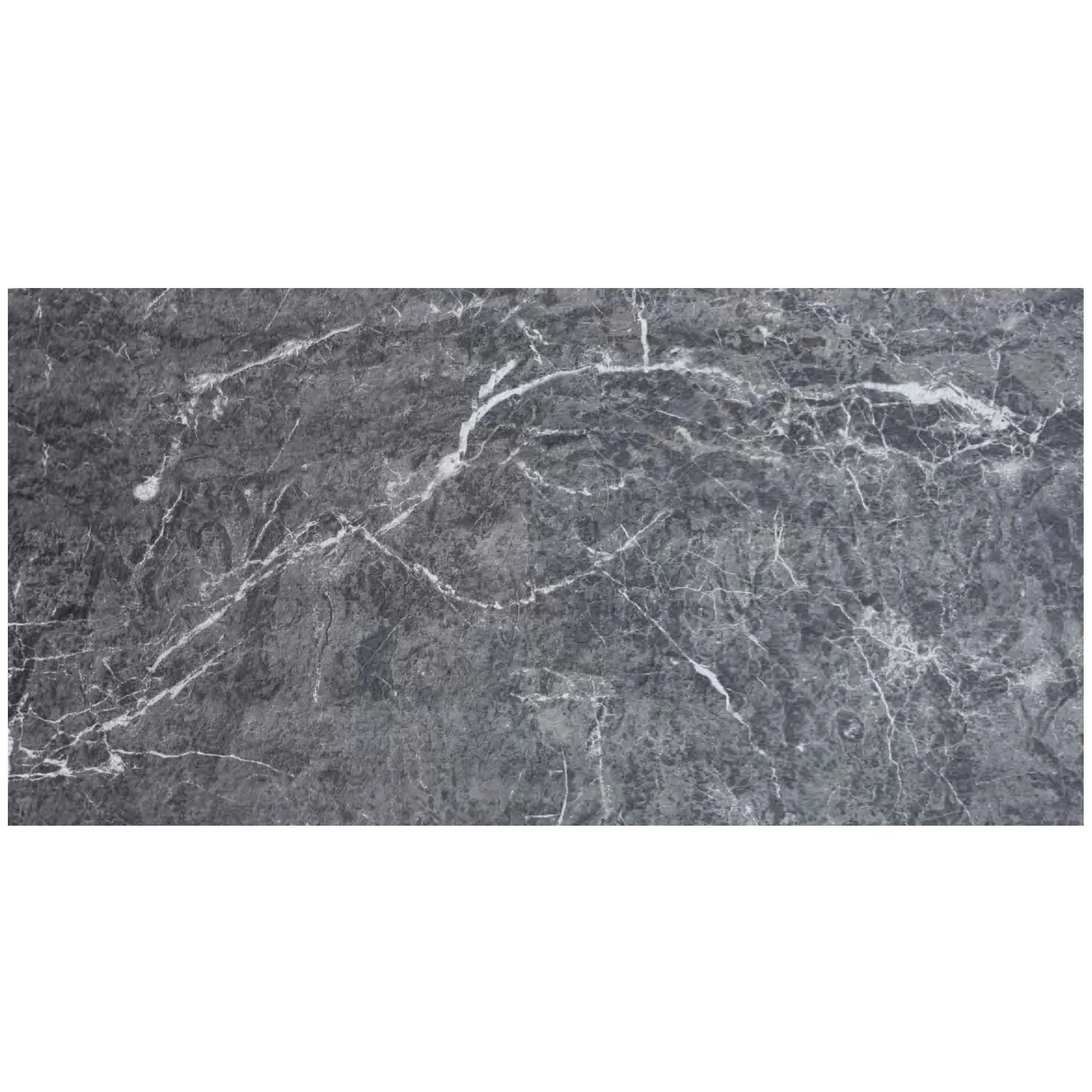
A deep dive into how traditional stone and modern composites stand up to the sun's harshest rays
Walk down any city street, and you'll notice something: buildings tell stories. Their exteriors whisper about the era they were built in, the materials available at the time, and the priorities of their designers. But there's one silent character in every architectural story that rarely gets credit—the sun. Day in and day out, ultraviolet (UV) radiation beats down on facades, testing their resilience, fading their colors, and slowly eroding their strength. For architects, designers, and builders, choosing an exterior material that can stand up to the sun isn't just about aesthetics; it's about ensuring a building's beauty lasts as long as its purpose.
In recent years, two materials have emerged as front-runners in the quest for UV-resistant exterior cladding: the timeless Granite Nero Margiua, a natural stone with a legacy spanning centuries, and MCM (Modified Composite Material), a modern engineered solution that's redefining what's possible in architectural design. Both promise durability, but how do they truly stack up when the sun is at its fiercest? Let's peel back the layers, examine the science, and hear from real-world applications to find out.
Before we pit Granite Nero Margiua against MCM, let's first understand the enemy: UV radiation. The sun emits three types of UV rays—UVC, UVB, and UVA. UVC is mostly absorbed by the ozone layer, but UVB (responsible for sunburn) and UVA (the aging ray) reach the Earth's surface in abundance. For building materials, UVA is particularly insidious: it penetrates deep into materials, breaking down chemical bonds, causing colors to fade, and weakening structural integrity over time.
Think of it like this: every material has a "shelf life" under UV exposure. Natural stones, with their crystalline structures, might seem impervious, but even they can weather. Engineered materials, while designed to resist, can degrade if their protective layers aren't formulated correctly. The result? A facade that looks tired, cracked, or discolored years before its time—costing building owners thousands in repairs and diminishing the building's curb appeal.
For architects, this isn't just a technical concern; it's a creative one. The right material should preserve the design vision for decades, not just the first few years. So, how do our two contenders measure up?
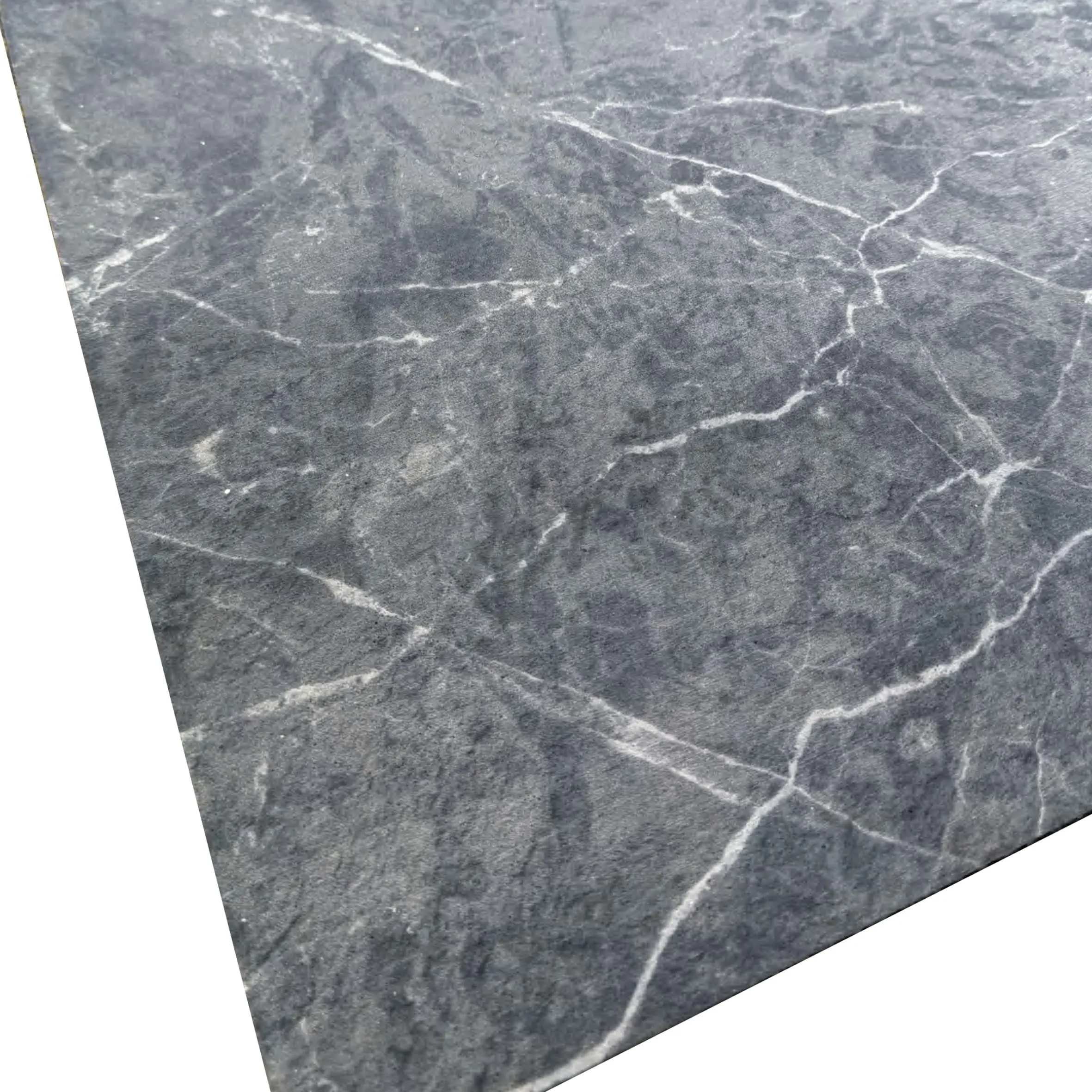
Granite Nero Margiua isn't just a stone—it's a piece of Earth's history. Quarried from select sites in Italy, this black granite is formed deep within the Earth's crust, where molten magma cools slowly, crystallizing into a dense, hard rock. Its composition is a triumph of nature: primarily quartz (20-60%), feldspar (30-70%), and mica (5-15%), with trace minerals that give it its signature deep black hue with subtle silver flecks.
What makes this composition so UV-resistant? Quartz, for starters, is one of the hardest minerals on Earth (7 on the Mohs scale) and highly stable under UV exposure. Feldspar, while slightly softer, forms a tight crystalline matrix with quartz, creating a barrier that's tough for UV rays to penetrate. Mica, though more delicate, is present in small quantities, so its impact on UV resilience is minimal.
Walk through Rome's historic districts, and you'll see granite structures that have withstood millennia of Mediterranean sun. That's a testament to granite's natural UV resistance. Nero Margiua, with its dark color, actually has an edge here: darker stones absorb more heat, but their dense structure means less thermal expansion and contraction, which can cause cracking. UV rays, while powerful, struggle to break down the strong ionic bonds in granite's minerals, so color fading is minimal over time.
But it's not entirely immune. In regions with extreme UV index (think Arizona or the Middle East), even Nero Margiua can show signs of weathering. The surface may develop a slight "patina"—a dulling of its polish—as minerals near the surface oxidize. This isn't necessarily a flaw; many designers embrace the patina as a mark of character. However, for buildings where a pristine, glossy finish is non-negotiable, this natural aging process can be a drawback.
To keep Granite Nero Margiua looking its best under UV exposure, maintenance is key. Most installers recommend sealing the stone every 3-5 years with a UV-resistant penetrating sealer. This sealer soaks into the pores, creating a barrier against moisture (which, combined with UV, can accelerate weathering) and slowing down oxidation.
Cleaning is also important. Harsh detergents or acidic cleaners can strip the sealer, leaving the stone vulnerable. Instead, a mild soap and water rinse is usually sufficient. For stubborn stains, a stone-specific cleaner designed for granite is a safer bet. The good news? Compared to softer stones like marble, Nero Margiua requires relatively little upkeep—a plus for busy building managers.
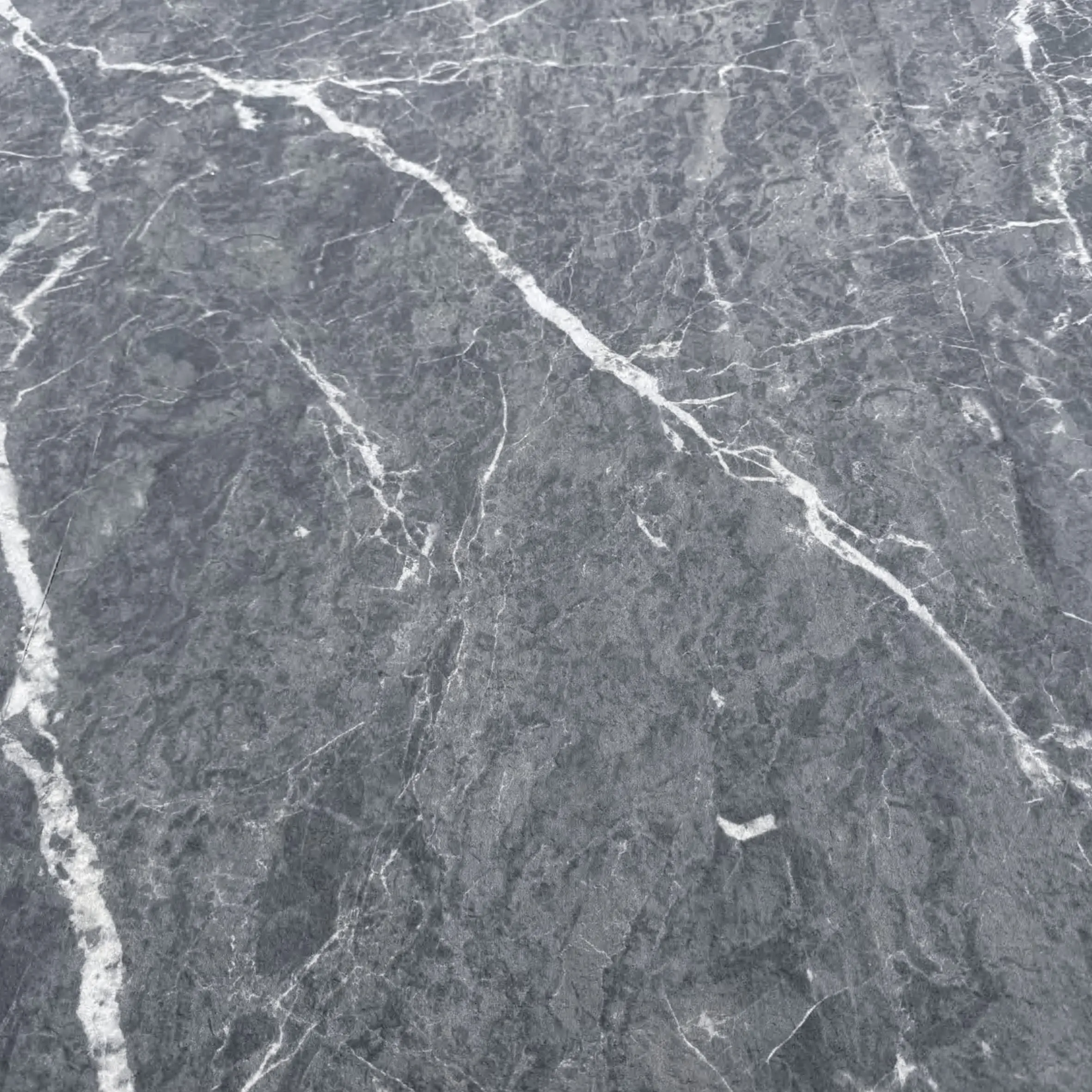
If Granite Nero Margiua is the wise elder of exterior materials, MCM is the tech-savvy newcomer. Short for Modified Composite Material, MCM is a lightweight, flexible cladding solution composed of three layers: a base layer (often aluminum or fiberglass), a core of mineral-filled polymer, and a decorative surface layer that mimics natural materials like stone, wood, or metal. Brands like mcm flexible stone and mcm big slab board series have taken this technology a step further, offering panels that are not only durable but also customizable in texture, color, and size.
What sets MCM apart is its engineering. Unlike natural stone, which is at the mercy of geological processes, MCM is designed in a lab to address specific challenges—including UV resistance. Manufacturers add UV stabilizers to the polymer core and topcoat, creating a shield that absorbs and dissipates UV rays before they can damage the material.
Let's break down MCM's UV defense system. The decorative layer, which often features pigments or inks, is protected by a clear, cross-linked acrylic or fluoropolymer topcoat. This topcoat is infused with UV absorbers (like benzophenones) and hindered amine light stabilizers (HALS). UV absorbers soak up UVA and UVB rays, converting them into harmless heat, while HALS act as "radical scavengers," neutralizing the free radicals that UV radiation generates—radicals that would otherwise break down the polymer bonds.
The core layer, made of mineral-filled polymer, adds another layer of protection. The minerals (often calcium carbonate or aluminum hydroxide) not only reduce flammability but also scatter UV rays, preventing them from reaching the base layer. The result? A material that resists fading, chalking (a powdery residue caused by UV degradation), and cracking—even in the sunniest climates.
Take flexible stone cladding panels , for example. These MCM panels are designed to bend around curves and contours, making them ideal for modern, organic architectures. Despite their flexibility, they maintain impressive UV resistance: independent tests show that after 5,000 hours of accelerated UV exposure (equivalent to about 5 years in Florida's sun), color retention is often over 90%—far better than many traditional materials.
While UV resistance is a star feature, MCM has other tricks up its sleeve. For one, it's lightweight—typically 3-5 kg per square meter, compared to granite's 25-30 kg per square meter. This reduces structural load, making it ideal for retrofits or buildings with weight restrictions. Installation is also faster: panels can be cut on-site, and many systems use a dry-joint method, eliminating the need for mortar.
MCM is also highly customizable. Want a facade that looks like travertine (starry blue) or lunar peak silvery ? MCM can replicate these textures and colors with precision, and because the pigments are locked into the topcoat, the color remains consistent across the entire facade—no more natural variations that plague stone.
MCM's low-maintenance profile is another win. Unlike granite, it doesn't require sealing. A quick rinse with water (or mild soap for stubborn dirt) is usually enough to keep panels looking fresh. The topcoat is resistant to graffiti, stains, and mold, so even in urban environments, upkeep is minimal. For building owners, this translates to lower long-term costs—a significant advantage over materials that demand regular professional maintenance.
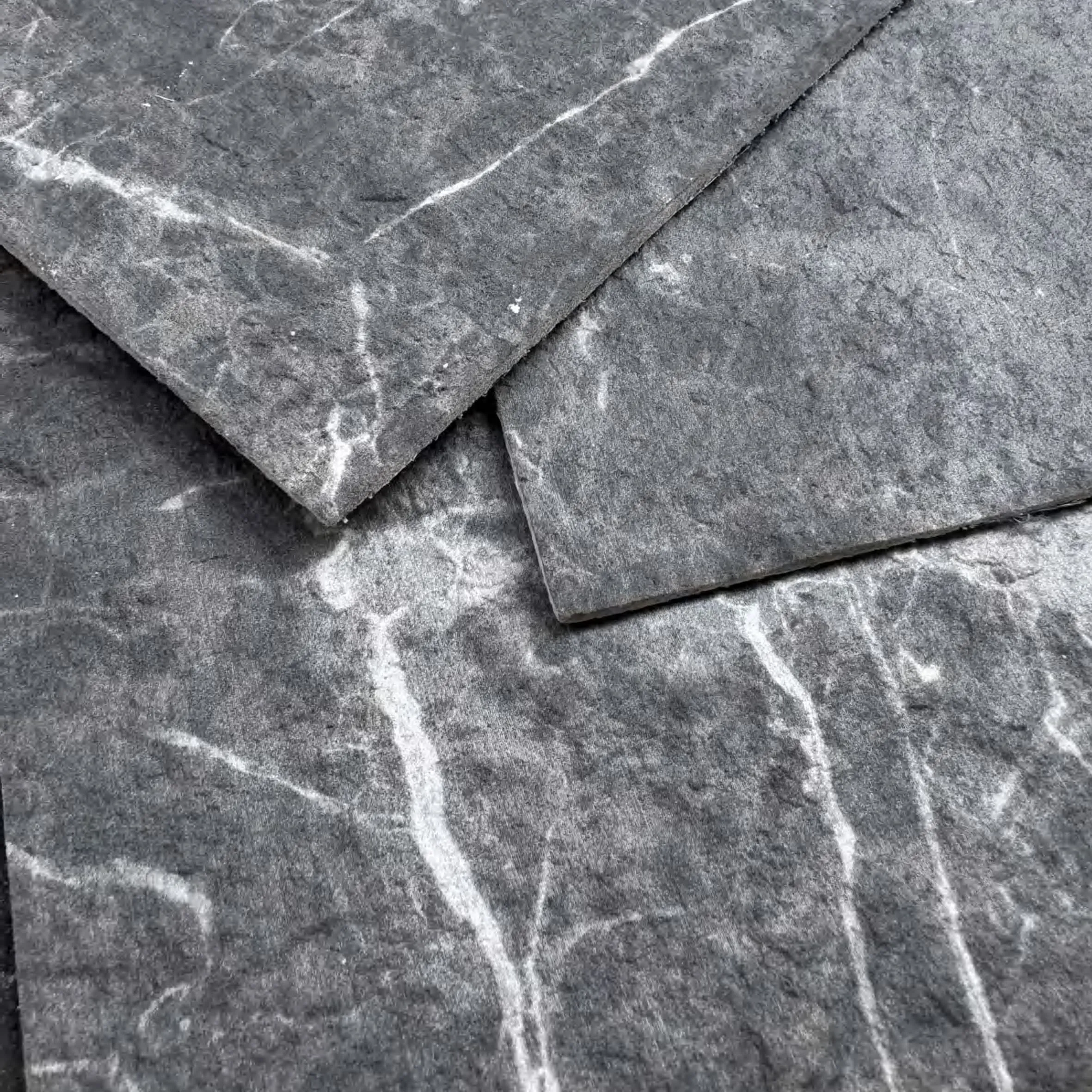
To truly understand how these materials stack up, let's compare them across key categories—beyond just UV resistance. Below is a detailed breakdown to help architects and builders make informed decisions:
| Category | Granite Nero Margiua | MCM (e.g., mcm flexible stone) |
|---|---|---|
| UV Resistance | High—minimal fading, but may develop a patina over time. Requires sealing every 3-5 years. | Excellent—90%+ color retention after 5 years of UV exposure. No sealing required. |
| Weight | Heavy (25-30 kg/m²)—requires strong structural support. | Lightweight (3-5 kg/m²)—ideal for retrofits and low-load structures. |
| Installation | Labor-intensive—requires skilled masons, mortar, and careful handling to avoid breakage. | Quick and easy—dry-joint systems, lightweight panels, and on-site cutting reduce installation time by 30-50%. |
| Aesthetic Versatility | Limited by natural variation—each slab is unique, which some love but others find inconsistent. | Highly customizable—available in travertine (starry red) , lunar peak golden , wood grains, and more. Consistent color and texture across panels. |
| Cost (Material + Installation) | Higher upfront cost—$80-120 per square foot (material + labor). | Lower upfront cost—$40-70 per square foot (material + labor). Lower long-term maintenance costs. |
| Environmental Impact | Quarrying can disrupt ecosystems; heavy transportation increases carbon footprint. | Low embodied carbon—recyclable materials, lightweight design reduces transportation emissions. |
As the table shows, both materials have their strengths. Granite Nero Margiua appeals to those who value natural beauty and heritage, while MCM shines in projects where speed, cost, and modern design flexibility are priorities.
The Azure Bay Resort in Santorini, Greece, features a facade clad in Granite Nero Margiua. Built in 2010, the resort faces south, exposing it to 12+ hours of daily sun in the summer. After 13 years, the stone has developed a subtle patina—its once-glossy surface now has a soft, matte finish—but the color remains deep black, with no significant fading. The resort's maintenance team seals the facade every 4 years, a process that takes 2 weeks and costs approximately €15,000. "Guests love the stone's natural look," says Maria Kostas, the resort's facilities manager. "The patina gives it character, like it's been part of the landscape forever."
Silicon Valley's Vertex Tech Campus, completed in 2018, chose mcm big slab board series in lunar peak silvery for its main facade. Located in Sunnyvale, where UV index regularly hits 10+, the campus needed a material that could maintain its sleek, futuristic look. Five years later, the panels still shine with their original silver hue—no fading, chalking, or cracking. "We haven't done any maintenance beyond pressure washing twice a year," notes Raj Patel, Vertex's operations director. "The MCM panels were 40% cheaper than granite and installed in half the time. For a campus that's all about innovation, it was the perfect fit."
We spoke with Lisa Wong, a senior architect at Gensler with 20 years of experience in exterior design, to get her take on when to choose Granite Nero Margiua vs. MCM. "It all comes down to three factors: context, budget, and design intent," she says. "For historic restorations or buildings where natural authenticity is key—like a luxury hotel in a heritage district—Granite Nero Margiua is unbeatable. Its weight and cost are justified by the timelessness it brings."
"But for modern projects, especially those with tight deadlines or unique geometries, MCM is a game-changer," Wong adds. "I recently designed a museum with a curved facade, and flexible stone cladding panels made it possible. We would have needed custom-cut granite, which would have doubled the budget and delayed the project by months."
Climate also plays a role. In coastal areas with salt spray, MCM's resistance to corrosion gives it an edge, while in regions with extreme temperature fluctuations, Granite's thermal stability may be preferable. "At the end of the day, both materials have their place," Wong concludes. "The best designs often blend them—using granite for accents and MCM for large, sun-exposed surfaces."
In the battle of UV resistance, both Granite Nero Margiua and MCM are strong contenders. Granite brings centuries of proven durability and natural beauty, while MCM offers cutting-edge engineering, versatility, and cost savings. The choice isn't about which is "better"—it's about which aligns with your project's needs, aesthetic goals, and long-term vision.
For those who crave the warmth of natural stone and don't mind higher upfront costs and maintenance, Granite Nero Margiua is a timeless choice. For architects pushing the boundaries of design, working with tight budgets, or prioritizing sustainability and speed, MCM—with its mcm 3d printing series , big slab solutions , and endless color options—is a modern marvel.
As the sun continues to shine down on our cities, one thing is clear: the future of exterior design lies in embracing both tradition and innovation. Whether it's the ancient strength of granite or the engineered resilience of MCM, the best materials are those that not only stand up to the sun but also tell the stories of the buildings they clothe—stories of durability, beauty, and human ingenuity.
Recommend Products












