
For centuries, travertine has held a special place in the hearts of architects, designers, and homeowners. Its warm, earthy tones, unique porous texture, and rich history tracing back to ancient Rome evoke a sense of timeless elegance and organic luxury. When we think of creating a space that feels both grounded and sophisticated, travertine mosaic tiles are often at the top of the list. They bring a piece of natural history into our homes and commercial spaces, promising beauty and a connection to the earth.
From the grand floors of historic villas to the chic backsplashes of modern kitchens, the appeal of travertine is undeniable. It tells a story of geological artistry, formed over millennia. But as our building practices evolve and our demands for performance, sustainability, and design freedom grow, are the materials of antiquity still the best choice for the future? What if you could capture the soul and aesthetic of travertine, but in a form that is stronger, more versatile, lighter, and kinder to our planet? This is not a hypothetical question; it's the reality that is reshaping the world of architectural finishes.
Let's be honest, the allure of natural stone is powerful. Each piece of travertine is unique, a fingerprint of nature with its own pattern of voids and mineral deposits. This uniqueness is a significant part of its charm. It's used to create stunning visual effects, from rustic, tumbled mosaics to sleek, honed and filled surfaces. The feeling of cool, solid stone underfoot is a tactile experience that speaks to quality and permanence.
However, for all its beauty, traditional travertine comes with a set of practical and environmental challenges that are becoming increasingly difficult to ignore in modern construction. Anyone who has worked with or lived with natural travertine knows these issues well:
These challenges have led innovators in the building materials industry to ask a crucial question: How can we deliver the aesthetic qualities people love about natural stone without the associated drawbacks? The answer lies in looking beyond the quarry and towards advanced material science.
This is where COLORIA GROUP enters the conversation. We are not just a supplier of materials; we see ourselves as pioneers redefining what's possible in architectural design. With decades of experience in the global building materials sector, we understood the limitations of traditional products and dedicated ourselves to finding a better way. Our mission led us to champion a groundbreaking material: MCM, or Modified Cementitious Material.
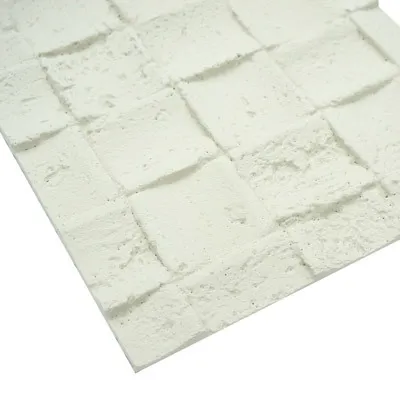
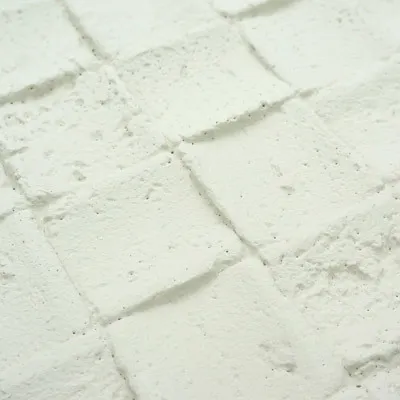
So, what exactly is MCM? It's a revolutionary composite material primarily made from natural, raw ingredients like modified soil and cement powder. Through a unique, low-temperature baking and forming process, these simple components are transformed into a material with extraordinary properties. It's not a ceramic, it's not a porcelain, and it's certainly not a simple plastic veneer. MCM is a category of its own, designed to perfectly replicate the look, texture, and feel of natural materials like stone, wood, brick, and leather, while dramatically improving upon their performance.
For those who love the look of travertine, our MCM products are a game-changer. We can capture the subtle color variations, the intricate textures, and the warm, inviting essence of the finest travertine stone. But we deliver it in a form that is lightweight, flexible, incredibly durable, and environmentally responsible. It's the best of both worlds: timeless beauty powered by 21st-century technology.
The benefits of switching from traditional stone to COLORIA's MCM are not just marginal improvements; they represent a fundamental shift in how we can approach design and construction. Let's delve deeper into what makes this material so special.
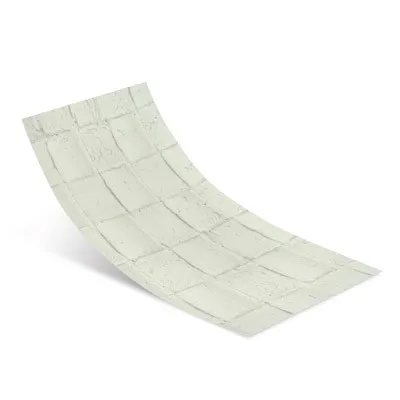
At the heart of our offering is the MCM Flexible Stone series. This is our direct, superior answer to traditional travertine and other natural stones. Imagine a material that looks and feels like a thin sheet of real stone, yet you can bend it in your hands. This is not science fiction. Its flexibility opens up a universe of design possibilities that are simply impossible with rigid, brittle stone.
Think about curved walls, columns, archways, or undulating feature walls. With traditional tile, achieving this would require countless small, meticulously cut pieces, resulting in a grid of grout lines that break the natural flow of the surface. With MCM Flexible Stone , you can wrap these complex shapes in a single, seamless-looking sheet of material. The effect is breathtakingly organic and monolithic, as if the structure itself were carved from a single block of stone. The installation is also faster, cleaner, and requires less specialized labor. Because it's so lightweight (roughly one-fifth the weight of traditional stone), it can be applied to almost any substrate without needing heavy-duty structural reinforcement.
For projects that demand a sense of scale and grandeur, we developed the MCM Big Slab Board Series . These large-format panels are designed to create vast, uninterrupted surfaces that exude modern luxury. Imagine a hotel lobby or a high-rise facade clad in what appears to be massive, single slabs of premium stone, without a single visible grout line across a huge expanse. This is the visual impact of our big slab boards.
The MCM Big Slab Board Series eliminates the busy, grid-like appearance of traditional tiling, allowing the texture and pattern of the material itself to be the hero. This is particularly effective for exterior wall decoration, where the lightweight nature of the panels drastically reduces the load on the building's frame and foundation, leading to significant savings in structural engineering and costs. Furthermore, their durability and resistance to weathering, UV rays, and temperature fluctuations ensure that the building's facade remains beautiful for decades with minimal maintenance.
COLORIA GROUP's commitment to innovation doesn't stop there. Our MCM 3D Printing Series allows for an unprecedented level of customization. We can create bespoke textures, patterns, and bas-relief effects that are tailored to a specific architectural vision. Whether it's a company logo subtly integrated into a feature wall or a unique artistic pattern inspired by nature, our 3D printing technology transforms walls into canvases. This elevates our materials from being mere surfaces to becoming integral parts of the artistic and narrative expression of a space.
To truly appreciate the leap forward that MCM represents, a direct comparison is often the most effective way to see the differences. Let's put traditional travertine side-by-side with COLORIA's MCM Flexible Stone, which is designed to emulate it.
| Feature | Traditional Travertine Tile | COLORIA MCM Flexible Stone |
|---|---|---|
| Aesthetics & Texture | Authentic, natural beauty with unique variations. Texture is inherent but can be inconsistent. Color matching can be difficult. | Hyper-realistic replication of travertine's look and feel. Consistent color and texture across batches, yet with natural-looking variations. Countless finishes available. |
| Weight | Very heavy (approx. 20-30 kg/m²). Requires significant structural support and reinforcement. High transportation costs. | Extremely lightweight (approx. 4-6 kg/m²). Reduces structural load, transport costs, and can be used on lightweight partitions. |
| Installation | Labor-intensive, requires wet cutting (dust/slurry), thick-set mortar, and specialized skills. High potential for breakage. | Fast, easy, and clean. Can be cut with a utility knife. Adheres with a simple adhesive. Drastically reduces installation time and labor costs. |
| Design Flexibility | Rigid and brittle. Limited to flat surfaces. Curves require complex and costly mosaic work. | Highly flexible. Can easily wrap around columns, curved walls, and complex architectural features for a seamless finish. |
| Durability & Performance | Prone to chipping and cracking. Highly porous, requiring frequent sealing to prevent stains and etching. | Impact-resistant, crack-resistant, and non-porous. Inherently waterproof, fire-resistant (Class A), and resistant to freeze-thaw cycles. |
| Maintenance | High maintenance. Requires regular sealing and special pH-neutral cleaners. Susceptible to permanent staining. | Virtually maintenance-free. Can be cleaned with regular water and soap. Its non-porous surface resists stains, mold, and mildew. |
| Environmental Impact | High-impact quarrying process destroys landscapes. High energy consumption for extraction and transport. Generates significant waste. | Low-impact. Made from modified soil. Low-energy, low-emission production process. Lightweight reduces transport carbon footprint. Minimal installation waste. |
| Cost-Effectiveness | High initial material cost, compounded by high transportation, structural, and installation labor costs. | Competitive material cost with massive savings on transportation, structural requirements, and installation labor, leading to a much lower total project cost. |
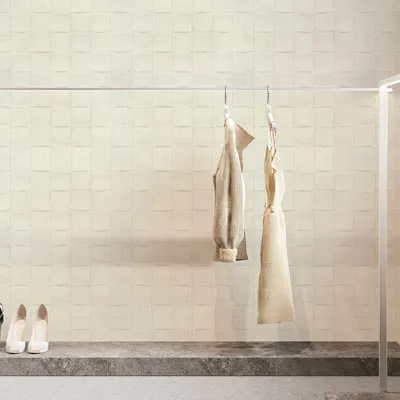
Our commitment at COLORIA GROUP goes far beyond simply manufacturing and selling a product. We position ourselves as a comprehensive one-stop solution provider for architects, developers, contractors, and designers. We understand that a successful project depends on more than just high-quality materials; it requires a holistic approach, expert guidance, and seamless execution.
What does being a one-stop solution provider mean for you?
By partnering with COLORIA GROUP, you're not just buying building materials. You're gaining a collaborator who is invested in the success of your project, from the initial concept to the final, stunning result.
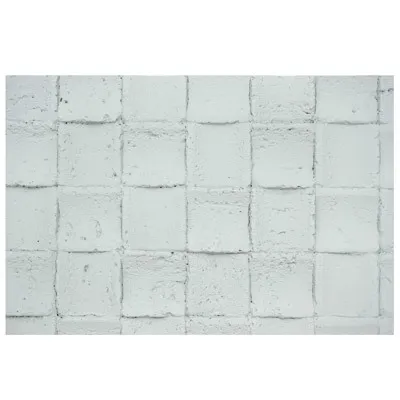
In today's world, sustainability is not a buzzword; it's a responsibility. The construction industry is a major consumer of natural resources and a significant contributor to carbon emissions. At COLORIA GROUP, we take this responsibility seriously. Our MCM products are inherently green, representing a significant step forward in sustainable building practices.
The eco-friendly journey starts with our raw materials, primarily modified soil, a widely available resource. Our production process consumes a fraction of the energy required for firing traditional ceramics or quarrying stone. There is no wastewater or industrial effluent, and the entire process is clean and low-emission. The lightweight nature of our products, like the MCM Flexible Stone , means less fuel is burned during transportation. On-site, the ease of cutting and minimal waste further contribute to a cleaner, more efficient construction process. For architects and developers pursuing green building certifications like LEED, specifying COLORIA's MCM products can contribute valuable points towards their goals.
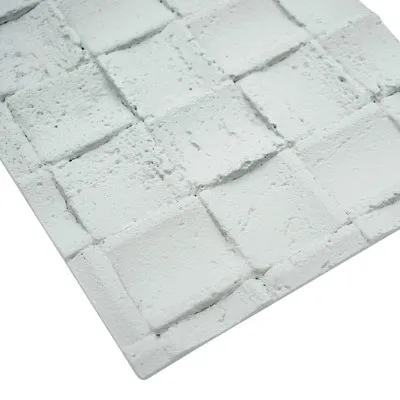
The classic, earthy elegance of travertine mosaic tiles will always have a place in design history. But the future of design and construction demands more. It demands materials that are not only beautiful but also intelligent, high-performing, versatile, and responsible.
COLORIA GROUP's innovative range of MCM products offers a definitive answer to this call. We provide the means to achieve the luxurious, natural aesthetic you desire without the weight, fragility, cost, and environmental burden of traditional stone. Whether you're designing a cozy residential bathroom, a dynamic commercial facade, or an intricate architectural feature, our materials empower you to push creative boundaries while ensuring long-lasting performance and sustainability.
It's time to rethink the materials we use to build our world. It's time to embrace an evolution that honors the beauty of the past while leveraging the technology of the future. Explore the possibilities with COLORIA GROUP, and discover how our advanced solutions can elevate your next project from ordinary to extraordinary.
Recommend Products












