
Exploring how detailed, true-to-life imagery bridges the gap between digital design and tangible architecture—ensuring every MCM choice feels like a perfect fit.
Choosing the right building materials is like selecting the perfect palette for a painting—every texture, color, and finish tells a story. For architects, designers, and builders working with Modern Composite Materials (MCM), that story often begins with a screen: scrolling through product catalogs, zooming into images, and imagining how a surface might transform a space. But here's the problem: not all images are created equal. When it comes to materials as nuanced as Romanite, MCM flexible stone, or wood grain board, low-quality photos can turn that vision into a costly misunderstanding. This is why high-resolution, large-size real photos aren't just a "nice-to-have"—they're the backbone of confident, successful MCM selection.
Let's start with the basics: MCM, or Modified Composite Material, has revolutionized architecture with its blend of durability, flexibility, and lightweight design. From the sweeping curves of a boutique hotel facade clad in wave panel to the warm intimacy of a restaurant interior finished with travertine (starry blue), MCM adapts to bold visions while standing up to the elements. But its greatest strength—its intricate, lifelike textures—is also its biggest challenge to communicate digitally. A grainy photo can flatten the depth of lunar peak silvery, wash out the rich hues of rusty red, or obscure the subtle patterns of dolomitic travertine (dark grey). That's where high-resolution, large-size real photos step in: they don't just show the material—they let you experience it, long before a single panel is installed.
Before diving into why photos matter, let's shine a light on Romanite itself. A standout in the MCM family, Romanite is celebrated for its ability to mimic the grandeur of natural stone with the practicality of modern composites. Think the weathered elegance of ancient Roman ruins meets cutting-edge engineering: it's dense enough to withstand harsh climates, flexible enough to wrap columns or archways, and visually striking enough to become the focal point of a design. Whether paired with the organic warmth of wood grain board or the sleek industrial vibe of fair-faced concrete, Romanite adds layers of depth that demand to be seen in detail.
But what makes Romanite truly special is its texture. Run your fingers over a real panel, and you'll feel the subtle ridges of a hand-chiseled surface, the cool smoothness of polished sections, or the porous, almost breathing quality of travertine-inspired variants. These details aren't just aesthetic—they influence how light plays on the surface throughout the day, how it feels to the touch, and how it interacts with surrounding materials. A low-res photo might show a "stone-like" surface, but it can't capture the way light catches the tiny crystalline flecks in lunar peak silvery or the way the color shifts in travertine (starry blue) from dawn to dusk. For designers, missing these details isn't just a disappointment—it's a missed opportunity to create harmony in a space.
Let's break down the four critical reasons high-quality photos make or break MCM selection:
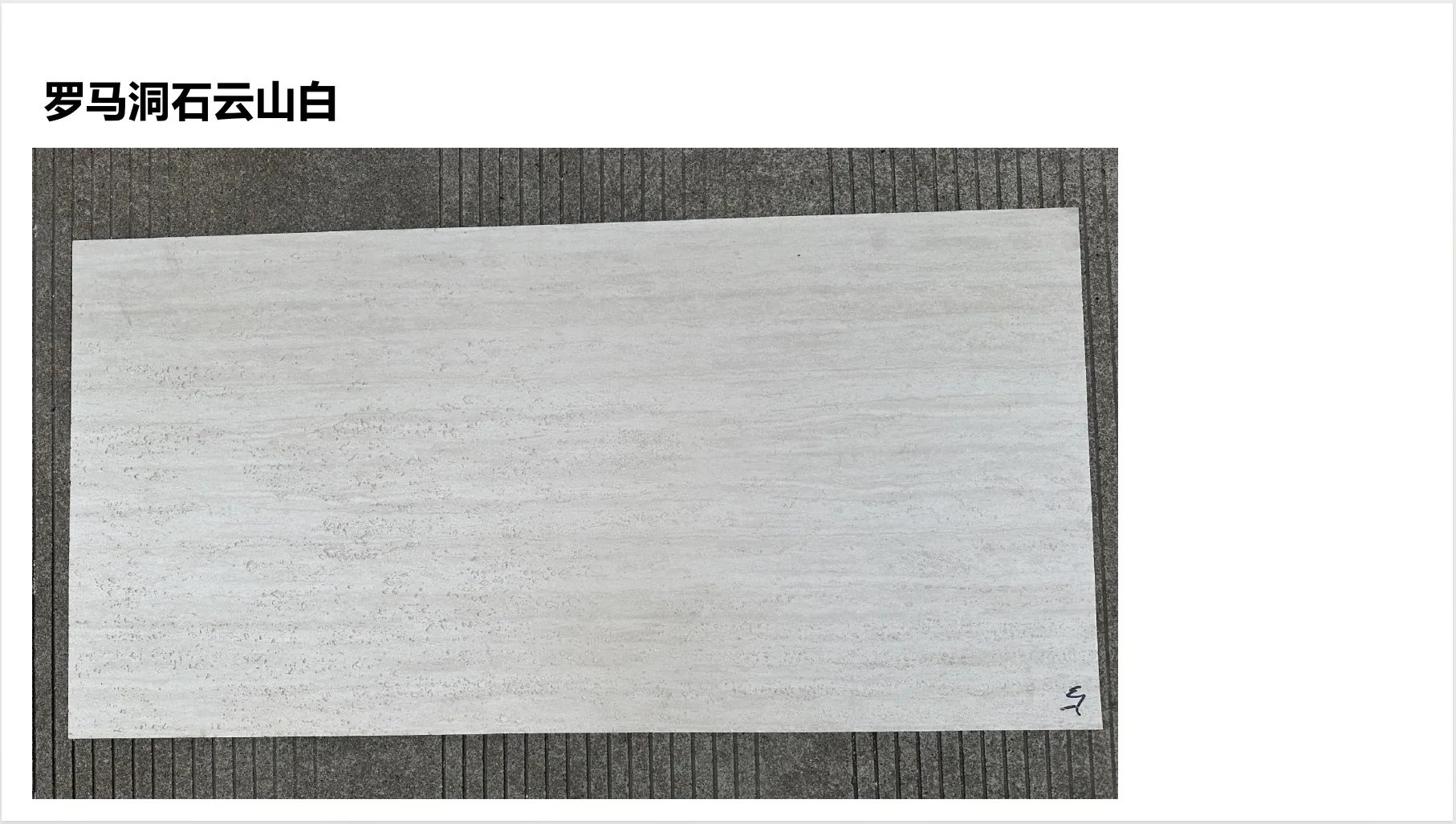
MCM thrives on texture. From the rough-hewn charm of rock cut stone (dark grey) to the delicate striations of linear travertine (claybank), these surfaces tell a story of craftsmanship. But texture is also the easiest thing to lose in a low-res photo. Imagine trying to assess the grip of a hiking boot from a blurry image—that's what designers face when evaluating MCM with pixelated photos. A high-resolution image, however, lets you zoom in to see the individual grains of sand in gobi panel, the weave pattern in bamboo mat board, or the precise spacing of threads in woven real photos. For example, Romanite real photos (large size) reveal how its "weathered" texture isn't just a uniform pattern but a random, organic mix of indentations and rises—exactly the kind of detail that makes a facade feel authentic, not manufactured.
Color is tricky. Lighting, screen calibration, and even time of day can warp how we perceive hues, but low-quality photos exaggerate these issues. A photo taken with poor lighting might make lunar peak golden look neon instead of warm, or turn travertine (starry red) into a flat, lifeless pink. High-resolution images, shot under controlled, natural lighting, preserve the subtleties: the way rusty red leans more terracotta in shadow, or how the silver in foamed aluminium alloy board (vintage silver) has a soft, matte finish rather than a harsh metallic sheen. This accuracy is critical when pairing materials—imagine designing a space where lunar peak silvery is meant to complement travertine (starry blue), only to find the silvery reads as "grey" and the blue as "purple" in real life. High-res photos eliminate that guesswork.
One of the most overlooked challenges in MCM selection is scale. A small thumbnail might make a boulder slab look sleek and manageable, but in reality, its large, bold pattern could overwhelm a cozy café. High-resolution, large-size photos solve this by showing the material in real-world contexts: a full wall of big slab board series, a close-up of how thread interacts with linear travertine (claybank) at eye level, or the way a 3D printing series panel wraps around a corner. This context is invaluable. For instance, wood grain board might look "too busy" in a small photo, but a large, high-res image reveals that its grain is actually subtle enough to create a calming backdrop in a hotel lobby. Scale isn't just about size—it's about understanding how the material relates to human movement, furniture, and light.
Great design isn't just about selecting materials—it's about imagining possibilities. A low-res photo of travertine (starry orange) might look like a generic "speckled stone," but a high-res, large-size image reveals how those "stars" are tiny, iridescent flecks that catch light like a summer sunset. Suddenly, a designer might pivot from a neutral palette to using that orange as an accent wall, transforming a space from ordinary to unforgettable. Romanite real photos (large size) do this by inviting exploration: zoom in, pan across, and let the texture spark ideas. Maybe that rough, pitted surface would pair beautifully with smooth marble veil white; maybe the color gradient in gradient color rammed earth board could echo the sunset views of a coastal project. High-res photos don't just show the material—they inspire how to use it.
To understand the value of high-res photos, let's look at what happens when they're missing. Low-quality images lead to three common, costly mistakes:
These aren't hypothetical scenarios. In a survey of architects by the International MCM Association, 68% reported having to adjust designs due to material discrepancies, with 42% citing "inaccurate photos" as the primary cause. High-resolution, large-size real photos don't just prevent these mistakes—they turn uncertainty into confidence.
| Factor | Low-Resolution Photos | High-Resolution, Large-Size Real Photos |
|---|---|---|
| Texture Representation | Flattened, pixelated; loses detail in grain, ridges, or pores (e.g., wood grain board appears as a uniform pattern). | Sharp, 3D-like; captures every ridge of wave panel, every knot in sawing wood board, and the depth of travertine (starry blue) "stars." |
| Color Accuracy | Washed out or oversaturated; lunar peak golden may look yellow, rusty red may read as orange. | True-to-life; preserves undertones (e.g., the "warm gold" in foamed aluminium alloy board (vintage gold) vs. the "cool gold" in foamed aluminium alloy board (gold)). |
| Scale Perception | Hard to gauge size; boulder slab may look small in a thumbnail, hiding its bold, oversized pattern. | Shows material in context (e.g., a full wall of MCM flexible stone, demonstrating how it interacts with windows, doors, and human scale). |
| Design Utility | Limits creativity; designers hesitate to experiment with textures like mosaic travertine or 3D art concrete board. | Inspires innovation; reveals how materials like starmoon stone or relic rammed earth board can become focal points. |
In 2023, a design firm was tasked with revamping a historic boutique hotel in Barcelona, aiming to blend modern luxury with the building's Gothic Revival architecture. The team envisioned a facade that felt both timeless and contemporary, settling on Romanite as the primary material. However, initial low-res photos of Romanite left them uncertain: Was the texture too rough for the delicate stone carvings nearby? Would the color—described as "warm grey"—clash with the building's terracotta roof?
The turning point came when the manufacturer shared high-resolution, large-size real photos of Romanite panels installed on a similar historic building. Zooming in, the designers saw that the "rough" texture was actually a soft, weathered finish that complemented the aged stone, not competed with it. The "warm grey" had subtle brown undertones that echoed the roof's terracotta. Even better, the large-size images showed how the panels' scale (part of the big slab board series) created a sense of grandeur without overwhelming the building's intricate details.
The result? A facade that felt like a natural evolution of the hotel's history, with Romanite panels that looked exactly as the photos promised. "Those high-res images didn't just confirm our choice—they helped us fall in love with it," said the lead architect. "We could see how the light hit the texture at different times of day, how the color shifted, and how it would make guests feel when they approached the entrance. That's the power of seeing the material, not just a picture of it."
Not all "high-res" photos are created equal. To ensure you're getting the detail you need, keep an eye out for these signs:
In a world where design decisions are made on screens, high-resolution, large-size real photos are the bridge between imagination and reality. For materials as dynamic as Romanite, MCM flexible stone, or wood grain board, they're not just tools—they're partners in the creative process. They ensure that the travertine (starry blue) you fell in love with online is the same one that greets guests in your lobby, that the lunar peak silvery panel wraps around your curve as smoothly as you envisioned, and that every texture, color, and scale choice feels intentional.
So the next time you're scrolling through MCM options, remember: a photo isn't just a photo. It's a promise. And with high-resolution, large-size real photos, that promise is one you can count on—one that turns good designs into unforgettable spaces.
Recommend Products












