
In the sprawling concrete and glass jungles that we call modern cities, the exterior of a high-rise building is far more than just a structural necessity. It's the building's identity, its handshake with the skyline, and its first impression upon every passerby. For decades, architects and developers have grappled with the challenge of cladding these colossal structures. The goal has always been to find a material that is not only beautiful and expressive but also durable, safe, and practical to install stories above the ground. The era of monotonous, purely functional facades is fading, giving way to a demand for texture, character, and sustainable performance. This is the new frontier of urban architecture, a space where innovation in building materials is not just welcome, but essential.
Stepping boldly into this arena is COLORIA GROUP, a company that has redefined itself as a visionary one-stop solution provider for the architectural materials industry. With a global footprint and decades of honed expertise, COLORIA GROUP doesn't just sell products; they deliver integrated systems that empower creative design. Today, we're taking a deep dive into one of their most transformative offerings: the Boulder Slab in Vintage Silver. This isn't just another cladding panel. It is a testament to how advanced material science can merge the timeless appeal of natural stone with the performance requirements of tomorrow's most ambitious high-rise projects. Let's explore how this specific product is changing the face of urban design.
Think about the most iconic skyscrapers you know. What makes them memorable? It's almost always their skin. The Chrysler Building's shimmering Art Deco crown, the sleek dark glass of the John Hancock Center, the intricate patterns of the Burj Khalifa—their facades tell a story. The evolution of high-rise design has been a relentless pursuit of pushing boundaries, both in height and in aesthetic expression. Initially, the focus was purely on function, with concrete and steel forming stark, utilitarian towers. But as cities grew more crowded and skylines more competitive, the building's exterior became a crucial differentiator, a branding tool, and a piece of public art.
However, this creative ambition has always been tethered to the limitations of traditional materials. Natural stone, like granite or marble, offers unparalleled beauty and a sense of permanence. But imagine the logistical nightmare: quarrying massive, multi-ton blocks, transporting them across continents, and then lifting them hundreds of feet into the air to be painstakingly fixed onto a structure. The weight alone adds immense stress to the building's foundation and frame, not to mention the significant safety risks during and after installation. Metal panels, another popular choice, can offer a sleek, modern look, but they can sometimes feel cold, overly industrial, and are susceptible to denting and warping. And what about simple paint or stucco? While economical upfront, they demand constant maintenance, succumbing to fading, staining, and cracking under the relentless assault of sun, rain, and pollution.
This is precisely why the architectural world has been searching for a "holy grail" material—one that combines the best qualities of its predecessors while shedding their weaknesses. The ideal modern facade material needs to be:
The ability to play with scale, texture, and color on a massive canvas like a skyscraper's exterior is what separates a good building from a great one. It's about creating visual rhythm, managing light and shadow, and giving the building a tactile quality that invites a closer look, even from a distance. This is the context in which a new generation of materials, pioneered by companies like COLORIA GROUP, is making its mark.
To understand the innovation behind the Boulder Slab, you first have to understand the philosophy of COLORIA GROUP. This is not a company that simply manufactures and ships a product. With a legacy built on decades of industry experience, they have evolved into a comprehensive solution provider, a partner for architects, designers, and developers who are looking to push the envelope. Their positioning as a "one-stop solution" means they are involved in the entire process, from conceptualization and material selection to ensuring the final installation meets the highest standards of quality and performance.
Their global perspective is a critical part of their identity. Having an established presence in demanding markets like Saudi Arabia, where buildings must endure extreme heat, sandstorms, and intense solar radiation, speaks volumes about the resilience of their products. This real-world testing in diverse and challenging climates ensures that their materials are not just theoretically sound, but proven to perform under the toughest conditions. This experience informs their continuous research and development, fueling a cycle of innovation that keeps them at the forefront of the industry.
At the heart of COLORIA GROUP's brand are two unshakable pillars: innovation and sustainability. They recognize that the future of construction is not about doing things the old way, but about finding smarter, more efficient, and more responsible methods. This commitment led them to champion their flagship technology: MCM, or Modified Cementitious Material. MCM is the core technology that underpins their most revolutionary product lines, representing a paradigm shift in how we think about building surfaces. It's the engine of their innovation, allowing them to create materials that are simultaneously beautiful, strong, lightweight, and eco-conscious.
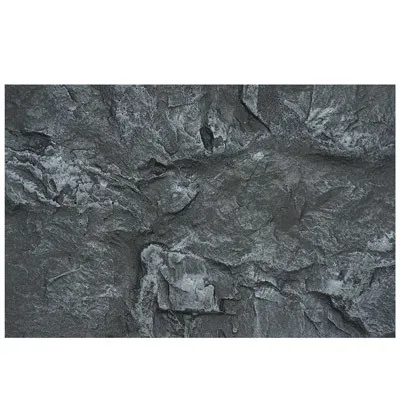
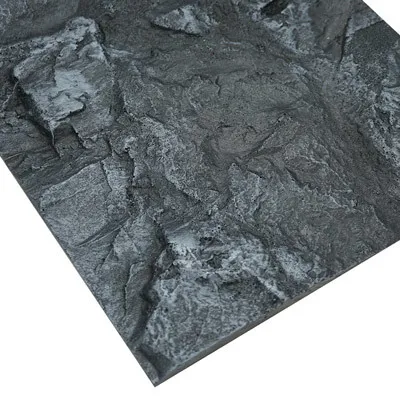
Now, let's zoom in on the specific product that perfectly encapsulates this philosophy: the Boulder Slab in Vintage Silver. As a premier offering from the **MCM Big Slab Board Series**, this material is engineered for large-scale applications, making it an ideal candidate for high-rise exteriors. But to simply call it a "panel" would be a disservice. It's a piece of engineered artistry.
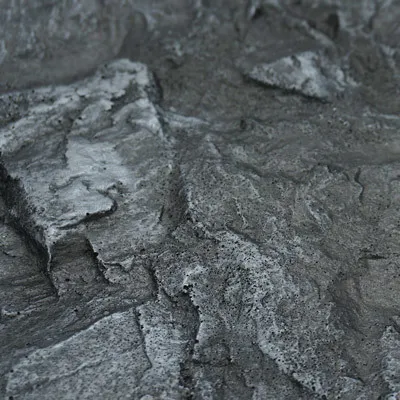
Imagine the face of a raw, majestic boulder, weathered over millennia by wind and water. Now, infuse that rugged, natural texture with a subtle, sophisticated metallic sheen—the "Vintage Silver." It's not a flat, uniform gray. It's a dynamic surface with depth and complexity. In the soft light of dawn, it might appear muted and gentle. Under the harsh midday sun, its metallic elements can catch the light, creating a lively shimmer that travels across the building's face. In the evening, it takes on a deeper, more dramatic character. This is the aesthetic power of the Boulder Slab: it interacts with its environment, giving the building a life and a personality that changes throughout the day.
The magic lies in the material itself. MCM (Modified Cementitious Material) is a high-tech composite. In simple terms, COLORIA GROUP takes natural raw ingredients—like common soil, mineral powders, and sand—and, through a proprietary process of modification and low-temperature curing, transforms them into a new kind of material. It's not a ceramic, which requires intense heat. It's not a plastic, which is petroleum-based. It's an innovative hybrid that harnesses the strengths of its natural origins while engineering out the weaknesses. This process allows them to precisely control the texture, color, and physical properties of the final product, creating the authentic look of the Boulder Slab without ever having to quarry a mountain.
For an architect designing a 40-story tower, the advantages of using the MCM Boulder Slab are profound and multifaceted.
While the Boulder Slab in Vintage Silver is a stunning example of what's possible, its true power is amplified when viewed as part of the broader COLORIA GROUP ecosystem. A one-stop solution provider understands that a single building often requires a variety of material solutions to address different design challenges. The beauty of their product range is its interconnectedness and versatility.
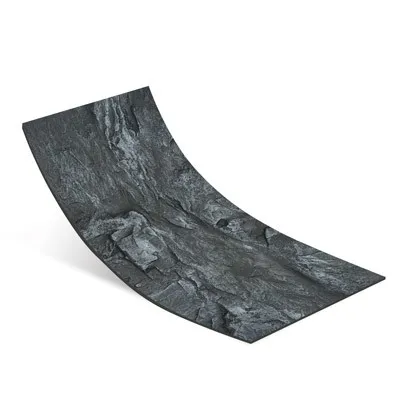
For instance, a high-rise project might feature the grand, monolithic Boulder Slabs on its main tower faces. But what about the curved podium levels, intricate window details, or the interior lobby walls? This is where other products from the MCM family come into play. The **MCM Flexible Stone** series is a perfect complement. As the name suggests, this material is even thinner and more pliable. It can be wrapped around columns, conformed to sweeping curves, and applied to complex geometries where a rigid board would be impossible to use. An architect could use the Boulder Slab for the main structure and then transition seamlessly to a matching or contrasting MCM Flexible Stone for detailed work, ensuring a consistent material language throughout the project.
The ecosystem extends even further. The MCM 3D Printing Series opens up a world of bespoke ornamentation, allowing for the creation of unique, three-dimensional patterns, logos, or artistic motifs that can be integrated directly into the facade. The MCM Project Board Series offers a range of economical and practical solutions tailored for large-scale developments where budget and performance are equally critical. This holistic approach means that designers are not locked into a single product. They can mix and match from a full suite of compatible materials, all stemming from the same core MCM technology, to achieve a rich, layered, and highly sophisticated architectural outcome. This is what it means to be a true partner in design, providing a toolbox, not just a single tool.
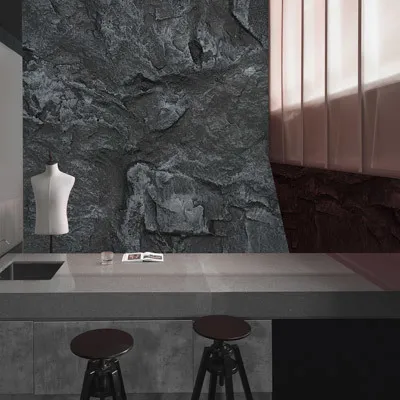
In today's world, a conversation about building materials is incomplete without a serious discussion of sustainability. The construction industry is a massive consumer of energy and resources, and there is a growing, urgent demand for greener alternatives. This is an area where COLORIA GROUP's MCM technology truly shines, positioning their products as leading **eco-friendly building materials**.
The environmental benefits begin at the source. The primary raw materials are natural and abundant—soil and mineral powders. This drastically reduces the need for destructive and energy-intensive quarrying of natural stone, which scars landscapes and destroys habitats. The production process itself is a major leap forward. Unlike traditional ceramics or bricks that must be fired in kilns at temperatures exceeding 1200°C, COLORIA's MCM products are cured at a low temperature (around 100-120°C). This simple difference results in a massive reduction in energy consumption and carbon emissions—by some estimates, over 80% less than traditional fired materials.
A brilliant material is only as good as its real-world applicability. The most beautiful facade is useless if it's prohibitively difficult, expensive, or dangerous to install. This is another area where the MCM Boulder Slab offers a clear advantage over traditional cladding, translating directly into time and cost savings on site.
The installation process is refreshingly simple. Instead of heavy-duty mechanical fixings, cranes, and large installation crews, MCM panels are typically applied using a specialized adhesive bonding system. The panels are light enough for two workers to handle easily, even at height. They can be cut and shaped on-site with basic tools to fit perfectly around windows and corners. This streamlined process means that facade installation can be completed much faster than with traditional stone or precast concrete, accelerating the overall construction timeline and reducing labor costs. The inherent safety of handling lightweight panels also minimizes risks on the job site, a major concern in high-rise construction.
To put these differences into perspective, let's compare the MCM Boulder Slab directly with traditional natural stone cladding in a high-rise context.
| Feature | COLORIA MCM Boulder Slab (Vintage Silver) | Traditional Natural Stone Slab |
|---|---|---|
| Weight per m² | Approximately 6-8 kg | Approximately 80-120 kg |
| Typical Thickness | 5-10 mm | 30-50 mm or more |
| Installation Method | Adhesive bonding; lightweight and fast | Mechanical fixing with anchors; heavy, complex, and slow |
| Structural Load Impact | Minimal; allows for lighter building frame | Significant; requires reinforced structure and foundation |
| Handling & Safety | Easy for 1-2 workers; low fall risk | Requires heavy machinery; high risk of accidents |
| Design Flexibility | Can conform to slight curves; easily cut on-site | Completely rigid; cutting is difficult and wasteful |
| Environmental Impact | Low-energy production, use of recycled/abundant materials | High-energy quarrying, transport, and processing |
| Maintenance | Excellent UV and stain resistance; self-cleaning properties | Prone to staining and requires periodic sealing |
The high-rise is the signature architectural form of our age, and its exterior is the most visible expression of our design ambitions. COLORIA GROUP's Boulder Slab in Vintage Silver, powered by their revolutionary MCM technology, is more than just an attractive finishing material. It is a comprehensive solution that addresses the core challenges of modern facade design. It delivers the aesthetic depth and gravitas of natural stone without the immense weight, cost, and environmental toll. It offers unparalleled performance and durability, ensuring that today's landmarks will retain their beauty for generations to come.
By choosing materials like this, architects and developers are making a statement. It's a statement of commitment to quality, to innovation, and to a more sustainable future for our cities. As we continue to build higher and dream bigger, the materials we choose will define the legacy we leave on the skyline. With its complete ecosystem of advanced architectural solutions, COLORIA GROUP is not just part of this future—they are actively helping to build it, one stunning facade at a time.
Recommend Products












