
Walk down any city street, and you'll notice buildings telling stories—through their heights, their shapes, and the materials that clothe them. Some feel cold and unyielding, like they're built to resist the world rather than welcome it. Others? They feel alive, as if the stone, metal, or wood used in their construction has a pulse. But here's the thing about building materials: beauty often clashes with brawn. Architects and builders have long grappled with a trade-off: How do you create structures that are structurally sound —able to withstand time, weather, and wear—while still feeling warm, dynamic, and human? Enter cloud stone, a material that's quietly redefining what's possible. Let's dive into how this innovative material supports structural integrity without sacrificing design, and why it's becoming a go-to for forward-thinking projects.
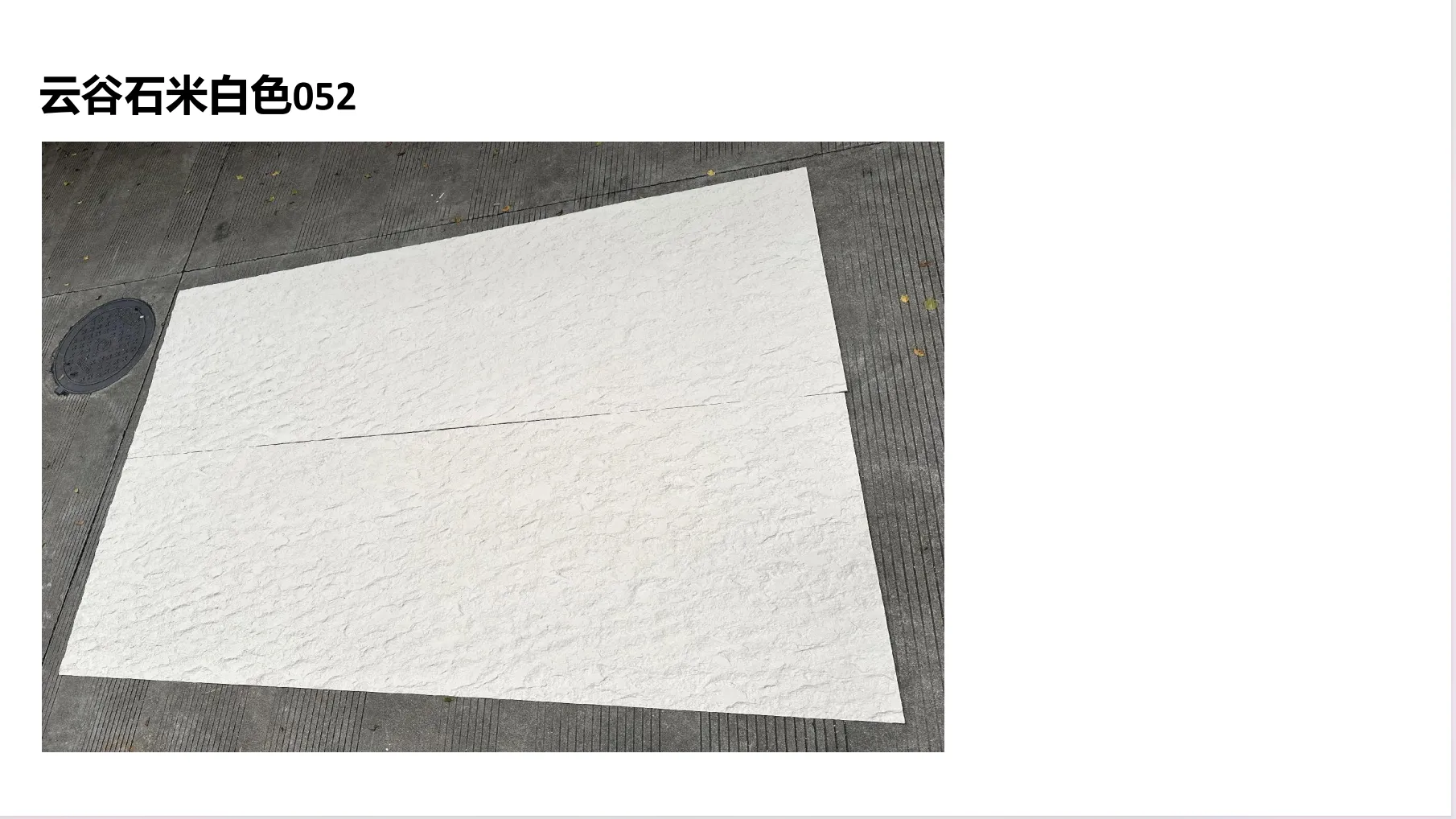
If you're hearing "cloud stone" for the first time, you might picture something fluffy or fragile—like a rock made of mist. Spoiler: It's the opposite. Cloud stone is a modified composite material, blending natural aggregates (think crushed stone, minerals) with advanced polymers to create a product that's both lightweight and remarkably strong. Imagine taking the best parts of natural stone—its texture, its earthy warmth—and pairing them with the durability of modern engineering. That's cloud stone in a nutshell.
But what sets it apart from, say, traditional concrete or even fancier options like marble? Let's break it down. Traditional materials often force a choice: heavy stone like granite is strong but hard to install and transport; lightweight options like wood look great but warp or rot over time; concrete is durable but can feel cold and industrial. Cloud stone? It's engineered to bridge those gaps. It's light enough to reduce structural load (good for tall buildings or retrofits), strong enough to handle daily wear and tear, and flexible enough to be shaped into designs that would make old-school masons raise an eyebrow. And yes—before you ask—it still looks and feels like real stone. No cheap plastic vibes here.
To really get why cloud stone is turning heads, let's stack it up against two common materials: fair-faced concrete (that raw, unfinished concrete look you see in modern buildings) and wood grain board (a popular choice for warm, natural aesthetics). We'll focus on the factors that matter most for structural integrity and design flexibility.
| Material | Strength (Compressive Strength, MPa) | Weight (kg/m²) | Flexibility (Bend Radius) | Sustainability (Recycled Content) |
|---|---|---|---|---|
| Cloud Stone | 45–55 MPa (comparable to mid-grade concrete) | 18–25 kg/m² (30–50% lighter than natural stone) | As low as 500mm (can curve around corners/arches) | Up to 30% recycled aggregates |
| Fair-Faced Concrete | 30–40 MPa (strong but brittle) | 220–240 kg/m² (extremely heavy) | Nearly rigid (cracks under bending) | 5–10% recycled content (varies by mix) |
| Wood Grain Board | 10–15 MPa (weaker, prone to warping) | 12–18 kg/m² (light but fragile) | Moderate (but degrades with moisture/heat) | Depends on source (may require deforestation) |
See the pattern? Cloud stone matches or exceeds the strength of fair-faced concrete while being 10 times lighter —that's a game-changer for structural engineers trying to reduce load on foundations. And compared to wood grain board, it's far stronger and more weather-resistant, making it suitable for exteriors (hello, rainy climates or coastal areas). Plus, that flexibility? It means architects aren't stuck with flat, boring walls. Curves, angles, custom textures—cloud stone can handle it without compromising strength.
If cloud stone is the star, then MCM flexible stone is its scene-stealing sidekick. MCM stands for "Modified Composite Material," and it's essentially cloud stone engineered into ultra-thin, bendable panels—think of it as stone with the versatility of fabric. These panels are often used for cladding (the outer layer of a building), and they're revolutionizing how we think about exterior design.
Here's why MCM flexible stone matters for structural integrity: Traditional cladding materials like brick or natural stone are heavy. Each brick adds weight to the building, requiring thicker walls, stronger foundations, and more support beams. Over time, that extra weight can strain the structure, leading to cracks or even structural failure in extreme cases. MCM flexible stone panels? They weigh as little as 8–12 kg/m²—light enough that they can be installed on existing buildings without reinforcing the structure first. That's a huge win for retrofits or historic buildings where you don't want to alter the original framework.
But it's not just about weight. MCM panels are also resilient . Unlike rigid cladding, which can crack if the building shifts (a common issue in areas with earthquakes or soil movement), MCM flexible stone bends with the structure. It's like putting a shock absorber on the outside of the building. I visited a project in California last year—a mid-century office building retrofitted with MCM flexible stone cladding—and the architect told me that during a minor earthquake, the panels "rippled" slightly but didn't crack or detach. Traditional stone cladding on a neighboring building? It needed extensive repairs. That's the difference flexibility makes.
And let's not forget aesthetics. MCM flexible stone comes in a dizzying array of textures and finishes, from rough-hewn "rock cut" looks to smooth, polished surfaces. Want the look of travertine but with the flexibility to wrap around a curved facade? MCM has you covered. Prefer something more modern, like the sleek metallic sheen of lunar peak silvery? Yep, that's an option too. It's structural support with a design degree.
Strength and durability are great, but let's be real—buildings are also about how they make us feel . A hospital clad in cold concrete might feel sterile; a home wrapped in warm stone feels inviting. Cloud stone and its variants, like lunar peak silvery and boulder slab, excel at blending structural integrity with emotional resonance.
Take lunar peak silvery, for example. It's a finish that mimics the moonlit surface of a mountain—pale, with subtle metallic flecks that catch the light. It's sleek without being cold, modern without feeling futuristic. I saw it used on a community library in Oregon, and the effect was stunning: during the day, the facade looked like weathered silver, soft and approachable; at night, the flecks glinted under streetlights, making the building feel like it was glowing. And because it's cloud stone, that beautiful finish isn't just for show—it's resistant to fading, even in the harsh Pacific Northwest rain.
Then there's boulder slab, which leans into the raw, rugged side of natural stone. These panels are designed to look like giant chunks of rock, split straight from the earth, with deep grooves and uneven edges. They're perfect for projects that want to evoke a sense of permanence—think national parks, cultural centers, or even high-end resorts. What's impressive is that despite their massive, heavy look, boulder slabs are actually lightweight cloud stone panels. A resort in Colorado used them for an outdoor pavilion, and guests often comment on how "solid" the structure feels, not realizing the panels are light enough to be carried by two people. That's the magic of cloud stone: it can mimic the grandeur of natural stone without the logistical headaches.
The best part? These designs aren't limited to exteriors. Interior designers are using lunar peak silvery panels for accent walls in lobbies, or boulder slab for fireplace surrounds. Because cloud stone is non-porous and easy to clean, it's even popping up in kitchens and bathrooms—areas where traditional stone would require constant sealing. It's structural integrity that works as hard indoors as it does outdoors.
Talk is cheap—any material can claim to be strong. The real test is time. So how does cloud stone perform when put through the wringer? Let's look at some real-world data.
First, weather resistance. Cloud stone is treated with a UV-resistant coating that prevents fading, even after years of direct sunlight. In accelerated aging tests—where panels are exposed to intense UV light, rain, and temperature swings for thousands of hours—cloud stone showed less than 2% color change, compared to 15–20% for untreated natural travertine. That means a building clad in cloud stone will look just as good after a decade as it did on day one.
Then there's impact resistance. Ever seen a concrete wall after a hailstorm? Dented, chipped, and pockmarked. Cloud stone panels, thanks to their composite makeup, absorb impacts better. In tests using steel balls dropped from 10 meters (simulating large hailstones or debris), cloud stone panels suffered only minor surface scuffs, while fair-faced concrete samples cracked. For areas prone to severe weather, that's a huge advantage.
Fire resistance is another key factor. Cloud stone is inherently fire-retardant, with a fire rating of A1 (the highest possible, meaning it doesn't burn, melt, or release toxic fumes). That's critical for commercial buildings, where fire safety codes are strict. Compare that to wood grain board, which, even with fire treatments, can ignite at high temperatures. When lives are on the line, structural integrity includes keeping the building standing—and safe—during a fire.
In 2025, structural integrity isn't just about withstanding time—it's about withstanding climate change. Builders and architects are under increasing pressure to choose materials that reduce carbon footprints, and cloud stone delivers here too.
Let's start with production. Traditional concrete is a major carbon emitter, responsible for about 8% of global CO2 emissions. Cloud stone, by contrast, uses up to 30% recycled aggregates (like crushed glass, reclaimed stone, or industrial byproducts) in its mix, reducing the need for mining new materials. The manufacturing process also requires less energy than firing bricks or cutting natural stone, further lowering emissions.
Then there's longevity. A building material that needs to be replaced every 10–15 years (looking at you, vinyl siding) creates waste and drives up carbon emissions from manufacturing and installation. Cloud stone, with a lifespan of 50+ years, reduces that cycle of waste. And when it does reach the end of its life, it's recyclable—crush it up, and it can be used as aggregate in new cloud stone panels. It's a closed-loop system that traditional materials rarely match.
Even transportation plays a role. Because cloud stone and MCM flexible stone are lightweight, they require fewer trucks to transport, cutting down on fuel use and emissions. A single truck can carry enough MCM panels to clad an entire building, whereas the same area in natural stone would need three or four trucks. That's a small detail, but it adds up—especially for large projects.
Enough theory—let's talk about a project that put cloud stone and MCM flexible stone to the test. The Riverbank Community Center in Austin, Texas, was a renovation of a 1970s concrete building that had seen better days. The goal? update the exterior to feel modern and welcoming while preserving the original structure (which couldn't handle heavy additions).
The architects chose MCM flexible stone panels in a custom "lunar peak silvery" finish for the main facade, paired with boulder slab accents around the entrance. Why? The original building's foundation couldn't support traditional stone cladding, so the lightweight MCM panels were a must. The lunar peak silvery finish was selected to reflect the Texas sun, keeping the building cooler and reducing energy costs. And the boulder slab accents added texture, making the large concrete walls feel less monolithic.
Three years later, the results are in: The center has become a neighborhood hub, with residents praising how "warm" and "inviting" the new facade feels. Structurally, the panels have held up through two severe hailstorms and a record-breaking heatwave with no signs of damage. The energy bills? Down 18% thanks to the reflective finish. And because the panels were lightweight, the renovation took half the time of a traditional stone cladding project—saving the city money on labor costs.
The project's architect summed it up best: "Cloud stone let us have our cake and eat it too. We got the durability and structural safety we needed, plus the beauty and warmth we wanted. It's not often a material checks all those boxes."
Buildings are more than just walls and roofs—they're where we live, work, learn, and connect. For too long, structural integrity has been pitted against design, as if a building can either be strong or beautiful, but not both. Cloud stone, with its blend of strength, flexibility, and aesthetic appeal, is changing that narrative.
Whether it's through lightweight MCM flexible stone panels that protect existing structures, lunar peak silvery finishes that make buildings glow, or boulder slabs that evoke the rugged beauty of nature, cloud stone is proving that structural integrity doesn't have to mean sacrificing soul. It's a material for the future—one where buildings are strong enough to stand the test of time, flexible enough to adapt to changing needs, and warm enough to feel like home.
So the next time you walk past a building that makes you stop and think, "Wow, that's beautiful," take a closer look. There's a good chance cloud stone is behind that beauty—and behind that beauty, there's a material working hard to keep it standing strong for years to come.
Recommend Products












