
Walk down any cobblestone street in a historic district, and you'll likely feel it—the weight of time in the weathered bricks, the stories in the creaking floorboards, the quiet pride of buildings that have stood for centuries. These structures aren't just walls and roofs; they're living testaments to our past, holding the memories of generations. But as the world around them evolves, so too must they. The challenge? Renovating these landmarks to meet modern needs without erasing their soul. It's a delicate dance between preservation and progress, and at the heart of it all lies one crucial element: materials.
Too often, historic renovations fall into one of two traps: either they cling so tightly to tradition that the building becomes a museum piece, unfit for contemporary life, or they prioritize modernity to the point where the original character is lost—think sleek glass additions that clash with 19th-century stonework. The solution? Materials that speak both languages. Materials that honor the past while embracing the future. Enter Cloud Stone, a material that's quietly revolutionizing how we approach historic renovation. Paired with companions like mcm flexible stone, fair-faced concrete, travertine (starry green), and rammed earth board, it's helping architects and preservationists write a new chapter in the story of old buildings.
To understand why materials matter, let's first unpack the tension at the core of historic renovation. Take, for example, a 18th-century townhouse in Prague. Its thick stone walls, arched doorways, and hand-carved wooden beams are irreplaceable. But its original single-pane windows let in drafts, its plumbing dates back to the 1950s, and its layout—designed for a family with servants—feels cramped for a modern household. The goal isn't just to fix what's broken; it's to make the building functional again while respecting its history.
Historians and architects often refer to this as "adaptive reuse," but the term barely scratches the surface of the emotional stakes. "When you work on a building that's been around for 200 years, you're not just a contractor—you're a custodian," says Elena Kovac, an architect specializing in historic preservation in Vienna. "Every decision feels like a conversation with the past. Choose the wrong material, and you're not just changing the look; you're altering the building's ability to tell its own story."
Traditional materials—think solid stone, hand-hewn timber, lime mortar—have stood the test of time, but they come with trade-offs. Stone is heavy, making it hard to install in aging structures with fragile foundations. Timber, while beautiful, is prone to rot and insect damage. Modern materials, on the other hand, offer durability and flexibility, but many feel cold or out of place. Vinyl siding on a Victorian home? It's practical, but it looks like a costume. Stainless steel beams in a Gothic cathedral? They clash with the building's organic, handcrafted essence.
This is where materials like Cloud Stone shine. They're not just "modern" or "traditional"—they're chameleons, able to adapt to the context around them. Let's dive into what makes them so special.
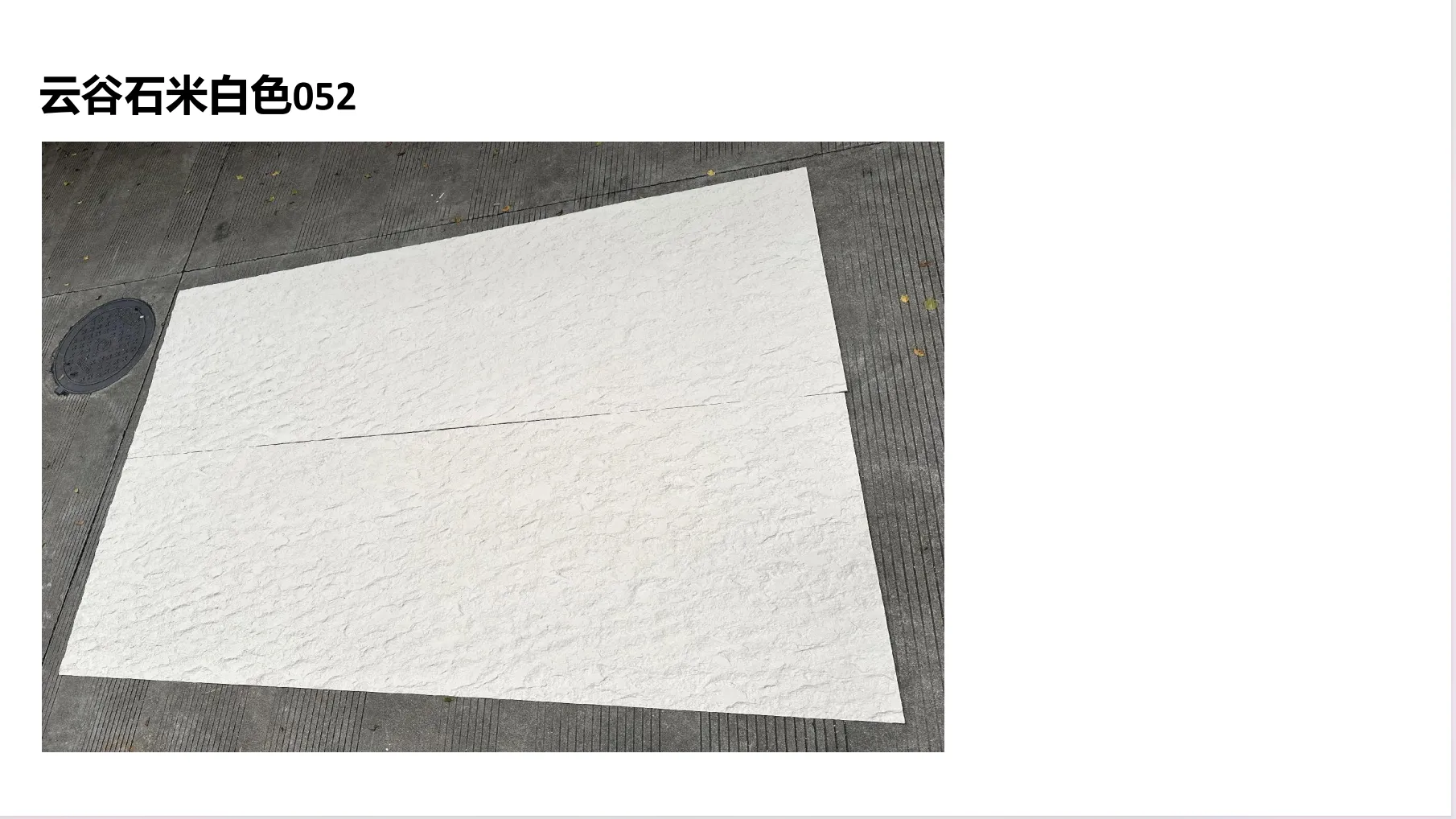
Cloud Stone isn't a single material, but a category of engineered stone that marries the best of natural beauty and modern technology. Imagine a stone that retains the depth and texture of centuries-old rock but is lightweight enough to be installed without reinforcing crumbling walls. A stone that can mimic the look of weathered limestone or the sheen of polished marble, depending on the project. That's Cloud Stone in a nutshell.
Developed in the early 2000s, Cloud Stone is made by blending natural stone aggregates with polymers and resins, creating a material that's both flexible and incredibly strong. "It's like taking the soul of natural stone and giving it a modern backbone," explains Marco Rossi, a materials scientist who works with historic renovation firms in Milan. "Traditional stone is rigid—if a building shifts (and old buildings always shift), the stone cracks. Cloud Stone flexes with the movement, preventing damage. And because it's made in panels, it's easier to install than quarried stone, which means less stress on the original structure."
One of the most striking things about Cloud Stone is its versatility. In the renovation of a 17th-century monastery in Tuscany, architects used Cloud Stone to replicate the look of the original travertine cladding, which had eroded over time. The new panels were so convincing that visitors often can't tell the difference between the 400-year-old stone and the modern replacement. "We wanted the monastery to feel like it had always been this way," says Rossi. "Cloud Stone let us do that without sacrificing durability. The panels are resistant to moisture, which is crucial in a region with heavy rains, and they require almost no maintenance—unlike the original stone, which needed regular sealing."
But Cloud Stone isn't just about replication. It can also add subtle modern touches that complement, rather than compete with, historic architecture. Take the renovation of a 1920s bank in Chicago, where the lobby's original marble floors were preserved, but the walls were clad in Cloud Stone with a matte finish. The soft, diffused light bouncing off the stone creates a warm, inviting atmosphere—perfect for the bank's new life as a community center—while still honoring the building's grandeur.
Cloud Stone rarely works alone. To truly blend old and new, it needs collaborators—materials that bring different strengths to the table. Let's meet the team:
If Cloud Stone is the bridge, mcm flexible stone is the bridge's foundation. Short for "modified composite material," mcm flexible stone is exactly what it sounds like: a thin, flexible panel that can mimic the look of stone, wood, or even brick. What makes it indispensable for historic renovation? Its ability to conform to uneven surfaces.
Older buildings are rarely straight. Walls bow, floors slope, corners aren't square. Traditional rigid materials like tile or stone can't handle these irregularities, leading to gaps, cracks, or uneven installations. mcm flexible stone, however, bends and adapts. "We used it on a 18th-century cottage in the English countryside where the walls were so wavy, we joked they looked like they'd been built by a very creative child," says Emma Clarke, a contractor who specializes in heritage projects. "mcm flexible stone hugged those curves like a second skin. We chose a finish that looked like aged oak, and now the cottage feels cozy and modern, but still like it belongs in the village."
Another perk? Weight. Historic buildings often have load-bearing limits, especially in upper floors or attic spaces. mcm flexible stone panels weigh a fraction of traditional stone, making them ideal for areas where adding heavy materials could compromise structural integrity. In a recent renovation of a 19th-century schoolhouse in Boston, for example, mcm flexible stone was used to clad the ceiling of the auditorium, creating the illusion of exposed beamwork without the weight of real wood.
Concrete might not sound like a natural fit for historic renovation, but fair-faced concrete—concrete that's left exposed, without paint or cladding—has become a secret weapon for architects looking to add modern elements. Unlike the cold, industrial concrete of parking garages, fair-faced concrete has a raw, tactile quality that can complement the weathered textures of old buildings.
In the renovation of a 19th-century factory in Berlin, which was converted into loft apartments, architects paired fair-faced concrete floors with original brick walls and Cloud Stone countertops. The result? A space that feels both industrial-chic and rooted in history. "Concrete has this honesty to it," says Klaus Mueller, the lead architect on the project. "It doesn't pretend to be something it's not, which is exactly what we wanted for a building that was once a working factory. The fair-faced finish lets the material's natural color and texture shine, and it pairs beautifully with the warmth of the brick and Cloud Stone."
Fair-faced concrete is also incredibly durable, making it ideal for high-traffic areas in historic buildings. In the lobby of a 1930s hotel in Paris, which now houses a boutique restaurant, the original terrazzo floors were preserved, but the bar was built using fair-faced concrete. The smooth, minimalist lines of the bar contrast with the hotel's ornate moldings, creating a dynamic tension that feels fresh yet respectful.
For projects that call for a touch of natural beauty, travertine (starry green) is a standout choice. This unique variety of travertine features subtle green hues and flecks of mineral deposits that sparkle like stars when hit by light—hence the name. It's a material that feels both ancient and alive, making it perfect for historic buildings that aim to connect with the natural world.
In the renovation of a 16th-century villa in the Italian Lakes region, travertine (starry green) was used to clad the outdoor terrace, which overlooks Lake Como. The stone's green tones echo the surrounding forests, while the "starry" flecks catch the sunlight, creating a magical effect at dawn and dusk. "The villa was built to harmonize with its landscape," says the villa's owner, who oversaw the renovation. "Travertine (starry green) didn't just fit that vision—it enhanced it. Guests often comment on how the terrace feels like an extension of the lake and mountains."
Indoors, travertine (starry green) adds warmth and texture. In a 19th-century townhouse in Edinburgh, the kitchen backsplash was tiled with travertine (starry green) panels, paired with Cloud Stone countertops and wooden cabinetry. The result is a space that feels both timeless and contemporary, where the natural stone serves as a focal point without overwhelming the room.
No discussion of historic renovation materials would be complete without rammed earth board, a modern take on an ancient building technique. Rammed earth—compacted soil mixed with clay and straw—has been used for thousands of years, from the Great Wall of China to Pueblo dwellings in the American Southwest. Rammed earth board takes that tradition and updates it, creating panels that are easier to install and more durable than traditional rammed earth.
In the renovation of a 18th-century adobe mission in New Mexico, rammed earth board was used to repair damaged walls, matching the color and texture of the original adobe. "Rammed earth has a soul that modern materials can't replicate," says Carlos Mendez, the preservationist who led the project. "It breathes, it regulates temperature, and it has a warmth that makes a building feel like home. The board version let us preserve that essence while ensuring the walls would stand for another 200 years."
Rammed earth board isn't just for adobe buildings, though. In the renovation of a Victorian cottage in England, architects used rammed earth board with a light, sandy color to clad the interior walls of the living room. The soft, earthy tone pairs beautifully with the cottage's original wooden beams, creating a cozy, rustic atmosphere that feels both traditional and current. "It's like bringing a piece of the countryside indoors," says Mendez. "People are drawn to that connection with nature, especially in historic spaces."
To better understand how these materials stack up against traditional options, let's take a closer look at their key properties:
| Material | Weight | Durability | Aesthetic Compatibility | Sustainability |
|---|---|---|---|---|
| Traditional Stone (e.g., Limestone) | Heavy (requires structural support) | High, but prone to erosion and cracking | Excellent for historic replication | High (natural, but quarrying can impact ecosystems) |
| Cloud Stone | Lightweight (50% lighter than natural stone) | Very high (resistant to moisture, cracking, and UV damage) | Excellent (can mimic natural stone or add modern touches) | High (uses recycled stone aggregates) |
| mcm flexible stone | Ultra-lightweight (panels weigh ~3kg/m²) | High (flexible, impact-resistant) | Excellent (adapts to uneven surfaces; mimics multiple textures) | High (low waste production; recyclable) |
| Fair-Faced Concrete | Moderate (heavier than Cloud Stone, lighter than traditional concrete) | Very high (resistant to wear, moisture, and fire) | Good (modern, but pairs well with rustic textures) | Moderate (can include recycled aggregates; high embodied carbon) |
| Travertine (Starry Green) | Moderate to heavy (depends on thickness) | Moderate (requires sealing; prone to staining) | Excellent (natural beauty; connects to historic landscapes) | High (natural stone; sustainable quarrying practices available) |
| Rammed Earth Board | Moderate (lighter than traditional rammed earth) | High (resistant to pests and moisture when sealed) | Excellent (traditional texture; earthy tones) | Very high (uses local soil; low energy production) |
Perhaps no project better illustrates the power of these materials than the renovation of the Old Mill District, a collection of 19th-century textile mills in Portland, Oregon, that sat abandoned for decades. The goal was to transform the mills into a mixed-use space with apartments, offices, and retail—all while preserving the industrial character that made the district a local landmark.
The challenge was significant. The mills' original brick walls were crumbling in places, the wooden floors were rotted, and the large, open spaces needed to be divided into functional units without losing their sense of scale. Enter the team of architects and preservationists, who turned to Cloud Stone, mcm flexible stone, fair-faced concrete, and rammed earth board to bring the mills back to life.
Starting with the exterior, the team used Cloud Stone panels to repair the damaged brickwork. The panels were colored to match the original red bricks, but their lightweight nature meant no additional structural support was needed—a crucial factor, as the mills' foundations were unstable. "We didn't want to add any more weight than necessary," says Sarah Chen, the lead architect on the project. "Cloud Stone let us strengthen the walls without compromising the building's integrity."
Inside, mcm flexible stone was used to line the hallways, mimicking the look of the original wooden planks that had deteriorated beyond repair. "The flexibility of the panels was a game-changer," Chen recalls. "The mill's floors slope in places, and the walls aren't straight. mcm flexible stone adapted to those imperfections, creating a seamless look that feels authentic."
For the apartments, fair-faced concrete was chosen for the countertops and flooring, adding a modern, industrial edge that complements the mills' history. "We wanted the apartments to feel contemporary, but not out of place," Chen explains. "Fair-faced concrete's raw texture pairs perfectly with the exposed brick walls and the warmth of the wood accents."
Finally, rammed earth board was used in the common areas, such as the lobby and community room, to add a touch of natural texture. "The board's earthy tones soften the industrial feel of the space, making it more inviting," says Chen. "Residents often gather in the lobby, and they always comment on how cozy it feels—like a modern space with a connection to the past."
Today, the Old Mill District is a thriving community, and the renovation has been hailed as a model for adaptive reuse. "These materials didn't just fix the mills—they gave them a new purpose," Chen says. "They let us honor the past while building a future for the district. That's the magic of materials like Cloud Stone and mcm flexible stone: they don't just build walls; they build stories."
As we look to the future, the role of materials in historic renovation will only grow more important—especially as sustainability becomes a top priority. Many of the materials we've discussed, from Cloud Stone to rammed earth board, are eco-friendly by design. Cloud Stone, for example, is often made with recycled stone aggregates, reducing the need for new quarrying. Rammed earth board uses local soil, minimizing transportation emissions. And mcm flexible stone's lightweight nature reduces fuel consumption during shipping and installation.
But sustainability isn't just about the environment—it's about ensuring these buildings can stand for centuries to come. "A truly sustainable renovation is one that doesn't need to be redone in 20 years," says Elena Kovac, the Vienna-based architect. "Materials like Cloud Stone and fair-faced concrete are built to last, which means less waste and less disruption to the historic fabric over time."
Perhaps most importantly, these materials help preserve the soul of historic buildings. They allow us to keep the stories alive—to walk through a 18th-century home and feel the weight of history, but also to cook in a modern kitchen, work from a home office, or gather with friends in a space that feels both old and new. In a world that often prioritizes the new over the old, that's a precious gift.
So the next time you pass a historic building undergoing renovation, take a closer look. Chances are, you'll see materials like Cloud Stone, mcm flexible stone, or travertine (starry green) hard at work—quietly bridging the gap between then and now. And in that bridge, you'll find something beautiful: a reminder that our past doesn't have to be left behind. It can be carried forward, one carefully chosen material at a time.
Recommend Products












