

Imagine standing in a bustling city square, surrounded by buildings that all blend into one—glass facades reflecting the same gray sky, concrete walls that feel cold and impersonal. For architects and designers, this is the silent challenge of modern construction: creating spaces that stand out, that tell a story, that feel human —without sacrificing durability or practicality. In a world flooded with generic building materials, the search for something unique often feels like chasing a ghost. But what if there was a material that didn't just cover walls, but shaped experiences? Enter Bali Stone—a material that's as versatile as the architects who use it, and as rich in character as the cultures it serves.
Every architect has a story about the "almost" project. Maybe it was a hotel in Santorini where the client dreamed of walls that echoed the island's sun-bleached cliffs, but the only available stone was too heavy to install on the upper floors. Or a community center in Tokyo, where the design called for warm, wood-like textures that could withstand the city's humid summers—only to find that real wood warped within months. These are the moments that make designers pull their hair out: when the vision is clear, but the materials can't keep up.
Traditional building materials often come with a catch. Natural marble is stunning but fragile; concrete is durable but lacks personality; wood adds warmth but demands constant maintenance. For global markets, where cultural tastes, climate conditions, and building codes vary wildly, this "one-size-fits-all" approach to materials leaves little room for creativity. An architect in Dubai might need a material that can handle scorching heat and sandstorms, while one in Oslo prioritizes insulation and resistance to freezing rain. And in between, there's the universal desire to create something that feels authentic —not just a structure, but a space that resonates with the people who use it.
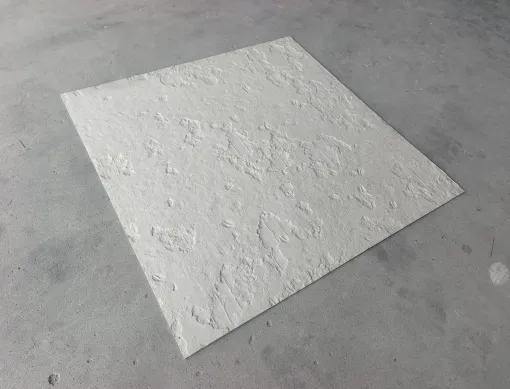
Bali Stone isn't just another entry in a catalog of cladding options. It's a product of innovation rooted in understanding what architects really need: flexibility, character, and reliability. Developed under the umbrella of Modified Composite Materials (MCM), Bali Stone is a blend of natural minerals, reinforced fibers, and eco-friendly polymers—engineered to capture the raw beauty of natural stone while ditching its limitations. Think of it as nature, reimagined for the demands of modern design.
At first glance, you might mistake it for traditional stone. Run your hand over its surface, and you'll feel the subtle texture of weathered rock, the coolness of natural minerals. But pick up a panel, and you'll notice the difference: it's lightweight, easy to handle, and surprisingly flexible. That flexibility is a game-changer. Unlike rigid natural stone slabs that crack under stress, Bali Stone can bend slightly, making it ideal for curved walls, archways, or even custom furniture pieces. It's a material that works with the design, not against it.
The magic of Bali Stone lies in its ability to adapt—to become whatever the project demands. For architects, this isn't just a feature; it's a lifeline. Let's break down how it transforms vague ideas into tangible, stunning results:
Natural stone is limited by what the earth provides. Bali Stone? It's a blank canvas. Want the warm, sunlit beige of travertine (beige) for a coastal villa in Italy? Done. Crave the deep, moody gray of dolomitic travertine (dark grey) for a minimalist office in Berlin? Consider it matched. Even bold, unexpected hues—like the starry red or starry blue of specialty travertine—are possible. The secret? A pigmentation process that infuses color deep into the material, ensuring it won't fade under UV rays or wear off with time. It's color that lasts as long as the memories made in the space.
Texture is what turns a wall into a story. Bali Stone doesn't just mimic textures; it embodies them. Run your fingers over a panel finished with the "wood grain board" texture, and you'll swear you're touching reclaimed oak—complete with the subtle knots and grain patterns that make wood feel alive. Opt for the "rough granite stone (medium grey)" finish, and you'll get the rugged, unpolished look of mountain rock, perfect for a lodge in the Swiss Alps. Even intricate details like "thread" or "linear travertine (claybank)" are possible, adding depth that generic materials can't replicate. It's texture that invites interaction—kids tracing patterns with their fingers, adults pausing to feel the wall as they pass by.
Ever tried installing a 10-foot natural stone slab? It's a logistical nightmare—requiring cranes, specialized labor, and a prayer that it doesn't crack mid-installation. Bali Stone's MCM big slab board series changes that. These panels come in sizes up to 1200x2400mm, meaning fewer seams, a sleeker look, and faster installation. But it's just as comfortable going small: think mosaic tiles for a backsplash, or semicircle boards for a decorative accent wall. Whether the project calls for grand, sweeping facades or tiny, intricate details, Bali Stone scales to fit.
In Lisbon's historic Alfama district, a community center wanted to honor local fishermen who'd lived and worked along the Tagus River for generations. The architect's vision? A wall that felt like the river itself—smooth in some places, rough in others, with colors that shifted like sunlight on water. Bali Stone delivered. Using custom "stream limestone (claybank)" and "stream limestone (dark grey)" textures, the panels were arranged in a flowing pattern, mimicking the river's currents. The result? A wall that's not just decorative, but interactive: locals often stop to trace the "waves" with their hands, sharing stories of the river as they do. It's a material that became a bridge between past and present.
Architecture isn't just about aesthetics—it's about context. A material that works in New York might feel out of place in New Delhi, and vice versa. Bali Stone's greatest strength might be its ability to speak the language of different cultures, adapting to local tastes and traditions without losing its core identity.
In the Middle East, where architecture often celebrates opulence and warmth, Bali Stone shines. Clients in Dubai, Riyadh, or Doha frequently request materials that reflect the region's golden deserts and vibrant sunsets. Bali Stone's "lunar peak golden" or "travertine (vintage gold)" finishes fit seamlessly here, adding a touch of luxury to hotels, palaces, and commercial towers. Even better, its resistance to heat and humidity means it stands up to the harsh desert climate—no cracking, no fading, just lasting beauty.
Europe's design ethos often leans toward "less is more"—but "less" doesn't mean "bland." In cities like Copenhagen, Stockholm, or Zurich, architects crave materials that are understated but full of character. Bali Stone's "slate veil white" or "fair-faced concrete" finishes deliver that: clean lines, subtle texture, and a neutral palette that lets light and space take center stage. It's minimalism with a heartbeat.
In Asia, where architecture often seeks balance with the natural world, Bali Stone's organic textures shine. In Tokyo, for example, a residential project used "wood grain board" and "bamboo mat board" finishes to create interiors that feel like a modern take on traditional Japanese homes—warm, inviting, and deeply connected to nature. In Bali itself (fittingly), resorts use "bali stone" panels to blur the line between indoor and outdoor spaces, making guests feel like they're living in harmony with the island's lush landscapes.
| Market | Popular Bali Stone Finishes | Key Traits Valued |
|---|---|---|
| Middle East | Lunar Peak Golden, Travertine (Vintage Gold), Rust Mosaic Stone | Heat resistance, luxury aesthetics, durability |
| Europe | Slate Veil White, Fair-Faced Concrete, Linear Travertine (Claybank) | Minimalism, subtle texture, sustainability |
| Asia | Wood Grain Board, Bamboo Mat Board, Bali Stone | Connection to nature, warmth, flexibility |
| North America | Stream Limestone (Dark Grey), Rough Granite Stone (Medium Grey) | Industrial chic, durability, customization |
Bali Stone rarely works alone—and that's by design. It's part of a broader family of MCM products that together give architects a complete toolkit for customization. Let's meet a few of its partners:
For projects with curved surfaces—think spiral staircases, rounded archways, or organic-shaped facades—MCM flexible stone is a dream. Thin, lightweight, and incredibly pliable, it clings to curves without cracking, making even the most ambitious designs possible. Pair it with Bali Stone's textures, and you've got a match made in design heaven.
Sometimes, size matters. The MCM big slab board series offers panels up to 3 meters in length, perfect for creating seamless, dramatic facades. Imagine a hotel in Singapore with a single, unbroken wall of "lunar peak silvery" Bali Stone, reflecting the city's skyline—no unsightly seams, just pure, uninterrupted beauty. That's the power of big slabs.
Wood is beloved for its warmth, but it's high-maintenance and prone to damage. Wood grain board captures that same organic feel—complete with knots, grains, and subtle color variations—but with the durability of MCM. Pair it with Bali Stone's earthy tones, and you've got a space that feels both rustic and modern, like a cabin in the woods meets a downtown loft.
In today's world, "sustainable" isn't just a buzzword—it's a responsibility. Architects and clients alike are demanding materials that look good and do good. Bali Stone delivers here, too. Its production process uses recycled minerals and low-VOC polymers, reducing waste and minimizing environmental impact. It's also lightweight, which means less fuel is needed for transportation, and installation requires fewer resources. Even better, it's fully recyclable at the end of its life, closing the loop on sustainability.
Take the "historical pathfinders stone" finish, for example. Designed to mimic ancient, weathered stone, it gives buildings a sense of history without requiring the mining of rare, old stones. It's a way to honor the past while protecting the future—a balance that matters more than ever.
At the end of the day, architecture is about people. It's about the spaces where we live, work, laugh, and dream. Bali Stone isn't just a material; it's a partner in creating those spaces—spaces that feel unique, meaningful, and alive. It's for the architect who wants to tell a story, the client who refuses to settle for "good enough," and the community that deserves a building they can be proud of.
So the next time you walk through a city, keep an eye out. Maybe that stunning facade with the warm golden glow isn't marble. Maybe that textured wall that makes you want to reach out and touch it isn't concrete. Maybe it's Bali Stone—quietly transforming architecture, one custom design at a time. And in that transformation, it's not just buildings that are changing. It's how we experience the world around us.
Recommend Products












