
In our rapidly urbanizing world, the skylines of our cities are a testament to human ambition. But as these structures rise higher, so too does our collective responsibility to build them sustainably. The conversation around urban development is no longer just about aesthetics or functionality; it's about a profound, urgent need to create cities that are green, resilient, and healthy for generations to come. This is the heart of sustainable urban development—a movement where every choice, right down to the materials cladding our buildings, carries significant weight.
For decades, architects and developers have relied on traditional materials like quarried marble and granite to convey a sense of permanence and luxury. Yet, the environmental cost of extracting these materials is becoming increasingly apparent. Blasting mountainsides, consuming vast amounts of water and energy, and generating significant transport emissions are the hidden prices paid for that classic look. This presents a critical challenge: how do we achieve breathtaking architectural beauty without compromising the health of our planet? The answer lies in innovation. It lies in materials engineered to deliver both performance and principle.
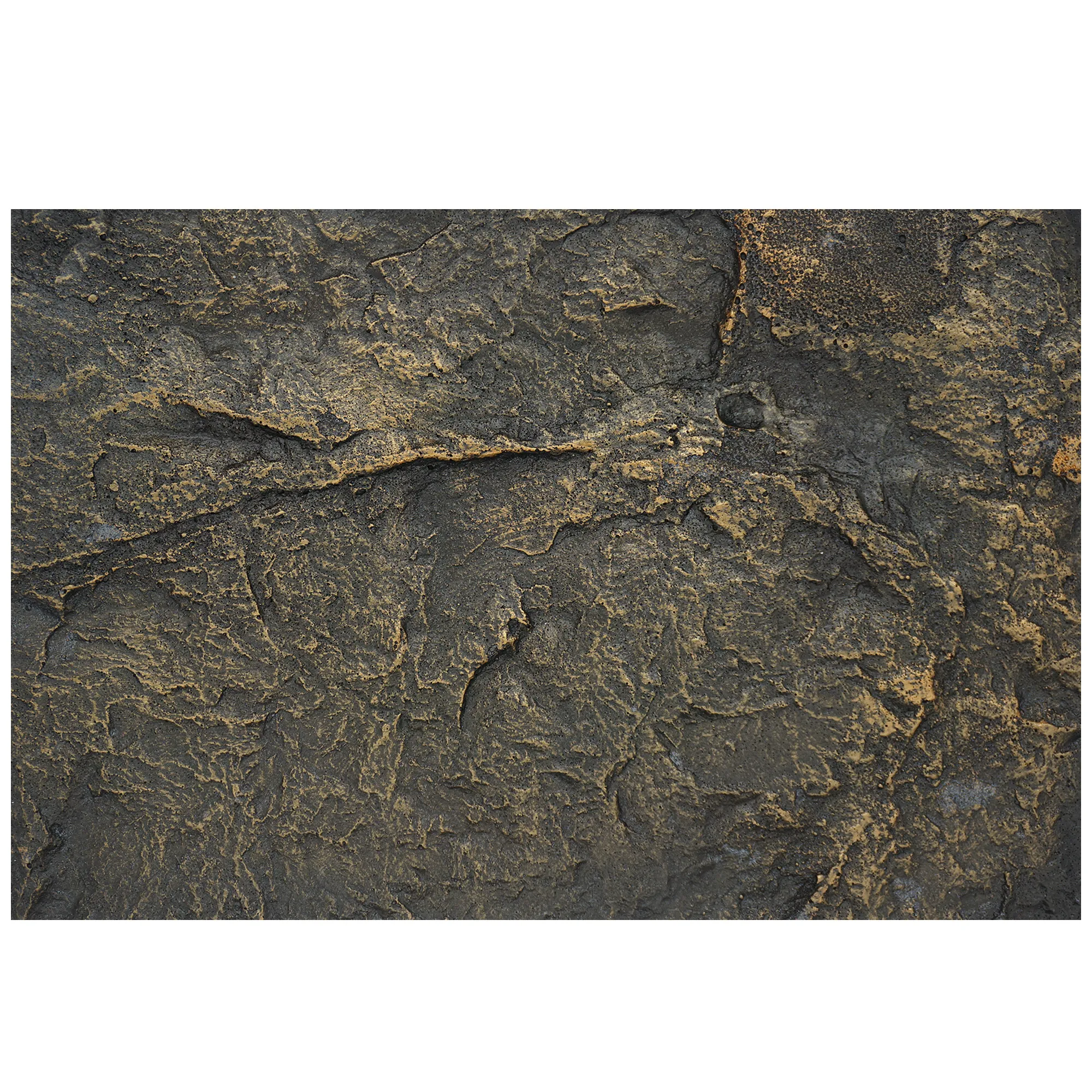
This is where a new generation of building solutions comes into play. Enter Boulder Slab (Vintage Gold) from COLORIA GROUP. More than just a surface, it represents a paradigm shift in how we think about construction. As a flagship product from our advanced architectural solutions, this material is specifically designed to meet the rigorous demands of modern, sustainable urban development, proving that you don't have to choose between a stunning aesthetic and environmental stewardship. Let's explore how this remarkable material is helping shape the responsible, beautiful cities of tomorrow.
Before we dive into the specifics of any one product, it's crucial to have a clear picture of what "sustainable urban development" really means. It's a holistic concept that stands on three core pillars. A truly sustainable project must succeed across all three areas, and the choice of building materials has a direct and measurable impact on each one.
This is often the first thing that comes to mind. Environmental sustainability is about minimizing our impact on the natural world. In construction, this translates to several key actions:
Sustainability isn't just about being green; it has to be economically viable. A material or process that is prohibitively expensive or impractical will never achieve widespread adoption. Economic sustainability in construction focuses on:
Ultimately, we build cities for people. Social sustainability is about creating environments that enhance human well-being, health, and community. In the context of building materials, this means:
As we'll see, the Boulder Slab (Vintage Gold) was engineered by COLORIA GROUP with all three of these pillars in mind, offering a solution that is environmentally sound, economically smart, and socially responsible.
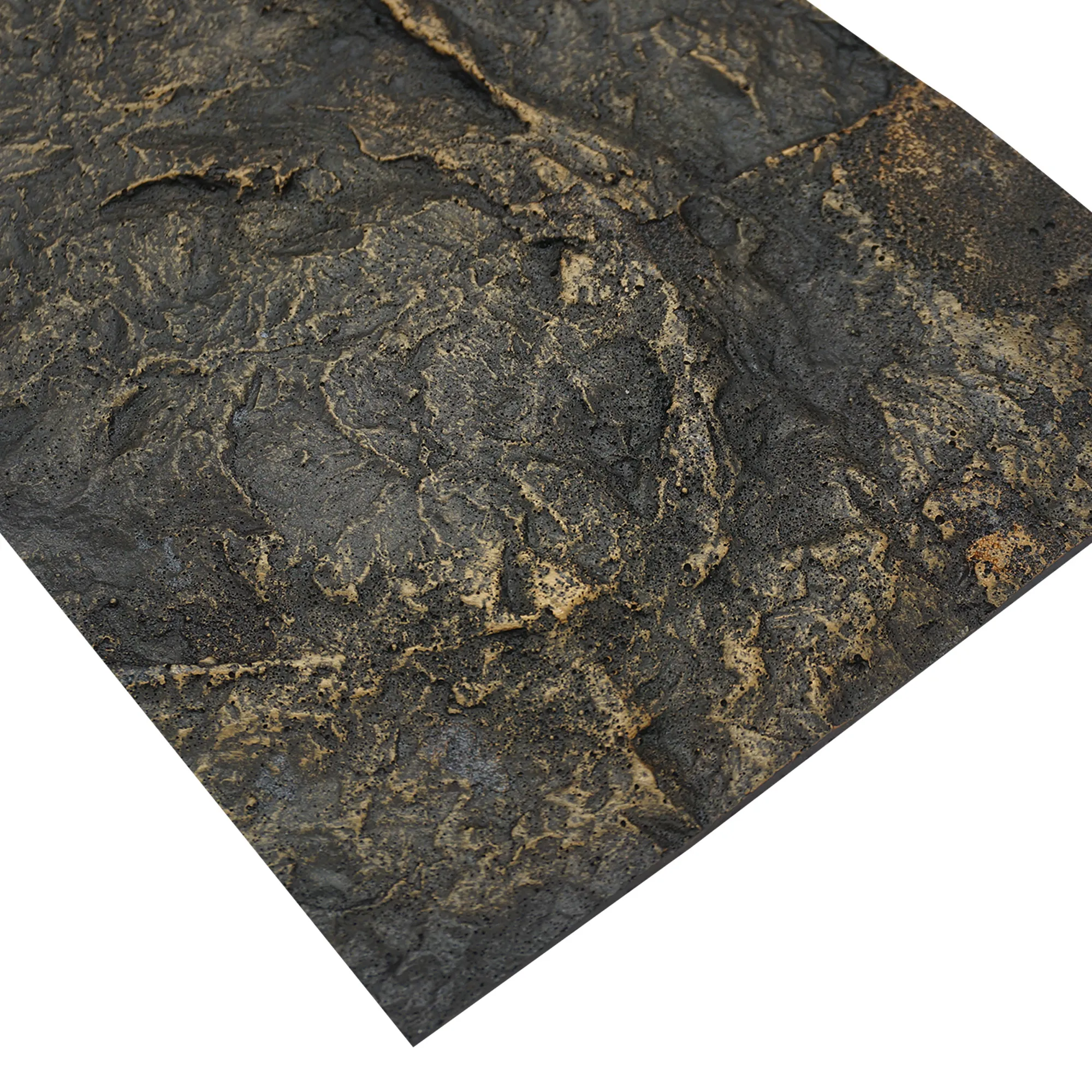
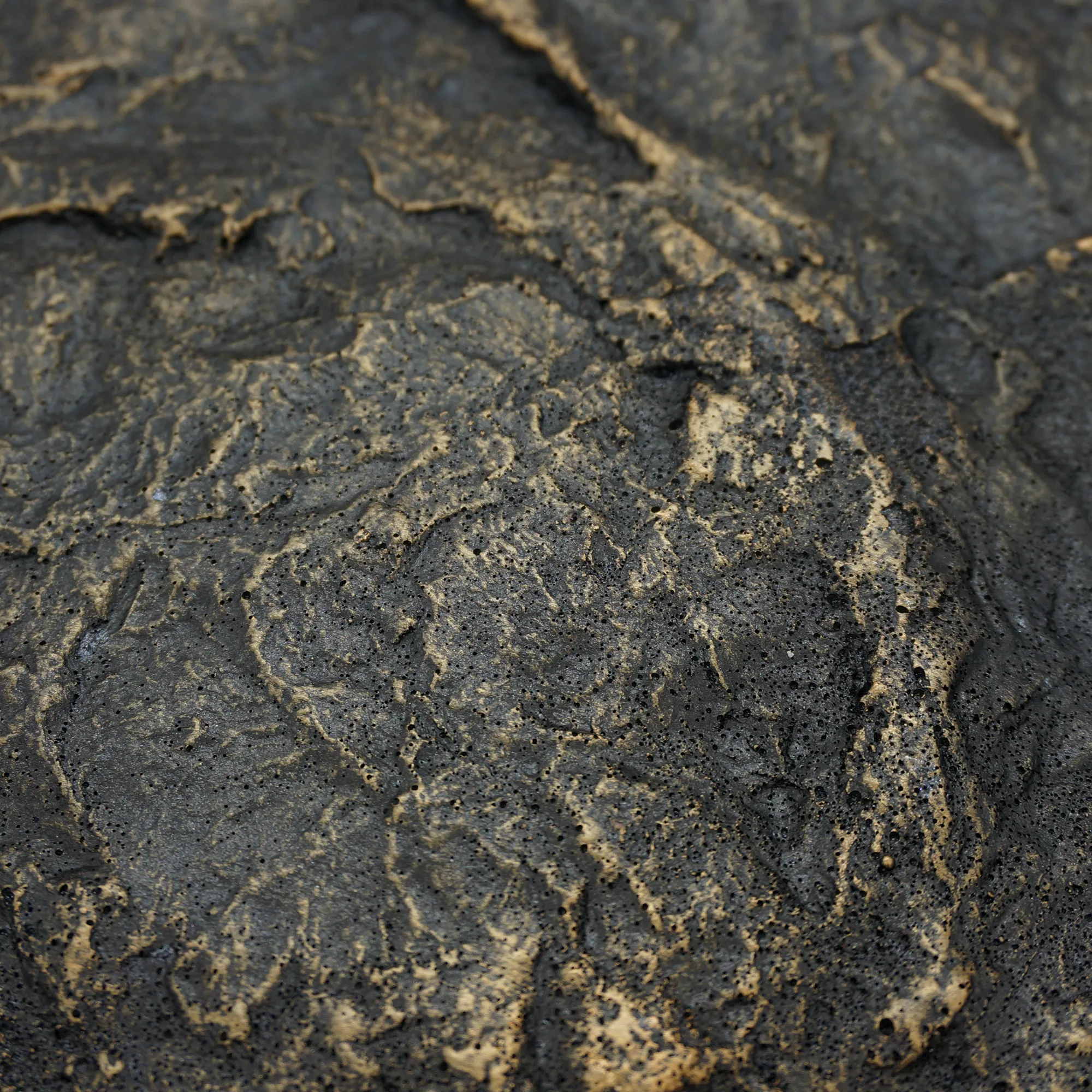
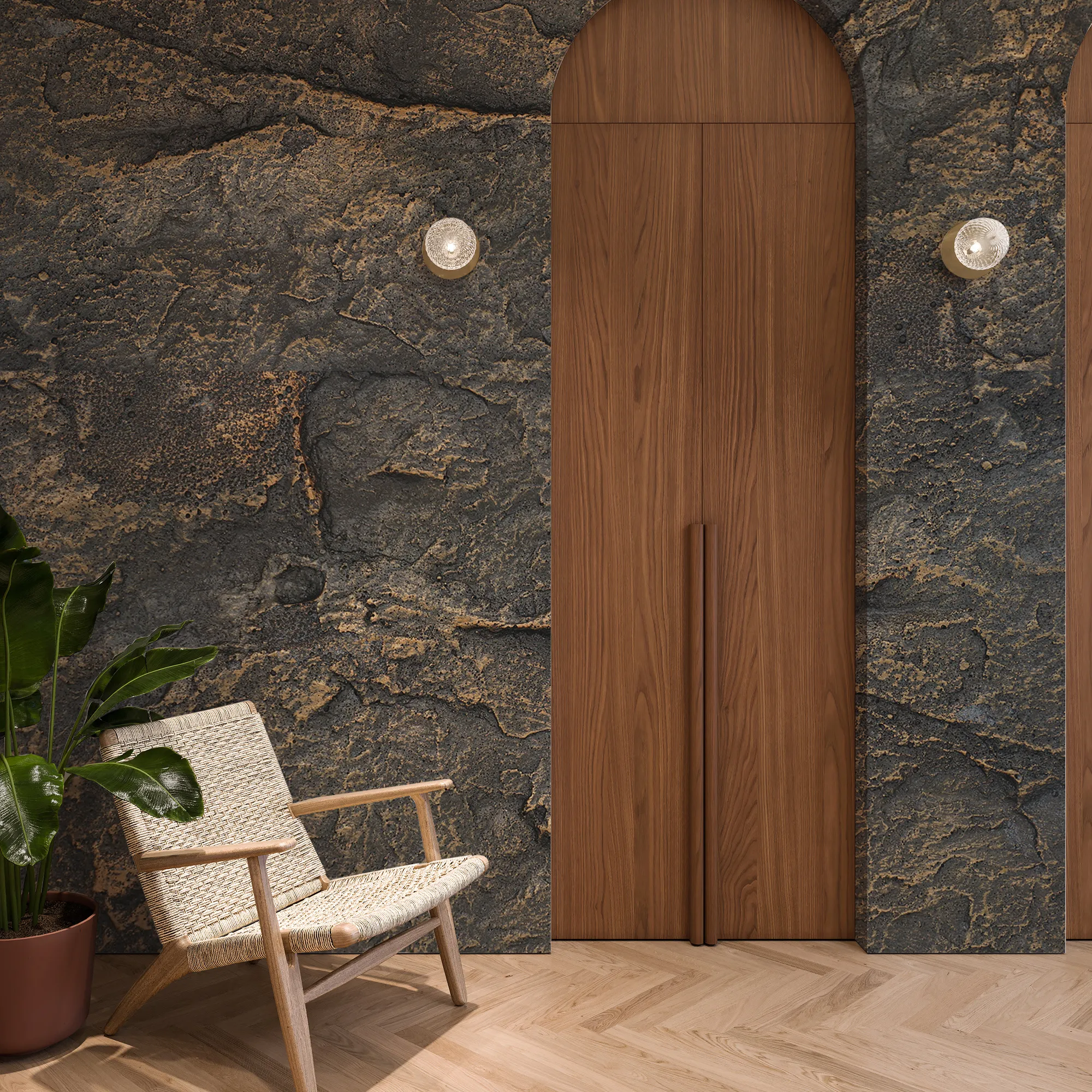
Picture a material that captures the timeless, majestic spirit of natural stone. Imagine a warm, golden hue, interwoven with subtle, earthy veins that evoke the look of a sun-drenched cliffside. This is the essence of Boulder Slab (Vintage Gold). It offers a rich, textured appearance that feels both luxurious and organic, making it a perfect choice for architects looking to make a statement that is both bold and sophisticated. But its true beauty lies deeper than its surface.
Boulder Slab (Vintage Gold) is a premier product within COLORIA GROUP's MCM Big Slab Board Series . This series is designed to provide large-format cladding solutions that create seamless, monolithic facades, minimizing joint lines and maximizing visual impact. The 'Big Slab' format is a game-changer for modern architectural expression, allowing for clean, expansive surfaces that define a building's character.
The technology that makes this possible is at the core of our innovation: Modified Cementitious Material (MCM). So, what does that really mean? It's a far cry from standard concrete or cement board. MCM is a composite material crafted primarily from natural components like mineral powders and plant fibers, bound together through a proprietary, low-temperature modification process. This isn't a high-heat, high-energy firing process like you see with ceramics, nor is it the brute-force extraction of stone from a quarry. Instead, it's a controlled, scientific method that transforms basic, abundant earthen elements into a high-performance architectural material. This innovative process is the key to MCM's sustainable credentials, dramatically reducing the embodied energy and carbon footprint compared to its traditional counterparts.
When we place Boulder Slab (Vintage Gold) under the microscope of environmental sustainability, its advantages become crystal clear. It directly addresses the most pressing ecological concerns associated with construction, offering a solution that is restorative rather than destructive.
The story of traditional stone begins with an explosion. Quarrying involves blasting and cutting massive sections of mountains, a process that permanently scars landscapes, destroys natural habitats, and often pollutes local waterways with sediment runoff. It is an inherently subtractive and finite process.
Boulder Slab (Vintage Gold) flips this narrative. Its production is additive and intelligent. The raw materials—natural mineral powders and inorganic clays—are abundant and sourced responsibly. No mountains are leveled, no ecosystems are shattered. By using a base of common earthen materials, we bypass the immense environmental toll of quarrying. This single shift from extraction to formulation represents a massive leap forward in sustainable resourcing. It's about working with nature's abundant building blocks, not against its monumental, finite creations.
A material's energy story has two chapters: the energy used to create it (embodied energy) and the energy it helps a building save (operational efficiency). Boulder Slab (Vintage Gold) excels in both.
Manufacturing: The curing process for our Modified Cementitious Material technology occurs at a significantly lower temperature range than the firing of ceramic tiles (which can exceed 1200°C) or the energy-intensive processing of natural stone blocks. This low-energy transformation process translates directly into a lower carbon footprint for every square meter of material produced. It's a smarter, leaner approach to manufacturing that drastically cuts down on greenhouse gas emissions from the very start.
Application: One of the most significant, yet often overlooked, advantages of Boulder Slab is its remarkably low weight. Compared to a solid stone slab of the same dimension, it can be up to 80% lighter. This has a cascade of positive environmental effects. Lighter materials require far less fuel to transport from the factory to the construction site, reducing logistical emissions. On-site, they are easier to handle, often requiring less heavy machinery. This lightness also reduces the dead load on the building's structure, which can lead to a more efficient structural design that uses less steel and concrete—two of the most carbon-intensive materials in any project.
Construction and demolition waste is a major contributor to landfills worldwide. Sustainable design seeks to minimize this at every stage. Boulder Slab (Vintage Gold) is manufactured in precise, controlled dimensions. This means architects can design with accuracy, and the panels arrive on-site ready for installation, dramatically reducing the need for on-site cutting which is a major source of dust, noise, and material waste.
Furthermore, the inherent toughness and slight flexibility of the material mean less breakage during transport and installation compared to brittle stone or ceramic. Every panel that doesn't break is one less panel going to waste. This focus on efficiency and waste reduction is fundamental to a circular economy approach, where resources are kept in use for as long as possible.
The "new building smell" is often the scent of volatile organic compounds (VOCs) off-gassing from paints, sealants, and synthetic materials. These chemicals can be harmful to human health and contribute to smog. Because Boulder Slab (Vintage Gold) is created from natural, inorganic materials and doesn't require toxic binders or coatings, it is inherently free of these harmful emissions. It is a non-toxic material, ensuring that it contributes to healthier air quality both inside and outside the building. This is a crucial element of social sustainability and a direct benefit to the community that will live and work around these structures.
A material can be the greenest on Earth, but if it's not practical, durable, and economically sound, it will remain a niche product. COLORIA GROUP has engineered the Boulder Slab (Vintage Gold) to deliver not only on its environmental promises but also on the hard-nosed realities of budget, schedule, and long-term performance.
It's time to move past the simple metric of initial cost per square meter. A truly wise investment is judged by its total lifecycle cost. While being a premium architectural finish, Boulder Slab (Vintage Gold) presents a compelling economic case. Its exceptional durability means it resists fading, cracking, and deterioration. This translates to vastly reduced maintenance budgets over the decades-long lifespan of a building. There's no need for frequent resealing, repairs, or eventual replacement that plagues lesser materials.
Furthermore, the installation savings are substantial. Its lightweight nature means faster installation with smaller crews and less reliance on heavy cranes. The reduced structural load can even result in savings on the building's foundational and support systems. When you factor in lower transportation costs, reduced labor, and minimal long-term maintenance, the total cost of ownership for Boulder Slab (Vintage Gold) becomes exceptionally competitive.
A building's facade is its first line of defense against the elements. Boulder Slab (Vintage Gold) is built to endure. Its technical performance is outstanding:
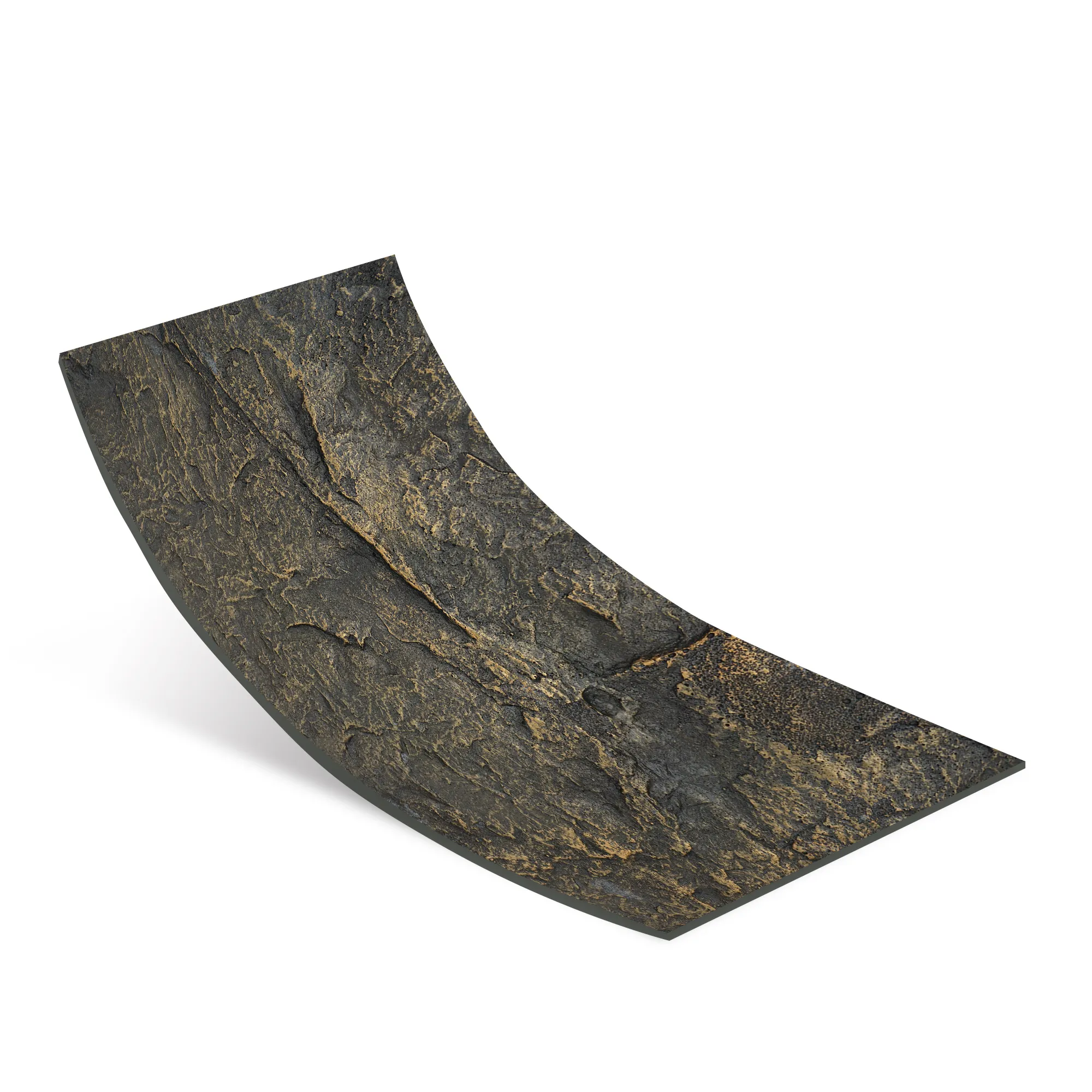
This is where practicality meets artistry. The large-format panels of the MCM Big Slab Board Series empower architects to think on a grander scale. They can create sweeping, uninterrupted surfaces that give a building a powerful, modern aesthetic. However, the innovation of the underlying MCM technology doesn't stop with rigid panels.
The same core technology allows for an incredible spectrum of possibilities. For designs that require wrapping around columns or curved walls, COLORIA GROUP offers the MCM Flexible Stone series. This product provides the same beautiful stone appearance but in a flexible format that can be easily applied to complex geometries where rigid slabs would be impossible. This demonstrates the sheer versatility of the MCM platform—it's not just one product, but a whole ecosystem of solutions. Whether a project demands the monolithic power of a big slab or the organic grace of a curved surface, our technology provides the tools to realize the architect's vision without compromise.
| Sustainability & Performance Metric | Boulder Slab (Vintage Gold) | Traditional Quarried Stone (e.g., Marble, Granite) |
|---|---|---|
| Raw Material Source | Abundant mineral powders and natural clays; responsibly sourced. | Destructive quarrying of finite mountain resources. |
| Energy in Production | Low-temperature curing process; significantly lower embodied energy. | High-energy extraction, cutting, and transportation of massive blocks. |
| Weight | Extremely lightweight (~5-8 kg/m²); reduces transport emissions & structural load. | Very heavy (~30-60 kg/m²); requires heavy machinery and reinforced structure. |
| Installation Complexity | Fast and simple; easy to cut and handle; less labor-intensive. | Slow and complex; requires specialized heavy lifting equipment and labor. |
| Waste Generation | Minimal on-site waste due to pre-sized panels; low breakage rate. | Significant waste from quarrying and on-site cutting; higher risk of breakage. |
| Design Flexibility | Large formats, customizable, can be complemented with flexible versions for curves. | Limited by block size and weight; extremely difficult/expensive to use on curves. |
| Health & Safety | Class A fire-rated, zero VOCs, non-toxic. | Fire-resistant but can emit radon (in some granites); silica dust during cutting is hazardous. |
Let's move from the technical to the tangible. Picture a new, iconic commercial headquarters rising in a dynamic global hub like Riyadh, a city known for its bold architectural ambitions and intense climate. The developer has a mandate to achieve a high-level green building certification while creating a landmark that exudes prestige.
They choose Boulder Slab (Vintage Gold) for the tower's extensive facade. The decision is transformative. Logistically, lightweight panels are shipped to Saudi Arabia with a fraction of the carbon footprint of heavy granite. On-site, installation proceeds at a rapid pace, saving valuable time and labor costs in the demanding construction environment.
Aesthetically, the result is breathtaking. The vast surfaces of the MCM Big Slab Board Series give the tower a grand, unified appearance. The Vintage Gold finish interacts beautifully with the powerful desert sun, its warm tones shifting from a soft morning glow to a deep, rich gold at sunset. The building doesn't just sit in the landscape; it communicates with it. It has the visual weight and gravitas of a building clad in solid stone, yet it was built with an intelligence and efficiency that traditional methods could never match.
For the project's green building assessment, the choice is a clear winner. The material scores points for sustainable sourcing, low embodied carbon, reduction of transport emissions, and use of non-toxic materials. It helps the project achieve its sustainability goals not as an afterthought, but as an integrated part of its core design. This fictional scenario is becoming a reality in projects worldwide, as developers and architects recognize the powerful combination of beauty, performance, and principle.
The path to sustainable urban development is paved with innovation. It requires a conscious departure from the inefficient and destructive practices of the past and an enthusiastic embrace of materials that are smarter, cleaner, and more efficient. Boulder Slab (Vintage Gold) is more than just an alternative to natural stone; it is a superior solution for the modern era.
It successfully addresses all three pillars of sustainability: it is environmentally responsible through its resource-saving production; economically viable through its lightweight efficiency and long-term durability; and socially beneficial by creating beautiful, healthy, and safe buildings.
As a one-stop solution provider for the architectural world, COLORIA GROUP is committed to pushing the boundaries of what's possible. Our extensive range of Modified Cementitious Material products, from the grand Boulder Slabs to the versatile MCM Flexible Stone , provides the tools for creative freedom. We believe that the future of our cities depends on the choices we make today. By choosing advanced materials like Boulder Slab (Vintage Gold), we are not just constructing buildings; we are laying the foundation for a more sustainable, resilient, and beautiful urban world.
Recommend Products












