
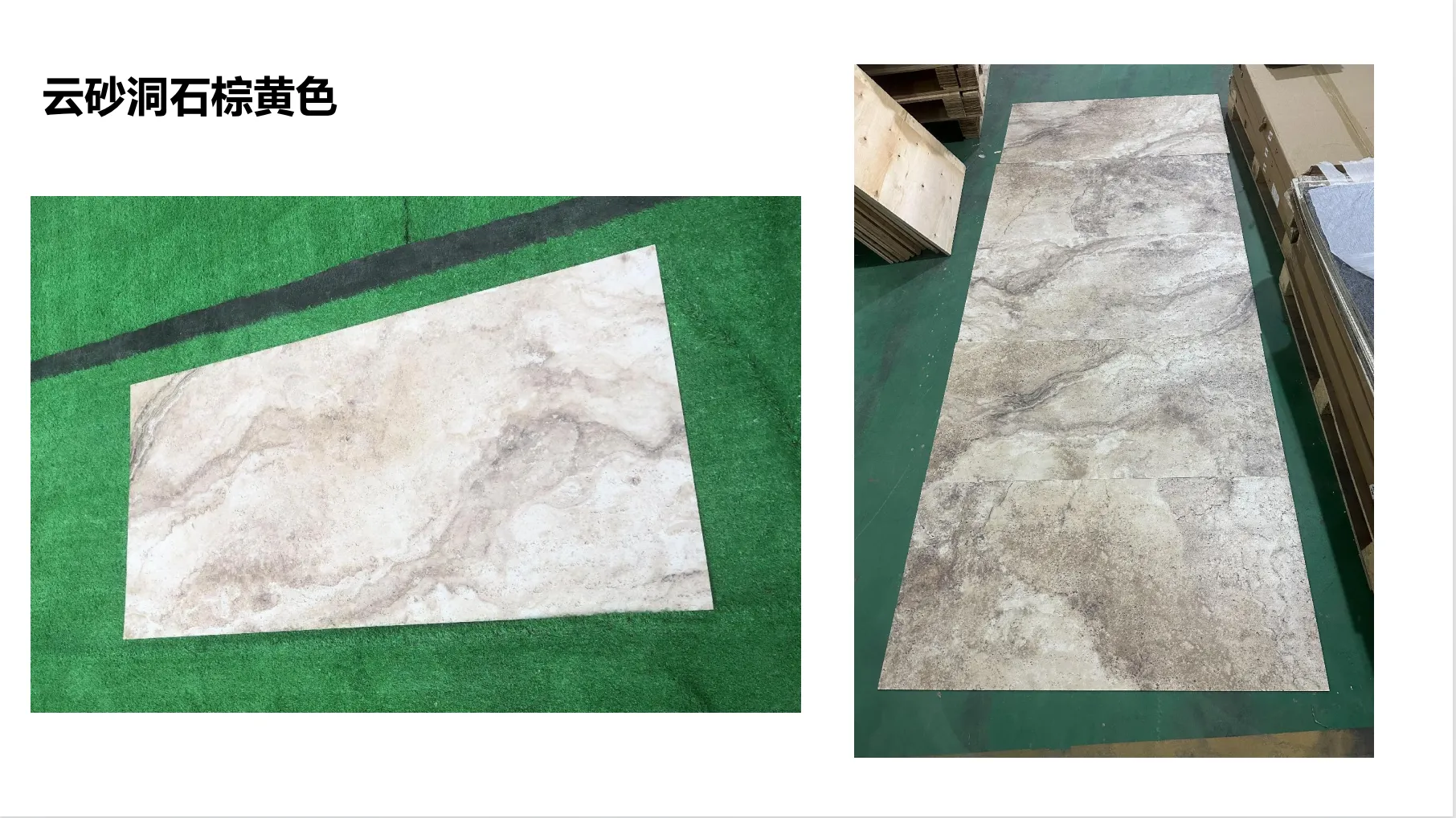
Walk through any modern urban district or historic town square, and you'll likely spot it: the subtle, weathered elegance of natural stone. For architects and homeowners alike, stone isn't just a building material—it's a storyteller. It carries the weight of time, the texture of the earth, and the promise of endurance. But here's the quiet truth: not all stones tell the same story in every climate. What thrives under the scorching sun of Arizona might crack under the freeze-thaw cycles of Minnesota, and vice versa. Today, we're zeroing in on a material that's been turning heads in contemporary design: dolomitic travertine(dark grey) . Its moody, slate-like hue and unique veining make it a favorite for everything from kitchen backsplashes to outdoor plazas. But how does this stone hold up when the mercury spikes—or plummets? Let's dive in.
Before we talk climate, let's get to know the star of the show. Travertine itself is a form of limestone, born from mineral-rich hot springs and rivers. What sets dolomitic travertine(dark grey) apart is its dolomite content—a mineral that adds density and resilience. Picture a stone with the porous, pitted texture travertine is known for, but in a deep, moody grey that shifts from charcoal to steel blue depending on the light. It's not just pretty; it's practical, too. Unlike the more porous classic travertine, the dolomitic variant is slightly harder, making it a go-to for high-traffic areas. But here's the catch: "resilient" doesn't mean "invincible." Its performance hinges on one big variable: climate.
To put it in perspective, think about two other popular materials: fair-faced concrete and lunar peak black . Fair-faced concrete is prized for its industrial-chic look and thermal mass, but it can crack in extreme cold. Lunar peak black, with its starry, night-sky aesthetic, is durable but absorbs heat like a sponge in hot climates. Dark grey dolomitic travertine sits somewhere in the middle—versatile, but with its own set of climate-specific quirks.
Let's start with heat. In regions where summer temperatures regularly top 90°F (32°C)—think Dubai, Texas, or parts of Australia—building materials face a unique set of challenges. Dark grey dolomitic travertine, with its dark color, is naturally a heat absorber. That's not always a bad thing (hello, warm winter patios!), but in relentless sun, it can become a liability.
Imagine a homeowner in Phoenix who chose dark grey dolomitic travertine for their pool deck. The first summer, they loved the sleek, modern look. By the third summer? Some tiles had faded to a patchy, lighter grey, and the surface felt rough, almost sandpaper-like underfoot. What happened? UV radiation. The sun's rays break down the stone's surface minerals over time, a process called "weathering." Dark colors absorb more UV, accelerating this effect. Add in daily thermal expansion—stone heating up, expanding, then cooling and contracting at night—and you get tiny cracks that let in moisture (or, in dry climates, dust and debris), worsening the wear.
Then there's the issue of thermal shock. In desert regions, temperatures can swing 40°F (22°C) in a single day—scorching hot at noon, surprisingly cool at midnight. Dark grey dolomitic travertine, like all natural stones, expands when hot and contracts when cold. Do this enough times, and the stone can develop hairline fractures, especially around edges or in areas with poor installation (more on that later).
Real-World Example: A boutique hotel in Marrakech used dark grey dolomitic travertine for its courtyard floors. After two years of intense sun and minimal shade, the maintenance team noticed "spalling"—small flakes of stone breaking off the surface. The culprit? A combination of UV damage and the stone absorbing heat, which weakened its outer layer. They switched to sealing the stone twice a year and adding shade sails, which helped slow the deterioration.
You might think hot, dry climates are "easier" on stone than wet ones, but dryness brings its own issues. In arid regions, dust and sand act like sandpaper, grinding away at the stone's surface with every footstep or gust of wind. Without regular cleaning, that beautiful, textured finish can turn dull and pitted. On the flip side, sudden rainstorms (yes, even in deserts!) can soak the stone, and if the water evaporates too quickly, it can leave mineral deposits behind, creating a chalky film called "efflorescence." Not exactly the sleek look you signed up for.
Now, let's head north—or south, if we're talking Patagonia or New Zealand. In cold climates, the enemy isn't heat, but ice. Freeze-thaw cycles are the silent killers of natural stone, and dolomitic travertine(dark grey) is no exception.
Here's how it works: Water seeps into the stone's pores (and yes, even dense dolomitic travertine has pores). When temperatures drop below freezing, the water expands by 9%, creating pressure inside the stone. As it thaws, the ice melts, leaving tiny voids. Do this repeatedly—say, every winter in Chicago or Oslo—and those voids grow, weakening the stone until it cracks or crumbles. This is why you'll often see outdoor stone walkways in cold climates with loose or broken tiles after a harsh winter.
Dark grey dolomitic travertine's porosity is lower than standard travertine, but it's not zero. A study by the Stone Industry Research and Information Association found that dolomitic travertine absorbs about 2-3% of its weight in water, compared to 4-5% for regular travertine. That might not sound like much, but in a climate with 50+ freeze-thaw days a year, it's enough to cause problems. Add de-icing salts—used to melt snow and ice on walkways—and you've got a recipe for disaster. Salts react with the stone's minerals, causing discoloration and accelerating deterioration.
Builder's Perspective: "We used dark grey dolomitic travertine for a residential driveway in Toronto," says Marco, a local contractor. "The homeowner loved the look, but after the first winter, we had to replace 10% of the stones. They'd cracked right through the middle. Turns out, the installer didn't seal the stone properly before winter, and water got in. Now, we always recommend sealing twice: once after installation, and again in late fall, before the first freeze."
To make it easier, let's break down how dark grey dolomitic travertine performs under the two most extreme climate scenarios:
| Climate Factor | Impact on Dark Grey Dolomitic Travertine (Hot Climates) | Impact on Dark Grey Dolomitic Travertine (Cold Climates) |
|---|---|---|
| Temperature Extremes | Thermal expansion/contraction leads to hairline cracks; surface weakening from prolonged heat. | Freeze-thaw cycles cause internal pressure, leading to cracking and spalling. |
| UV Exposure | Color fading and surface weathering (rough, dull texture). | Minimal impact; shorter daylight hours and weaker sun reduce UV damage. |
| Moisture | Dust/sand abrasion; efflorescence from rare rainstorms. | Water absorption + freezing = internal damage; de-icing salts worsen deterioration. |
| Maintenance Needs | Regular sealing (1-2x/year) to protect from UV; frequent cleaning to remove dust. | Pre-winter sealing; avoiding de-icing salts; repairing cracks promptly to prevent water intrusion. |
The good news? Dark grey dolomitic travertine isn't a one-trick pony. With the right care, it can thrive in both hot and cold regions. Here's how:
Even the most durable stone fails with shoddy installation. For dark grey dolomitic travertine, use a flexible mortar (like those designed for MCM flexible stone products) to allow for thermal movement. Avoid installing in areas with poor drainage, and always leave expansion joints between large slabs—this gives the stone room to breathe, whether it's expanding in the heat or contracting in the cold.
At the end of the day, dark grey dolomitic travertine is more than just a building material. It's a bridge between nature and design—a stone that carries the earth's history while shaping our modern spaces. Its performance in hot or cold climates isn't about weakness; it's about understanding its needs, just like you'd understand a plant's need for sun or shade. Whether you're building a home in the Sonoran Desert or a café in the Canadian Rockies, this stone can thrive—with a little care, a lot of planning, and a respect for the climate it calls home.
So, to the architects, builders, and homeowners out there: choose wisely, install carefully, and maintain diligently. Your dark grey dolomitic travertine will repay you with decades of beauty—and a few stories of its own.
Recommend Products












