Once the raw materials arrive at MCM's manufacturing facilities, the real magic begins. Each product has its own recipe, but let's walk through three key processes that define Cloud Stone: 3D printing, flexible stone manufacturing, and artisanal finishing.
3D Printing Series: Where Digital Dreams Become Physical Reality
The MCM 3D Printing Series is a love letter to innovation. Imagine a giant 3D printer, not churning out plastic trinkets, but building stone-like panels layer by layer. The process starts with a digital design—maybe a wave panel that mimics ocean swells or a geometric pattern inspired by ancient mosaics. The printer then extrudes a special stone composite (think crushed
travertine (starry green)
mixed with high-strength binders) in ultra-thin layers, each just 0.5mm thick. Over hours, the design rises, with the printer adjusting pressure and speed to ensure no air bubbles or weak spots.
What's remarkable? The precision. A 3D-printed wave panel might have 500+ layers, each slightly different to create the illusion of movement. And because it's digital, customization is endless. Want a panel with your company logo embedded? No problem. Need 100 identical pieces for a hotel facade? The printer repeats the design with pinpoint accuracy. It's like having a sculptor and a mathematician working in tandem.
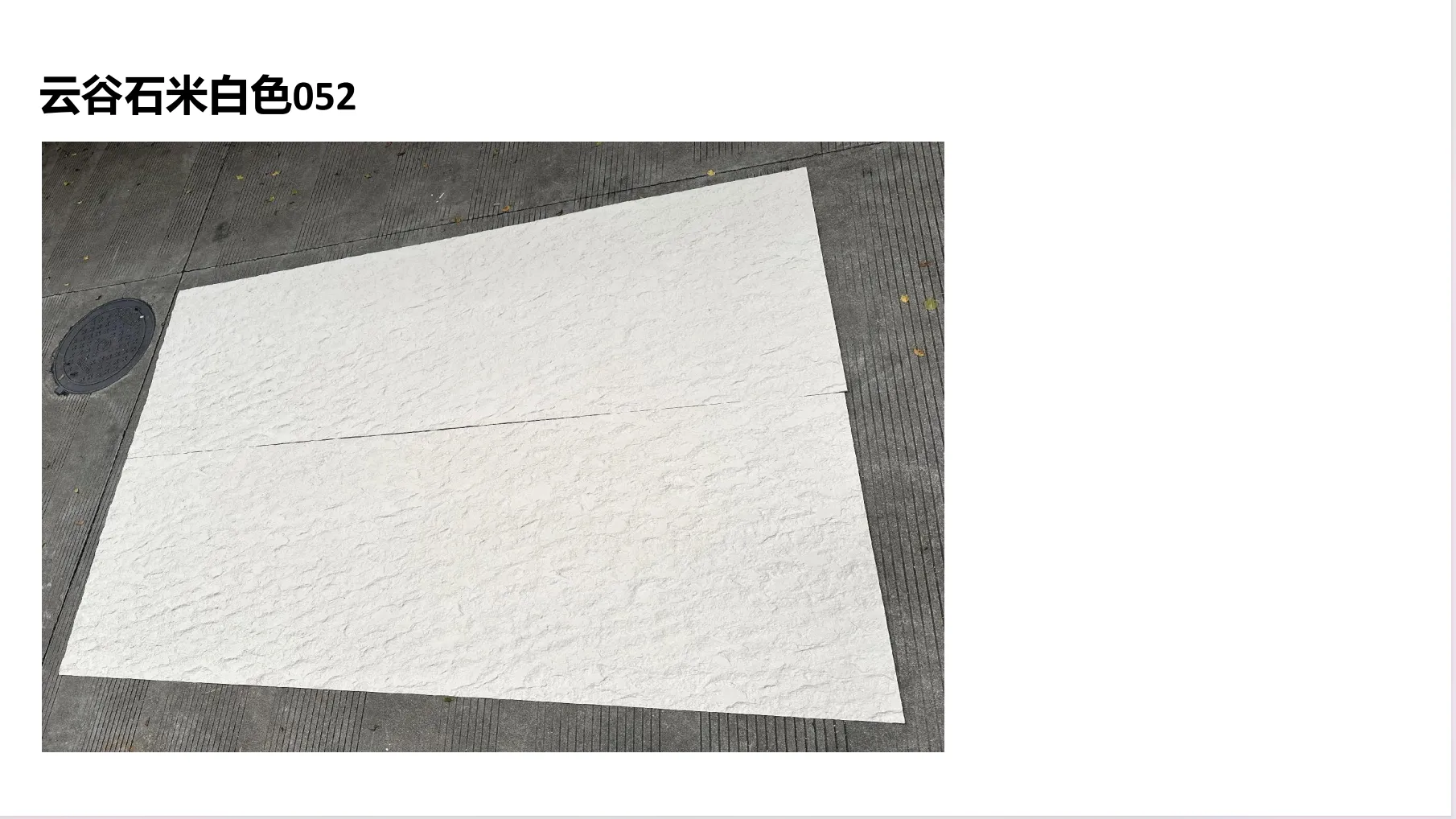
Mcm flexible stone
is a game-changer for architects who hate being limited by straight lines. Here's how it's made: First, raw stone (say,
travertine (starry green)
or marble) is crushed into a fine powder, almost like flour. This powder is then mixed with a secret blend of polymers and resins—binders that hold the stone particles together without losing flexibility. The mixture is spread onto a fiberglass mesh (for added tensile strength) and pressed under high pressure (up to 200 tons!) to squeeze out air and compact the material.
The result? A sheet of stone that's thin (3-5mm), lightweight (just 4-6kg per square meter), and surprisingly tough. Bend it, and it springs back. Hit it, and it resists chipping. But the real win is the texture: run your hand over it, and you'll feel every groove and pit of the original stone, as if you're touching the side of a mountain. It's nature, but better—nature that fits in a truck and bends around a curved wall.
Finishing Touches: The Art of Aging and Polishing
Even the most perfectly processed material needs a final flourish. That's where MCM's artisans step in, adding the "soul" to each product. Take
foamed aluminium alloy board (vintage silver)
: after being cut to size, it's treated with a special acid solution that eats away at the surface, creating tiny pits and a matte finish that looks like it's been weathered by decades of rain and sun. The result? A metal panel that feels both modern and timeless, like a relic from a future past.
For
travertine (starry green)
, the finishing process is all about enhancing its natural sparkle. After cutting, the stone is gently polished with diamond pads—just enough to bring out the starry pyrite inclusions without making it too shiny. Craftsmen inspect each slab under light, tilting it this way and that to ensure the stars "dance" when viewed from different angles. It's meticulous work; a single slab might take 20 minutes to polish, but the payoff is a surface that feels alive with light.
Even
fair-faced concrete
gets the artisanal touch. Instead of smoothing out every imperfection, MCM's finishers embrace the "fair-faced" ethos: leaving small air bubbles, subtle color variations, and the faint texture of the wooden molds used to cast it. It's a celebration of authenticity—proof that beauty lies in the unpolished, the real.