
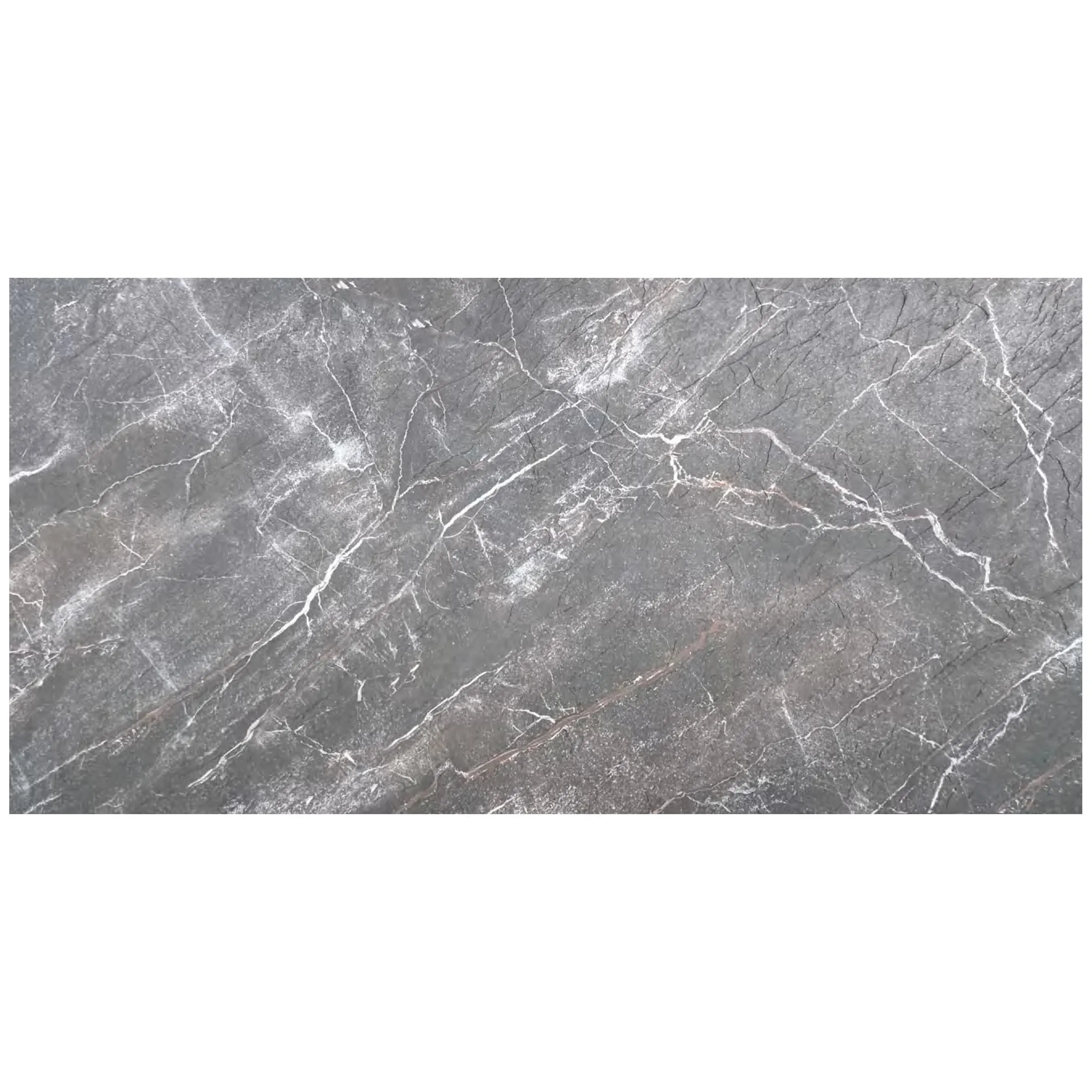
There's something almost poetic about natural stone. For centuries, it has adorned the walls of palaces, the floors of cathedrals, and the facades of iconic buildings, telling stories of time, geology, and human ingenuity. Among the pantheon of natural stones, few command attention quite like Slate Portoro . With its deep, velvety black base swirled with golden veins that seem to glow from within, it's a material that feels both ancient and opulent—a canvas where nature paints its most dramatic contrasts. But for architects, designers, and builders, the love affair with Slate Portoro has long been tinged with frustration. Its beauty comes with a price: weight, cost, and limitations that often make it impractical for modern projects. That is, until COLORIA MCM stepped in.
To understand why Slate Portoro is so revered, you have to see it up close. Imagine a slab of stone so dark it borders on midnight, yet alive with streaks of gold that twist and turn like liquid sunlight frozen in time. It's the kind of material that transforms a space from ordinary to extraordinary—whether it's cladding a luxury hotel lobby, topping a high-end kitchen island, or accenting a residential fireplace. Designers often describe it as "the little black dress of stone"—versatile, timeless, and always elegant.
Historically, Slate Portoro was quarried in limited quantities, making it a status symbol. Its rarity meant it graced only the most prestigious projects: think Renaissance-era villas in Italy, Art Deco skyscrapers in New York, or modernist masterpieces in Dubai. But as demand grew, so did the challenges. Quarrying large slabs is labor-intensive and environmentally taxing. Transporting them? A logistical nightmare. A single 4x8-foot slab of natural Slate Portoro can weigh over 500 pounds, making it nearly impossible to use in high-rise buildings or projects where structural weight is a concern. Then there's the cost: genuine Slate Portoro can run into thousands of dollars per square foot, putting it out of reach for most budgets. And perhaps most disheartening for sustainability-minded creators, natural stone extraction leaves behind scars on the landscape—quarries that take decades to regenerate, if they ever do.
"We had a client once who fell in love with Slate Portoro for their penthouse renovation," recalls Maria Gonzalez, a senior architect at a leading design firm in Chicago. "They wanted it on the walls, the floors, even the backsplash. But when we crunched the numbers—transport, structural reinforcement, installation—it was going to add $200,000 to the budget. And the engineer said the floor couldn't support the weight of full slabs. We had to pivot to a cheaper, lighter alternative, and the client was devastated. That's the story I hear over and over: designers and clients dreaming of Slate Portoro, but reality getting in the way."
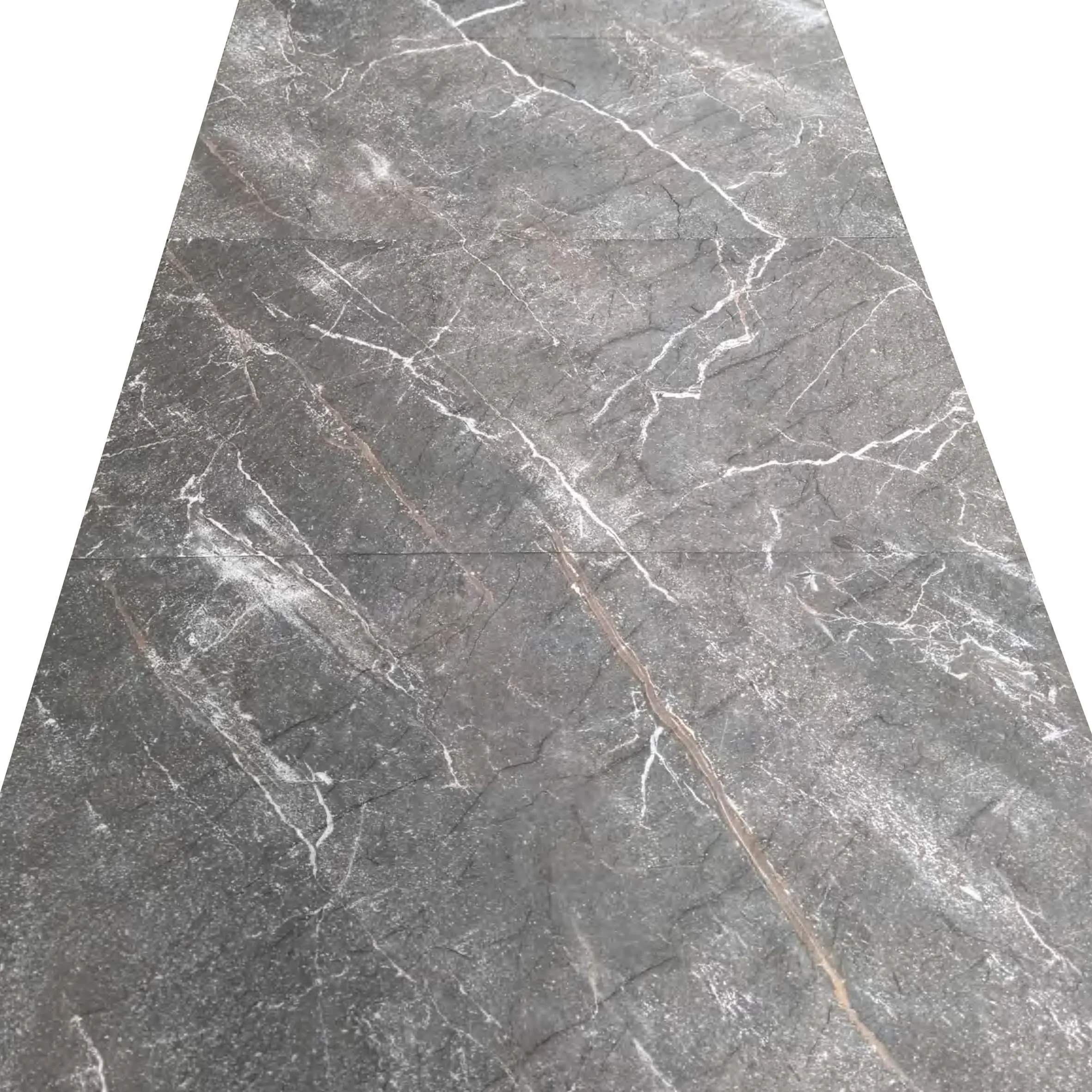
For years, the industry tried to replicate Slate Portoro with alternatives: ceramic tiles, porcelain slabs, even painted concrete. But these often felt flat, artificial—like a photograph of a sunset compared to the real thing. The golden veins lacked depth, the black base looked more like charcoal than midnight, and the texture? Smooth and lifeless, missing the subtle pits, ridges, and imperfections that make natural stone feel "alive." Clients would walk into showrooms, see a "Slate Portoro lookalike," and shake their heads. "It's close," they'd say, "but not quite."
Then came the rise of composite materials. Early versions, like cultured stone or veneer, were lighter and cheaper, but they too fell short. They often lacked durability, fading or chipping over time, and their surface texture was a poor mimic of the real thing. "I once specified a composite Slate Portoro for a restaurant project," says David Chen, a contractor with 20 years of experience. "Six months after opening, the veneer started peeling near the entrance, where foot traffic was heavy. The client was furious, and we had to replace it all. Never again, I thought—until I heard about COLORIA MCM."
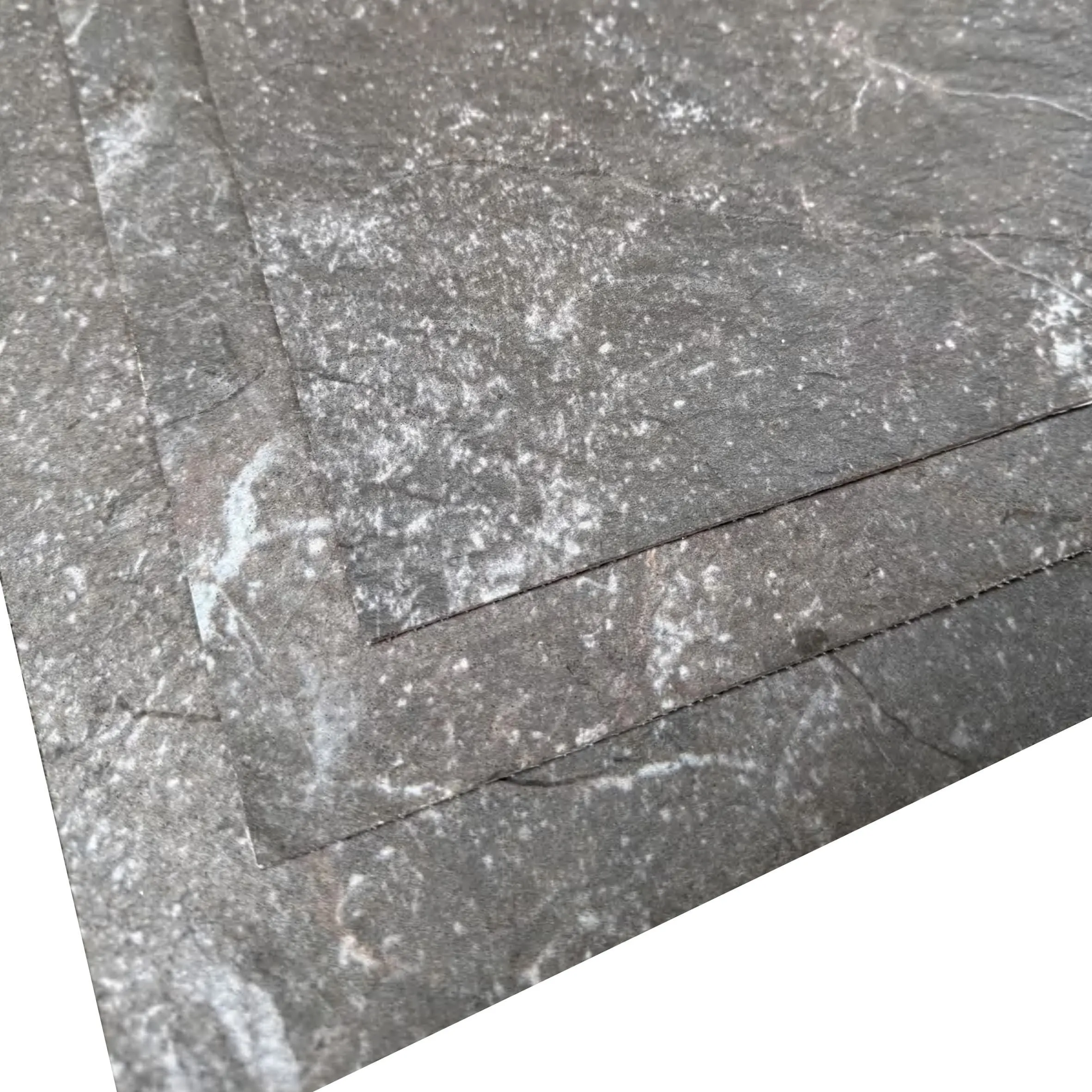
COLORIA MCM wasn't just another company trying to "copy" natural stone. From the start, their mission was bolder: to replicate the essence of stone—its texture, depth, and character—while solving its biggest flaws. MCM, or Modified Composite Material, is the secret sauce. It's a blend of natural minerals, polymers, and reinforcing fibers that's engineered to be lightweight, durable, and incredibly versatile. And when combined with cutting-edge technology—like 3D printing and advanced scanning—MCM becomes something revolutionary: a material that can mimic the look and feel of Slate Portoro so accurately, even experts struggle to tell the difference.
"We started with a simple question," says James Lin, COLORIA MCM's Chief Technology Officer. "What if we could capture every nuance of natural Slate Portoro—the way light plays on its surface, the tiny pits and grooves, the variation in vein patterns—and recreate it in a material that's light enough to hang on a high-rise, affordable enough for mid-range projects, and sustainable enough to feel good about?" The answer was the mcm 3d printing series and mcm flexible stone —two innovations that have redefined what's possible in architectural cladding.
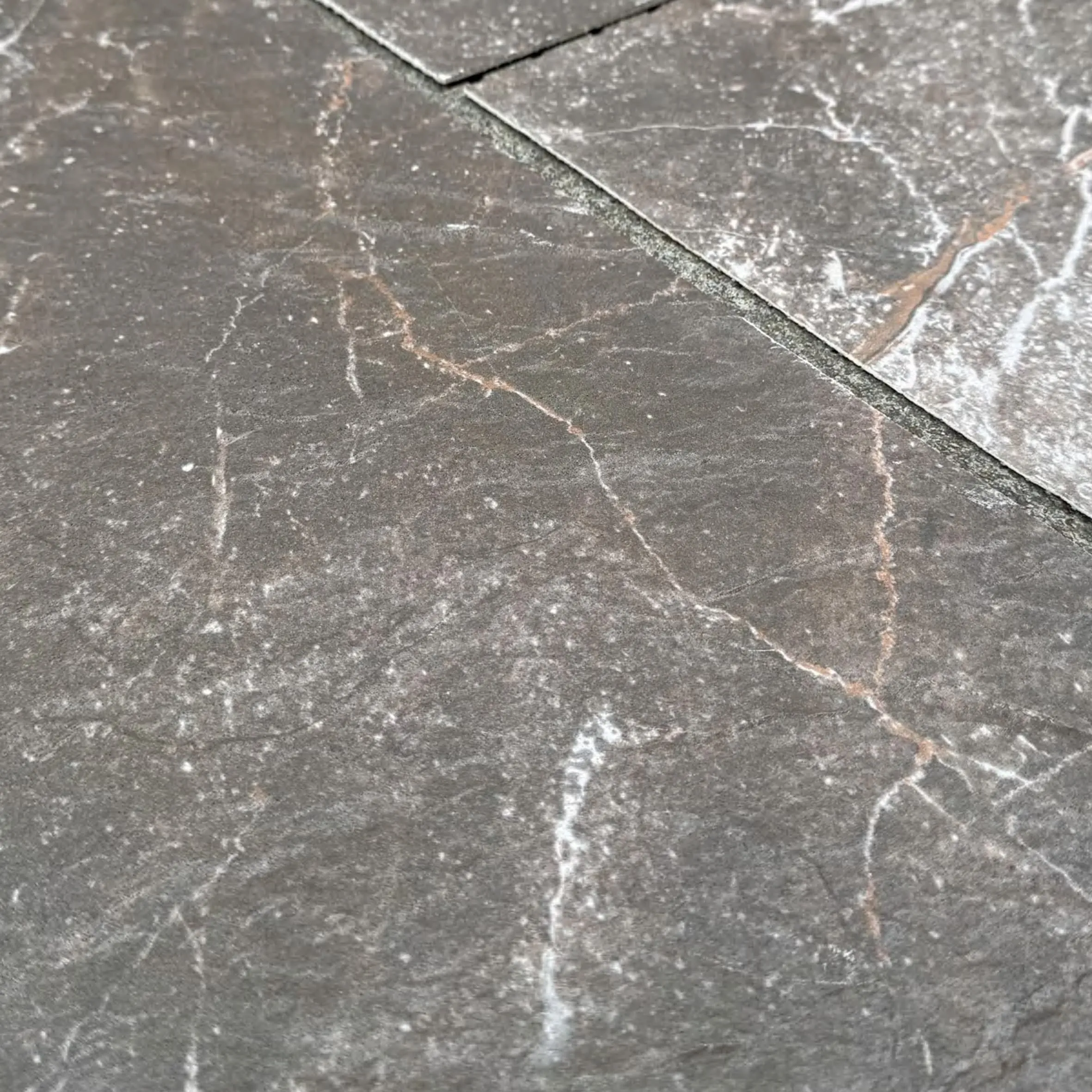
Replicating Slate Portoro isn't just about copying its color. It's about capturing its soul —the way it feels under your hand, the way it interacts with light, the unique "personality" of each slab. To do that, COLORIA MCM uses a multi-step process that combines art, science, and cutting-edge tech.
It all starts with the real thing. COLORIA MCM's team travels the world to source the finest specimens of natural Slate Portoro—slabs with the most striking vein patterns, the richest color, and the most authentic texture. These slabs are then scanned using high-resolution 3D scanners that capture every imperfection, every ridge, every subtle variation in the stone's surface. "We're talking about 100 million data points per square foot," Lin explains. "That's the level of detail needed to make the replication indistinguishable from the real thing."
The scans are fed into powerful computers, where designers use specialized software to digitize the Slate Portoro's texture. They adjust for inconsistencies (like cracks or blemishes in the original slab) while preserving the natural "randomness" that makes stone so beautiful. The result? A digital blueprint that's a perfect 3D replica of the real Slate Portoro's surface.
Next comes the mcm 3d printing series —the heart of the process. Using the digital blueprint, COLORIA MCM's 3D printers deposit layers of modified composite material panels with pinpoint accuracy. Unlike traditional 3D printers that use plastic, these printers work with a proprietary blend of natural minerals (including crushed stone dust), polymers, and fibers that mimic the density and feel of real stone. The printer builds up the texture layer by layer, recreating the pits, grooves, and veins of Slate Portoro with microscopic precision.
"It's like building a stone slab from the ground up," says Lin. "Each layer is only a fraction of a millimeter thick, but together, they create a surface that's identical to natural Slate Portoro—right down to the way a fingernail catches on a tiny ridge." The 3D printing process also allows for customization: designers can adjust the vein patterns, scale the texture, or even create unique variations for a project. Want a Slate Portoro-inspired panel with more gold veins? No problem. Need a lighter, more subtle version for a residential space? Done.
Once the texture is printed, the panel is coated with a layer of mcm flexible stone —a game-changing material that solves the weight issue. Traditional stone is rigid and heavy; flexible stone is thin (as little as 3mm thick) and lightweight (just 3-5 pounds per square foot, compared to 15-20 pounds for natural stone). This flexibility makes installation a breeze. Unlike natural slabs, which require cranes and teams of installers, COLORIA MCM's Slate Portoro panels can be cut on-site with standard tools, glued to walls with simple adhesives, and even curved around corners or arches. "We installed COLORIA MCM Slate Portoro on a 20th-floor balcony last year," says Chen, the contractor. "Two guys, a ladder, and a tube of adhesive—done in a day. With natural stone, that would have taken a crew of six and a crane. It's night and day."
But flexibility doesn't mean sacrificing durability. The modified composite materials in COLORIA MCM panels are engineered to withstand extreme temperatures, moisture, and UV rays. They're fire-resistant, scratch-resistant, and backed by a 20-year warranty. "We tested them in our lab for everything," Lin says. "Freeze-thaw cycles, heavy impact, acid rain—they held up better than some natural stones. And because they're non-porous, they don't stain or harbor mold, which is a huge plus for kitchens and bathrooms."
| Feature | Natural Slate Portoro | COLORIA MCM Slate Portoro |
|---|---|---|
| Weight (per sq. ft.) | 15-20 lbs. | 3-5 lbs. |
| Cost (per sq. ft.) | $200-$500+ | $50-$100 |
| Installation | Requires cranes, structural reinforcement, specialized labor | Can be installed with basic tools, no structural reinforcement needed |
| Durability | Prone to cracking, staining, and weathering | Scratch-resistant, moisture-resistant, fire-resistant (20-year warranty) |
| Sustainability | High environmental impact (quarrying, transportation) | Low impact (recycled materials, reduced transportation emissions) |
| Versatility | Limited to low-rise, high-budget projects; rigid, cannot bend | Suitable for high-rises, residential, commercial; flexible for curved surfaces |
While Slate Portoro is a standout, COLORIA MCM's technology isn't limited to one stone. The mcm 3d printing series and mcm flexible stone are part of a broader range of products designed to replicate dozens of natural materials—from the warm, earthy tones of fair-faced concrete to the rustic charm of wood grain board and the sleek elegance of marble interstellar gray . This versatility has made COLORIA MCM a favorite among designers who want to mix textures and materials without compromising on consistency or cost.
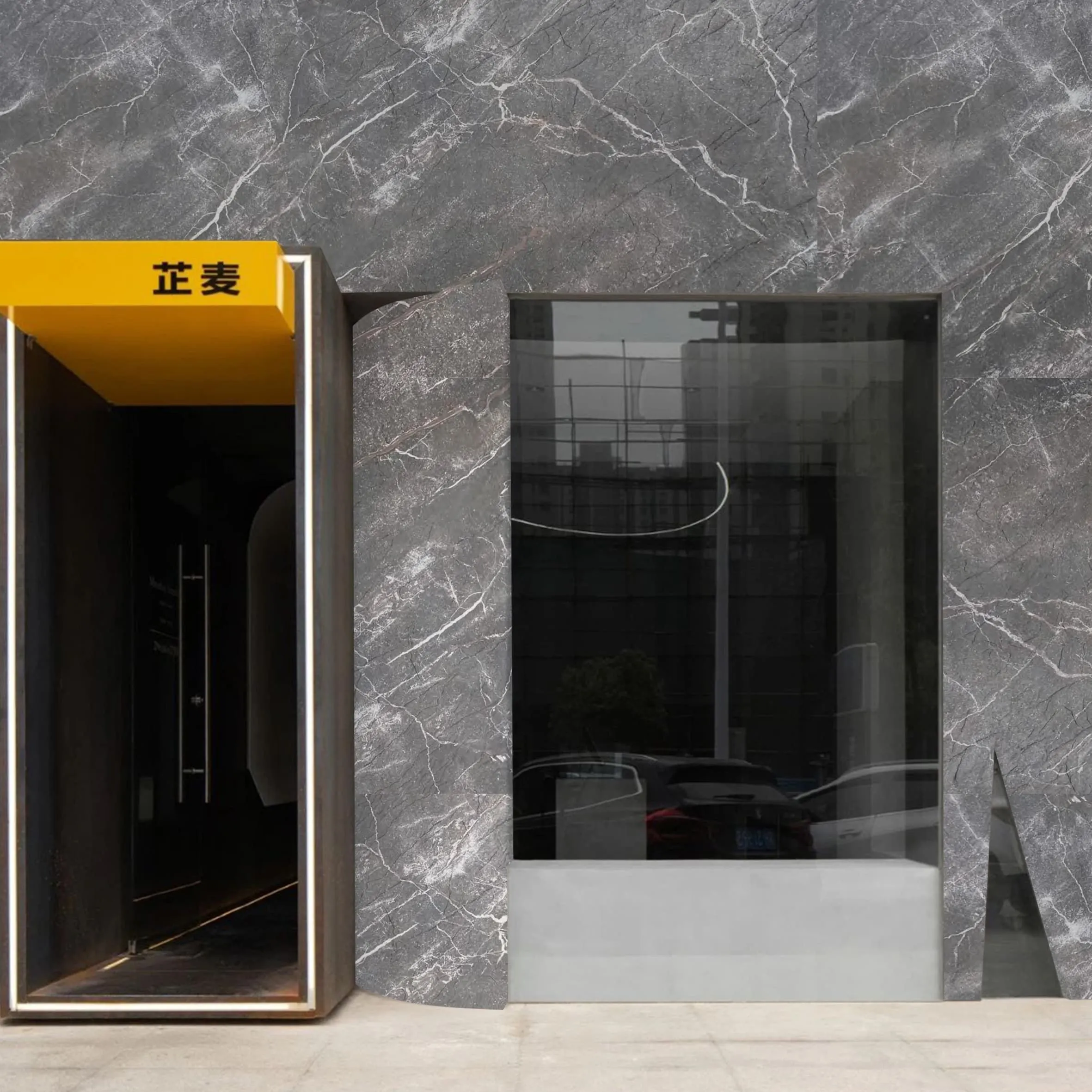
"We used COLORIA MCM's Slate Portoro for the lobby walls of a boutique hotel, then paired it with their fair-faced concrete panels for the reception desk and wood grain board for the ceiling," says Gonzalez, the architect. "The result was a space that felt cohesive, high-end, and totally unique—all while staying under budget. Clients can't believe it's not real stone."
In an era where sustainability is no longer a "nice-to-have" but a "must-have," COLORIA MCM's approach to materials is a breath of fresh air. Unlike natural stone, which requires extensive quarrying, COLORIA MCM's modified composite panels use recycled stone dust and eco-friendly polymers. The 3D printing process minimizes waste—only the exact amount of material needed is used—and the lightweight panels reduce transportation emissions (a single truck can carry 10 times more COLORIA MCM panels than natural stone slabs). "We're not just replicating stone," Lin says. "We're reimagining how we build—with respect for the planet."
For developers and builders, this sustainability angle is a selling point. Green building certifications like LEED often reward projects that use recycled materials and reduce carbon footprints. "Our clients love that they can have the look of luxury stone without the environmental guilt," Gonzalez notes. "It's a win-win: beautiful design, lower costs, and a better score on sustainability reports."
As COLORIA MCM continues to innovate—expanding its mcm 3d printing series , refining its mcm flexible stone formulas, and adding new textures to its lineup—the future of architectural design looks brighter (and lighter). Slate Portoro, once a luxury reserved for the few, is now accessible to anyone with a vision. And it's not just about Slate Portoro: imagine a world where every natural stone—from the rare travertine (starry blue) to the rugged gobi panel —can be replicated with the same precision, sustainability, and affordability.
"At the end of the day, design is about storytelling," says Lin. "Natural stone tells a story of the earth's history. COLORIA MCM tells a new story—one of innovation, accessibility, and respect for both the past and the future. We're not replacing natural stone; we're expanding the palette. Now, every designer, every builder, every homeowner can write their own story—with the beauty of Slate Portoro, and the practicality of MCM."
Slate Portoro will always hold a special place in the world of design. Its beauty is timeless, its allure undeniable. But thanks to COLORIA MCM, we no longer have to choose between beauty and practicality, luxury and affordability, tradition and innovation. The mcm 3d printing series and mcm flexible stone have unlocked a new era—one where the magic of Slate Portoro can grace high-rises and homes, hotels and cafes, without weighing us down. It's a testament to human ingenuity: when we love something deeply enough, we don't just accept its flaws—we reimagine it. And in doing so, we create something even better.
So the next time you walk into a space and gasp at the sight of stunning Slate Portoro walls, take a closer look. Run your hand over the surface. Notice how light plays on the veins. It might just be COLORIA MCM—proving that sometimes, the most authentic beauty is the one that's designed, not dug from the earth.
Recommend Products












