
Exploring how COLORIA's innovative Materials Create Harmonious, Sustainable Spaces That Meet the World's Toughest Green Standards
Walk into any modern architectural marvel today, and you'll notice something beyond stunning aesthetics: a quiet commitment to the planet. From office lobbies that breathe with natural light to residential facades that blend into their surroundings, green building isn't just a trend—it's a responsibility. For architects, designers, and builders, the challenge lies in balancing beauty with sustainability, especially when chasing certifications like LEED, WELL, or BREEAM. That's where COLORIA's MCM (Modified Composite Material) series steps in—not just as building materials, but as partners in crafting spaces that honor both human needs and environmental health.
At first glance, you might wonder: How can a product line with such rich textures—from the cosmic sparkle of travertine (starry blue) to the earthy warmth of rammed earth board (gradient) —also be a champion of green building? The answer lies in COLORIA's core philosophy: sustainability doesn't require sacrificing design. Let's dive into how these materials don't just meet certification standards, but elevate them, creating spaces that feel alive, intentional, and kind to the planet.
MCM, or Modified Composite Material, is more than a buzzword. It's a result of years of innovation, blending natural minerals with advanced engineering to create panels that are lightweight, durable, and eco-friendly. Unlike traditional stone or concrete, COLORIA's MCM is crafted with minimal waste, low carbon emissions, and a focus on longevity—key factors that green certifications prioritize. Let's break down the "why" before diving into the "how."
Certifications like LEED (Leadership in Energy and Environmental Design), WELL Building Standard, and BREEAM (Building Research Establishment Environmental Assessment Method) set rigorous benchmarks for sustainability. Let's map COLORIA's key products to the specific criteria they excel in, showing exactly how they help projects earn those coveted points.
| Product Name | Key Green Features | Certification Alignment |
|---|---|---|
| travertine (starry blue) | Recycled glass particles for sparkle; low-VOC resin binding; 90% natural mineral content | LEED Material & Resources (MR Credit 4: Recycled Content); WELL Air Quality (Feature 2.3: Low-Emitting Materials) |
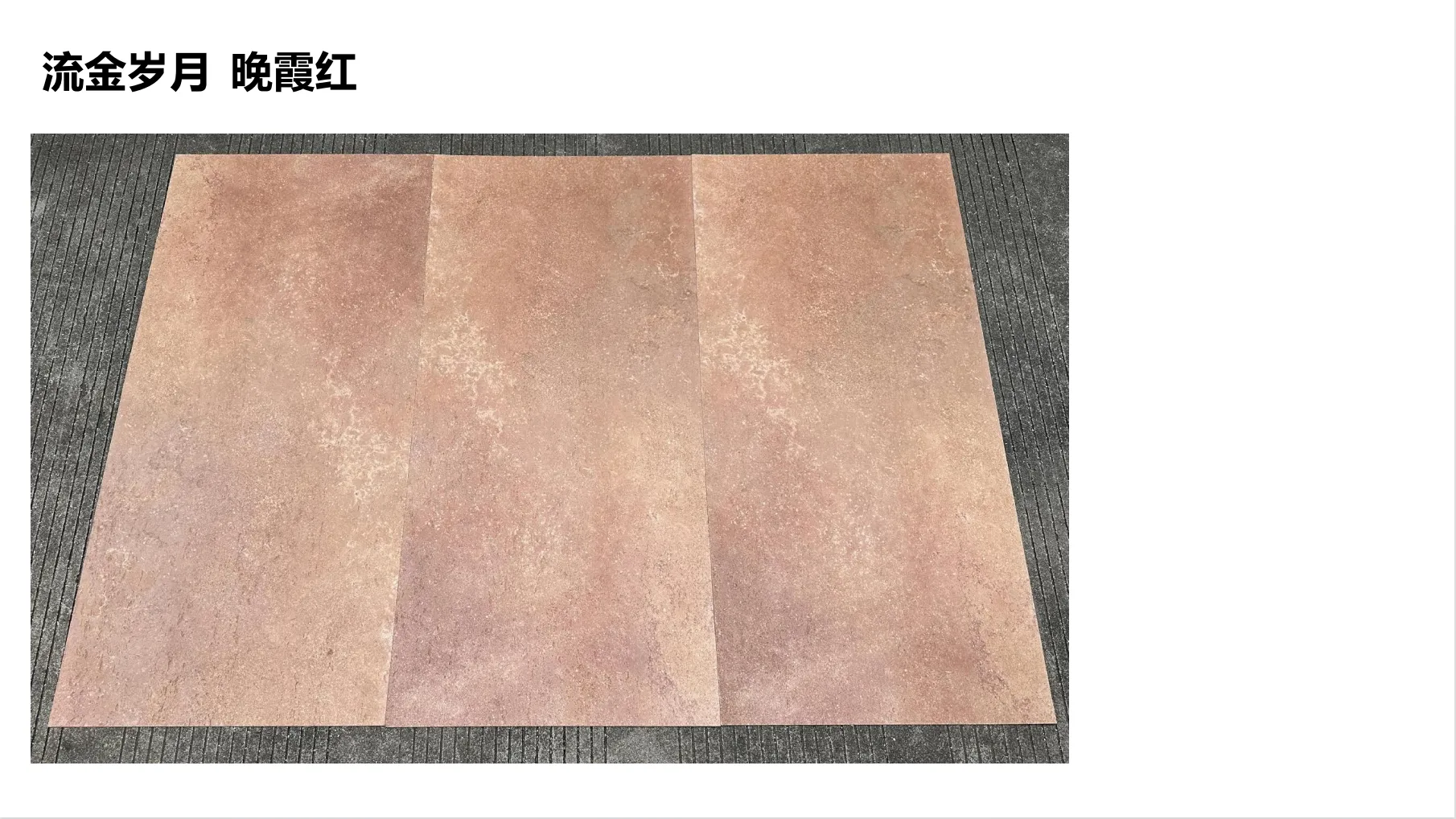
| rammed earth board (gradient) | Local soil sourcing reduces transportation emissions; natural pigments; thermal insulation properties lower energy use | LEED Sustainable Sites (SS Credit 5: Site Development); BREEAM HEA 02: Thermal Comfort |
| foamed aluminium alloy board (vintage silver) | 85% recycled aluminum; lightweight (reduces structural load and transportation energy); 100% recyclable at end-of-life | LEED MR Credit 3: Materials Reuse; BREEAM MAT 01: Responsible Sourcing |
| fair-faced concrete | Low-carbon cement mix; no need for additional cladding (reduces material waste); high reflectivity minimizes urban heat island effect | LEED Energy & Atmosphere (EA Credit 1: Optimize Energy Performance); WELL V06: Thermal Comfort |
| rough granite stone (medium grey) | Quarried using waterless cutting techniques; natural slip resistance reduces need for chemical treatments; long lifespan (50+ years) | LEED MR Credit 8: Local Materials; BREEAM MAT 03: Durability & Longevity |
Take LEED, for example. A project using foamed aluminium alloy board (vintage silver) can earn points under "Materials Reuse" because of its high recycled content, while rammed earth board (gradient) checks boxes for "Local Materials" when sourced from within 500 miles of the build site. For WELL certification, travertine (starry blue) contributes to "Low-Emitting Materials," ensuring the air inside is as clean as the view outside.
Numbers and certifications tell part of the story, but it's the spaces themselves that bring the impact to life. Let's explore a few projects where COLORIA's MCM didn't just help achieve green certifications—they made the spaces more human, more inspiring, and more connected to nature.
Nestled in Portland, Oregon, the EcoVillage Community Center was designed to be the heart of a sustainable neighborhood. The goal? LEED Platinum, the highest certification level. The design team chose COLORIA's rammed earth board (gradient) for the exterior walls—a bold choice that paid off in spades.
"Rammed earth has this primal, grounding quality," says lead architect Maria Gonzalez. "But traditional rammed earth is heavy and hard to source locally. COLORIA's gradient boards solved both issues: they're lightweight, made with soil from a nearby farm, and the color transition—from soft terracotta to warm beige—mirrors the Oregon landscape. Plus, the thermal mass of the boards keeps the center cool in summer and warm in winter, cutting HVAC costs by 30%."
Inside, the lobby features travertine (starry blue) floors. "We wanted a focal point that felt cosmic, like bringing the night sky indoors," Maria adds. "The starry blue travertine has these tiny glass flecks that catch light, and since it's low-VOC, we didn't have to worry about off-gassing. Parents love that their kids can crawl on the floor without exposure to chemicals. That's WELL certification in action—health and beauty, hand in hand."
Hospitals have unique needs: durability, easy cleaning, and materials that promote healing. For Serenity Hospital in Toronto, WELL Gold certification was non-negotiable—patients deserve spaces that support recovery, not hinder it.
The pediatric wing uses COLORIA's weaving (beige) panels on the walls. "Kids are sensory learners," explains hospital designer James Park. "The woven texture is soft to the touch,,,.,.,,."
For the surgical wards, the team opted for fair-faced concrete with a matte finish. "Concrete is inherently durable, which is crucial in high-traffic areas," James notes. "COLORIA's version is treated to resist stains and bacteria, and it doesn't require harsh chemical cleaners. Plus, the neutral tone calms patients, and the material's thermal properties help maintain a steady, comfortable temperature—key for WELL's thermal comfort criteria."
As green building standards evolve, so does COLORIA. The team is already experimenting with new materials, like foamed aluminium alloy board (vintage gold) with integrated solar cells—a prototype that could turn building facades into energy generators. Or lunar peak silvery , a panel inspired by moon dust that reflects sunlight, reducing the need for air conditioning in urban heat islands.
But perhaps the most exciting part is that sustainability isn't an afterthought here. It's woven into every texture, every color, every panel. Whether you're drawn to the rustic charm of ancient wood , the modern edge of foamed aluminium alloy board (metal) , or the organic flow of stream limestone (claybank) , you're choosing a material that respects the planet without compromising on beauty.
In the end, green building certifications are more than just plaques on a wall. They're a promise—to the people who use the space, to future generations, and to the Earth. With COLORIA's MCM, that promise isn't just kept; it's celebrated, one textured panel, one starry surface, one sustainable space at a time.
Recommend Products












