Walk onto any construction site, and you'll likely spot it: piles of discarded stone chunks, dust-coated offcuts, and broken slabs stacked near dumpsters. This isn't just "construction byproduct"—it's waste. Tons of it. In fact, the construction industry generates over 2 billion tons of waste annually worldwide, with natural stone alone accounting for a significant chunk. Quarries blast mountains to extract blocks, factories cut those blocks into slabs (wasting up to 50% of the original stone), and job sites toss aside mismeasured or cracked pieces that never make it onto walls or floors. But what if there was a way to build with the beauty of stone—without the waste? Enter
Croco MCM. Short for Modified Composite Material, MCM is redefining how we think about building materials, starting with one critical goal: slashing construction waste from quarry to completion. Let's dive into how
Croco MCM achieves this, and why it's quickly becoming the go-to choice for architects and builders who care about both aesthetics and the planet.
The Problem with Natural Stone: A Wasteful Journey from Quarry to Wall
To understand why
Croco MCM is a game-changer, we first need to unpack the wasteful lifecycle of natural stone. Let's start at the source: the quarry. Extracting natural stone—whether marble, granite, or
travertine—involves heavy machinery, explosives, and massive amounts of energy. For every usable block of stone pulled from the earth, quarries often discard 3-5 times that amount in "overburden" (the rock and soil covering the stone deposit) and "waste rock" (stone that's cracked, discolored, or too small to use). In some cases, this waste can reach up to 70% of the total material removed from a quarry. That's like digging up 100 tons of rock to get just 30 tons of usable stone—hardly efficient.
Then there's manufacturing. Once at the factory, those 30 tons of raw stone are cut into slabs, polished, and shaped. But stone is unpredictable; veins, cracks, or color variations mean many slabs get rejected. Even when they're usable, cutting large blocks into standard sizes leaves behind heaps of offcuts—small pieces too narrow or short for most projects. These offcuts often end up in landfills, since recycling stone is energy-intensive and rarely cost-effective. By the time natural stone reaches a construction site, it's already lost a huge portion of its original mass to waste.
Transportation adds another layer of waste. Natural stone is heavy—really heavy. A single slab of granite can weigh 200-300 pounds, and a truckload might carry just 10-15 slabs. This weight means more fuel consumption, higher emissions, and a greater risk of breakage during transit. Even a small crack during delivery renders a slab useless, adding to the waste pile before installation even begins.
Finally, installation. On-site, contractors often have to cut stone to fit specific wall or floor dimensions. But natural stone is brittle; a wrong cut or a slight miscalculation can split a slab, turning hours of work into trash. Plus, its weight makes handling tricky—dropping a slab isn't just dangerous; it's a guaranteed loss. All told, by the time a natural stone project is finished, up to 30% of the original quarried material has been wasted, from quarry to installation.
Croco MCM: Redefining Material Efficiency
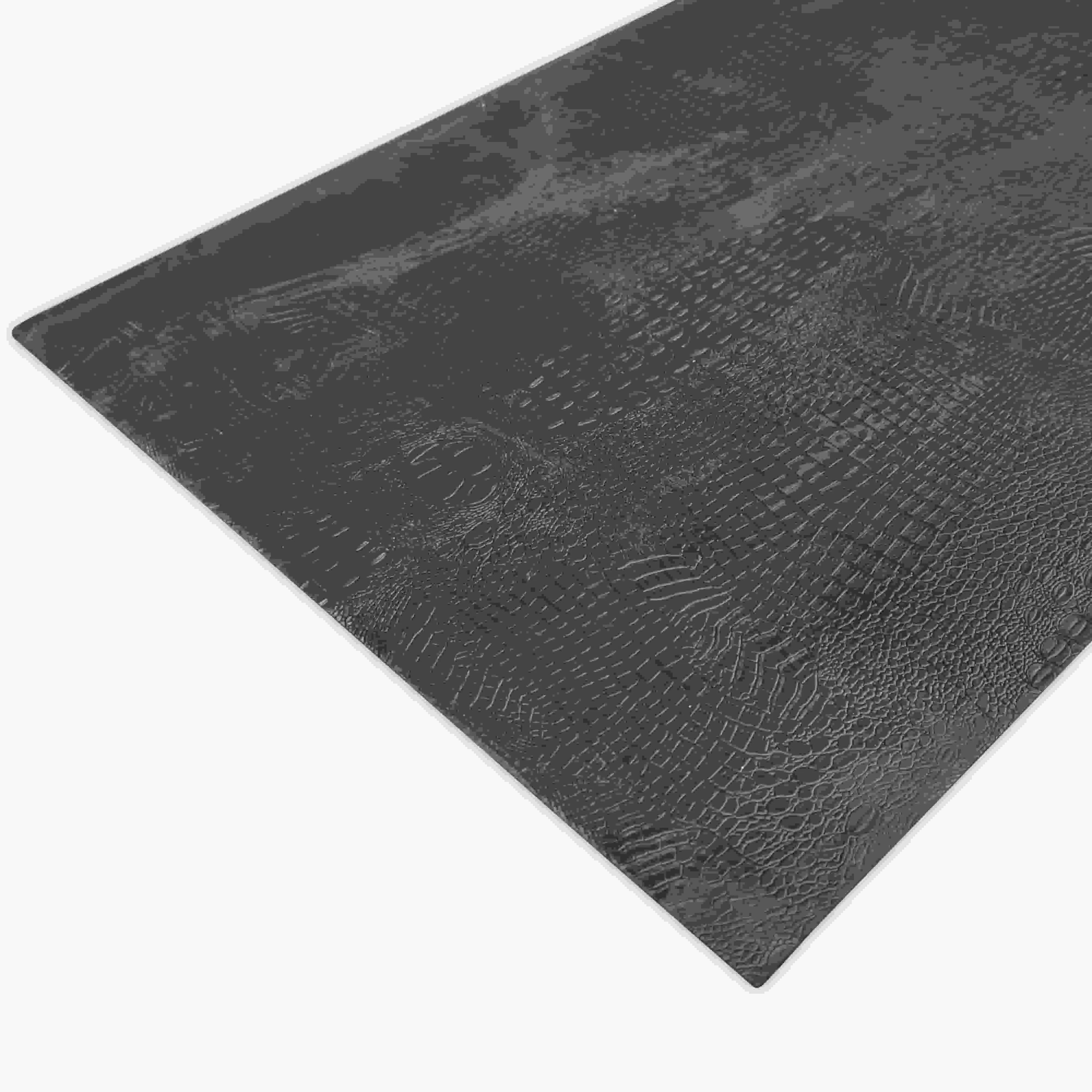
Croco MCM flips this script. Instead of starting with a massive block of stone, MCM begins with a smart blend of recycled minerals, polymers, and fibers—materials that are either recycled or sustainably sourced. The result? A lightweight, flexible material that mimics the look and texture of natural stone (think
travertine, granite, or even
boulder slab) but with a fraction of the waste. Let's break down how each stage of MCM's lifecycle cuts waste compared to natural stone.
1. No Quarry, No Waste: Sustainable Sourcing
Unlike natural stone, MCM doesn't require mining. Instead, it uses recycled stone dust, leftover minerals from other industries, and eco-friendly resins. For example,
Croco's
mcm flexible stone—a flagship product—starts with recycled
travertine or marble dust, which would otherwise end up in landfills from natural stone factories. By repurposing these "waste" materials, MCM eliminates the need for quarrying, slashing the 70% waste generated during natural stone extraction. There's no blasting, no overburden removal, and no destruction of natural landscapes—just smart reuse of existing resources.
2. Precision Manufacturing: Minimizing Waste from the Start
Natural stone manufacturing is a messy, imprecise process. MCM, on the other hand, is engineered in controlled factory settings, often using advanced techniques like 3D printing (part of
Croco's
mcm 3d printing series) to shape materials with pinpoint accuracy. This precision means almost zero waste during production. Whereas natural stone factories waste 50% of raw material cutting slabs, MCM production typically uses 95% of its input materials. Any excess is recycled back into the manufacturing process, creating a closed loop. For example, during the production of foamed aluminium alloy board—another lightweight MCM option—the alloy is expanded and shaped in molds, leaving no offcuts. What little waste is generated (like minor trimmings) is melted down and reused, so nothing ends up in landfills.
Real-World Example: A Hotel Project in Dubai
A luxury hotel in Dubai recently swapped natural
travertine for
Croco's
travertine (vintage gold) MCM panels. The project required 2,000 square meters of wall cladding. With natural
travertine, the quarry would have extracted ~120 tons of stone to yield 40 tons of usable slabs (after accounting for extraction and manufacturing waste). With MCM, the manufacturer used just 15 tons of recycled
travertine dust and 5 tons of eco-resins—no quarrying, no waste rock, and 80% less material overall.
3. Lightweight and Durable: Cutting Transport and Installation Waste
One of MCM's biggest advantages is its weight.
Croco's
mcm flexible stone weighs just 3-5 kg per square meter, compared to 20-30 kg for natural stone. Foamed aluminium alloy board is even lighter, at 2-4 kg per square meter. This lightness transforms transportation: a single truck can carry 5-10 times more MCM panels than natural stone slabs. Fewer trucks mean lower emissions, but more importantly, less breakage. Natural stone often cracks during transit due to its weight and brittleness; MCM, being flexible and lightweight, rarely breaks. In fact,
Croco reports less than 1% transit damage for MCM panels, compared to 5-8% for natural stone. That's a huge reduction in waste from damaged materials.
Installation is where MCM really shines. Unlike natural stone, which requires heavy machinery and skilled stonemasons to cut and fit, MCM panels are easy to handle. They can be cut on-site with standard tools (no specialized equipment needed), and their flexibility means they bend slightly to fit uneven surfaces, reducing the risk of cracking. Contractors report up to 90% less on-site waste with MCM compared to natural stone. For example, when installing
fair-faced concrete—a material known for its rough, industrial look—traditional concrete panels often require on-site grinding and cutting to achieve a uniform finish, generating dust and offcuts.
Croco's
fair-faced concrete MCM panels, however, come pre-finished, so no on-site modification is needed. What little waste is generated (like small trimmings) is often recyclable, as MCM is designed to be broken down and reused.
4. Longevity and Recyclability: Waste Reduction for the Long Haul
Waste isn't just about what's tossed during construction—it's also about how long a material lasts. Natural stone is durable, but it's prone to staining, chipping, and weathering over time. When it does wear out, it's usually dumped in landfills, as recycling stone is costly. MCM, by contrast, is engineered to be highly durable. It resists UV rays, moisture, and impact, with a lifespan of 25-30 years—comparable to natural stone. And when it does reach the end of its life, MCM panels can be ground down and recycled into new panels, closing the loop.
Croco's recycling program accepts old MCM panels and repurposes them into raw materials for new products, ensuring almost zero waste at the end of the lifecycle.
By the Numbers: Natural Stone vs. Croco MCM
To put this all in perspective, let's compare the waste and efficiency of natural stone and
Croco MCM across their lifecycles. The table below uses data from construction industry reports and
Croco's sustainability studies to highlight key differences:
|
Metric
|
Natural Stone
|
Croco MCM (e.g., mcm flexible stone, foamed aluminium alloy board)
|
|
Extraction/Source Waste
|
70% of quarried material is waste (overburden + waste rock)
|
0% (uses recycled materials; no quarrying)
|
|
Manufacturing Waste
|
30-50% of raw stone wasted as offcuts/dust
|
5% or less (precision manufacturing; waste recycled)
|
|
Transit Damage Rate
|
5-8% of slabs cracked/damaged
|
Less than 1% damage rate
|
|
On-Site Installation Waste
|
10-15% of delivered stone wasted (cuts, cracks, misfits)
|
1-2% of delivered panels wasted
|
|
End-of-Life Recyclability
|
Low (rarely recycled; ends in landfills)
|
High (90%+ recyclable into new MCM panels)
|
|
Total Lifecycle Waste
|
40-60% of original quarried material wasted
|
5-10% of total materials wasted
|
The numbers speak for themselves:
Croco MCM reduces lifecycle waste by 75-85% compared to natural stone. For a typical commercial project using 10,000 square meters of cladding, that's a reduction of 500-800 tons of waste—enough to fill 30-50 dumpsters.
Beyond Waste: MCM's Other Environmental Benefits
While waste reduction is a key focus,
Croco MCM offers other eco-friendly perks. For starters, its manufacturing process uses 60-70% less energy than natural stone production. Quarrying, cutting, and polishing natural stone require massive amounts of electricity; MCM's low-temperature manufacturing (using recycled materials) cuts energy use dramatically. Additionally, MCM is often finished with low-VOC (volatile organic compound) coatings, improving indoor air quality compared to natural stone sealants, which can off-gas harmful chemicals.
Then there's water usage. Natural stone processing requires thousands of gallons of water for cutting and polishing; MCM manufacturing uses minimal water, and what little is used is recycled. In water-scarce regions like the Middle East—where
Croco is a major supplier—this is a critical advantage. For example, a quarry in Oman might use 500,000 liters of water per day to process natural stone;
Croco's Dubai factory uses less than 50,000 liters daily for MCM production, with 90% of that water recycled.
Why Builders and Architects Are Making the Switch
It's not just about the environment—MCM makes economic sense, too. While MCM panels can cost slightly more upfront than natural stone, the savings in transportation, labor, and waste quickly offset the difference. A recent study by the UAE's Ministry of Infrastructure found that projects using MCM saved 15-20% on total cladding costs compared to natural stone, thanks to lower transport fees, faster installation (reducing labor time), and less waste disposal.
Architects also love MCM for its versatility.
Croco offers over 100 finishes, from the classic look of
travertine (starry green) to the modern industrial vibe of
fair-faced concrete, and even unique textures like
bamboo mat board or woven (khaki). This variety means designers don't have to sacrifice aesthetics for sustainability. As one Dubai-based architect put it: "With MCM, I can get the rustic charm of
boulder slab or the elegance of marble without the guilt of waste. It's a win-win."
Conclusion: Building a Waste-Free Future with Croco MCM
Construction waste is a silent crisis, but it's one we can solve—starting with the materials we choose. Natural stone has long been prized for its beauty, but its wasteful lifecycle is no longer sustainable in a world grappling with climate change and resource scarcity.
Croco MCM offers a better way: a material that captures the essence of natural stone while slashing waste by 75-85% from quarry to recycling.
Whether it's the lightweight durability of
mcm flexible stone, the sleek look of foamed aluminium alloy board, or the industrial appeal of
fair-faced concrete, MCM proves that sustainability and aesthetics can go hand in hand. As more builders and architects adopt MCM, we're not just reducing waste—we're reimagining what construction can be: efficient, eco-friendly, and infinitely creative.
So the next time you walk past a construction site, imagine (oops—scratch that) picture this: no piles of discarded stone, no dust clouds from cutting, just stacks of lightweight MCM panels being installed quickly, cleanly, and with almost no waste. That's the future
Croco MCM is building—one panel at a time.